



Gold phase analysis plays a pivotal role in optimizing gold beneficiation processes by identifying the distribution and chemical associations of gold within ores. This guide delves into gold phase determination across geochemical, high-grade, and cyanide-leachable contexts, detailing tailored analytical procedures, reagent preparations, and operational protocols for precise characterization.
Gold Phase Analysis Overview
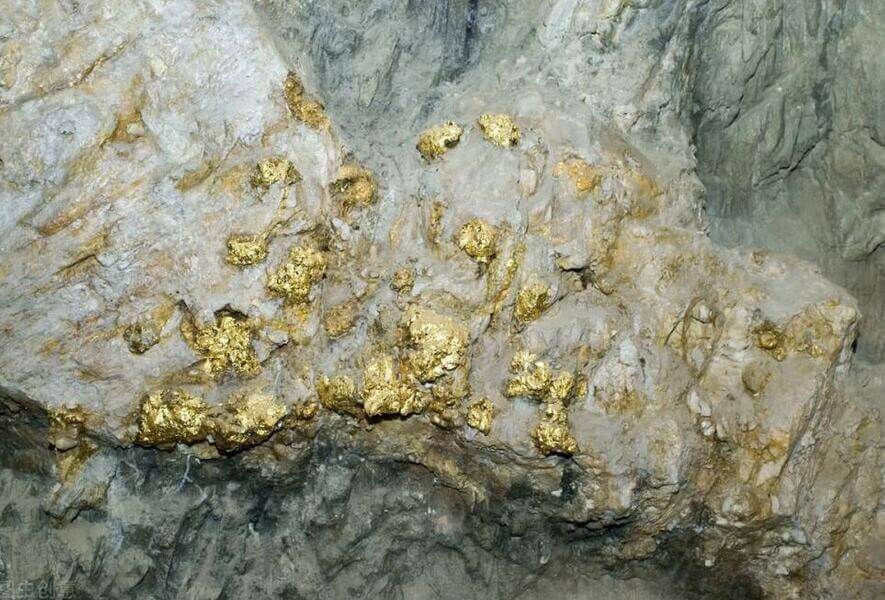
With an average crustal abundance of 4×10⁻⁹, gold primarily occurs in nature as native metal or intermetallic compounds (e.g., electrum (AgAu), gold-silver alloy (AuAg)). It commonly coexists with sulfide minerals like pyrite, arsenopyrite, and chalcopyrite, as well as galena, sphalerite, and stibnite.
Since more than 98% of gold in gold deposits usually exists in the state of elemental gold, the phase analysis of emas is not to find out the phase state of gold itself, but to find out whether the gold is in a bare, semi-bare state and in various carrier minerals—the amount in the inclusion state.
Analytical Procedures
Three tailored methods for gold phase determination:
1. Geochemical & Low-Grade Ore Analysis
Quantifies six phases:
-
- Bare/semi-bare native gold
- Carbonate-coated gold
- Pb-Zn-Cu sulfide-coated gold
- Limonite-coated gold
- Pyrite-coated gold
- Quartz/silicate-coated gold
2. High-Grade Ore Analysis
Focuses on four phases:
-
- Discrete native gold
- Intergrown gold
- Sulfide-encapsulated gold
- Silicate/quartz-encapsulated gold
3. Cyanidable Gold Determination
Assesses extractable gold via cyanidation to guide metallurgical recovery efficiency.
Phase analysis of gold not only enhances recovery rates but also informs the selection of suitable extraction techniques, such as cyanidation. Below, we delve into the analytical methods for geochemical samples, covering reagent preparation, step-by-step protocols, and critical considerations.
Analisis Fasa Emas dalam Sampel Geokimia
1. Ringkasan Metode
Use I2-NH4I solution to leach bare and semi-naked native gold; the residue is first dissolved in carbonate with dilute HC104, and the encapsulated native gold is dissolved and separated with I2-NH4I solution. Determination of carbonate-coated gold residues: The lead-zinc-copper sulfide minerals-coated gold was leached with bromine-methanol. After the residue was dissolved in HCl(1+1) containing SnC12 to remove limonite, it was leached with I2-NH4I solution and coated with it. After calcining at 480-500 ℃ for 1 h, the pyrite-coated gold was leached with I2-NH4I solution, and the final residue is quartz and silicate-coated gold. After phase separation, the leaching solution of each phase was determined by the FAAS method or graphite furnace atomic absorption (GFAAS) method depending on the content. When the total amount of Au is 10×10-9, the phase-separated determination can be carried out, and the determination limit of each phase is 10-9. This method applies to the determination of the storage state of Au in general gold ores and geochemical exploration samples.
2. Reagent Preparation
Leaching agent Au I 50g/L I2-100g/L NH4I solution. Leaching agent Au II HC104 (1+99). Leaching agent Au Ⅲ: Bromo-methanol (5+95). Leaching agent Au Ⅳ 10g/L SnCl2·2H2O HCl(1+1) solution.
3. Analysis Steps
Langkah 1: Penentuan emas murni dan semi murni.
Weigh 10 g of the sample with a particle size of less than 0.075 mm into a 250 mL conical flask. Add 50 mL of leaching agent Au I, shake at room temperature for 1 h, filter with suction, and wash the residue with water for 2 to 3 times (transfer the residue together with the filter paper to the original conical flask). The filtrate was transferred to a 300mL beaker, and most of the I2 was removed by evaporation; then HN03 was added to drive up the I2, and evaporated to dryness. Add 20mL aqua regia (1+1), boil for a while, transfer to a 200mL conical flask, and dilute with water to about 90mL. A piece of foam (about 0.1 g) was put in, shaken at room temperature for 30 minutes to enrich and separate Au, and Au was determined by the FAAS method or GFAAS method depending on the content.
Langkah 2: Penentuan emas berlapis karbonat.
Add 150 mL of leaching agent Au II to the residue, heat on a boiling water bath for 1 hour, and add dilute HC104 dropwise if necessary to keep the pH of the solution at 1-2. After cooling, perform suction filtration, wash the conical flask and the residue with water 2 to 3 times, and keep the filtrate. Add 50 mL of leaching agent Au I to the residue, shake at room temperature for 1 h, filter with suction, combine the two filtrates, and measure Au according to step 1.
Langkah 3: Penentuan mineral timbal-seng-tembaga sulfida yang dienkapsulasi emas.
Add 50 mL of leaching agent Au III to the residue. Shake at room temperature for 1 h. Suction filtration, wash with water until the filtrate has no yellow color, add 5mL HN03 to the filtrate, evaporate on a low-temperature electric furnace, remove Br2 to dryness, add 20mL aqua regia (1+1), and measure Au according to step 1.
Langkah 4: Penentuan emas yang dienkapsulasi limonit.
Add 70 mL of leaching agent Au IV to the residue in the upper section (continuously add SnCl2 solution dropwise to keep the solution yellow-free), and shake at room temperature for 1 h. Suction filter, wash with HCl (1+99) 2 to 3 times, and discard the filtrate. Add 60 mL of leaching agent Au I to the residue, shake at room temperature for 1 h, and measure Au as in step 1 below.
Langkah 5: Penentuan emas yang dienkapsulasi pirit.
The residue is incinerated in a 50mL porcelain crucible and fired in a muffle furnace at 480- 500 °C for 1 h. After cooling, it was transferred to a 200 mL conical flask, 50 mL of leaching agent Au I was added, and the solution was shaken at room temperature for 1 h. The same as step 1 below for Au determination.
Langkah 6: Penentuan kuarsa dan emas berlapis silikat.
The final residue is ashed in a 50mL porcelain crucible and fired at 650°C for 20-30min. After cooling, transfer the residue into a polytetrafluoroethylene beaker, add 10 mL of HF and 10 mL of HNO3, heat it slightly for 1-2 hours, and then evaporate to dryness. Then 10 mL of HF and 10 mL of HNO3 were added, heated and left overnight, and evaporated to dryness the next day. Add 30 mL of aqua regia (1+1), heat it to a slight boil for 30 min, to a volume of about 20 mL, remove it, cool it, and transfer it to a 200 mL conical flask with water, dilute to 90 mL, and measure Au as in step 1 below.
Tindakan pencegahan
Ketika melakukan analisis fasa Au dalam sampel eksplorasi geokimia, larutan NH4I 10g/L I2-20g/L dapat digunakan untuk menggantikan agen pelindian Au I. Jumlah busa yang ditambahkan bisa sekitar 0,1 g.
Kesimpulan
Mastering gold phase analysis is indispensable for enhancing both recovery efficiency and process economics in gold beneficiation. By systematically addressing bare, coated, and encapsulated gold through targeted leaching and advanced detection techniques—including FAAS and GFAAS—operators can confidently select optimal extraction strategies. Rigorous adherence to protocols, from reagent preparation to phase-specific dissolution, ensures accuracy even at ultra-trace levels (10⁻⁹). Whether applied to geochemical exploration or high-grade ore processing, these methodologies empower metallurgists to unlock gold’s full potential while minimizing waste and operational costs. A disciplined approach to phase analysis ultimately bridges the gap between ore complexity and actionable insights, driving sustainable and profitable gold recovery.
PRODUK TERBARU
-

SFM-8 Lab Grinder
【Max. Power Consumption】 150W 【Morta…
-
Cyclosizer
【Feeding Capacity】< 100g/time 【Feeding …
-
JKZ/2JKZ Mine Shaft Sinking Hoist
【Power Source】Electric Motor Drive 【Motor Spee…


 English
  French
  Spanish
  Portuguese
  Indonesian