



Pendahuluan
Pumps serve as the heart of fluid transfer systems across industries, including manufacturing, agriculture, and healthcare. From massive industrial centrifugal pumps to precision medical infusion devices, these critical pieces of equipment can develop various operational issues that affect performance and efficiency. This comprehensive guide examines 20 frequent pump malfunctions, thoroughly analyzes their root causes, and provides practical troubleshooting solutions to minimize downtime and maintain optimal operation. Whether you’re dealing with startup failures, vibration issues, leaks, or temperature problems, understanding these common challenges will help ensure your pumping systems function reliably for their intended service life.
Transitioning from general concerns to specific failures, we’ll first examine startup and operational problems that typically appear immediately during commissioning or when resuming operation after maintenance.
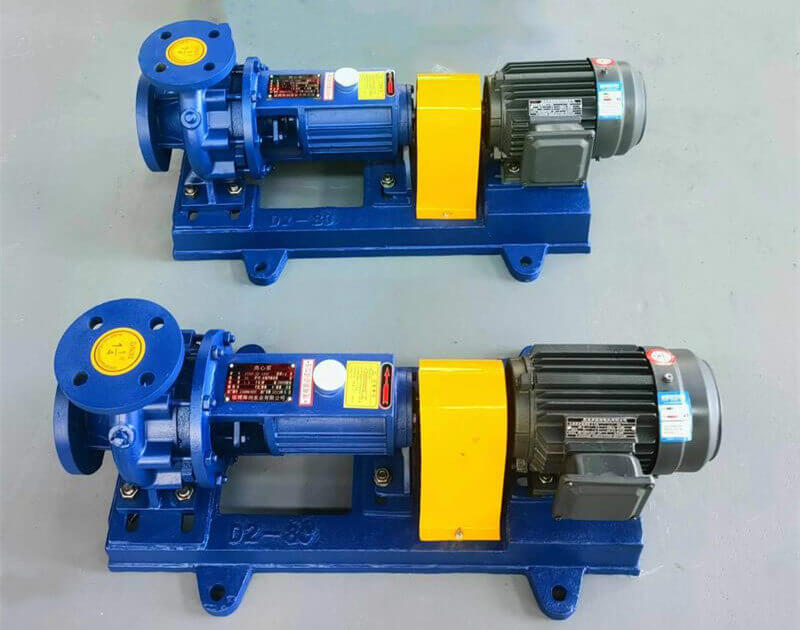
Masalah dan Solusi Umum
Startup and Operation Failures
1. Pump Fails to Start
- Potential Causes: Electrical issues (phase loss, low voltage), motor failure, impeller jammed by debris, seized bearings, or shaft
- Solusi: Verify power supply voltage and wiring; clean impeller clearance; lubricate or replace bearings; realign or replace pump shaft
Before progressing to performance issues, it’s worth noting that many initial startup problems stem from electrical rather than mechanical causes. A methodical troubleshooting approach should always begin with verifying basic electrical connections and parameters.
2. No Liquid Flow After Startup
- Potential Causes: Inadequate priming (air in pump), leaking foot valve, suction line leaks, excessive suction lift
- Solusi: Re-prime the pump thoroughly; inspect and repair suction line seals; lower pump elevation or increase static head
As we transition from startup to operational performance, flow and pressure issues become the next critical consideration. These problems often manifest during normal running conditions.
3. Insufficient Flow Rate
- Potential Causes: Low rotational speed, worn or clogged impeller, excessive wear ring clearance, high suction line resistance, blocked foot valve
- Solusi: Check motor speed settings; clean or replace impeller/wear rings; remove suction line obstructions; verify valve positions
4. Reduced Head Pressure
- Potential Causes: Incorrect rotational speed, undersized or worn impeller, fluid properties (density/viscosity) mismatch, excessive system backpressure
- Solusi: Confirm motor wiring and speed; install properly sized impeller; validate fluid characteristics against pump specifications
Moving beyond basic performance parameters, excessive energy consumption often indicates developing issues that may lead to more severe failures if unaddressed.
5. Excessive Power Consumption
-
- Potential Causes: Overtightened packing gland, bearing failure, bent shaft, impeller rubbing casing, high specific gravity fluid
- Solusi: Adjust packing compression; replace damaged bearings; straighten or replace shaft; correct internal clearances; confirm fluid properties
6. Motor Overload or Tripping
- Potential Causes: Undersized motor, phase loss, unstable voltage, mechanical binding causing torque spikes
- Solusi: Verify motor capacity matches load; inspect electrical protection devices; eliminate mechanical obstructions
Vibration and Noise Issues
Having covered operational parameters, we now examine vibration and noise – critical indicators of mechanical health that often provide early warning of developing problems.
7. Severe Vibration
- Potential Causes: Loose foundation bolts, coupling misalignment, unbalanced rotor, inadequate base support, cavitation
- Solusi: Tighten anchor bolts; realign couplings; perform dynamic balancing; reinforce mounting structure; improve suction conditions
Transitioning from general vibration to specific noise patterns, acoustic signatures can provide valuable diagnostic information about failure modes in progress.
8. Abnormal Noise
- Potential Causes: Worn bearings, foreign objects in the pump, cavitation (crackling sounds), gear/screw meshing issues (in PD pumps)
- Solusi: Replace bearings; remove pump internals; increase NPSHA or reduce fluid temperature; inspect transmission components
9. Cavitation Phenomena
- Potential Causes: Suction pressure below fluid vapor pressure, high suction line losses, low reservoir level
- Solusi: Increase suction pipe diameter; lower pump elevation; clean inlet strainers; select pumps with better NPSH characteristics
Leakage and Sealing Problems
Following mechanical condition monitoring, leakage issues represent another critical maintenance consideration with safety, environmental, and efficiency implications.
10. Mechanical Seal Leakage
- Potential Causes: Worn seal faces, failed springs, deteriorated secondary seals, shaft sleeve wear, improper installation
- Solusi: Replace the complete seal assembly; check the shaft runout; ensure proper installation alignment; adjust spring tension
Proceeding from mechanical seals to packed glands, different sealing technologies present distinct failure modes and maintenance requirements.
11. Excessive Packing Gland Leakage
- Potential Causes: Loose gland compression, packing wear, misaligned lantern ring, interrupted cooling flow
- Solusi: Adjust gland bolts; repack with new material; reposition lantern ring; restore cooling supply (30-60 drops/minute ideal)
Beyond the pump itself, connecting piping and auxiliary components frequently develop leaks requiring attention.
12. Flange/Drain Connection Leaks
- Potential Causes: Damaged gaskets, loose fasteners, flange face defects, poor thread sealing
- Solusi: Install new gaskets; tighten bolts sequentially; resurface mating flanges; apply proper thread sealant
13. Housing Cracks/Leaks
- Potential Causes: Casting flaws, freeze damage, corrosion holes, water hammer effects
- Solusi: Weld repair or housing replacement; implement freeze protection; install water hammer arrestors
Temperature and Lubrication Issues
Alongside leakage problems, abnormal temperature readings often indicate developing lubrication or cooling system failures that require prompt attention.
14. Bearing Overheating
- Potential Causes: Improper oil level/grade, lubricant contamination, bearing fatigue, excessive preload, cooling failure
- Solusi: Maintain correct oil quantity; change contaminated oil; install new bearings; adjust clearance; clean cooling jackets
15. Packing Gland Overheating
- Potential Causes: Excessive compression, missing cooling/lubrication, misplaced lantern ring
- Solusi: Loosen gland for controlled leakage; start cooling flow; properly position lantern ring
16. Motor Overheating
- Potential Causes: Blocked ventilation, high ambient temperatures, winding faults, continuous overload, voltage imbalance
- Solusi: Clear cooling passages; improve air circulation; rewind motor; balance electrical load; correct supply voltage
Other Specific Problems
Besides these common issues, several specialized problems require specific diagnostic approaches depending on pump type and application.
17. Pressure Gauge Fluctuation
- Potential Causes: Air ingress in the suction line, cavitation, unstable valve throttling, faulty gauge
- Solusi: Eliminate air leaks; suppress cavitation; stabilize valve position; calibrate or replace gauge
Moving to electrical monitoring, unstable current readings can reveal developing issues throughout the pump system.
18. Erratic Current Readings
- Potential Causes: Voltage fluctuations, partial impeller blockage, broken motor rotor bars
- Solusi: Stabilize power input; clean impeller passages; repair motor rotor
For medical and precision applications, special considerations apply that differ from industrial pumping scenarios.
19. Infusion Pump Alarms (Medical)
- Potential Causes: Incorrect syringe selection, jammed plunger, low battery, false occlusion detection
- Solusi: Re-enter syringe parameters; free plunger mechanism; recharge battery; clear fluid path
Finally, positive displacement pumps present unique failure modes not typically seen in centrifugal designs.
20. Diaphragm Pump Membrane Failure
- Potential Causes: Material fatigue, chemical attack, excessive air pressure, stuck check valves
- Solusi: Install chemical-resistant diaphragms; regulate air pressure; service check valves; stabilize air supply
Ringkasan
Effective pump maintenance follows the systematic diagnostic principle of “check external factors before internal components, examine electrical systems before mechanical parts.” The transition from simple to complex diagnostics outlined in this guide provides a structured approach to troubleshooting. Regular monitoring of key parameters—including pressure readings, current draw, temperature trends, and leakage observations—enables early problem detection and preventive intervention.
Advanced monitoring techniques have evolved beyond basic parameter checks, with modern systems incorporating vibration analysis, motor current signature analysis, and thermal imaging for comprehensive condition assessment. By understanding these 20 common pump malfunctions and their corresponding remediation strategies, maintenance teams can significantly reduce unscheduled downtime, extend equipment service life beyond design expectations, and maintain optimal system efficiency throughout the pump’s operational lifecycle.
Implementation of these best practices requires balancing thoroughness and efficiency – while detailed inspections are valuable, they must be weighed against operational demands. Always prioritize safety procedures when troubleshooting, maintain detailed equipment history logs for pattern recognition, and consult OEM documentation for model-specific guidance. With this comprehensive approach, pump reliability and performance can be maintained at peak levels, minimizing lifecycle costs and maximizing operational availability.
PRODUK TERBARU
-

High Temperature & Pressure Gold Desorption Electrolysis System
High-Temperature & Pressure Gold Desorption Elect…
-
Normal Temperature & Pressure Gold Desorption Electrolysis System
The normal temperature & pressure gold desorption…
-
ABS Spiral Chutes
【Capacity】0.15-6 tph 【Feeding Size】0.02-…


BERITA TERBARU
- Tailings Dam Safety: 5 Critical Parameters to Monitor
- What Is the Beneficiation Process for Ultra-pure Iron Concentrate?
- How to Comprehensively Recover Valuable Metals from Copper Slag?
- Chemical Phase Analysis of Manganese Ore: Optimizing Processing
- Mineral Processing: Screening, Classification, and Separation
 English
  French
  Spanish
  Portuguese
  Indonesian