



With the surge in global demand for lithium batteries (especially in electric vehicles and renewable energy storage), the importance of lithium resources is becoming increasingly apparent. However, lithium ore is typically low-grade and must undergo beneficiation to extract usable lithium concentrate. This article will introduce the distribution and development of lithium mines and analyze in detail five of the most commonly used lithium ore beneficiation methods, including hand sorting, flotation, thermal cracking, heavy media separation, and magnetic separation.
Lithium Introduction: Distribution & Development Prospects
Lithium is an important strategic resource widely used in emerging fields such as batteries, ceramics, glass, aluminum, lubricants, refrigerants, the nuclear industry, and optoelectronics. It is an indispensable and important raw material for modern high-tech products.
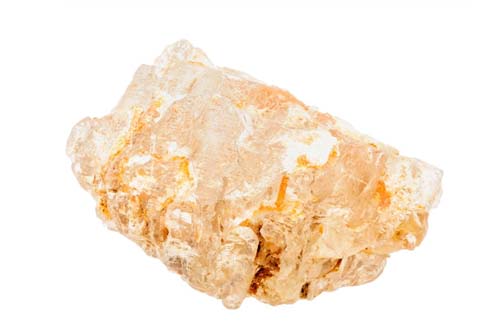
Distribution of Lithium Ore
Chile, China, and Argentina all have rich lithium reserves, but the Salar de Uyuni in Bolivia, South America, eclipses them. According to the US Geological Survey, the lithium reserves under the Uyuni salt marsh are staggering, accounting for almost half of the world’s lithium. If the lithium mine resources are fully developed, Bolivia, a poor South American country, will rival the Middle East giant Saudi Arabia.
Lithium Development Prospects
From the perspective of the changes in the various uses of lithium in recent years, the battery has become the largest application field in terms of the growth rate of lithium in other fields. At present, the global demand for lithium carbonate is around 140,000 tons. It is expected that the global demand for lithium carbonate will maintain an average annual growth rate of 15% to 20%, driven by the growth in demand for global consumer electronics and new energy vehicles. The annual consumption will reach more than 300,000 tons, and the proportion of new energy vehicles to lithium carbonate will increase from 9.7% in 2012 to 37.8% in 2018.
Jika kendaraan energi baru global, terutama kendaraan listrik murni yang diwakili oleh Tesla AS, tumbuh lebih cepat, permintaan global untuk litium karbonat akan mencapai 350.000 ton pada tahun 2010. Sedangkan untuk pasokan litium karbonat, akan ada kesenjangan dalam pasokan dan permintaan litium karbonat global pada tahun 2019.
5 Most Useful Lithium Ore Beneficiation Methods
1. Hand Sorting: The Original Technique
Hand sorting is a separation method based on the difference in color and appearance between lithium minerals and gangue minerals. The selective particle size is generally 10 to 25 mm, and the determination of the lower limit of the particle size depends on economic benefits. Hand sorting method is the earliest method dari pengolahan mineral used in the history of lithium mine production. In addition to spodumene, the hand selection is also used to pick lithium concentrates from lithionite, petalite, and amblygonite.
Metode pemilihan dengan tangan umumnya telah digantikan oleh flotasi atau metode lain karena intensitas tenaga kerja yang tinggi, efisiensi produksi yang rendah, dan pemborosan sumber daya yang besar.
2. Flotation: The Dominant Industrial Method
In the 1930s, flotation was applied to the industrial production of spodumene concentrate. There are two flotation processes of spodumene: one is positive flotation, and the other is reverse flotation.
- The positive flotation, which is the preferential flotation of spodumene. The working principle: ground fine ore in an alkaline medium formed by sodium hydroxide or sodium carbonate, after high concentration, strong agitation, and multiple washing and de-sludge, the fatty acid or its soap is added as a collector to directly float the spodumene.
- The reverse flotation process is to inhibit the spodumene in a lime-adjusted alkaline medium with dextrin and starch as a regulator, and use a cationic collector to float the silicate-like gangue mineral as a foam, and the product in the tank is a spodumene concentrate.
Spodumene Flotation Methods Comparison Table
| Fitur | Positive Flotation (Direct) | Reverse Flotation |
|---|---|---|
| pH Environment | Alkaline (NaOH/Na₂CO₃) | Natural or slightly alkaline |
| Target Minerals | Collects spodumene | Collects silicate gangue |
| Jenis Kolektor | Fatty acids (oleate, linoleate) | Cationic (amines) |
| Depressants | – | Dextrin/starch for spodumene |
| Froth Product | Spodumene concentrate | Silicate waste |
| Tank Product | Silicate tailings | Spodumene concentrate |
| Pre-treatment | Intensive washing/desliming required | Less washing needed |
| Selectivity | Sedang | Higher |
| Reagent Cost | Lower (fatty acids) | Higher (specialized reagents) |
| Common Use Cases | Simple ore compositions | Complex silicate-rich ores |
Hand selection and flotation are the main methods for selecting spodumene. Other methods, such as thermal cracking, magnetic separation, and gravity separation, play an auxiliary role in the production of spodumene concentrate.
3. Thermal Cracking: Heat-Driven Liberation
Prinsip kerja: When the natural spodumene is about 1100 °C, its crystals change from α type to β type, and at the same time, the volume expands and easily breaks into powder. Through grinding and screening, producers can achieve separation of spodumene and gangue minerals.
Best for:
- Coarse-grained deposits
- Low-operating-cost scenarios
4. Heavy Medium Separation (HMS)
Since the difference in density between spodumene and associated gangue minerals is not large, gravity separation methods such as jigging, spiral beneficiation, and shaker beneficiation are not suitable for the process of spodumene ore. However, heavy medium separation or heavy liquid beneficiation is an effective method for spodumene ore.
How it works:
- Uses ferrosilicon suspension to create a dense medium
- Separates particles by density differential (spodumene: 3.1-3.2 g/cm³)
Proven at:
- South Dakota lithium operations
- North Carolina mineral processing plants
Advantage: Lower chemical consumption vs flotation
5. Magnetic Separation: The Iron Solution
Magnetic separation is often used as an auxiliary method to improve the concentrate quality of spodumene. For example, the spodumene concentrate produced by the flotation of North Carolina, USA, is high in iron and can only be sold as a chemical-grade concentrate. In order to meet the requirements of the ceramic industry, the plant uses magnetic separation to remove iron. In addition, since iron-lithium mica has weak magnetic properties, magnetic separation can be used as the main method for producing iron-lithium mica concentrate.
Future Outlook & Equipment Guide
Lithium ore beneficiation equipment includes crushers, ball mills, jigs, flotation machines, etc., as well as some auxiliary equipment to form a complete production line. The modern plants combine multiple methods:
Typical Production Line: Crusher → Ball Mill → Sel Flotasi → Pemisah Magnetik → Concentrate Dryer
Emerging Innovations:
- Sensor-based automated sorting
- Solvent extraction for brine deposits
For specific ore testing and customized solutions, consult our mineral processing experts.
PRODUK TERBARU
-

Inclined Vibrating Screen
The inclined vibrating screen is a simple and eff…
-
High Temperature & Pressure Gold Desorption Electrolysis System
High-Temperature & Pressure Gold Desorption Elect…
-
Normal Temperature & Pressure Gold Desorption Electrolysis System
The normal temperature & pressure gold desorption…


BERITA TERBARU
- Modern Cyanide Residue Treatment Technologies for Gold Processing
- Traditional De-cyanidation Technologies for Gold Cyanide Residues
- Shaking Table, 3-Disc Dry Magnetic & Electrostatic Separator for W-Sn-Ta-Nb
- Mineral Analysis: The Foundation for Successful Mineral Processing Projects
- What Is Over-Grinding and How Can It Be Prevented?
 English
  French
  Spanish
  Portuguese
  Indonesian