



Globally, 10 billion tons of construction waste are generated annually, with concrete accounting for nearly 40%. If recycled properly, this material could create a $300 billion global market. Countries worldwide are racing to transform this environmental burden into economic opportunity.
Concrete blocks can indeed be processed into high-quality aggregate and artificial sand. Through crushing, screening, and shaping processes, recycled aggregates meeting international standards like EN 12620 (EU) and ASTM C33 (US) can be produced. German studies show recycled concrete achieves compressive strength of 25-45MPa, suitable for most construction applications, while reducing carbon emissions by up to 30%.
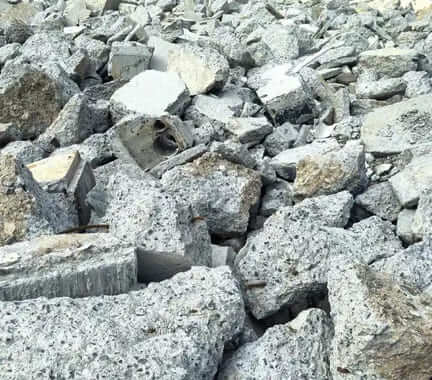
Can Concrete Blocks Really Be Processed into Aggregate and Artificial Sand?
Many still see demolition debris as worthless waste, but global innovators prove otherwise.
Advanced recycling technologies now produce three market-ready products: 5-31.5mm recycled aggregate (water absorption ≤6%), 0-5mm artificial sand (fineness modulus 2.5-3.0), and blended aggregates. Japan leads with 96% concrete recycling rates, while the Netherlands transforms 90% of demolition waste.
Global Standards Comparison
| Parameter | EU Standard | US Standard | Japanese Standard |
| Kepadatan | ≥2000kg/m³ | ≥2200kg/m³ | ≥2100kg/m³ |
| Chlorides | ≤0.1% | ≤0.15% | ≤0.08% |
| Sulphates | ≤0.8% | ≤1.0% | ≤0.5% |
How Does Concrete Recycling Work Globally?
Processing concrete waste isn’t just crushing – it’s sophisticated material science applied worldwide.
International best practices include:
- Primer penghancur rahang (feed size ≤1m).
- Electromagnetic separators for rebar recovery.
- Impact/cone crushers for secondary reduction.
- Air classifiers remove lightweight contaminants.
- Vertical shaft impactors for sand production.
- Canadian facilities achieve processing costs of $10-18/ton.
Australia’s model recycling plant features:
Pre-treatment Zone
- Hydraulic pulverizers (400-800 ton/hr)
- Robotic sorting arms
- Eddy current separators
Processing Core
- Metso Lokotrack mobile units
- Multideck screens (5 fractions)
- Tertiary crushing with Barmac VSI
Environmental Controls
- Baghouse filters (emission <5mg/m³)
- Water recycling systems
- AI-powered quality monitoring
Process of Converting Concrete Blocks into Crushed Stone and Manufactured Sand
Processing cement blocks into crushed stone and manufactured sand hinges on three core steps: “crushing – screening – purification.” This technology is mature, environmentally sound, and control lable:
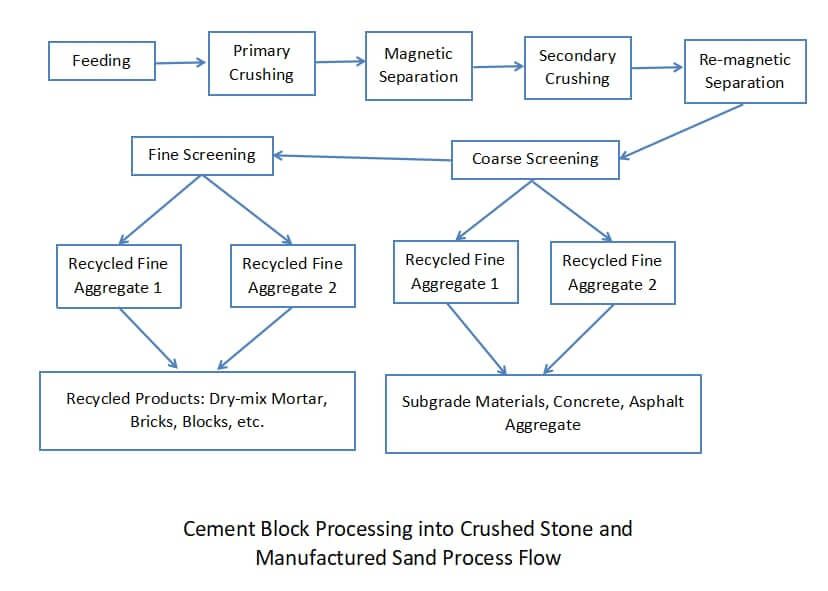
Raw Material Pre-treatment: First, sort out impurities like rebar and plastic from the cement blocks to ensure raw material purity (impurity content must be ≤3%), preventing quality issues in the final product.
Graded Crushing: Large concrete blocks undergo primary crushing in jaw crushers (to medium particle size), followed by secondary/tertiary crushing in cone or penghancur dampak to produce uniform particles.
Sand Making & Shaping: Finely crushed particles enter impact sand makers, where “stone-on-stone” or “stone-on-iron” processes grind them into rounded sand grains, improving particle shape and gradation.
Screening and Grading: High-frequency vibrating screens classify materials by particle size, separating compliant aggregate (10-31.5mm) and manufactured sand (0.15-5mm). Non-compliant particles are returned to the sand maker for reprocessing, forming a closed-loop system.
Environmental Purification: Optional sand washers remove silt and stone powder (silt content ≤2.5%). Integrated baghouse dust collectors (dust emissions ≤10mg/m³) and wastewater recycling systems (reuse rate ≥90%) ensure fully green production throughout.
Why Is Concrete Recycling Taking Off Worldwide?
Beyond environmental benefits, powerful economic drivers fuel global adoption.
Three converging trends:
- EU’s Circular Economy Package mandates 70% C&D waste recycling by
- Natural aggregate prices have doubled since 2015.
- AI sorting achieves 99% purity. Singapore offers 30% tax rebates for recycling plants, while Scandinavia bans landfill dumping.
Regional Market Snapshots
| Region | Key Policy | Recycling Rate | Price Premium |
| Western Europe | Landfill taxes >€100/t | 75-90% | 15-20% |
| Amerika Utara | LEED certification | 50-70% | 10-15% |
| Middle East | Green building codes | 30-50% | 25-30% |
What Are the Global Pitfalls in Concrete Recycling?
Exciting opportunities come with internationally shared challenges.
Common mistakes: 1) Assuming all concrete is equal (porosity varies 5-20%), 2) Overlooking local regulations (EU requires 19 permits), 3) Wrong scale selection (US favors 500t/hr plants), 4) Ignoring logistics (optimal radius <80km), 5) Undervaluing quality control (UK mandates 157 tests).
Global Case Studies Reveal
Material Challenges
- Contaminated demolition waste (UK case)
- Seasonal moisture variations (Canadian experience)
- Unknown original mix designs (Australian findings)
Technical Missteps
- Insufficient liberation crushing (German research)
- Oversized final products (Brazilian market rejection)
- Inconsistent gradation (US DOT rejection cases)
Market Misalignment
- Overestimating government demand (Indian projects)
- Undercutting natural aggregate prices (South African lesson)
- Ignoring export potential (Dutch success model)
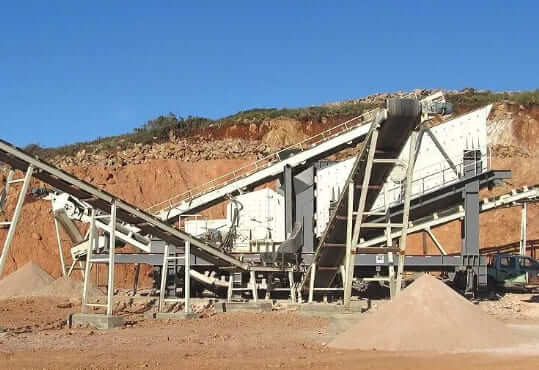
Common Misconceptions about Cement Block Recycling
Avoid these 3 misconceptions for a smoother cement block recycling process:
Misconception 1: “Cement blocks are waste, so just crush them randomly.”
Choose cement blocks that are free of pollutants and meet strength standards (≥C30). Otherwise, the crushing value of the finished product will exceed the standard (qualified recycled aggregate crushing value ≤18%).
Misconception 2: “Processing will pollute the environment”
Modern production lines use enclosed workshops + spray dust suppression + sound insulation facilities. Dust emissions are ≤5mg/m², and noise is ≤75dB(A), fully complying with environmental standards.
Misconception 3: “The finished product quality is poor, and it can’t be used in high-end projects.”
Recycled manufactured sand has a uniform particle shape and reasonable gradation, and the stone powder content can be precisely controlled. It can be used to prepare C30 and above concrete. A cement-stabilized layer made with recycled aggregate in one project achieved a 7-day compressive strength of 3.5MPa, meeting design requirements.
Who Participates in The Cement Block Reprocessing?
Demolition waste piles worldwide contain hidden fortunes. As natural aggregate supplies dwindle and landfill costs soar, recycled concrete processing presents profitable opportunities across five key sectors.
Six ideal candidates for concrete recycling ventures are: demolition contractors (already handling material streams), construction firms (seeking cost savings), waste management companies (with logistics networks), environmental startups (leveraging green incentives), equipment manufacturers (offering turnkey solutions), and investors (backing circular economy models). In Germany, over 60% of recycling plants are operated by mid-sized demolition firms.
Demolition Contractors: The First Link in the Chain
Your demolition projects generate the raw materials others want to buy.
Contractors possess three unbeatable advantages: 1) Direct access to clean concrete waste streams, 2) Existing heavy equipment for initial crushing, 3) Established relationships with municipalities. A Toronto demolition company increased profits 40% by adding onsite processing before hauling.
Value-Added Services Contractors Can Offer
| Layanan | Equipment Needed | Profit Margin |
| Onsite crushing | Mobile crusher | $15-25/ton |
| Clean fill production | Screening plant | $8-12/ton |
| Selective demolition | Hydraulic pulverizers | 30-50% premium |
Construction Companies: Closing the Loop
Why buy aggregates when your sites produce them?
Forward-thinking builders establish captive recycling operations to: 1) Secure material supply chains, 2) Achieve LEED/ BREEAM certification points, 3) Reduce project costs by 10-15%. Swedish construction giant Skanska operates 12 recycling plants feeding its own projects.
Waste Management Firms: Expanding Their Portfolio
Your landfill alternatives just became profit centers.
Strategic advantages include: 1) Existing collection infrastructure, 2) Knowledge of local regulations, 3) Established customer bases. A Brazilian waste company tripled recycling revenues by converting transfer stations to sorting hubs.
Equipment Manufacturers: Selling Solutions Not Just Machines
Your clients need complete material processing ecosystems.
Differentiate through: 1) Performance-guaranteed plant designs, 2) Mobile configurations for urban sites, 3) AI-powered quality control systems. Finnish manufacturer Metso outperformed competitors by offering throughput warranties.
Investors & Entrepreneurs: Funding the Circular Economy
The next waste management unicorns won’t manage waste – they’ll eliminate it.
Emerging opportunities include: 1) Urban micro-recycling plants, 2) Recycled concrete R&D startups, 3) Digital material marketplaces. A London VC fund exclusively backs construction tech startups reducing material footprints.
Kesimpulan
Global concrete recycling presents a $300 billion opportunity addressing both environmental crises and material shortages. Success requires adapting international best practices to local conditions while meeting evolving regulatory landscapes. The future belongs to circular economies where every demolished building becomes a raw material mine.
PRODUK TERBARU
-

Inclined Vibrating Screen
The inclined vibrating screen is a simple and eff…
-
High Temperature & Pressure Gold Desorption Electrolysis System
High-Temperature & Pressure Gold Desorption Elect…
-
Normal Temperature & Pressure Gold Desorption Electrolysis System
The normal temperature & pressure gold desorption…


BERITA TERBARU
- Modern Cyanide Residue Treatment Technologies for Gold Processing
- Traditional De-cyanidation Technologies for Gold Cyanide Residues
- Shaking Table, 3-Disc Dry Magnetic & Electrostatic Separator for W-Sn-Ta-Nb
- Mineral Analysis: The Foundation for Successful Mineral Processing Projects
- What Is Over-Grinding and How Can It Be Prevented?
 English
  French
  Spanish
  Portuguese
  Indonesian