A hydrocyclone is one of the most widely used pieces of equipment for slurry classification and solid-liquid separation in the mining and mineral processing industries. It operates on the principle of centrifugal sedimentation. When a slurry enters the cyclone tangentially under pressure, it forms a high-speed swirling flow. Because particles differ in size, density, and mass, they experience different centrifugal and drag forces. Coarser and heavier particles move toward the cyclone wall and leave through the underflow, while finer and lighter particles migrate to the center and exit through the overflow. This simple yet efficient process enables hydrocyclones to achieve high-performance classification and separation.
Hydrocyclones can be classified by their applications and structural designs. Based on their position in the grinding circuit, they are divided into first-stage grading cyclones dan second-stage grading cyclones. Based on their functions, they include classification, dewatering, desliming, desanding (slag removal), concentration, and special hydrocyclones for tailings dry discharge.
1. Fold a Segment of Grading Cyclone
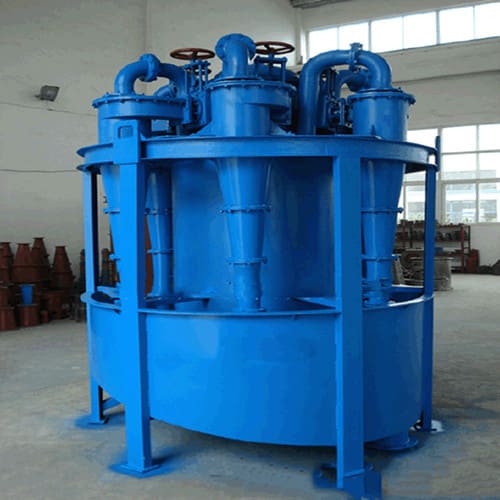
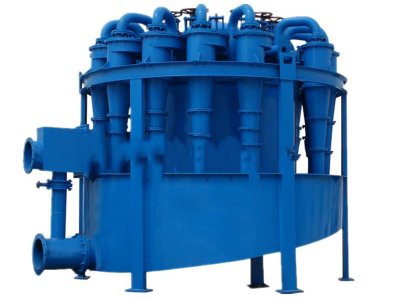
The folded-segment grading cyclone(first-stage classification cyclone) is widely used in various metal ores and non-metallic ore dressing plants with a daily processing capacity of more than 500 tons and forms a closed-circuit grinding and classification cycle with the first-stage ball mill. Cyclones can be arranged individually or in groups according to different processing capacities. In the case of higher ore feeding concentration, it has higher classification efficiency and finer overflow fineness; the overflow product is evenly promoted, and the separation efficiency is 5-10% higher than that of the commonly used spiral classifier, which is beneficial to the mill. The utilization factor is improved.
2. Folding Two-stage Classification Cyclone
The folding two-stage classification cyclone(second-stage classification cyclone) banyak digunakan dalam pemeriksaan tahap kedua berbagai bijih logam dan bijih non-logam untuk mengontrol klasifikasi. Spesifikasi siklon berkisar dari 75mm hingga 660mm, yang dapat diterapkan pada pabrik dengan kapasitas pemrosesan yang berbeda dan persyaratan yang berbeda untuk kehalusan penggilingan. Siklon ini mengadopsi desain struktur yang unik sehingga kehalusan luapan siklon tahap kedua dapat dipilih dan disesuaikan secara sewenang-wenang dari -200 mesh 75% hingga 95%.
3. Folding Dehydration Cyclone
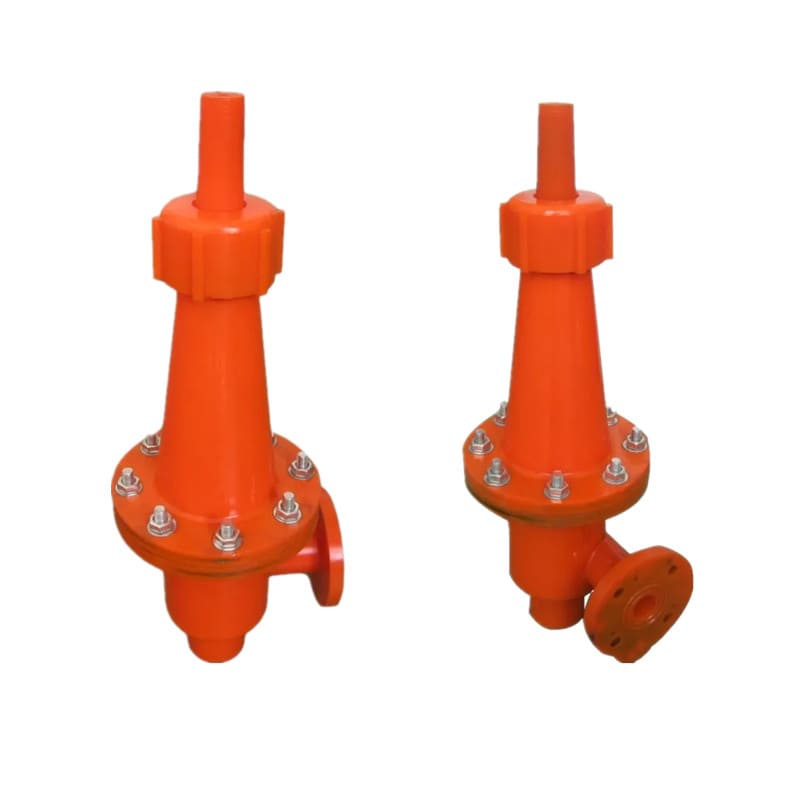
The folding dehydration cyclones(dewatering cyclones) terutama digunakan untuk pengeringan berbagai bubur mineral. Menurut karakteristik material yang berbeda dan produk serta lingkungan pemasangan yang berbeda, desain struktural yang berbeda diadopsi, yang memiliki keunggulan pengurangan tekanan, kapasitas pemrosesan yang besar, dan efisiensi pengeringan yang tinggi. Ini diterapkan pada operasi pemilihan ulang tailing, pembuatan pulp, dan pengeringan tertentu. Di bawah kondisi konsentrasi pengumpanan bijih adalah 5-12% dan kandungan -200 mesh adalah 75%, konsentrasi rata-rata luapan siklon dikontrol di bawah 1,5%. Dalam kasus tujuan dehidrasi, hilangnya mineral yang berguna dapat dihindari. Dalam penerapan operasi pengurasan pasir silika tertentu, konsentrasi luapan siklon pengurasan mencapai di bawah 0,5%, dan luapan tersebut hampir merupakan lumpur halus yang tidak memenuhi syarat, yang mencapai efek ganda pengeringan dan pengurangan ukuran. Setelah penyelesaian, dapat digunakan kembali untuk menghemat biaya.
4. Folding Desliming Cyclone
The siklon desliming efisiensi tinggi is mainly used for desliming of various metal ores and non-metallic slurries. The high-efficiency desliming cyclone is based on absorbing foreign excellent results, and after several years of practice, the proportion and coordination of the main components of the high-efficiency desliming cyclone are determined, and the designed and produced high-efficiency desliming cyclone has a desliming efficiency. High, with less loss of useful minerals, saving user costs and improving production efficiency. Case: The discarded tailings of a silica sand mine accounted for 12.7% of the muddy minerals, the fineness of -325 mesh accounted for 39.3%, and almost all of the muddy minerals were stored in the -325 mesh level.
5. Folding Slag Cyclone
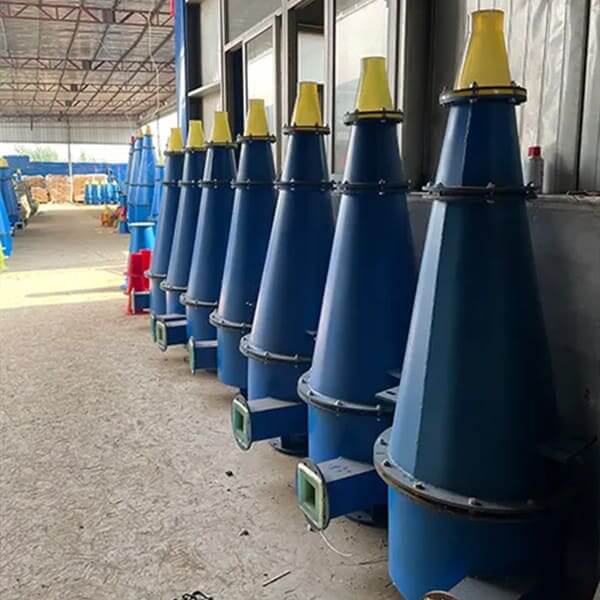
The siklon terak is used in wet desulfurization in power plants, lime pulping, crude oil slag removal, tap water sand removal, sewage treatment, and other operations. It can effectively remove coarse sand, metal, and other particulate debris in the slurry, with high slag removal efficiency and minimal loss of useful slurry.
6. Siklon Konsentrator Lipat
Siklon konsentrasi efisiensi tinggi are often used in conjunction with
thickeners,
filter, etc., and are used for concentration before filtration of various minerals, mineral fine-grinding flotation, gold pulp cyanidation, etc. In conveying and other operations, the concentration of pulp is realized. After the concentration and dehydration of the cyclone, the increase in the underflow concentration creates good conditions for the dewatering screen operation, which can greatly increase the dewatering screen production capacity, and the reduction in the overflow concentration can effectively reduce the load of the thickener. With a unique structural design, it is widely used in various concentrators. In iron ore, even if the ore feeding concentration is about 8%, the underflow concentration can still be maintained above 70%, and the yield is above 75%.
Hydrocyclones are indispensable equipment in modern mineral processing because of their simple structure, high efficiency, and low operating cost. Different hydrocyclone designs are optimized for different tasks, including classification, dewatering, desliming, desanding, and pulp concentration. Selecting the appropriate hydrocyclone according to the characteristics of the slurry and the processing objective can significantly improve separation efficiency, reduce energy consumption, and enhance the overall performance of the processing plant. Understanding the strengths and applications of each hydrocyclone type is therefore essential for maximizing productivity and achieving stable, cost-effective mineral processing operations.






 English
  French
  Spanish
  Portuguese
  Indonesian