



Introduction: The High Stakes of RODL
In mineral processing, the terms Run, Overflow, Drip, Leak (RODL) might sound like minor operational nuisances—but in reality, they signify systemic inefficiencies that drain profitability and destabilize production. These issues aren’t just about slurry on the floor or dripping pipes; they represent cascading failures in material flow, energy waste, and lost metal recovery.
For plant managers, ignoring RODL means tolerating:
- Financial bleed: Millions lost annually through unrecovered metals, wasted reagents, and degraded equipment.
- Process instability: Uncontrolled slurry crossflows, misclassified particles, and erratic dosing disrupt optimization efforts.
- Safety & sustainability risks: Spills increase workplace hazards, while water/chemical leaks escalate environmental liabilities.
This breakdown examines RODL’s four dimensions—Run, Overflow, Drip, Leak—and exposes the 10 critical details that silently sabotage your plant’s performance.
“Run, Overflow, Drip, Leak”: Far More Than Just Physical Leakage
Dalam mineral processing plants, “Run, Overflow, Drip, dan Leak” (RODL) goes far beyond its literal meaning—it represents a systemic issue encompassing material flow, value stream, dan cost flow disruptions. These issues directly impact production efficiency, cost control, and workplace safety. We can precisely deconstruct it into four dimensions:
1. Run— Value Loss
Core Manifestation: Loss of metals/concentrates. This represents the most critical and highest-value loss within “runaway, leakage, and waste.” It primarily manifests as:
- Coarse/high-grade tailings discharge: Improper grinding size, misaligned flotation/magnetic separation parameters, unstable reagent systems, or inefficient equipment cause recoverable minerals to be discharged with tailings, lowering recovery rates. For a mine with annual output worth hundreds of millions, every 0.5% drop in recovery translates to millions in tangible losses.
- Concentrate grade deviation: Inefficient classification, unstable froth layers, or severe entrainment allow excessive gangue minerals into the concentrate, resulting in substandard grades. This not only impacts selling prices but may also trigger downgrading or rejection of entire batches, causing substantial economic losses and damage to brand reputation.
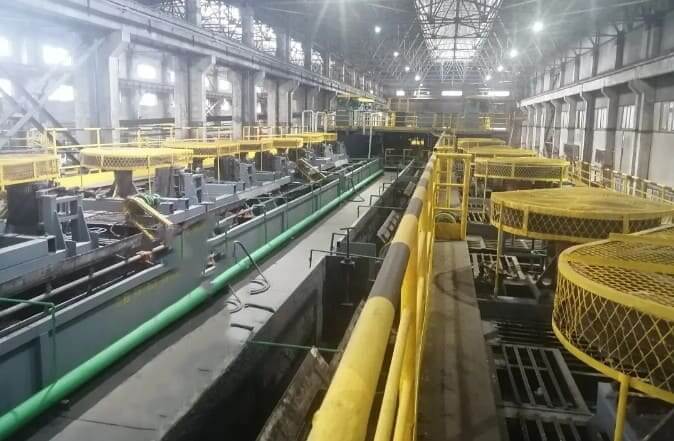
2. Overflow—Process Disruption
Core Manifestation: Abnormal material spillage and cross-flow. This directly undermines process stability.
- Slurry overflow from tanks/vessels: Caused by mismatched pump head/flow rates, pipeline blockages, or failed liquid level control, leading to slurry spillage from flotation tanks, agitation tanks, or classifiers. This not only causes direct material loss but also pollutes the site environment, creates safety hazards, and often requires reprocessing of spilled slurry, increasing energy consumption.
- Topan “Coarse/Fine Overflow“: Wear on the sand discharge nozzle or overflow pipe, coupled with fluctuations in feed pressure, leads to abnormal classification. Coarse particles entering subsequent grinding or flotation stages reduce grinding efficiency and recovery rates; fine slime entering roughing stages disrupts flotation processes and increases reagent consumption.
- Layar “pitching holes“: Damaged or clogged screens allow non-compliant particle sizes to pass to subsequent stages, triggering chain reactions—a classic example of “one faulty screw breaking an entire machine.”
3. Drip—Waste of Resources
Core Manifestation: Continuous, minute losses of media (water, electricity, chemicals, oil).
- Water dripping: Leaks from pipes and valves throughout the plant. A seemingly insignificant dripping faucet can waste tons of fresh water annually. In today’s era of increasingly scarce water resources, this represents both a cost issue and an environmental problem. Additionally, excess water unnecessarily dilutes slurry concentration, affecting process parameters.
- Chemical Leakage: Drips from chemical pipelines and dosing pumps. Mineral processing chemicals like xanthates, black liquor, and frothers are costly. Even minor leaks accumulate into significant direct expenses. More critically, they disrupt chemical dosing systems, directly impairing flotation efficiency and causing environmental pollution.
- Oil Leakage: Seepage of lubricating oil or hydraulic fluid from equipment like gearboxes, motors, and pumps. This not only wastes oil but also serves as a critical warning sign of impending equipment failure, potentially leading to major incidents such as bearing burnout or equipment shutdown.
4. Leakage—Material Loss
Core Manifestation: Physical leakage of dry ore or slurry.
- Leaking ore/slurry: Material spillage from konveyor sabuk, pipe abrasion, pump seal failure, flange gasket deterioration, etc. Recovering and cleaning up these leaks requires manual labor or equipment, increasing labor intensity and operational costs. Leaked slurry also corrodes equipment foundations and steel structures, shortening the lifespan of facilities and machinery, resulting in long-term asset depreciation.
For mineral processing plants, “Run–Overflow- Drip– Leak” (RODL) isn’t just about slurry pooling on the floor (visible losses). It represents systemic inefficiencies—wasted reagents, idle energy consumption, metal loss, and escaped equipment efficiency (invisible losses).
10 Critical Details in On-Site Management of Mineral Processing Plants
Here are 10 often-overlooked yet critical details that silently erode process performance and profitability:
Ⅰ Visible “Run-Leak”: Physical Losses & Environmental Risks
1. Slurry Pump Seal Water Failure
Problem
- Seal water pressure too high → dilutes slurry inside the pump.
- Seal failure → slurry leaks along the shaft.
Consequences
- Dilution: Excess water disrupts flotation density/reagent balance, crushing recovery.
- Wear: Slurry infiltrates seals, accelerating bearing failure → unplanned downtime.
Fix
- Optimize seal pressure (+0.5–1 kg vs. discharge pressure).
- Upgrade to mechanical sealsatau expeller seals—stop trading “water for ore.”
2. Turbulent Wear in Chutes & Pipes
Problem: Poor chute angles/pipe misalignment → slurry splashing → localized erosion.
Consequences: Every spilled drop = lost metal. Worse, cleanup flushes in excess water → process imbalances.
Fix
- Redesign with wear-resistant ceramic/rubber liners.
- Install buffer hoppersat transfer points—convert “hard impact” to “soft landing.”
3. Belt Conveyor Spillage & Dust
Problem: Carryback on return rollers → dusty transfer points.
Consequences
- Dust = high-grade, liberated fines—literally throwing money away.
- Dust kills bearings → early motor failures.
Fix
- Install polyurethane scrapers + dry fog dust suppression.
- Seal transfer points—keep “powdered gold” in the system.
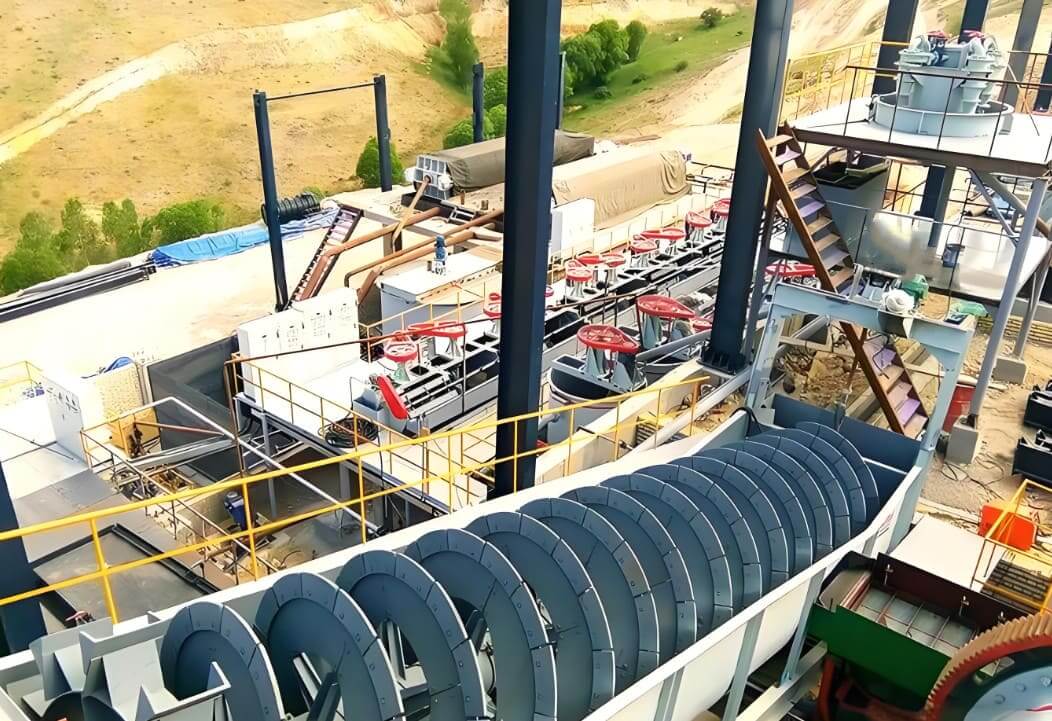
Ⅱ Hidden “Drip-Loss”: Process Inefficiencies
4. Reagent Dosing Inconsistencies
Problem: Manual valves/cup feeders → erratic dosage, lagging ore flow changes.
Consequences
- Under-dosing: Metal escapes to tails.
- Over-dosing: Wastes reagents + contaminates water loops → process instability.
Fix: Switch to automated dosing pumps synced with feed tonnage/grade.
5. “Dead” Grinding Media
Problem: Blindly adding balls without removing deformed/worn ones.
Consequences: Broken balls occupy space but don’t grind → higher energy use + overgrinding.
Fix
- Schedule ball screening during shutdowns.
- Adjust the size distribution based on linear wear.
6. Cyclone Apex Blindness
Problem: Worn apex → misclassified coarse/fines.
Consequences: Just 1mm wear = 5% efficiency drop. Coarse slips to overflow (clogging pipes); fines recirculate (overgrinding).
Fix
- Daily spigot discharge checks.
- Gunakan silicon carbide apexes+ monitor overflow P80.
7. Unstable Level Control
Problem: Erratic flotation cell levels → inconsistent froth depth.
Consequences:
- High level: Gangue mechanically entrapped → low-grade concentrate.
- Low level: Bubble collapse → valuable minerals report to tails.
Fix: Maintain ultrasonic sensors + optimize PID loops—no “manual guesswork.”
Ⅲ Decision Blind Spots: Data Gaps & Management Flaws
8. Non-Representative Sampling
Problem: Clogged pipes/sporadic manual sampling (e.g., top-layer bias).
Consequences: “Data lies”: Overestimated head grade masks poor recovery; underestimated tails breed complacency.
Fix: Deploy online XRF analyzers + calibrate cross-stream samplers.
9. Metal Balance Discrepancies
Problem: Huge gaps between theoretical vs. actual recovery (“unaccounted losses”).
Consequences: Undetected major leaks or faulty belt scales/flow meters.
Fix
- Audit “three recoveries”(head/tails/concentrate).
- Trace “mystery losses” in balance sheets.
10. Recycled Water Poisoning
Problem: Blindly reusing untreated process water.
Consequences: Accumulated Ca²⁺/Mg²⁺/residual reagents poison mineral surfaces → flotation collapse.
Fix
- Segregate water circuits: Freshwater for cleaning, recycled for grinding.
- Monitor water chemistry—install ion-exchange if needed.
Conclusion: Turning RODL Awareness into Action
RODL isn’t inevitable. It’s a symptom of operational gaps that, when addressed, unlock significant cost savings and efficiency gains.
Key Takeaways
- Prevent “Run”: Optimize recovery rates with real-time slurry monitoring and sharpened classification.
- Control “Overflow”: Upgrade sealing systems, automate level controls, and eliminate turbulence hotspots.
- Stop “Drip”: Switch to smart dosing, mechanical seals, and predictive maintenance for water/chemical/oil lines.
- Plug “Leak”: Redesign transfer points with wear-resistant materials and enforce metal-balance audits.
The battle against RODL isn’t about chasing spills with mops—it’s about engineering out inefficiencies at the source. Plants that institutionalize these fixes don’t just reduce waste; they outcompete those still ignoring the drips.
PRODUK TERBARU
-

Inclined Vibrating Screen
The inclined vibrating screen is a simple and eff…
-
High Temperature & Pressure Gold Desorption Electrolysis System
High-Temperature & Pressure Gold Desorption Elect…
-
Normal Temperature & Pressure Gold Desorption Electrolysis System
The normal temperature & pressure gold desorption…


BERITA TERBARU
- Modern Cyanide Residue Treatment Technologies for Gold Processing
- Traditional De-cyanidation Technologies for Gold Cyanide Residues
- Shaking Table, 3-Disc Dry Magnetic & Electrostatic Separator for W-Sn-Ta-Nb
- Mineral Analysis: The Foundation for Successful Mineral Processing Projects
- What Is Over-Grinding and How Can It Be Prevented?
 English
  French
  Spanish
  Portuguese
  Indonesian