



Gold smelting, a centuries-old practice, faces a pivotal moment as traditional furnace materials reach their technical limits. With modern metallurgy demanding higher temperatures, faster cycles, and greener processes, refractory bricks and graphite crucibles—long the industry staples—are proving inadequate. This article explores the limitations of conventional materials and how cutting-edge composites, nano-coatings, and alloys are unlocking unprecedented efficiency, durability, and sustainability in gold smelting operations worldwide.
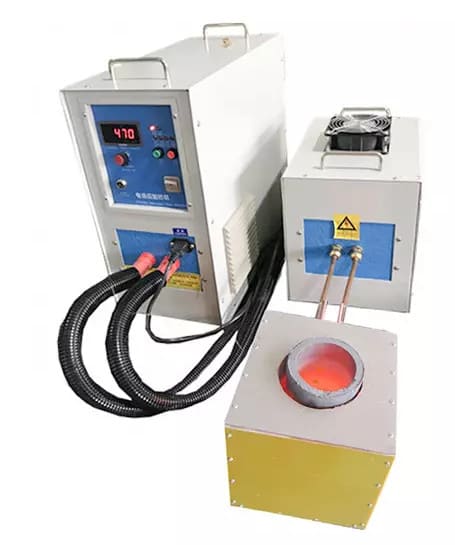
Traditional Materials for Gold-Melting Furnaces
Classification of Traditional Materials
Refractory Materials
- Fireclay Bricks: Made primarily from clay, these are cost-effective and resistant to thermal shock, but have limited high-temperature resistance (~1300°C).
- High-Alumina Bricks (Al₂O₃ content 50%~70%): Withstand higher temperatures (up to ~1600°C) and exhibit strong chemical resistance, but have poor thermal shock resistance and are prone to cracking.
- Silica Bricks (mainly SiO₂): Resistant to acidic slag, but react with alkaline substances at high temperatures and may spall under rapid temperature changes.
Ceramic Materials
- Silicon Carbide (SiC): High strength, excellent thermal conductivity, and high-temperature resistance (up to 1600°C), but expensive and prone to oxidation (requiring a protective atmosphere).
Metallic Materials
- Cast Iron/Steel Shells: Used for structural support, but susceptible to deformation and oxidation when exposed to high temperatures.
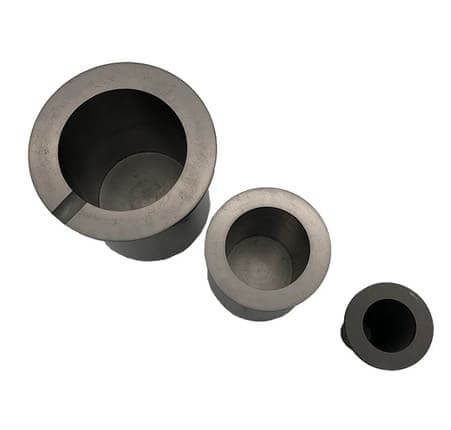
Graphite Crucibles
High temperature resistance (up to 3000°C) and superior heat transfer, but rapidly degrade in oxidizing environments unless protected (e.g., inert gas shielding).
While these traditional materials have formed the backbone of gold-melting furnaces for decades, their limitations become starkly apparent under modern industrial demands.
Key Challenges of The Traditional Materials
Limited High-Temperature Resistance: Conventional refractories (e.g., fireclay bricks) struggle to sustain prolonged exposure beyond 1500°C, reducing furnace lifespan.
Poor Thermal Shock Resistance: Silica or high-alumina bricks crack and spall under frequent thermal cycling, necessitating frequent repairs.
Chemical Attack: Molten metals (e.g., aluminum, copper) or fluxes (e.g., borax) react with refractories, forming low-melting-point compounds that erode the furnace lining.
Oxidation and Degradation: Graphite crucibles rapidly consume in oxidizing conditions, requiring costly protective measures (e.g., nitrogen purging).
Low Energy Efficiency: Materials like fireclay bricks have poor thermal conductivity, leading to significant heat loss and higher energy consumption.
Insuchanical Strength at High Temperatures: Softening under extreme heat makes materials vulnerable to erosion from molten metal or mechanical stress.
These challenges have catalyzed breakthroughs in material science, paving the way for next-generation solutions.
New Materials for Gold-Melting Furnaces
With the advancement of high-temperature metallurgical technologies, the materials traditionally employed in gold-melting furnaces—such as refractory bricks and graphite crucibles—are increasingly revealing numerous limitations. Although graphite materials possess excellent high-temperature resistance, they suffer from vulnerabilities to chemical corrosion and mechanical abrasion, as well as suboptimal thermal conductivity; these issues severely compromise the furnace body’s heating efficiency and service life. To overcome these technical bottlenecks—thereby enhancing smelting efficiency, extending furnace longevity, and reducing energy consumption—the development of novel materials for gold-melting furnaces has emerged as a critical area of research within the industry.
Research Directions in New Materials
To address the performance limitations of traditional gold-melting furnace materials, industry research is currently focused on three core development directions:
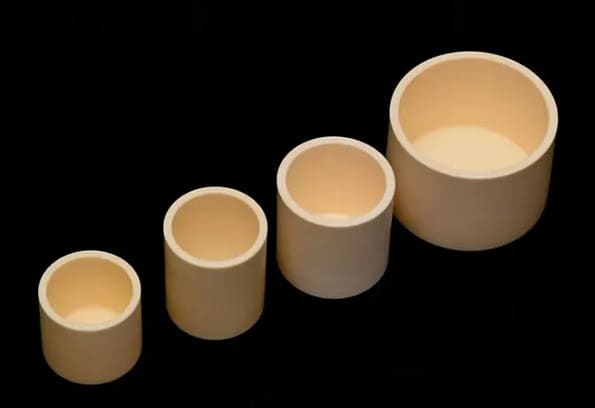
1. Composite Ceramic Materials
Novel ceramic materials, represented by alumina ceramics, have emerged as ideal solutions due to their outstanding chemical stability (resistance to acid/alkali corrosion) and high-temperature stability (>1800°C). By combining multiple oxide ceramics, the material’s mechanical strength and thermal shock resistance can be optimized, making them suitable for furnace linings and thermal insulation layers. In particular, the use of nano-ceramic materials such as zirconia significantly enhances creep resistance and lifespan.
2. Nano-coating Technology
Leveraging the unique surface effects of nanomaterials, nano-coatings are deposited onto conventional substrates through surface modification techniques (e.g., plasma spraying). This innovation preserves the mechanical properties of the base material while imparting superior thermal conductivity (over 40% improvement in heat transfer efficiency) and corrosion resistance. For example, zirconia nano-coatings effectively suppress oxidation-reduction reactions inside the furnace.
3. Specialized Alloy Materials
Research focuses on platinum-group noble metal alloys and composite materials, with refined metallurgical structures that maintain excellent oxidation and sintering resistance under high temperatures (1600–2000°C). These materials are particularly suitable for critical heating components and molten metal contact surfaces.
As these innovations transition from labs to factories, their market impact is becoming undeniable.
Market Response and Application Prospects
The research and development of novel materials have brought significant opportunities and promising prospects to the gold melting furnace industry. The application of these new materials enhances the efficiency and stability of gold melting furnaces, reduces energy consumption, and minimizes environmental pollution within production settings. These advantages serve to lower the operational costs of gold melting furnaces while simultaneously improving safety and product quality throughout the metal smelting process.
In the marketplace, the application of novel materials is garnering increasing attention from enterprises within the gold melting furnace sector. Numerous companies are actively integrating these new materials into their production processes to boost manufacturing efficiency and product quality. Furthermore, the adoption of these novel materials is driving technological innovation and industrial upgrading within the sector, propelling the industry toward a more efficient and sustainable future.
The development of new materials for gold smelting furnaces and market response to these innovations are hot topics in the metal smelting industry. Through the development of ceramic and nanomaterials, the efficiency and stability of gold smelting furnaces have been significantly improved. The application of these new materials has also opened up broad market prospects for the gold smelting furnace industry. In the future, the industry will continue to intensify its efforts in the research and development of new materials, driving sustainable development in the sectors of technology, the environment, and the economy.
Kesimpulan
The gold smelting industry stands at the brink of a materials revolution. While fireclay bricks and graphite crucibles served their purpose historically, emerging technologies like zirconia nano-ceramics and platinum alloys are redefining performance benchmarks. These advancements promise not only extended furnace lifespans and reduced downtime but also align with global sustainability goals through energy savings and lowered emissions. As adoption accelerates, the fusion of material science and metallurgy will continue to push the boundaries of what’s possible in precious metal processing.
PRODUK TERBARU
-

Inclined Vibrating Screen
The inclined vibrating screen is a simple and eff…
-
High Temperature & Pressure Gold Desorption Electrolysis System
High-Temperature & Pressure Gold Desorption Elect…
-
Normal Temperature & Pressure Gold Desorption Electrolysis System
The normal temperature & pressure gold desorption…


BERITA TERBARU
- Modern Cyanide Residue Treatment Technologies for Gold Processing
- Traditional De-cyanidation Technologies for Gold Cyanide Residues
- Shaking Table, 3-Disc Dry Magnetic & Electrostatic Separator for W-Sn-Ta-Nb
- Mineral Analysis: The Foundation for Successful Mineral Processing Projects
- What Is Over-Grinding and How Can It Be Prevented?
 English
  French
  Spanish
  Portuguese
  Indonesian