



The strategic value of gold mine tailings is shifting from an “environmental burden” to a “potential resource trove.” They contain recyclable gold, precious metals, and industrial minerals (such as rare earth elements, copper, and sulfur), alleviating resource scarcity and supply chain risks. They can also promote a circular economy through remediation and reuse (e.g., for photovoltaic power generation and building materials) while meeting environmental compliance requirements. Technological advances (such as biometallurgy and AI-powered sorting) and policy drivers (green finance and resource security strategies) are further amplifying their economic and environmental benefits. In the future, gold mine tailings will become a key component of sustainable mining development and strategic resource reserves. Follow us to understand the gold recovery from tailings, the multi-scale solution, and the selection of the mining equipment.
Extracting Gold From Tailings of Gold Mines of Varying Scales
Core Logic
Gold tailings with 0.2-0.5g/t gold content retain high mining value, but extraction strategies must scale accordingly:
- Small-scale gold mines (annual processing <500,000 tons) prioritize “low cost and ease of operation,” selecting cost-effective equipment to control investment;
- Medium-scale gold mines (500,000–2,000,000 tons) emphasize “efficiency and compliance balance,” requiring a focus on extraction rates and environmental protection equipment;
- Large-scale gold mines (>2,000,000 tons) target “automation and resource recovery,” relying on intelligent systems to coordinate the entire process.
Only by matching equipment to scale can both maximized gold extraction returns and environmental compliance be achieved.
Gold Recovery Technologies
Generally speaking, the primary methods for reprocessing and recovering gold from gold tailings include gravity separation, flotation, cyanide leaching, and biological oxidation.
1. Gravity Separation of Gold Tailings
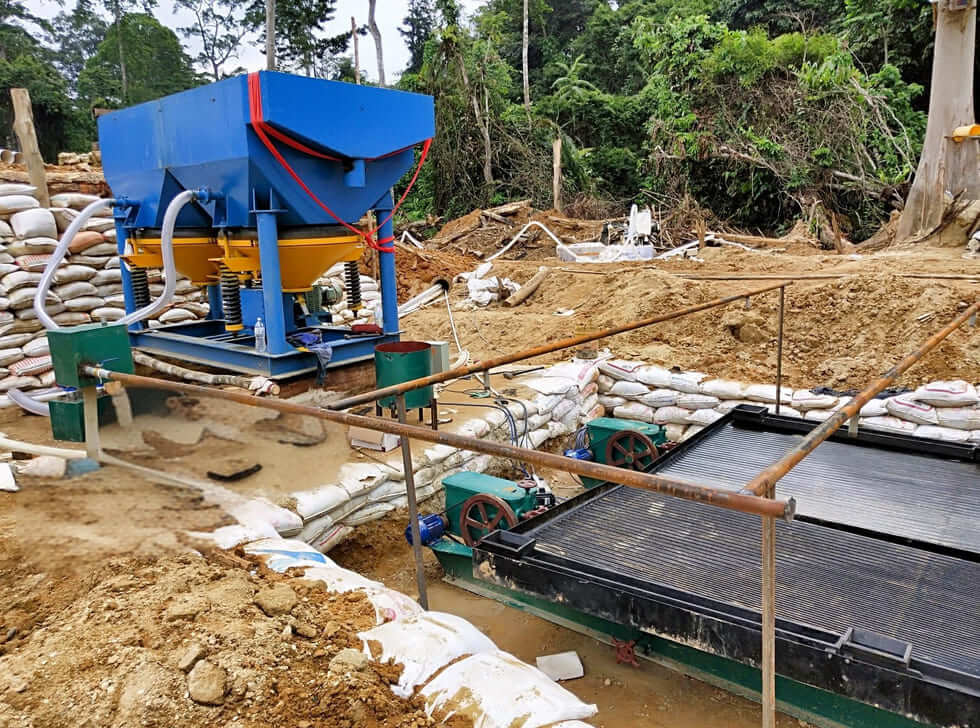
Low-grade gold tailings refer to tailings material that retains a certain amount of gold after conventional gold beneficiation processes, but with relatively low grades. Typically, gold grades between 0.5 g/t and 2 g/t are considered recoverable. As a traditional and effective mineral processing method, gravity separation plays a crucial role in the recovery and reprocessing of low-grade gold tailings. Currently, the primary methods used for gold gravity separation include jigging, shaking table separation, sluice separation, and blanket channel separation.
In some small-scale gold tailings reprocessing plants, sluice reprocessing is widely adopted. However, this method exhibits relatively low separation precision and poor recovery efficiency for fine-grained gold. It is typically employed as a preliminary or pre-selection step, integrated with equipment like jigs and shaking tables to complete the gravity reprocessing and recovery of gold tailings collectively.
2. Gold Tailings Flotation Method
Flotasi is a widely applied technique in gold tailings recovery. It effectively separates valuable minerals from gangue by exploiting differences in their physical and chemical properties. For tailings containing heavy precious metals like gold and silver, even at low concentrations, re-grinding to achieve 60-80% of particles at -200 mesh ensures thorough mineral liberation, thereby enhancing gold recovery rates.
During flotation, roughing, scavenging, and cleaning stages enable effective activation of gold-bearing minerals alongside efficient dispersion and suppression of gangue minerals. Flotasi emas methods are not only suitable for tailings with readily floatable gold minerals but also significantly enhance recovery efficiency through comprehensive optimization and process adjustments, yielding high-quality gold concentrates.
3. Cyanide Leaching of Gold Tailings
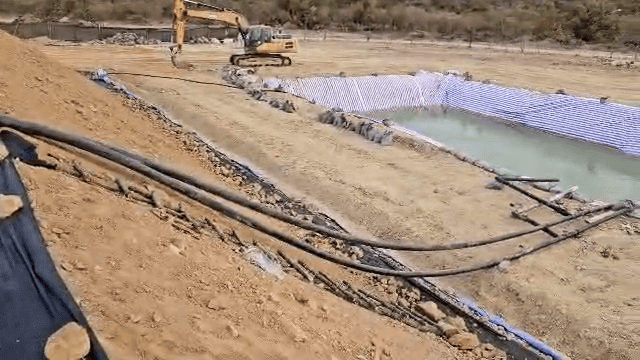
Pencucian sianida serves as a recovery method for gold in tailings when traditional flotation or gravity separation is unsuitable. This technique is effective for fine-grained, well-dissociated gold-bearing tailings. By leveraging the affinity between cyanide and precious metals, gold, silver, and other metals are dissolved from the tailings.
During cyanidation, strict control of cyanide concentration and reaction time is essential to prevent environmental contamination. Additionally, heap leaching can be employed to reduce costs. Cyanide leaching enhances gold recovery rates while ensuring ecological safety, thereby optimizing economic benefits.
4. Biological Oxidation of Gold Tailings
Biological oxidation provides a sustainable and eco-friendly alternative for gold extraction from refractory tailings that resist conventional cyanidation or flotation. This method utilizes naturally occurring bacteria, such as Acidithiobacillus ferrooxidans and Acidithiobacillus thiooxidans, to break down sulfide minerals encapsulating gold particles, exposing them for subsequent cyanide leaching or thiourea extraction.
Key parameters like bacterial activity, pH levels (optimally 1.5–2.5), and aeration must be carefully controlled to ensure efficient sulfide decomposition. Compared to traditional roasting or pressure oxidation, bio-oxidation operates at ambient temperatures and pressures, significantly reducing energy consumption and emissions. This technology enhances gold recovery from recalcitrant ores while minimizing environmental impact, aligning with modern green mining practices.
For further optimization, inert materials can be introduced to improve bacterial adhesion, and intermittent nutrient supplementation may maintain microbial vitality.
List of main methods for gold recovery from gold tailings
| Metode | Aplikasi | Tingkat Pemulihan | JXSC Core Equipment |
| Pemisahan Gravitasi | Liberated gold (>0.074mm) | 60-75% | Konsentrator Knelson |
| Flotasi | Sulfide-encapsulated gold | 75-85% | Mechanical Agitation Flotation Cell |
| Cyanidation | Fine-grained gold (<37μm) | 90-95% | CIP/CIL Adsorption System |
| Bio-Oxidation | Arsenic-bearing refractory tailings | 80-88% | Bio-Reactor |
Scalable Solutions
1. Small-Scale Systems
Annual tailings processing: < 500,000 tons
Core Equipment: Jaw Crusher + High-Frequency Vibrating Screen + Shaking Table (2 units) + Two Adsorption Columns + Acid Leaching Tank + Medium-Frequency Furnace + Ceramic Filter.
Suitability: For low-yield tailings, the shaking table re-selects coarse gold, while the adsorption columns capture fine gold, achieving a recovery rate of up to 60%.
2. Medium-Scale Systems
Annual tailings processing: 500,000-2,000,000 tons
Core Equipment: Jaw crusher + pabrik bola + centrifugal concentrator (two units) + four adsorption columns + acid leaching tank + medium-frequency furnace + ceramic filter + two-stage alkaline chlorination reactor.
Suitability: The ball mill grinds 90% of the ore to -200 mesh. The combined centrifugal and adsorption process achieves a gold extraction rate of 65%-75%. Environmental protection equipment ensures a wastewater recycling rate exceeding 70%.
3. Large-Scale Systems
Annual tailings processing: >2,000,000 tons
Core Equipment: Double-jaw crusher + ball mill + centrifugal concentrator (4 units) + adsorption columns + acid leaching tank + medium-frequency furnace + ceramic filter + automated control system + emergency tank.
Suitability: The automated system coordinates the entire process. The CIL process (simultaneous leaching + adsorption) achieves a leaching rate exceeding 81%, and the dry tailings can be used to make building materials, realizing resource utilization.
Ringkasan
Successful implementation of gold recovery technologies and scalable solutions for tailings has transformed what was once considered an environmental burden into a strategic resource reservoir, driving sustainable development in the mining industry. By leveraging core technologies such as gravity separation, flotation, cyanide leaching, and bio-oxidation—combined with customized equipment configurations tailored to small-, medium-, and large-scale operations—gold recovery rates have been significantly improved (60%-95%).
The adoption of eco-friendly processes like bio-oxidation enhances recovery rates for refractory tailings (80%-88%) while reducing energy consumption and environmental risks, aligning with circular economy objectives. Looking ahead, the integration of intelligent and green technologies will expand the resource potential of gold tailings beyond precious metal extraction, enabling diversified applications such as photovoltaic materials and construction resources. As a result, gold tailings will emerge as a key pillar for both resource security and environmental compliance in sustainable mining development.
PRODUK TERBARU
-

Inclined Vibrating Screen
The inclined vibrating screen is a simple and eff…
-
High Temperature & Pressure Gold Desorption Electrolysis System
High-Temperature & Pressure Gold Desorption Elect…
-
Normal Temperature & Pressure Gold Desorption Electrolysis System
The normal temperature & pressure gold desorption…


BERITA TERBARU
- Modern Cyanide Residue Treatment Technologies for Gold Processing
- Traditional De-cyanidation Technologies for Gold Cyanide Residues
- Shaking Table, 3-Disc Dry Magnetic & Electrostatic Separator for W-Sn-Ta-Nb
- Mineral Analysis: The Foundation for Successful Mineral Processing Projects
- What Is Over-Grinding and How Can It Be Prevented?
 English
  French
  Spanish
  Portuguese
  Indonesian