



A modular gold CIL beneficiation plant is an integrated, modular processing facility that employs the Carbon-in-Leach (CIL) gold recovery process. By integrating the gold leaching and adsorption stages, it offers key advantages such as a compact footprint, rapid commissioning, and stable recovery rates, making it the prevailing solution for small-to-medium-scale gold mines today.
20TPD Modular Gold CIL Plant
Release time:23 Mei 2026About Modular Gold CIL Plant
Core Process Principles
CIL stands for Carbon-in-Leach. The primary distinction between CIL and CIP (Carbon-in-Pulp) is that the leaching and adsorption processes are carried out simultaneously. The core workflow consists of three main steps:
- Leaching Preparation: The ore is ground to a fineness of 200 mesh to form a slurry; sodium cyanide is then added to dissolve the gold, converting it into gold cyanide complex ions.
- Simultaneous Adsorption: Activated carbon is added directly into the leaching tanks. As the gold cyanide complex ions dissolve, they are simultaneously adsorbed onto the activated carbon; the carbon and slurry flow in a counter-current direction to maximize efficiency.
- Gold Recovery: The gold-loaded carbon undergoes desorption and electrolysis, followed by smelting, to yield the final gold product; the stripped carbon is then recycled for reuse.
Core Advantages of Modular Plants
Compared to traditional, fixed-site beneficiation plants, the modular integrated design offers numerous benefits:
- Investment & Commissioning Advantages: Requires a smaller infrastructure footprint and a shorter construction cycle, resulting in lower initial capital investment. It allows for rapid project commencement and commissioning, saving over 30% of the time typically required for traditional construction methods.
- High Recovery Rates: Gold recovery rates can reach 90%–95%. This method is particularly well-suited for low-grade lode gold deposits (rock gold) with grades ranging from 2 to 5 g/ton, achieving recovery rates that are more than 10% higher than those of flotation processes.
- Strong Adaptability: Capable of processing a wide variety of complex ores—including oxidized ores, sulfide ores, arsenic-bearing sulfide gold ores, and high-clay gold ores—and remains robust and insensitive to fluctuations in ore properties.
- Low O&M Costs: Features a high degree of automation, and the modular design facilitates easy replacement of spare parts. Many components are designed to achieve energy savings of 15%–20%, resulting in significantly lower labor and operational maintenance costs.
Skenario yang Berlaku
Modular CIL plants are the ideal choice in the following situations:
- Medium-grade lode gold deposits (2–5 g/t) where high recovery rates are a priority.
- Medium-scale processing plants with a daily throughput of 100 to 500 tons.
- Existing processing plants require improved recovery rates or sites involving ores with complex characteristics where other processing methods yield poor results.
- Operations prioritizing environmental compliance, requiring reduced reagent consumption, and a closed-loop production system.
Scenarios Where Not Recommended
Coarse-grained gold deposits (where gravity separation is more economical), and extremely small-scale mines with a daily throughput of less than 20 tons (where the cost-effectiveness of the equipment is low).
20TPD Modular Gold CIL Plant
In the realm of small-to-medium-scale gold mine development, modular CIL (Carbon-in-Leach) plants are rapidly emerging as the industry’s new favorite, distinguished by their high efficiency and flexibility. The following analysis provides an in-depth examination of the entire operational workflow of a standard 20 TPD modular gold recovery system, while also highlighting the key technological breakthroughs that set it apart from traditional cyanide-based methods.
20TPD Integrated Gold CIL Plant Flowchart
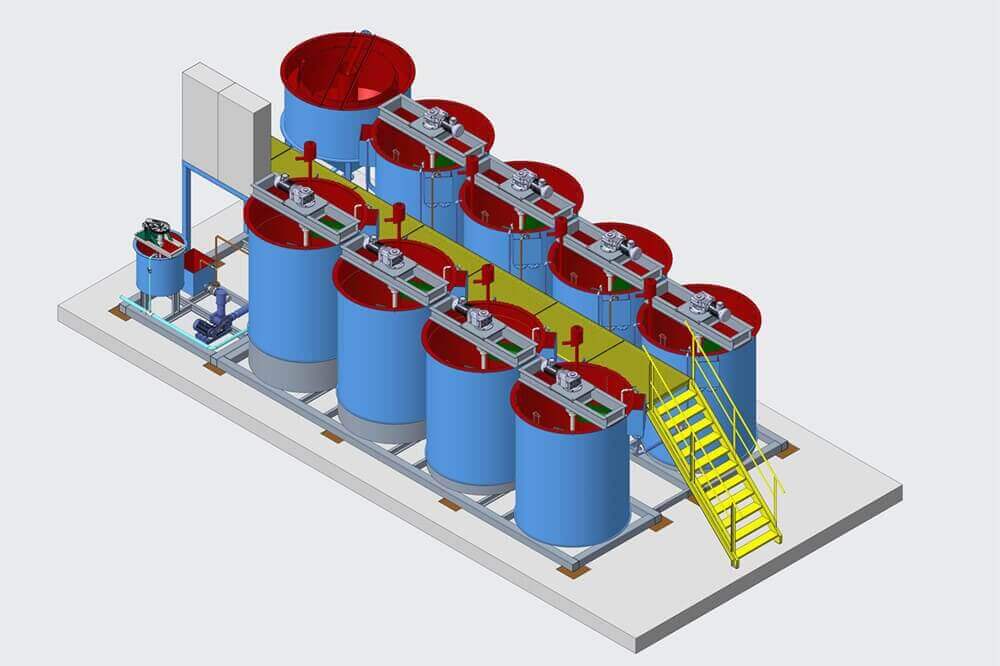
20TPD Relocatable Modular Gold CIL Plant Process Explanation
1. Material Feeding
The pompa lumpur delivers ground ore from the pabrik bola classifier into the cone thickener for initial concentration.
2. Chemical Mixing
The concentrated slurry flows into the tangki pencampuran, where leaching agents are added for maximum gold dissolution efficiency.
3. Leaching & Aeration
The pulp enters the CIL leaching tanks, where air is introduced via the Roots blower, enhancing the leaching reaction.
4. Carbon Adsorption
Activated carbon within the tanks captures gold from the solution, while the carbon & slurry separation screen ensures effective separation before elution.
Five Core Advantages of the Modular Solution
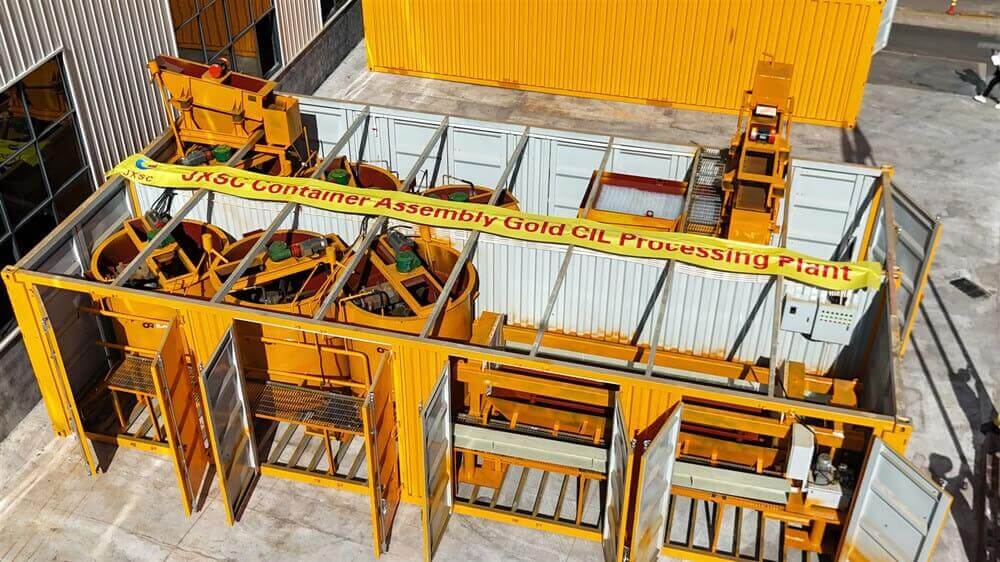
1. Rapid Deployment Capability: Containerized modules are pre-assembled, reducing on-site installation time by 70% (requiring only 7–10 days).
2. Intelligent Control System: A PLC-based system automatically regulates 12 key parameters, including cyanide concentration, pH levels, and oxygen content.
3. Water-Saving & Eco-Friendly Design: A closed-loop water circulation system limits water consumption to less than 3 m³ per ton of ore, achieving a wastewater reuse rate of over 95%.
4. Adaptability to Complex Ores: Capable of processing refractory gold ores—including those containing arsenic and copper—by adjusting the number of leaching stages (expandable up to 6 stages).
5. Mobile Configuration: The entire system occupies a footprint of less than 300 m², making it ideal for decentralized operations across dispersed mining sites.
Key Equipment Used in This Mobile Modular Gold CIL Plant
- Leaching Tanks: Facilitate gold dissolution with cyanide under controlled conditions.
- Carbon & Slurry Separation Screen: Efficiently extracts gold-laden carbon for further refining.
- Roots Pump (Air Blower): Enhances leaching efficiency by aeration, improving gold dissolution.
- Chemical Pump: Precisely doses leaching agents (cyanide, lime) for optimal gold recovery.
- Slurry Pump: Transports ore slurry from grinding circuits to downstream processes.
- Mixing Tank: Ensures homogeneous blending of reagents and slurry before leaching.
- Cone Thickener: Concentrates slurry from the grinding mill, reducing water content.
Through the deep integration of process innovation and intelligent equipment, this 20 TPD modular CIL plant sets a new industry benchmark in terms of both Return on Investment (ROI < 18 months) and environmental compliance, making it particularly well-suited for small-to-medium-scale gold mining projects with an annual processing capacity of 5,000 to 10,000 tons.
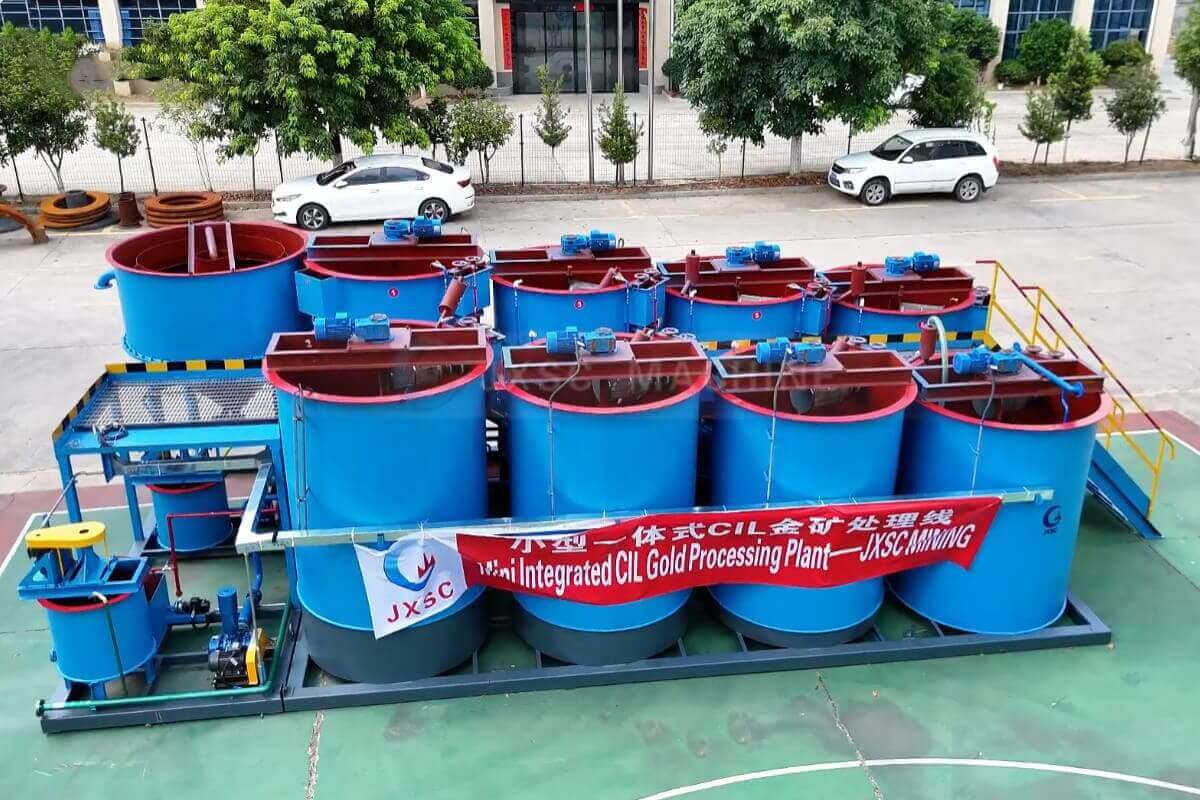
Small Mobile Modular Gold CIL Plant For Sale-– Perfect for Remote Sites
Produk Terkait



Hubungi Kami Sekarang
Jika Anda memiliki pertanyaan tentang produk kami, silakan isi formulir di bawah ini, dan kami akan menghubungi Anda dalam waktu 24 jam. Yakinlah bahwa kami tidak akan mengungkapkan informasi Anda kepada siapa pun.
 English
  French
  Spanish
  Portuguese
  Indonesian