



Ball mills are essential grinding equipment in mineral beneficiation plants, used to pulverize ores into fine powders before magnetic or chemical processing.
With numerous manufacturers offering various ball mill types, selecting the right one for your production needs is critical. Below, we break down ball mill classifications, operation methods, and key selection factors to help you make an informed decision.
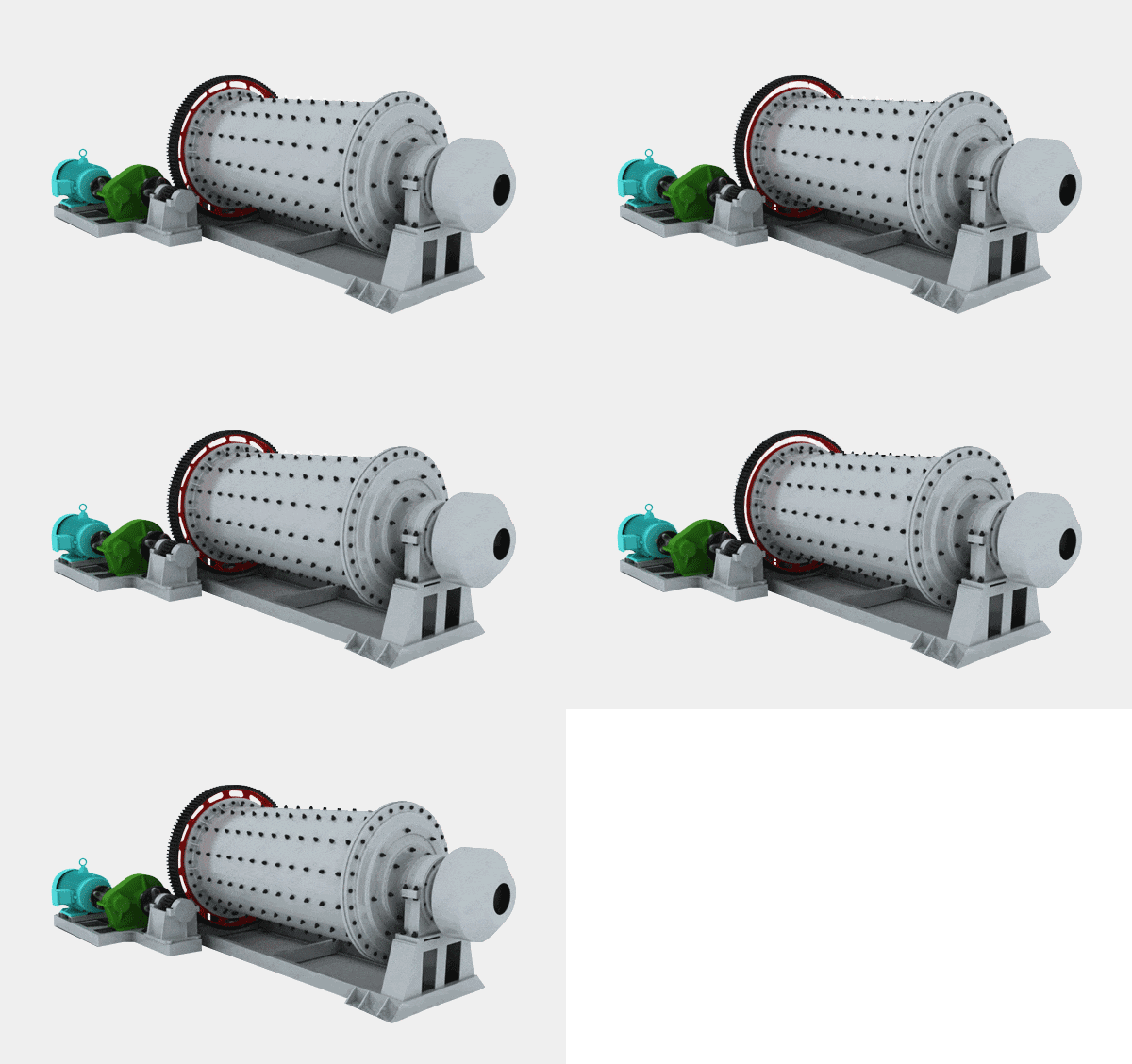
What Kind of Ball Mill Do We Supply?
Cylinder Shape (L/D)
1. Short-Cylinder Ball Mill (L ≤ 2D)
The length (L) of the cylinder is less than twice the diameter (D) of the cylinder, that is, the ball mill with L ≤ 2D is a short-cylinder ball mill.
Ideal untuk coarse/primary grinding due to high efficiency and single-bin structure.
2. Medium-Long Cylinder Ball Mill (L = 3D)
Balanced performance for intermediate grinding stages.
3. Long Barrel Mill (L ≥ 4D, 2-4 bins)
Used for fine grinding; typically has multiple chambers for progressive particle size reduction.
Configuration Tip: Adjust bin numbers and grinding media based on output requirements and material hardness.
Media Penggilingan
1. Steel Ball Mill
The pabrik bola is loaded with steel balls, which have a high grinding force and stable speed.
Cocok untuk most ores.
2. Rod Mill (50-100mm steel rods)
Rod mills are usually equipped with steel rod which diameter is mostly between 50-100mm, requiring a longer grinding time. The number of bins in a rod mill is generally two to four, and there are some differences in the grinding media loaded in each bin.
To ensure the final effect of grinding, the staff will place the cylindrical steel rod in the first bin, and the steel ball or steel segment in several other bins.
3. Gravel Mill (Pebbles, Ceramic Balls, Sandstone)
The grinding media in the gravel mill mainly include pebbles, gravel, sandstone, ceramic balls, etc.
Gravel mills mostly use porcelain or granite as lining boards, and are widely used in the production fields of cement, ceramics, and so on.
The type of grinding media impacts fineness and efficiency.
Metode Pembuangan
1. Overflow Discharge
The overflow discharge ball mill discharges ore through the hollow shaft. When the ore discharge surface is higher than the slurry surface, the finished product is discharged, and the ore is automatically discharged by gravity; the overflow ball mill saves energy.
2. Grate Discharge
The ore is discharged through the grate plate. The grating part can strictly control the minerals’ discharge size that meets the demand, and it has a good effect on fine particle grinding.
3. Peripheral Discharge
This ball mill discharges ore through the periphery of the cylinder.
Less common but useful for specific applications.
Different discharge mechanisms affect grinding efficiency and particle size.
Operation Mode
1. Continuous Ball Mill
Runs 24/7 with automatic feeding; best for high-capacity production.
2. Intermittent Ball Mill
The intermittent ball mill can not operate continuously, at the same specification, its output is lower.
The feeding and discharging times are set according to the characteristics of the grinding material.
The intermittent ball mill is suitable for the mixing and grinding of materials, with lower power consumption.
Catatan: Many modern mills can be retrofitted for continuous operation if needed.
Transmission Method
1. Central Transmission Ball Mill
The driving power of this type of mill is in the center of the fuselage, and the motor realizes the operation of the ball mill through a reducer. During operation, the hollow shaft in the center of the ball mill drives the grinding body to rotate under the drive of the power system.
2. Edge Transmission Ball Mill
The motor drives the gear on the edge of the barrel through the reducer to drive the barrel.
Simpler but less efficient for large-scale grinding.
Ball Mill Grinding Conditions
1. Wet Ball Mill
Water is added at the same time as the material is fed, and the material is discharged into a certain concentration of slurry and discharged. A closed-circuit system, it is composed of a closed-circuit operation with a hydraulic classification device.
Better energy efficiency and finer output.
2. Dry Ball Mill
No water; material is ground in air, suitable for moisture-sensitive or water-scarce operations (e.g., cement milling).
Selection Tip: Wet mills deliver finer grinding but consume more water. Dry mills handle larger capacities but may produce coarser output.
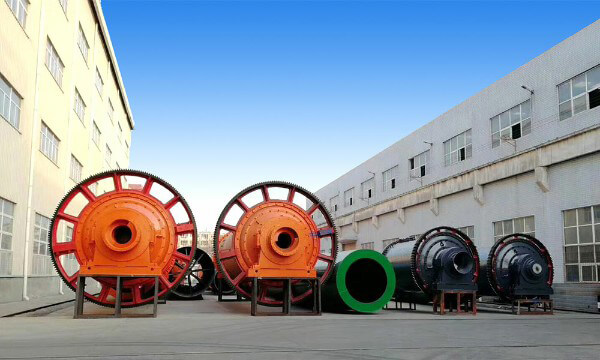
How to Select a Ball Mill?
1. Working Conditions & Material Properties
Minerals that cannot be touched with water, minerals that are sticky after adding water, and the mining plant in areas where water resources are scarce, are suitable for grinding with a dry ball mill.
Under other conditions, it is better to use a wet ball mill, which has a better grinding effect and energy-saving performance.
2. Energy Consumption
Opt for energy-saving models if the power supply is limited.
3. Production Capacity
Jika Anda membutuhkan kapasitas tinggi, pilihlah ball mill kontinu. Pengumpan bergetar dapat secara otomatis memberi makan, sehingga ball mill kontinu dapat terus berjalan selama 24 jam.
Batch processing = Intermittent mill for controlled grinding.
4. Discharge Fineness
Overflow = General fine grinding.
Grate discharge = Precise particle size control.
For expert guidance on selecting the best ball mill for your needs, consult our engineers today!
Artikel terkait
PRODUK TERBARU
-

Inclined Vibrating Screen
The inclined vibrating screen is a simple and eff…
-
High Temperature & Pressure Gold Desorption Electrolysis System
High-Temperature & Pressure Gold Desorption Elect…
-
Normal Temperature & Pressure Gold Desorption Electrolysis System
The normal temperature & pressure gold desorption…


BERITA TERBARU
- Modern Cyanide Residue Treatment Technologies for Gold Processing
- Traditional De-cyanidation Technologies for Gold Cyanide Residues
- Shaking Table, 3-Disc Dry Magnetic & Electrostatic Separator for W-Sn-Ta-Nb
- Mineral Analysis: The Foundation for Successful Mineral Processing Projects
- What Is Over-Grinding and How Can It Be Prevented?
 English
  French
  Spanish
  Portuguese
  Indonesian