



Abstract: With the rapid development of the new energy vehicle and energy storage industries, the demand for lithium—a crucial strategic resource of the 21st century—continues to rise. Nearly 60% of global lithium resources are contained in salt lake brines; compared to spodumene ores, lithium extraction from salt lakes offers the advantages of abundant reserves and lower costs. As a traditional extraction method, precipitation remains widely used in industrial production due to its process simplicity and technological maturity. This paper provides a systematic overview of the principles and process types of the precipitation method, as well as its application in lithium extraction from salt lakes.
Introduction to the Precipitation Method
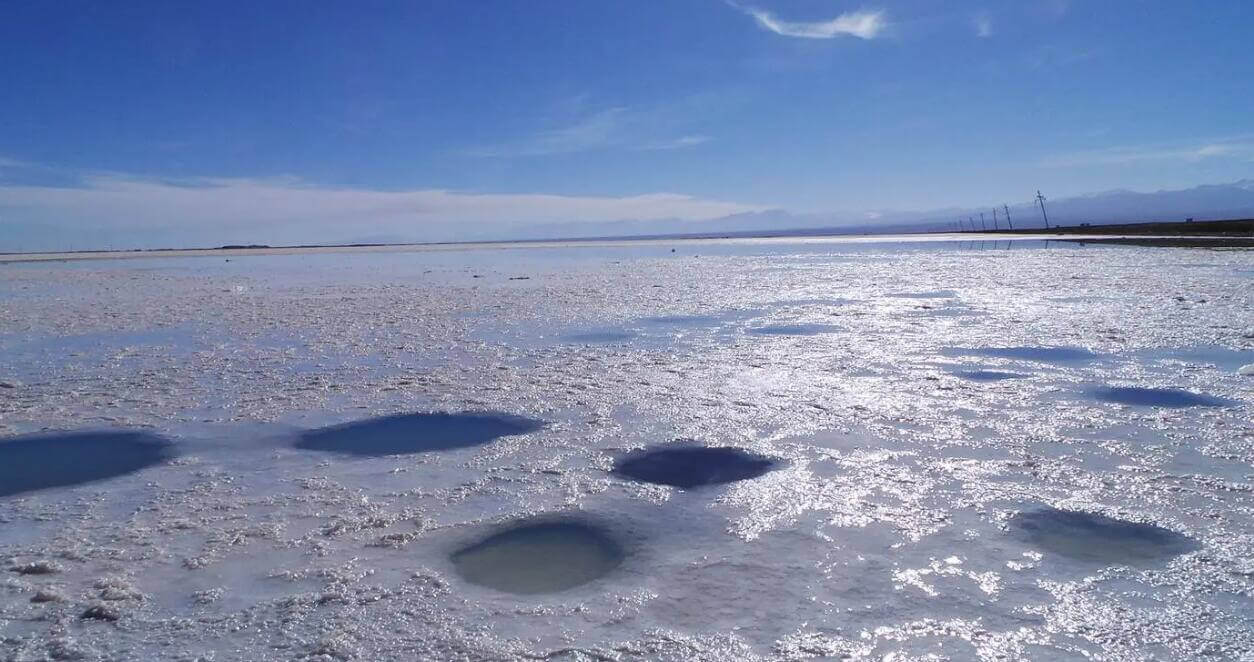
The metode presipitasi adalah salah satu teknik umum yang digunakan untuk mengekstrak lithium dari air asin danau garam. Proses ini melibatkan pengendapan senyawa litium secara selektif dari larutan air garam melalui reaksi kimia. Proses prinsip metode presipitasi is to use solar energy to evaporate and concentrate salt lake brine naturally. After removing boron, calcium, and magnesium to remove impurities, a mixture of precipitants or salting-out agents is added to the mother liquor to separate lithium in the form of precipitates. Precipitation extraction of lithium metal has been applied earlier in industry. The process is mature, simple to operate, and highly reliable. However, this method needs better adaptability to brines with high concentrations of alkaline earth metal ions and low concentrations of lithium ions. According to the specific process, the precipitation method is divided into carbonate, aluminate, boron magnesium, and boron lithium co-precipitation. Kami akan memperkenalkan ketiga metode pengendapan ini untuk ekstraksi lithium dari danau garam.
1. Metode Pengendapan Karbonat
The carbonate precipitation method involves evaporating and concentrating the lithium-containing brine from the salt lake, adding lime to remove residual calcium, magnesium, and other basic metal impurities, and then adding a sodium carbonate precipitant to prepare lithium carbonate products. The method has low energy consumption and applies to industrial production and extraction. The disadvantage is that lithium selectivity is low, and alkali consumption is relatively high in the production process. After the salt lake brine is naturally evaporated and concentrated by solar energy to make salt, it is separated by segmental crystallization. Then an alkaline precipitant and impurity metal Mg2+ are added to form an insoluble precipitate. Magnesium is removed by solid-liquid separation, and then a specific temperature and alkalinity are maintained. Evaporate and crystallize NaCl, and finally add precipitant soda ash to prepare the lithium carbonate product. Use ammonia water and ammonium bicarbonate to adjust the brine alkalinity and precipitate the impurity magnesium. The removal rate of magnesium is about 98%, and the recovery rate of lithium is above 95%. The carbonate precipitation method has the advantages of simple operation and mature technology. It is currently the most important method for extracting lithium from salt lake brine with a low magnesium-lithium ratio. In the separation and extraction process, problems such as large alkali consumption and poor selectivity limit its industrial application.
2. Metode Presipitasi Aluminat
By reasonably controlling the aluminum-lithium ratio, we obtain aluminum-lithium precipitates first, filter the sediments, calcinate the residues at high temperatures, and immerse the calcined products in water to separate aluminum-lithium. Use a precipitating agent to remove impurities such as calcium and magnesium in the lithium-containing solution, add sodium carbonate after evaporation and concentration for the lithium precipitation reaction, and realize the production of lithium carbonate products. Use AlCl3·H2O and NaOH as raw materials; the aluminum hydroxide precipitation method is used to precipitate lithium selectively, and then the aluminum-lithium coprecipitate is subjected to high-temperature calcination and room-temperature water immersion. After filtration, we obtain a lithium-containing solution. Add NaOH to the solution to remove calcium and magnesium impurities. After that, add sodium carbonate to get lithium carbonate. Generally speaking, the aluminate precipitation method has problems such as high evaporation energy consumption of carbonization liquid and roasting leaching liquid, large freshwater consumption, and complicated process flow.
3. Metode Pengendapan Bersama Boron Magnesium Dan Boron Lithium
The metode pengendapan bersama boron-magnesium refers to the demagnetization of the brine after the evaporation and concentration of the salt field to precipitate the potassium-magnesium mixed salt, adding an alkaline precipitant to control the pH value at 8-10, and under a specific temperature and pressure, making boron and magnesium co-precipitate. After solid-liquid separation, add NaOH to the mother liquor for deep magnesium removal. Then add soda ash to prepare lithium carbonate products. The recovery rate of lithium in this method reaches 80%-90%.
The metode pengendapan bersama boron-litium mengacu pada penghilangan kotoran dari air garam lama yang mengendapkan natrium dan kalium, menambahkan endapan asam seperti asam klorida atau asam sulfat untuk membuat pengendapan bersama boron-litium, untuk mewujudkan pemisahan litium dan magnesium. Setelah residu yang diperoleh dicuci dengan air, kotoran seperti magnesium dan kalsium dihilangkan secara mendalam, dan akhirnya, endapan ditambahkan untuk menyiapkan litium karbonat. Tingkat pemulihan lithium mencapai 75%-85%.
The metode pengendapan bersama boron-magnesium dan boron-lithium cocok untuk memproduksi ekstraksi lithium dari air garam danau garam dengan rasio magnesium-lithium yang tinggi di Tiongkok. Metode ini memiliki prosedur pemisahan yang sederhana, pengoperasian yang kuat, dan hasil litium yang tinggi. Ini memiliki prospek aplikasi industri tertentu, tetapi masalahnya adalah endapan yang diperoleh dengan metode pengendapan bersama boron-magnesium sebagian besar bersifat koloid, dan pemisahan padat-cair sulit dilakukan. Selama proses pemisahan, tingkat kehilangan lithium mencapai 15%-20%, menghasilkan pemborosan lithium yang besar.
Based on the boron-lithium co-precipitation method, boron-lithium co-precipitation is carried out by using the process of primary freezing, evaporation with halogen, primary evaporation, secondary freezing, secondary evaporation, and precipitation of boron-lithium. The recovery rate of boron-lithium in this method is relatively high and has strong practicality. The precipitation process was developed earlier and had the advantages of mature process technology and high operational reliability. However, for the production process in China that uses high-magnesium-lithium ratio salt lake brine as raw material, the alkaline precipitant is generally large, the production cost is relatively high, and there is high & poor selectivity to lithium and other issues.
Perlu dicatat bahwa metode pengendapan hanyalah salah satu dari beberapa teknik yang digunakan untuk ekstraksi lithium. Metode lain, seperti ekstraksi pelarut dan ekstraksi litium langsung dari air garam, juga digunakan tergantung pada karakteristik spesifik air garam dan produk akhir yang diinginkan.
Ringkasan
As a mature technology for lithium extraction from salt lakes, the precipitation method encompasses various process variants tailored to different brine compositions. The carbonate method is suitable for systems with simple matrices and low magnesium-to-lithium ratios; the aluminate method can handle higher magnesium-to-lithium ratios; and boron-related processes are appropriate for boron-bearing salt lakes. Current research focuses on developing novel precipitants, optimizing precipitation conditions, and enhancing lithium recovery rates to maintain the method’s competitiveness in lithium resource development. With future technological advancements, the precipitation method is expected to overcome existing limitations and play a more significant role in processing brines with high magnesium-to-lithium ratios.
Bacaan yang Diperpanjang
Teknologi Flotasi Bijih Lithium
Pabrik Pengolahan Lithium
5 Metode Paling Berguna untuk Manfaat Penambangan Lithium
Pabrik Pengolahan Lepidolit 10TPH
PRODUK TERBARU
-

SFM-8 Lab Grinder
【Max. Power Consumption】 150W 【Morta…
-
Cyclosizer
【Feeding Capacity】< 100g/time 【Feeding …
-
JKZ/2JKZ Mine Shaft Sinking Hoist
【Power Source】Electric Motor Drive 【Motor Spee…


 English
  French
  Spanish
  Portuguese
  Indonesian