



In modern mineral processing operations, efficient particle separation forms the foundation of successful ore beneficiation. The clasificador espiral stands as a workhorse in this regard, serving as essential equipment for mineral processing and sand washing applications.
These robust machines typically feature:
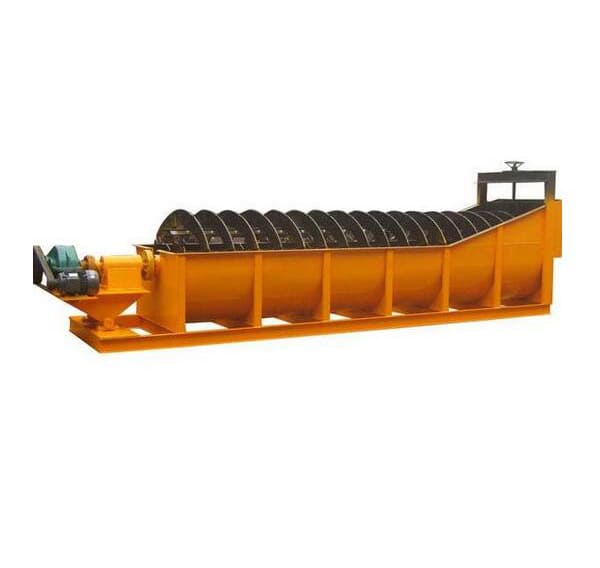
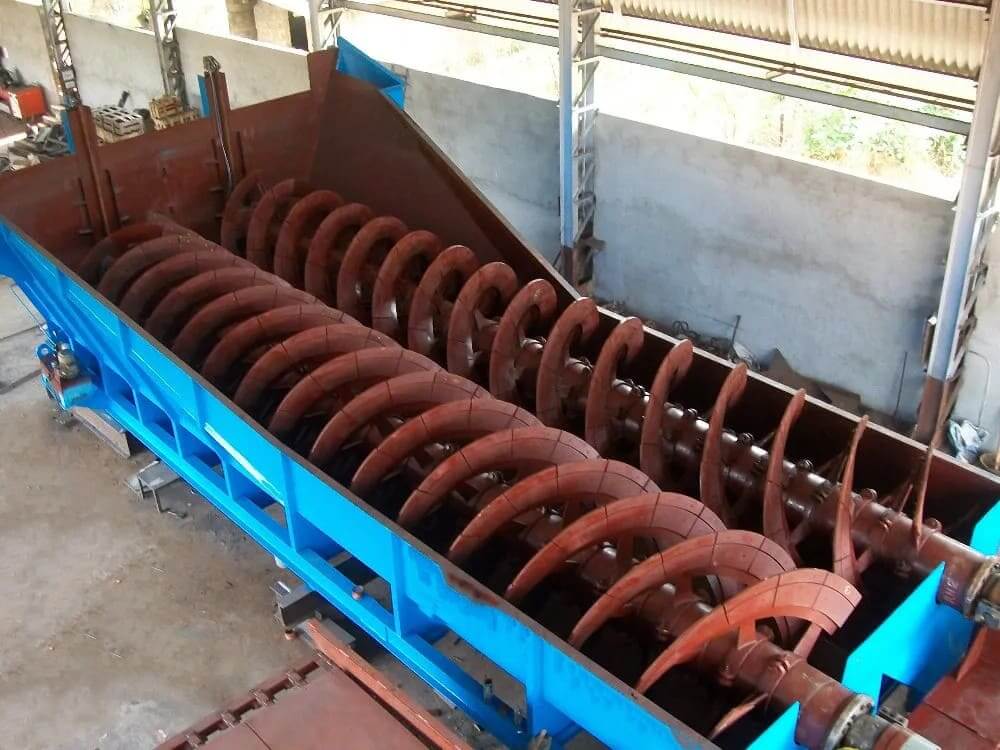
- A long longitudinal axis mounted in an inclined semicircular tank.
- Specially designed rotating blades attached to the axis.
- An upper transmission mechanism that drives the rotation.
- A lower spiral lifting device for material handling
The spiral classifier relies on the principle that the solid particles have different sizes and specific gravity and have different settling speeds in the liquid. The fine ore particles float in the water and overflow, while the coarse ore particles sink to the bottom of the tank and are pushed to the upper part by the spiral and discharged. A device for mechanical grading. It can filter the powder ground out of the mill, screw the coarse material into the feed port using a spiral blade, and discharge the filtered fine material from the overflow pipe.
Spiral classifiers demonstrate remarkable versatility in mineral processing circuits: It is often paired with a molino de bolas to form a closed-circuit circulation to divert ore. It is also used in concentradores gravitacionales to classify ore and fine mud, ore slurry in metal mineral processing processes, particle size classification, desliming, dehydration, and other operations in mineral washing operations.
This mechanical classification device serves dual functions – filtering mill discharge while simultaneously returning coarse material to the feed port via its spiral mechanism, with properly sized particles discharging through the overflow pipe.
Importancia del clasificador espiral en el tratamiento de minerales
Spiral classifiers are a fundamental component of mineral dressing operations, and they help in achieving the desired product quality and recovery rates. Their ability to classify and separate particles based on size and density is crucial for the efficient and cost-effective extraction and processing of valuable minerals from ore. A continuación se muestra la importancia de los clasificadores en espiral en el procesamiento de minerales:
- Clasificación granulométrica: En el procesamiento de minerales suele ser necesario separar partículas de distintos tamaños. Los clasificadores en espiral clasifican las partículas en función de su tamaño, garantizando que en los procesos posteriores se alcance el rango de tamaños de partícula deseado. Es esencial en los procesos de molienda y beneficio de minerales, donde la distribución del tamaño de las partículas puede afectar significativamente a la eficacia de las operaciones posteriores.
- Deshidratación: Spiral classifiers dewater or remove excess water from mineral slurries. Settling and separate particles, help concentrate the valuable minerals, and reduce the final product’s water content. It is essential for efficient transportation and further processing.
- Descalcificación: En algunas aplicaciones de procesamiento de minerales, sobre todo cuando se trata de minerales de grano fino, es esencial eliminar las partículas finas o "limos" de los lodos de mineral. Los clasificadores en espiral se utilizan para deslimar, garantizando que estas partículas finas no interfieran en procesos posteriores como la flotación o la separación por gravedad.
- Separación por densidad: Los clasificadores en espiral también pueden separar partículas en función de su densidad. Es esencial en procesos como la concentración por gravedad, donde los minerales más densos se separan de los materiales de ganga más ligeros.
- Eficiencia del proceso: La clasificación y separación adecuadas de partículas mediante clasificadores en espiral mejoran la eficacia general de las operaciones de procesamiento de minerales. Al optimizar el tamaño y la concentración de las partículas, se puede maximizar el rendimiento de los minerales valiosos al tiempo que se minimizan los residuos y el consumo de energía.
Tipos de clasificadores espirales
Un clasificador en espiral se denomina clasificador. Existen cuatro clasificadores principales: high-dam single-spiral and double-spiral classifiers and submerged single-spiral and double-spiral classifiers. Lo introduciremos a partir de la posición de la espiral y el número de espirales.
Posición en espiral
El componente principal del clasificador en espiral es la espiral. Según su posición en el tanque y el nivel de la superficie del lodo, puede dividirse en tres tipos: clasificadores de dique bajo, dique alto y espiral sumergida. El clasificador en espiral de dique bajo apenas se utiliza en la actualidad; se emplean principalmente los clasificadores en espiral de dique alto y sumergidos.
1. Clasificador espiral de presa baja
Dado que ahora hay pocas aplicaciones, he aquí una breve introducción. El tipo de dique bajo consiste en que el dique de rebose está más bajo que el eje del tornillo. Debido a la pequeña superficie de la zona de decantación, sólo se puede utilizar para el lavado de minerales de arena con poco barro y deshidratación de partículas gruesas en la producción real, pero rara vez se utiliza en los ciclos de molienda.
2. Clasificador espiral de presa alta
The high dam type spiral classifier means that the overflow dam is higher than the spiral axis of the spiral but lower than the upper edge of the spiral at the overflow end. There are high-dam-type single-spiral and double-spiral classifications. This kind of classifier has a lower settlement area and a larger dam type, and its dam height can be adjusted within a certain range. That is, the area of the settlement area can be adjusted and changed within a certain range so that the particle size of classification can be adjusted, which is an important part and a commonly used device of the grinding cycle. It is mainly used for ore classification with overflow particle size of 0.83mm to 0.15mm.
3. Clasificador espiral sumergido
The submerged type has 4-5 spiral blades at the end of the overflow dam, all submerged in the pulp. There are also two types: single spiral and double spiral. The classifier has a large settlement area and a deep classification pool, and the spiral agitation has little effect on the surface of the pulp. Hence, the classification surface is stable, and the overflow is large and fine. It is used for ore classification with an overflow particle size of 0.15mm to 0.07mm. The submerged spiral classifier is often used as classification equipment for fine or secondary grinding in mineral processing plants.
Número de espirales
Divide los clasificadores en espiral en espiral simple y Clasificadores en espiral dúplex según el número de espirales. El rendimiento de clasificación de los dos es el mismo, pero el clasificador de doble espiral tiene una mayor capacidad de procesamiento y es adecuado para su uso con grandes máquinas trituradoras. Las especificaciones del clasificador de espiral se expresan en términos de diámetro de espiral.
Conclusión
The spiral classifier remains an indispensable asset in modern mineral processing, offering reliable particle classification, efficient dewatering, and effective desliming for various ores. Its ability to enhance process efficiency, reduce energy consumption, and improve recovery rates makes it a cornerstone of mineral dressing operations. With distinct types such as high-dam and submerged spiral classifiers—available in both single- and double-configuration options—this equipment can be tailored to meet different operational needs, from coarse particle screening to fine grinding circuits.
As mining operations continue to evolve with stricter environmental and efficiency standards, spiral classifiers will remain vital for optimizing mineral recovery while minimizing waste. For tailored solutions, performance specifications, and expert recommendations, consúltenos for parameters and quotations for your mineral processing needs.
In summary, whether for grinding circuits, gravity concentration, or slurry processing, the spiral classifier’s versatility and reliability make it an enduring choice for achieving precise and cost-effective mineral separation.
ÚLTIMOS PRODUCTOS
-

Inclined Vibrating Screen
The inclined vibrating screen is a simple and eff…
-
High Temperature & Pressure Gold Desorption Electrolysis System
High-Temperature & Pressure Gold Desorption Elect…
-
Normal Temperature & Pressure Gold Desorption Electrolysis System
The normal temperature & pressure gold desorption…


ÚLTIMAS NOTICIAS
- Modern Cyanide Residue Treatment Technologies for Gold Processing
- Traditional De-cyanidation Technologies for Gold Cyanide Residues
- Shaking Table, 3-Disc Dry Magnetic & Electrostatic Separator for W-Sn-Ta-Nb
- Mineral Analysis: The Foundation for Successful Mineral Processing Projects
- What Is Over-Grinding and How Can It Be Prevented?
 English
  French
  Spanish
  Portuguese
  Indonesian