



Soil and rock separation is an important step in sand and gravel production, especially when raw materials contain excessive soil, clay, silt, or other fine impurities. If these unwanted materials are not removed effectively, they can reduce the quality of finished aggregates and affect subsequent crushing, screening, washing, and sand-making processes.
A circular vibrating screen is one of the most commonly used machines for soil and rock separation. It uses vibration to screen materials according to particle size, allowing soil, sand, gravel, and larger rocks to be separated efficiently. Depending on production requirements, the screen can be used as a fixed screening machine or integrated into a mobile crushing and screening plant.
This article explains how soil and rock are separated, what equipment is commonly used, how a circular vibrating screen works, and how to choose the right screening equipment for your production line.
What Is Soil and Rock Separation?
Soil and rock separation refers to the process of removing soil, clay, silt, and other unwanted fine materials from rocks, aggregates, sand, and gravel. The purpose is to improve the quality of raw materials and finished products while reducing the negative impact of excessive soil content on downstream equipment and production processes.
In most sand and gravel production lines, soil and rock are separated by a tamizadoratambién conocido como an earth rock separator, soil separator, or vibrating screen. The equipment separates materials according to particle size through the movement of a screen surface.
Generally, the screening machine works together with other crushing equipment. It can not only separate earth and rock, but also separate stones, sand, and gravel. Generally, it can be placed at the end of the production line or pre-screened before crushing, so that the quality of aggregate and sand produced by the production line will be better.
What Kind of Equipment is Good for Earth Rock Separation?
Two types of machines separate stone and soil. One is a fixed earth-rock separator, and the other is a mobile earth-rock separator. Due to different names in different places, this machine that separates stone and soil is also called a screening machine, which is also called a vibrating screen, as we often say. It generally works in combination with other equipo de trituración. This earth rock separator is required for crushing stones into stones or into sand. It is generally placed at the end of the production line process. There are also special earth rock separators in the middle of the crushing equipment, so that the quality of aggregate will be higher.
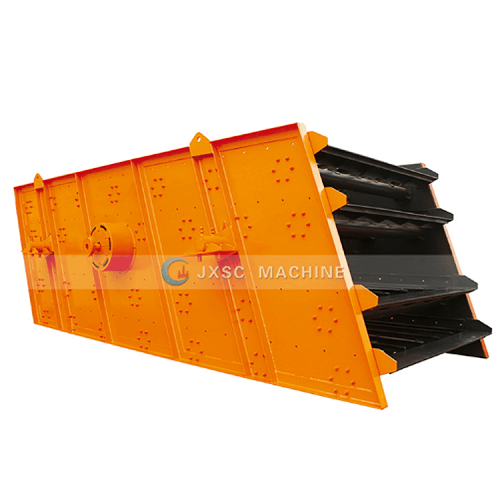
Fixed Earth Rock Separator
As the name suggests, its working mode is fixed. It needs capital construction, piling, and installation before it can be put into production. It can be installed on a firm reinforced concrete base or steel frame, and the installation angle is generally 20 °.
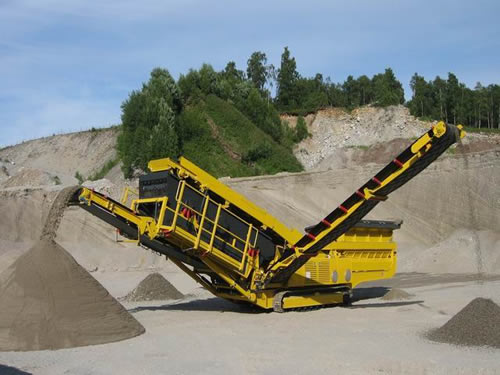
Mobile Earth Rock Separator
Compared with fixed models, this equipment provides mobility. It is equipped with a mobile frame with a crusher and feeder, which can directly go deep into the site and be put into production immediately. The mobile machine is a movable screening equipment, with crawler and tire as the frame. It can be equipped with different types of vibrating screens, crushing, and sand-making equipment. One machine is comparable to a production line; It can also remotely control the operation, reducing the investment of human and material resources. The hydraulic lifting design is adopted, and the whole machine can realize folding, expansion, and telescopic operation, saving floor space during shutdown.
Fixed vs. Mobile Soil and Rock Separation Equipment
In general, fixed vibrating screens are more suitable for stable, long-term production lines, while mobile screening plants are better suited to projects requiring flexible movement between sites.
The choice should therefore be based on production capacity, raw material characteristics, site conditions, transportation requirements, and investment budget.
We know an earth rock separator is a tamizadora. A vibrating screen uses a vibrator to excite the screen to produce reciprocating vibration to screen earth and rock. In the sand and gravel production line, the vibrating screen can pre-screen the materials, check and screen the crushed materials, and screen the particle size of the finished products. In the screening machine, we commonly use the criba vibratoria circular.
Why Use a Circular Vibrating Screen for Soil and Rock Separation?
A circular vibrating screen is widely used in aggregate, mining, coal, metallurgy, and building-material applications because of its relatively simple structure, high screening efficiency, and flexible configuration.
During operation, the screen box moves in a circular trajectory. Materials are continuously thrown upward and forward on the screen surface, allowing particles smaller than the selected screen openings to pass through while larger particles remain on the screen and move toward the discharge end.
Depending on the model and configuration, circular vibrating screens can be equipped with multiple screening decks to produce several size fractions in a single operation.
For aggregate production, they can be used for:
- Soil and rock separation
- Pre-screening before crushing
- Classification of crushed stone
- Aggregate sizing
- Sand and gravel screening
- Removal of unwanted fine materials
The appropriate screening capacity depends on factors such as screen area, material characteristics, feed size, moisture content, screening efficiency, inclination, and equipment configuration. Therefore, actual capacity should be selected according to specific production conditions rather than relying on a single nominal output range.
Principio de funcionamiento del tamiz vibratorio circular
The vibrating screen is mainly composed of a screen box, vibration exciter, suspension device, and motor. The motor drives the main shaft of the vibration exciter to rotate through the triangular belt. The screen box vibrates due to the centrifugal inertia force of the unbalanced weight on the vibration exciter. Different amplitudes can be obtained by changing the eccentric shaft of the exciter. In addition, there are 2, 3, and 4 layers of screens in an earth rock separator. The number of layers, amplitude, and inclination jointly affect the specification, quantity, and output of finished products.
¿Cómo elegir una criba vibratoria de circuito?
Choosing the right circular vibrating screen requires more than simply comparing equipment models. The screen should be matched to the material characteristics, required capacity, product sizes, and process configuration.
1. Materials
When choosing circular vibrating screen equipment, the first thing to consider is the type of material. In production, there are many and varied materials, and their hardness and properties are quite different. Common materials include ore, sand, and powder. When users choose circular vibrating screen equipment, they must make a reasonable choice according to the actual production situation, combined with factors such as the structure, water content, and characteristics of the material, so as to give full play to the advantages of the vibrating screen.
2. Actual Production Needs
La función de la criba vibratoria es remover las impurezas contenidas en los materiales, mejorar la calidad de los materiales y cribar los materiales calificados para su posterior procesamiento y uso. Por lo tanto, cuando los usuarios eligen equipos de criba vibratoria circular, deben realizar un análisis exhaustivo basado en sus propias necesidades de producción, grados de cribado, requisitos de cribado, niveles de filtración, etc., y comunicarse con los comerciantes a tiempo para seleccionar el equipo de criba vibratoria circular adecuado.
3. Production Output Size
Para los usuarios, a la hora de elegir un criba vibratoria circularTambién hay que tener en cuenta la capacidad de producción de la línea de producción. Hay muchos tipos de cribas vibratorias, y la capacidad de producción de los diferentes tipos de cribas vibratorias también es muy diferente. Por lo tanto, antes de elegir una criba vibratoria circular, el usuario debe entender la capacidad de producción de la línea de producción antes de comprar. Preste atención a la precisión de tamizado y las especificaciones de la criba vibratoria al momento de comprar.
4. Select the Appropriate Screen Size and Mesh
Screen dimensions and screen openings directly affect screening capacity and product size.
A larger screening area generally provides greater processing capacity, while smaller screen openings are used when finer classification is required. However, screen aperture should always be selected according to the desired product size and material properties.
For wet or sticky materials, screen clogging and material adhesion should also be considered during selection.
5. Consider the Complete Production Line
A vibrating screen does not normally operate independently in a large aggregate production line. It may work together with feeders, jaw crushers, cone crushers, impact crushers, sand-making machines, conveyors, and washing equipment.
Therefore, the screen should be matched with the capacity and discharge size of upstream and downstream equipment. A well-designed production line should maintain a balanced material flow between each stage. As a commonly used production equipment, the circular vibrating screen has greatly promoted the production of sand washing, sand making, and mining. For users, it is very important to purchase vibrating screen equipment that meets their own production needs. Therefore, when users choose circular vibrating screens, they should combine the actual situation and make more comparisons.
Conclusión
Soil and rock separation is an important part of sand and gravel production, and a circular vibrating screen provides an efficient and practical solution for separating soil, sand, gravel, and different sizes of rock. Whether used as a fixed screening machine or integrated into a mobile crushing and screening plant, the equipment can help improve material quality, optimize downstream crushing and screening processes, and produce more consistent aggregate products.
When selecting a circular vibrating screen, users should consider material characteristics, required capacity, feed size, moisture content, screen opening, number of screening decks, site conditions, and the configuration of the complete production line. Choosing equipment based on actual production requirements rather than simply comparing models or nominal capacity can help achieve better screening efficiency and more stable operation. With the right equipment and a properly designed process, soil and rock separation can significantly improve the overall efficiency and quality of aggregate production.
ÚLTIMOS PRODUCTOS
-

Inclined Vibrating Screen
The inclined vibrating screen is a simple and eff…
-
High Temperature & Pressure Gold Desorption Electrolysis System
High-Temperature & Pressure Gold Desorption Elect…
-
Normal Temperature & Pressure Gold Desorption Electrolysis System
The normal temperature & pressure gold desorption…


ÚLTIMAS NOTICIAS
- Modern Cyanide Residue Treatment Technologies for Gold Processing
- Traditional De-cyanidation Technologies for Gold Cyanide Residues
- Shaking Table, 3-Disc Dry Magnetic & Electrostatic Separator for W-Sn-Ta-Nb
- Mineral Analysis: The Foundation for Successful Mineral Processing Projects
- What Is Over-Grinding and How Can It Be Prevented?
 English
  French
  Spanish
  Portuguese
  Indonesian