newbg

Extracción del estaño de su mineral

Publicado el tiempo:25 octubre 2018

Introduction to Tin and Its Importance


Rock Tin is one of humanity’s earliest discovered metals, first extracted by our ancestors who combined it with copper and lead to create bronze, marking a pivotal moment in technological advancement. Tin ore has strong development, rust resistance, and corrosion resistance. Rock Tin can form various alloys with other metals and is easy to plate on many metal surfaces. In particular, the surface of tin is corrosion-resistant and nontoxic.

Tin & Tin Alloys Applications

Today, tin and its alloys continue to play vital roles across multiple sectors due to their unique properties:

  • Ductility for versatile shaping
  • Chemical stability for reliable performance
  • Corrosion resistance for longevity
  • Low friction coefficient for mechanical applications
  • Non-toxic nature for food packaging and medical uses
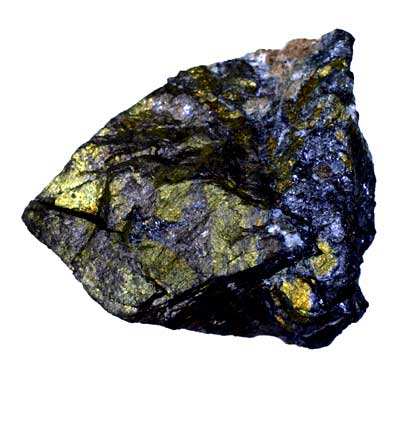
mineral de roca de estaño

Global Distribution of Tin Resources


Tin ore deposits are geographically concentrated in three primary regions:

  • Southeast Asia(major producer)
  • Central South America
  • Eastern Russia

Secondary deposits exist in:

  • Eastern Africa
  • Western Europe
  • Western North America

Types of Tin Ores

1. Alluvial (Placer) Tin Deposits

In nature, the tin ore exists in sand or alluvial raw material. This kind of tin ore, called sand tin or alluvial tin, the raw material may be with stone, sand, gravel, soil, sticky clay, sometimes with other magnetic iron, tungsten, ilmenite, hematite, monazite, zircon sand, and other minerals.

2. Hard Rock (Lode) Tin Deposits

The other type of tin ore is hard rock tin ore, where tin exists in hard rock, such as normal stone, quartz vein above the land. The rock tin ore is mostly like to be with tungsten ore together.

How is Tin Extracted From Tin Ore?


In general, the rock tin ore processing machine of gravity separation is generally used.

  • For the ore dressing of tin ore with a high degree of dissociation of the monomer is basically the same as the ore dressing of gold ore, and a better ore dressing index can be obtained by simple screening.
  • For the ore processing of tin ore with low dissociation degree, it is often necessary to break the secondary structure by bar grinding and other processes, so as to improve the recovery rate and concentrate grade.

The basis of the gravitational separation of the placer tin ore processing machine is also the principle of gravity separation. According to the specific gravity difference between tin ore and waste stone, the proportion of tin and waste stone in the tin deposit is very good, and the beneficiation effect can be obtained by the method and equipment of heavy separation in the tin ore processing plant.

At the same time, the advanced tin ore processing plant has the advantages of high efficiency, energy saving, environmental protection, and so on. The investment in equipment is small, and the operating cost is low. It is an ideal choice for the beneficiation of Sands.

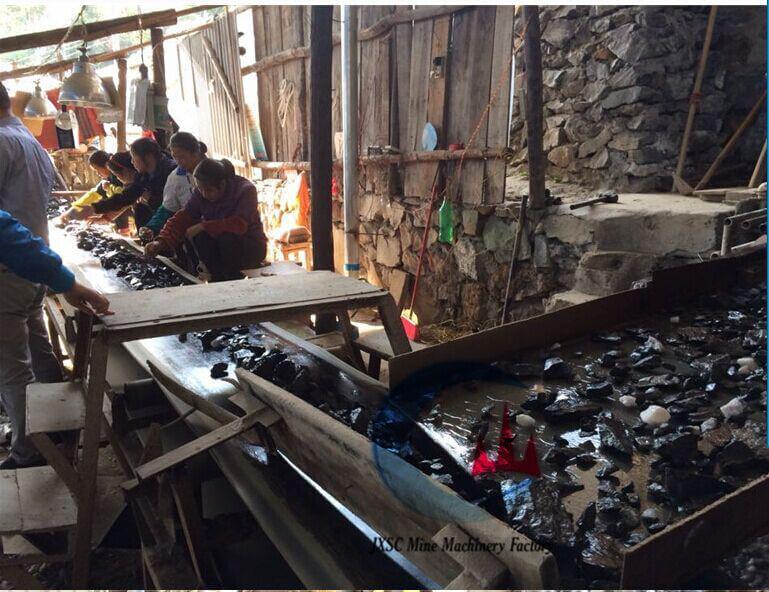
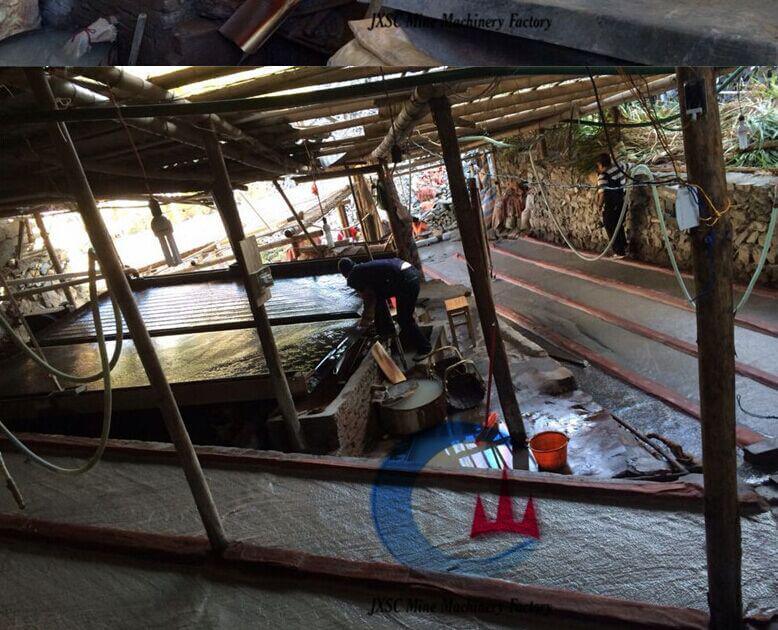
The equipment for the gravity separation of the placer tin ore is mainly a concentrador jig. Sometimes, the shaking table is also used to improve the recovery rate of finely grained tin ore.

  • The technological process of gravity separation for sand tin ore is screening, jigging, and dewatering.
  • The placer tin ore with a low degree of dissociation requires two reelection processes, which are often needed: screen jig, rod mill, jigging, and dewatering.

What Are The Extraction Methods of Tin From Its Ore?


Extraction of tin from its ore generally adopts the gravity separation method, which is determined by the density of tin ore rather than the characteristics of paragenetic minerals. However, iron oxides such as magnetite and hematite are often associated with tin ores, so gravity separation is not possible. Therefore, magnetic separation and flotation methods will be used in tin ore dressing.

Tin Ore Extraction Process Flow

1. Ore washing and desliming

Este paso está destinado a las materias primas con alto contenido de barro y fuerte cementación. Tales materias primas deben lavarse y deslimarse antes de la trituración. La lavadora de minas se utiliza para lavar el mineral, y la clasificador se utiliza para la deslimación y el hidrociclón.

2. Crushing and screening

Using the jaw crusher and hammer crusher, the ore is broken into pieces with a particle size below 20mm. Then the vibrating screen is divided into two particle sizes, 0-4mm and 4-20mm.
Rock Tin Ore Crushing: for crushing the big rock tin ore stone to a smaller size before grinding.
Crushers can be rough rock tin ore jaw crusher, rock tin fine jaw crusher, rock tin cone crusher, rock tin hammer crusher, roller crusher rock, depending on the rock tin ore feeding size and process capacity to use which kind of crusher.
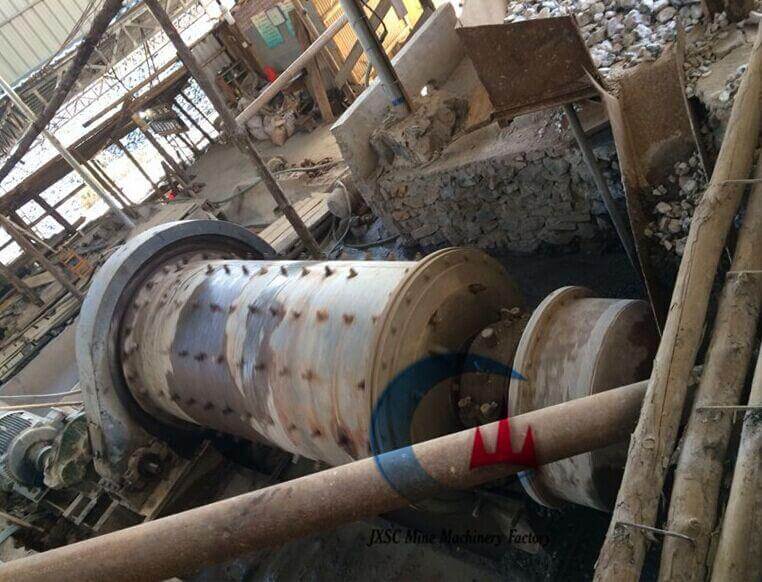
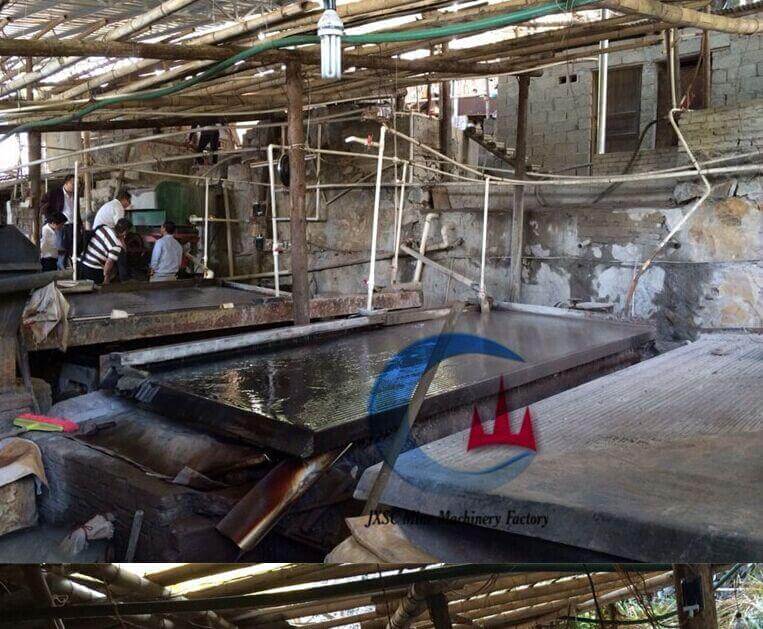
Rock Tin ore Grinding: after crushing the stone to a smaller size, need to grind to be ground into powder by a tin ore molino de bolas, molino de pan mojado, or other rock grinding machine, so the tin concentrate can be released from the stone. Then go to the gold separation machine and concentration machine( tin ore shaking table).

planta de tratamiento de mineral de estaño
extracción del estaño de su mineral

3. Pre-selection stage

After crushing and sieving, the ore of 4-20mm should be pre-processed by using a heavy medium cyclone, and then sent to a grinding section. After grinding, jigs and vibrating screens are used for further separation. The screen is controlled at 2mm, – 2mm, and then the concentrate is selected by shaking table, +2mm becomes tailings.

4. Flotation process

The flotation stage is divided into two steps: mixed flotation and separation flotation. Firstly, the concentrates selected by jig and shaking tables are mixed flotation, then the concentrates are separated by lead and zinc flotation, and the tailings are separated by shaking table.

5. Gravity separation

El lodo entra en el ciclón de 300 mm, luego rebosa por los hidrociclones de 125 mm y 75 mm para eliminar el lodo fino, y después el sedimento se concentra y desulfura por flotación y flotación de casiterita.

tratamiento del mineral de estaño
planta de tratamiento de mineral de estaño

Extraction of Tin From Its Ore: Technological Advancements, Economic & Environmental Considerations

Technological Advancements

Modern tin processing incorporates:

  • Automated control systems for optimal recovery
  • Eco-friendly reagents reduce environmental impact
  • Water recycling systems minimize resource use
  • Sensor-based sorting pre-concentration
  • Advanced modeling software for process optimization

Economic & Environmental

  • Low energy consumption compared to other metals
  • Modular plants available for small-scale operations
  • High recovery rates (>75% for alluvial, >65% for hard rock)

Sustainability Measures

  • Dry processing options for water-scarce regions
  • Tailings reprocessing technology
  • Comprehensive waste management systems

Conclusión

From ancient bronze production to modern technological applications, tin remains a strategically important metal. Contemporary extraction methods combine time-tested gravity separation with advanced technologies to efficiently recover tin from both alluvial and hard rock sources. Ongoing innovations in mineral processing continue to improve recovery rates while reducing environmental impact, securing tin’s position as a vital industrial material for the future.


JXSC Mine Machinery Company in China has more than 40 years of professional experience in rock tin ore processing plant, designs a full set of tin ore process flowchart, provides a complete set of tin ore processing plant, and can send an engineer to the mine site for equipment installation and commissioning guidance. Included: China, Indonesia, Peru, Brazil, Bolivia, Malaysia, Nigeria, Myanmar, Australia, Mongolia, Kenya, etc. Research about the extraction of tin from its ore has a positive influence on the mineral mining industry.

    Póngase en contacto con nosotros