



En stone washing machine, also called a lavadora de arena, is used for desliming and screening large quantities of sand and gravel at construction sites, sand and gravel factories, prefabrication plants, and hydroelectric construction sites, and can also be used for ore sorting operations. Stone washing machines enhance efficiency, reduce impurities, and help meet environmental standards by minimizing dust and debris. Stone washing machines can be roughly divided into lavadoras de arena de espiral, lavadoras de piedras de tambor, lavadoras de piedras vibratorias, lavadoras de piedras de cangilones con ruedas y lavadoras de piedras cilíndricas.
Next, we will explore different types of sand and stone washing machines, highlight essential safety rules to prevent accidents and maximize operational longevity.
Tipos de lavadoras de arena
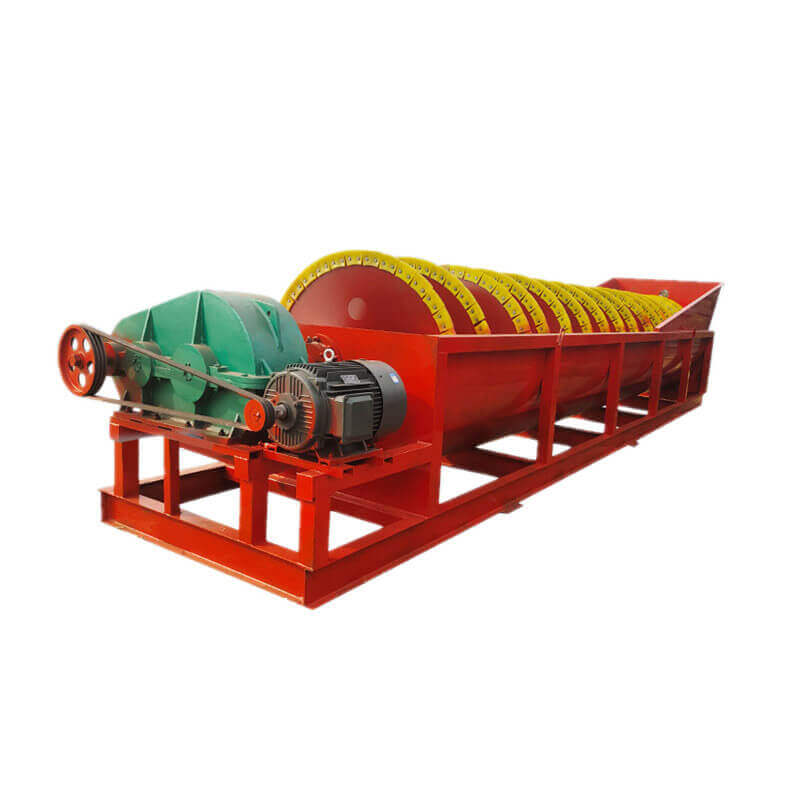
Lavadora de arena en espiral
En lavadora de arena en espiral forma un tanque de sedimentación en la parte inferior del tanque inclinado. La cabeza del tornillo se sumerge en el tanque de sedimentación. El motor acciona el tornillo a través del reductor para que gire, y el agua de limpieza se alimenta desde la parte inferior del tanque de sedimentación para completar la limpieza, deshidratación y clasificación.
En lavadora espiral de piedra(arena) is made of foreign advanced technology level, combined with domestic stone washing machine equipment, researched and developed new high-efficiency equipment, scientifically and rationally combines all components into one to ensure the integrity of the equipment, mainly used for construction sites, sand, and gravel. It is widely used in the desliming and screening of sand and gravel in factories, prefabrication plants, and hydropower construction sites, and can also be used in ore sorting operations. The spiral stone washing machine is suitable for processing materials with different fine- and coarse-grained specifications. The spiral stone washing machine uses a screw to propel the stones to separate them from water and soil, so the rocks are pretty clean after processing, and it is one of the more famous stone washing equipment.
Principio de funcionamiento
The spiral sand washing machine comprises a central shaft driven by a motor, a drum frame, a rotating threaded groove, and a metal screen. The steel bars connect the main shaft with the drum frame. A rotating threaded groove fixes the inner edge of the roller frame, a metal screen wraps the outer edge of the roller frame, and two water pipes go deep into the spiral cavity of the rotating thread groove. The spiral thread groove has a certain stroke length from the beginning to the end. When the stroke is completed, the cleaned stone has fully met or exceeded the national ministry standard. The mud and water washed from the rocks leak directly from the screen and flow into the sedimentation tank for sedimentation. The sedimented water can be pumped out again for recycling. The conveyor belt machine, the screening cylinder, and the screening washing cylinder are sequentially connected to the towable trailer for joint operation. There is a pair of meshing gears at both ends of the screen; the gears are integrated shafts, and the shaft is the transmission shaft of the motor. A couple of meshing bevel gears are installed on the gear shaft, a pulley is installed on the gear shaft, and the belt on the transmission shaft is driven. Pulley, the motor, which drives the whole machine to work. Four tugboats support the cleaning cylinder; the motor drives the reducer, and the large and small gears drive the cleaning cylinder to rotate at a low speed. The mud and stone powder aggregates are fed from the feed port and enter the rotating drum. The wear-resistant rubber liner installed at a certain angle in the cleaned drum is continuously lifted and thrown, and moves from the feed end to the discharge end. It is cycled multiple times and washed with forward or reverse flushing water during the process. The cleaned aggregate is screened and dehydrated by the discharge end drum sieve and then discharged. Wastewater containing sludge flows through the perforated baffle at the discharge or feed end.
Lavadora de arena de cangilones con ruedas
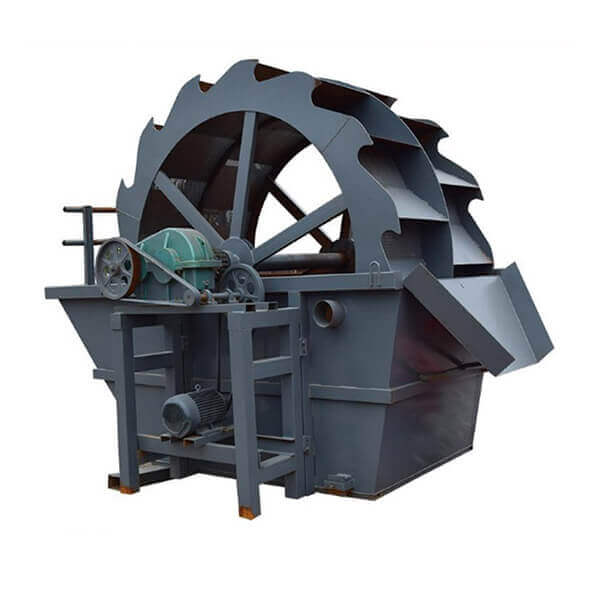
The wheel bucket sand washing machine (stone washing machine) is widely used in washing, grading, impurity removal, and other operations in metallurgy, building materials, hydropower, and other industries. It is suitable for washing fine-grained and coarse-grained materials. It is ideal for construction sand and road construction sand. The lavadora de arena has a reasonable structure, convenient maintenance, large processing capacity, low power consumption, and high cleaning degree. A novel sealing structure, fully enclosed oil bath transmission device, and adjustable overflow weir plate ensure that this series of products is efficient, durable, has good cleaning and dehydrating effects, and produces stable fine-grained products.
La lavadora de arena con cubo de ruedas consta de un cubo de ruedas, una base de máquina y un dispositivo de transmisión. La base de la máquina soporta la cuchara con ruedas y el sistema de transmisión y forma un tanque de lavado de arena. La arena levantada por la cuchara con ruedas se envía a través del dispositivo de transporte.
Características
1. La estructura de la máquina es simple, y el dispositivo de rodamiento de accionamiento del impulsor está aislado del agua y de los materiales que reciben agua, evitando significativamente los daños debidos al agua, la arena y los contaminantes.
2. La lavadora de arena (lavadora de piedra) tiene ventajas evidentes en comparación con la lavadora de arena de espiral tradicional cuando se utiliza para el lavado de arena en el campo de grava:
- The loss of medium-fine sand and stone powder is minimal. The gradation and fineness modulus of the washed construction sand meet the national standards of “Sand for Construction” and “Pebbles and Crushed Stones for Construction.”
- La máquina casi no tiene piezas de desgaste, salvo la criba.
- Larga vida útil, sin mantenimiento durante mucho tiempo.
Principio de funcionamiento
The motor and the reducer drive this type of sand washing machine (stone washing machine) to drive the impeller in the water tank to rotate circularly in the water tank so that the sand, gravel, or slag particles in the water tank are stirred and turned over in the water. Wash and discharge the water-receiving material after being dehydrated by the impeller.
The wheel bucket sand washing machine is a new type of water washing equipment in recent years. It can not only wash sand, but also wash stones, and it has a wide range of uses and a great social demand.
Lavadora de piedras de tambor
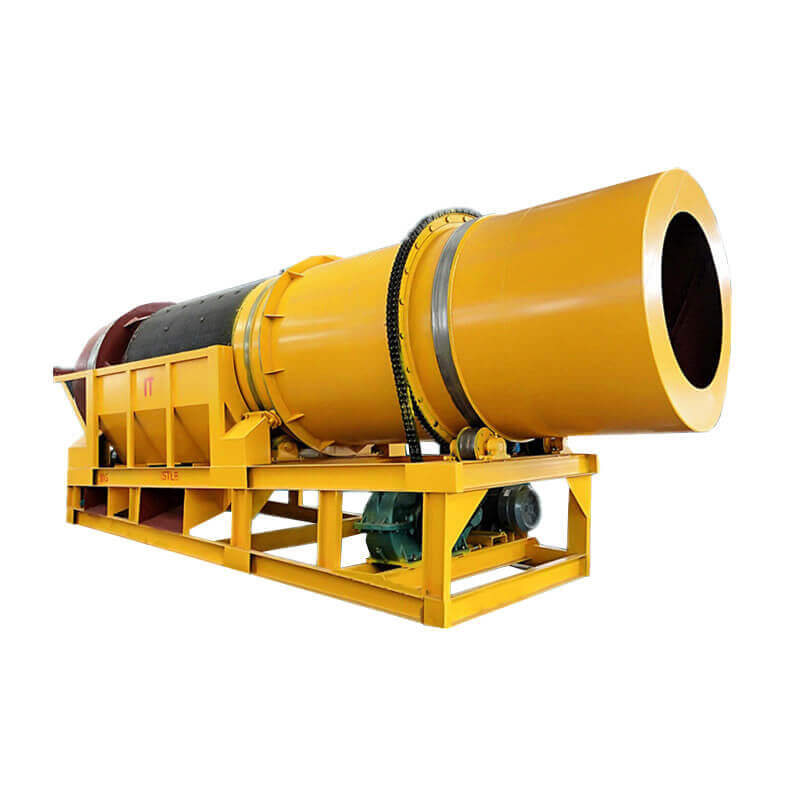
The drum stone washing machine makes the stones collide, rub, and roll with the rotation of the drum and is sprayed with a high-pressure water gun, so the water demand is great, but the output is large.
Normas de seguridad para el uso de lavadoras de piedra
- Antes de poner en marcha la lavadora de piedras, gire el rotor con la mano para comprobar si hay anomalías en todas las partes de la máquina.
- La unidad usuaria debe instalar el equipo de protección en la correa trapezoidal de acuerdo con las condiciones específicas del lugar antes de que pueda funcionar.
- Cuando la lavadora de piedras está en marcha, no está permitido reparar y limpiar, y está estrictamente prohibido arrancar el motor para el mantenimiento.
- No añada piedras de material que superen el tamaño especificado.
- La máquina debe girar en un sentido fijo y no en sentido contrario.
- Cuando la máquina esté en marcha, si se producen vibraciones o ruidos anormales, detenga inmediatamente la alimentación. Una vez agotado el material de la caja, pare el motor inmediatamente e inspecciónelo, y siga funcionando después de solucionar el problema. En caso de emergencia, pare primero el motor, retire el material de la cámara antes de arrancar la máquina, y póngala en marcha sin carga.
- No amontone el lugar de trabajo de la lavadora de piedras con artículos diversos, y debe haber un equipo de iluminación con luz suficiente.
Conclusión
Selecting the right stone washing machine is crucial for improving production efficiency and ensuring finished product quality. Different types of washing equipment—such as spiral, wheel bucket, and drum stone washing machines—each have unique advantages, allowing for flexible configuration based on material characteristics, production scale, and environmental requirements. Meanwhile, strictly adhering to safety operating procedures and maintaining equipment regularly not only extends the machine’s lifespan but also ensures the safety of workers. With continuous technological advancements, modern stone washing equipment is evolving toward greater energy efficiency, intelligence, and reliability, providing a more dependable cleaning solution for the aggregate, mining, and construction industries.
ÚLTIMOS PRODUCTOS
-

Inclined Vibrating Screen
The inclined vibrating screen is a simple and eff…
-
High Temperature & Pressure Gold Desorption Electrolysis System
High-Temperature & Pressure Gold Desorption Elect…
-
Normal Temperature & Pressure Gold Desorption Electrolysis System
The normal temperature & pressure gold desorption…


ÚLTIMAS NOTICIAS
- Modern Cyanide Residue Treatment Technologies for Gold Processing
- Traditional De-cyanidation Technologies for Gold Cyanide Residues
- Shaking Table, 3-Disc Dry Magnetic & Electrostatic Separator for W-Sn-Ta-Nb
- Mineral Analysis: The Foundation for Successful Mineral Processing Projects
- What Is Over-Grinding and How Can It Be Prevented?
 English
  French
  Spanish
  Portuguese
  Indonesian