



What’s Magnesite Ore?
Magnesite (MgCO₃) is a crucial industrial mineral that serves as the primary source of magnesium – a vital element in modern manufacturing and refractory applications. Initially valued for its refractory properties, magnesite has evolved into an essential raw material across multiple industries, from construction to military applications.
Key Characteristics of Magnesite
Chemical Composition
- Chemical formula: MgCO₃
- Theoretical composition: MgO 47.81%, CO₂ 52.19%
- Density: 2.9-3.1 g/cm³
- Mohs hardness: 3-5
Crystal Forms: Magnesite occurs in two primary forms
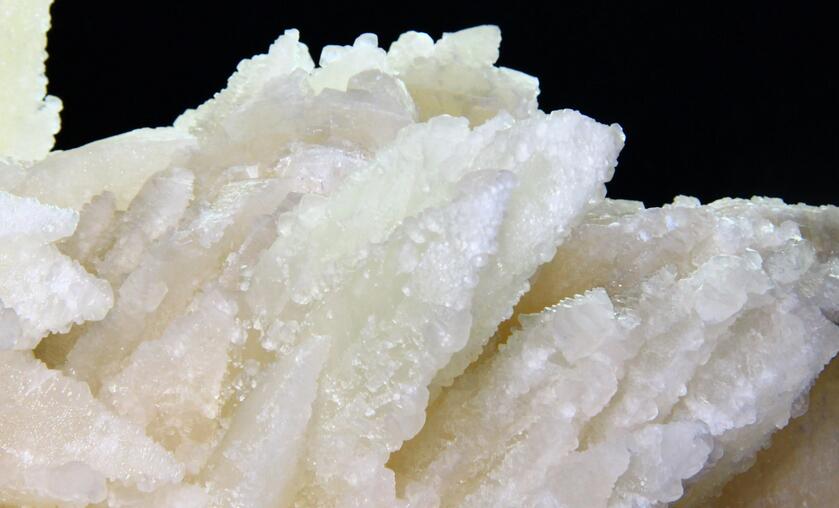
- Crystalline magnesite: Rhombohedral, columnar, platy, granular, compact, earthy, or fibrous forms. Often contains isomorphic substitutions of calcium and manganese, with Fe²⁺ potentially replacing Mg²⁺ to form a solid solution series with siderite (FeCO₃).
- Amorphous magnesite: Gel-like structure, typically stalactitic, lacking luster and cleavage, with conchoidal fracture.
Global Significance of Magnesite
- Resource Dominance: China holds about two-thirds of global magnesite reserves and produces half of the world’s supply
- Market Position: China plays a pivotal role in international magnesite trade
- Industrial Value Chain: From raw ore to processed products, magnesite serves as a foundation for multiple industrial processes
Magnesite Calcination Products and Applications
When heated to different temperatures(magnesite is heated to above 640°C, it begins to decompose into magnesium oxide and carbon dioxide), magnesite (MgCO₃) decomposes into various forms of magnesia (MgO), each with distinct properties and industrial applications:
1. Light-Burned Magnesia (700–1000°C)
When calcined at 700~1000℃, the carbon dioxide does not completely escape and becomes a powdery substance called light burnt magnesia (also called caustic magnesia, calcined magnesia, α-magnesium, chalcogenite)
Properties
- Powdered form with residual CO₂
- Highly reactive and adhesive
- Reacts with water to form magnesium hydroxide
Aplicaciones
- Cement & Construction: Such as magnesium-containing cement, heat, and sound insulation building materials.
- Ceramics & Chemicals: After the light burns, magnesium is chemically treated, and it can be made into a variety of magnesium salts, which can be used as raw materials for medicine, rubber, man-made fibers, and papermaking.
2. Dead-Burned Magnesia (1400–1800°C)
When calcined at 1400~1800℃, carbon dioxide completely escapes, and magnesia forms a compact periclase mass. Weigh burnt magnesia (also known as hard burnt magnesia, dead burnt magnesia, β-magnesium, etc.).
Properties
- Fully decomposed (CO₂ totally removed)
- Forms dense periclase crystals
- High refractoriness and chemical resistance
Aplicaciones
- Refractory material for metallurgy: Magnesia bricks, chrome-magnesia bricks, metallurgical powders
3. Fused Magnesia (2500–3000°C)
The recalcined magnesia is melted at 2500~3000℃, and after cooling and solidification, it develops into a perfect periclase crystal, called fused magnesia or molten magnesia.
Properties
- Fully crystallized periclase structure
- Extremely hard, water-resistant, chemically inert
- High electrical resistivity
Aplicaciones
- High-Temperature Furnaces: Linings, crucibles for alloy steel/non-ferrous metal smelting
- Insulation & Electronics: High-temperature electrical insulation
Magnesium metal can be extracted from magnesite by electrolysis, reduction, etc. Magnesium has the characteristics of being lightweight (the weight is only 2/3 of aluminum), active chemical properties, and good electrical and heat transfer performance. It can be fused with other metals to form a variety of alloys with low specific gravity, high strength, and good mechanical properties. It is widely used in the Military industry and the cutting-edge industry. Since magnesium is easy to oxidize and burn in the air to give off a strong light, magnesium powder can be used to make flares and incendiary bombs. Magnesium can also be used as a reducing agent for smelting titanium, zirconium, uranium, and beryllium, and as a spheroidizing agent for ductile iron and a desulfurizing agent for steel in the iron and steel industry.
Normas de calidad para los productos de magnesita
Los requisitos de granulometría de los productos de magnesita son los siguientes:
- 25~100mm: no more than 15% for those smaller than 25mm, no more than 10% for those larger than 100mm, and the maximum particle size is no more than 120mm.
- No more than 10% for those larger than 40mm, and the maximum particle size is not larger than 60mm.
- 0~25mm: no more than 10% for those larger than 25mm, and the maximum particle size is no more than 40mm.
- 50~80mm (for reverberatory kiln roasting light-burned magnesia powder): no more than 15% for those smaller than 50mm, no more than 10% for those larger than 180mm, and the maximum particle size is no more than 200mm.
| Normas de calidad para los productos de magnesita | |||
| Grado | Composición química Contenido (%) | ||
| MgO no es inferior a | CaO no superior a | SiO2 no es mayor que | |
| Extraordinario | 47 | 0.6 | 0.6 |
| Primer curso | 46 | 0.8 | 1.2 |
| Segundo curso | 45 | 1.5 | 1.5 |
| Tercer curso | 43 | 1.5 | 3.5 |
| Cuarto curso | 41 | 6 | 2 |
| Magnesita | 33 | 6 | 4 |
Proceso de flotación de magnesita
Overview of Beneficiation Methods
Magnesite is a carbonate mineral. We mainly adopt the direct flotation process and reverse flotation process to beneficiate magnesite.
Application Guidelines: The reverse flotation process is suitable for high-grade ores with less calcium and iron (Fe). For low-grade ore, we combine these two methods. The reverse flotation process removes silicon-containing materials, while the direct flotation process removes calcium and iron (Fe)-containing materials.
Complete Flotation Process Breakdown
Trituración y molienda
Aplastante: El mineral en bruto (menos de 200 mm) se tritura a 10~0 mm mediante un proceso de circuito cerrado de dos etapas que incluye un trituradora de mandíbulas y un criba vibratoria.
Rectificado: Closed-circuit grinding of the broken ore, grind the ore to -200mm 70%, and then enter the flotation process.
Etapa de separación
En esta fase, el equipo principal es un máquina de flotación, a stirring tank, thickener. The following two methods are the magnesite flotation process designed by us.
Proceso de flotación de magnesita de alta calidad
The ground ore is sent to a stirring tank and mixed with the flotation agent. Reverse flotation will get the concentrate puree. The pulp will then be transported to the thickener to reduce moisture.
Proceso de flotación de magnesita de baja calidad
Only the reverse flotation process is used, and the impurities in the raw ore cannot be removed. Therefore, for low-grade magnesite, we usually combine two methods, namely the reverse flotation process (one roughing-one cleaning) and the direct flotation process (one roughing-one cleaning). In the reverse flotation process, part of the tailings is separated, and at the same time, the concentrate and intermediate products are obtained by direct flotation.
Environmental Considerations
Modern magnesite processing emphasizes:
- Water recycling systems
- Tailings management
- Dust control measures
- Energy-efficient thermal processing
This comprehensive approach ensures sustainable production while meeting the stringent quality standards required by global industries.
Our Magnesite Case: Planta de lavado y cribado de magnesita de 200 TPH en Tanzania
ÚLTIMOS PRODUCTOS
-

Inclined Vibrating Screen
The inclined vibrating screen is a simple and eff…
-
High Temperature & Pressure Gold Desorption Electrolysis System
High-Temperature & Pressure Gold Desorption Elect…
-
Normal Temperature & Pressure Gold Desorption Electrolysis System
The normal temperature & pressure gold desorption…


ÚLTIMAS NOTICIAS
- Modern Cyanide Residue Treatment Technologies for Gold Processing
- Traditional De-cyanidation Technologies for Gold Cyanide Residues
- Shaking Table, 3-Disc Dry Magnetic & Electrostatic Separator for W-Sn-Ta-Nb
- Mineral Analysis: The Foundation for Successful Mineral Processing Projects
- What Is Over-Grinding and How Can It Be Prevented?
 English
  French
  Spanish
  Portuguese
  Indonesian