



Tin ore has played a pivotal role in human civilization since ancient times. As one of the first metals discovered and utilized by mankind, tin’s unique properties have made it invaluable across various industries – from ancient bronze production to modern electronics and advanced technologies. This comprehensive guide explores the essential aspects of tin ore, including its global distribution, different types found in nature, and how to process it. Whether you’re involved in mining operations, material science, or simply interested in mineral resources, understanding tin ore can provide valuable insights into this versatile metal’s journey from raw material to finished product.
Understanding Tin Ore
What is Tin Ore?
Tin ore is one of the metals that mankind first discovered and used. In the early days, our ancestors used tin, copper, and lead to produce bronze. Tin and tin alloys have been widely used in modern national defense, industry, advanced science and technology, and human life because of their ductility, chemical stability, corrosion resistance, low friction coefficient, and non-toxic tin salts.
Tin ore has the characteristics of strong development, rust resistance, and corrosion resistance. Tin can form various alloys with other metals and metals, and is easily plated on many metal surfaces. In particular, the surface of tin is corrosion-resistant and nontoxic.
Tin Ore Distribution in The World
Tin ore deposits are relatively concentrated in the world, mainly in Southeast Asia, Central South America, and eastern Russia, followed by eastern Africa, Western Europe, and western North America. According to the “Minerals Commodity Summaries 2011” data issued by the US Geological Survey, the global identification of reserves is about 11 million tons, mainly in China, Indonesia, Peru, Brazil, Bolivia, Malaysia, Nigeria, Myanmar, Australia, Mongolia, Kenya, and other countries.
China is one of the countries with rich Tin Mineral Resources in the world. At present, China has found more than 520 tin deposits (including ore points and mineralized points). According to the Mineral Resources Reserves Department of the Ministry of Land and Resources, the total reserves of tin in 2010 were 4 million 319 thousand tons of tin, which is the second largest in the world.
Tin Ore Types Existing in Nature
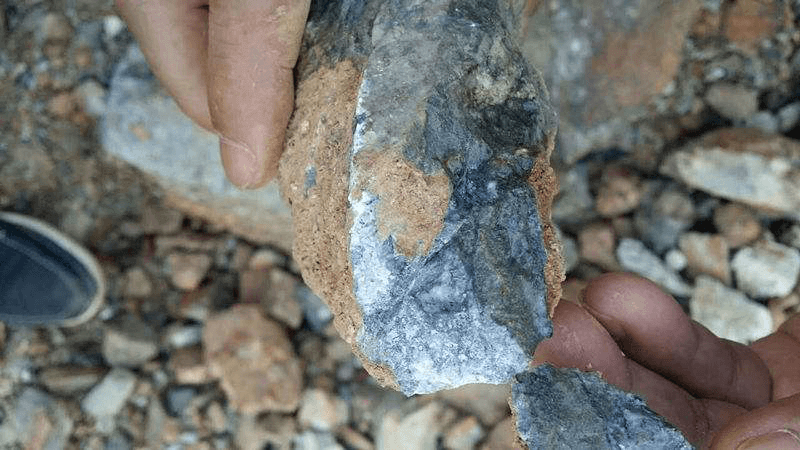
In nature, the tin ore exists in sand or alluvial raw material. This kind of tin ore, called sand tin or alluvial tin, the raw material may be with stone, sand, gravel, soil, sticky clay, sometimes with other magnetic iron, tungsten, ilmenite, hematite, monazite, zircon sand, and other minerals. The sand/alluvial tin ore mine site is possible near a river, on land, on a mountain, or in the bushes, etc. The tin ore concentrate is visible, usually with a size of several mm or below 1 mm.
The other type of tin ore is hard rock material, where tin exists in hard rock, such as normal stone, quartz vein above the land. The rock tin ore is mostly like to be with tungsten ore together. (Tin Tungsten Ore Mining Plant Solution)
Tin ore as below pictures
How to Process Tin Ore?
In general, the tin ore processing machine of heavy selection is generally used, and the ore dressing of tin ore with a high degree of dissociation of the monomer is basically the same as the ore dressing of gold ore, and a better ore dressing index can be obtained by simple screening.
For the ore processing of tin ore with low dissociation degree, it is often necessary to break the secondary structure by bar grinding and other processes, so as to improve the recovery rate and concentrate grade.
The basis of the gravitational separation of sand, the tin ore processing machine is also the principle of gravity separation. According to the specific gravity difference between tin ore and waste stone, the proportion of tin and waste stone in the tin deposit is very good, and the beneficiation effect can be obtained by the method and equipment of heavy separation in the tin ore processing plant.
At the same time, the advanced tin ore processing plant has the advantages of high efficiency, energy saving, environmental protection, and so on. The investment in equipment is small, and the operating cost is low. It is an ideal choice for the beneficiation of sands.
The equipment for the gravity separation of sand tin ore is mainly a jig. Sometimes, the rocking bed is also used to improve the recovery rate of fine-grained tin ore. The technological process of gravity separation for sand tin ore is screening, jigging, and dewatering. For the sand tin ore with a low degree of dissociation, two reelection processes are often needed: screen jig, rod mill, jigging, and dewatering.
It is the most ideal, the most economical, and the most effective tin ore dressing method at present, the most economical and the most effective method of tin ore dressing, with small investment in the SN mineral reelection equipment, low operating cost, and no pollution to the environment. The sieving heavy selection method is used in all big Sn washing plants, and stannum staging ships to deal with tin ore. The effect of ore dressing is good, and the application is very common.
JXSC Mine Machinery Company in China has more than 40 years of professional experience in tin ore processing plants, designs a full set of tin ore process flowcharts, provides a complete set of tin ore processing plants, and can send an engineer to the mine site for equipment installation and commissioning guidance. Have already built many tin ore processing plants in African countries. Include: China, Indonesia, Peru, Brazil, Bolivia, Malaysia, Nigeria, Myanmar, Australia, Mongolia, Kenya, etc.
Below is the flowchart description that JXSC Engineers recommend for the tin ore processing plant:
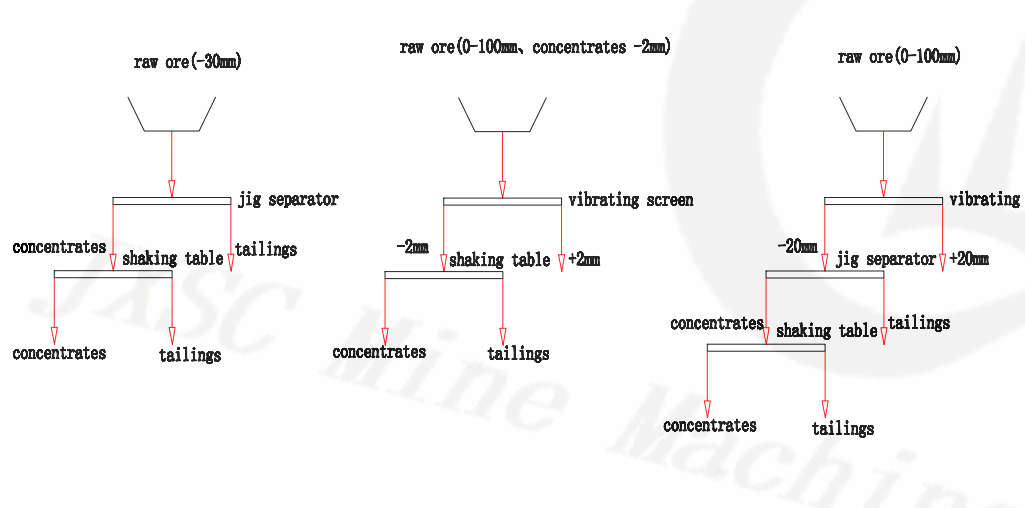
Alluvial/Placer Tin Ore Processing Plant
Alluvial/Placer tin processamento de minério fábrica, the flowchart can be as follows:
Falimentação->lavagem->peneiramento->separação primária -> concentração final
Alimentação de minério de estanho: Can be a vibration feeding machine, a feeding hopper, a belt feeder, a wheel loader, or an excavator that feeds directly. Usually will make a grizzly bar on a vibration feeder or hopper to remove big waste stones first. Depends on the process capacity to choose which feeding machine.
Tin Ore Washing: It is for washing the clay and mud in the raw material. The most commonly used are the tin ore washing lavador trommel and the tin ore washing ecrã trommel. The trommel scrubber washing machine is for washing tin ore raw material that has much sticky clay, trommel screen is for washing tin ore raw material that does not have much sticky clay.
Tin Ore Sieving: After washing, sieve out some bigger waste stones; the under-screen slurry will go to the next separation machine. This sieving process can use a trommel screen or vibration screen, or a tin ore high-frequency vibration screen.
Minério de estanho Primary Concentration: It is for the primary tin ore concentration process, the separador de jigueiras is the best choice. The concentrated ore discharged from them will be sent to the final concentration machine.
Concentração final: The concentrate ore from the tin ore jig machine will go to the tin ore shaking table concentration machine for final concentration, and can get high-grade tin ore concentrate.
Tin Ore Refining: If a much higher tin ore grade is available, we can use a magnetic separator to remove other magnetic minerals, such as iron, ilmenite, hematite, coltan, monazite, etc.
Hard Rock Tin Ore Processing
Rtipo de tinta estanho processamento de minério fábrica, the flowchart can be as follows:
Feeding-> trituração->trituração->primário separação -> concentração final-> atualização
The feeding way, primary separation, final concentration, and tin ore refining process are almost the same as the above alluvial/sand tin ore processing plant.
Below is the crushing and grinding stage description for the rock tin ore processing plant:
Trituração: For crushing the big rock tin ore to a smaller size before grinding. The crushers can be rough rock tin ore triturador de maxilas, rock tin fine jaw crusher, rock tin cone crusher, rock tin hammer crusher, roller crusher rock, depending on the rock tin ore feeding size and process capacity to use which kind of crusher.
Moagem: After crushing the stone to a smaller size, need to grind to be ground into powder by a tin ore máquina de moer bolas ou moinho de panelas húmidas, or another rock grinding machine, so the tin concentrate can be released from the stone. Then go to the gold separation machine and the concentration machine. ( Tin ore shaking table)
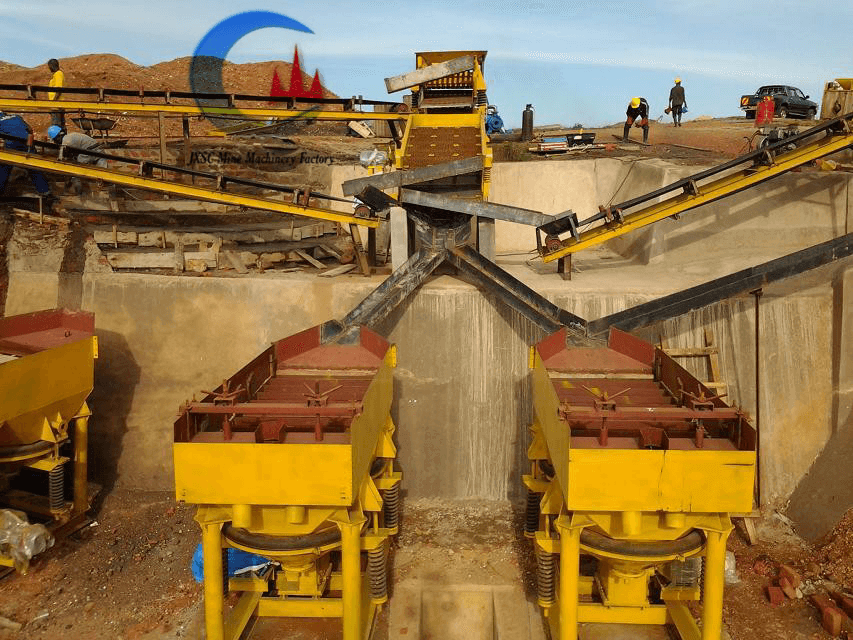
Below are some pictures of the tin ore processing plant in Uganda
Conclusão
Tin ore continues to be a vital resource in our modern world, serving critical applications across numerous industries. From its historical significance in bronze production to contemporary uses in electronics and industrial applications, tin’s unique properties ensure its ongoing importance. The processing of tin ore, whether alluvial or hard rock varieties, requires specialized techniques that balance efficiency with environmental considerations. As global demand for tin continues, understanding its geological distribution, mineral characteristics, and processing methods becomes increasingly valuable. With advancing technologies in ore processing and new applications emerging in green technologies, the future of tin ore remains bright, promising continued relevance in our material world.
For operations looking to establish tin processing plants, partnering with experienced equipment providers like JXSC Mine Machinery Company can ensure optimal setup and efficient processing, maximizing both resource recovery and operational profitability.
PRODUTOS MAIS RECENTES
-

SFM-8 Lab Grinder
【Max. Power Consumption】 150W 【Morta…
-
Cyclosizer
【Feeding Capacity】< 100g/time 【Feeding …
-
JKZ/2JKZ Mine Shaft Sinking Hoist
【Power Source】Electric Motor Drive 【Motor Spee…


 English
  French
  Spanish
  Portuguese
  Indonesian