



Introdução
South Africa, once the world’s undisputed “Golden Kingdom,” now faces a pivotal moment in its mining legacy. Amid political turbulence, labor tensions, and dwindling high-grade deposits, its gold industry—once the backbone of the economy—stands at a crossroads. But does this mean the end of South Africa’s gold dominance? Or is there still untapped potential beneath its soil?
This article traces the journey of South Africa’s gold—from its cosmic origins to its uncertain future—and examines whether the nation can reclaim its golden glory.
South Africa’s Golden Past: A Meteorite’s Gift
The story of South Africa’s gold begins with a cataclysmic event—a 5-10 km wide meteorite that struck the region 2 billion years ago, forming the Vredefort Dome (visible today near Johannesburg).
Joanesburgo
Two billion years ago, a giant star meteorite with a diameter of 5 to 10 kilometers entered the atmosphere and hit the Earth in southern Africa. Fortunately, there was only some simple early life on the earth that could do photosynthesis. But it still left its mark on the earth, which is today in the Vredefort Dome in the north-central part of South Africa.
Atualmente, ainda se pode encontrar esta cratera no sudoeste de Joanesburgo.
Imagens do mapa do Google
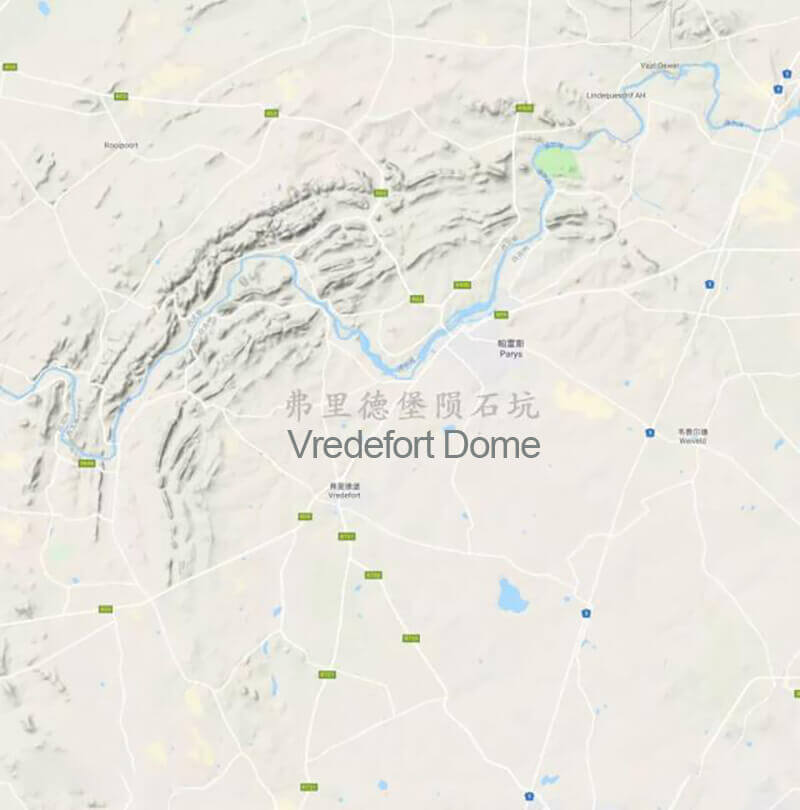
The huge kinetic energy of the meteorite caused severe vibration on the surface of the fragile crust, directly distorted the geological environment within a 300 km diameter, and turned the underground stratum upside down. A half crater was formed 25 km from the collision point, at 80-120. Several broken mountain belts were formed within a kilometer, and a volcano was formed in the collision center. Magma once again brings gold elements to the ground, while the ring-shaped mountains protect these minerals that come to the surface from weathering and erosion.
The red dot is the center of the impact, next to it are the first semi-craters, and the second layer of the northeast is Johannesburg.
Imagem da wikipedia@Oggmus
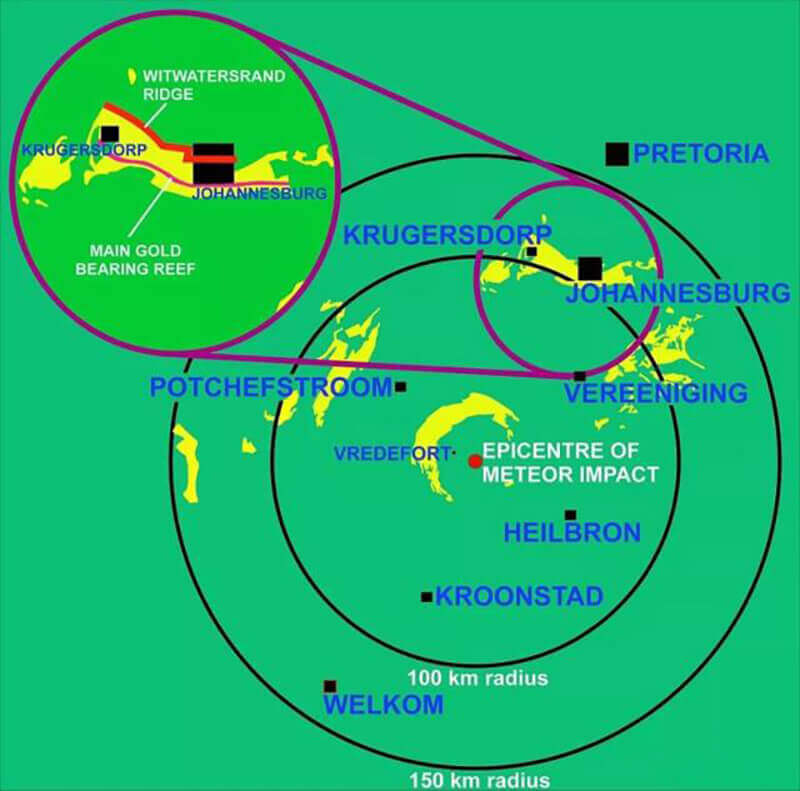
A atual cidade de Joanesburgo situa-se no sopé da cratera formada pelos meteoritos no nordeste do país. Esta é a dádiva da energia natural aos sul-africanos.
Cintura de ouro de Witwatersrand
The gold belt, formed by the craton, meteorite, and volcano, is known as the Witwatersrand gold belt in South Africa today. The name means “mountain with white water” in Afrikaans. The Dutch colonists who first discovered this white water mountain range did not realize that there would be gold treasures.
A principal zona de Witwatersrand - famosa zona da corrida ao ouro.
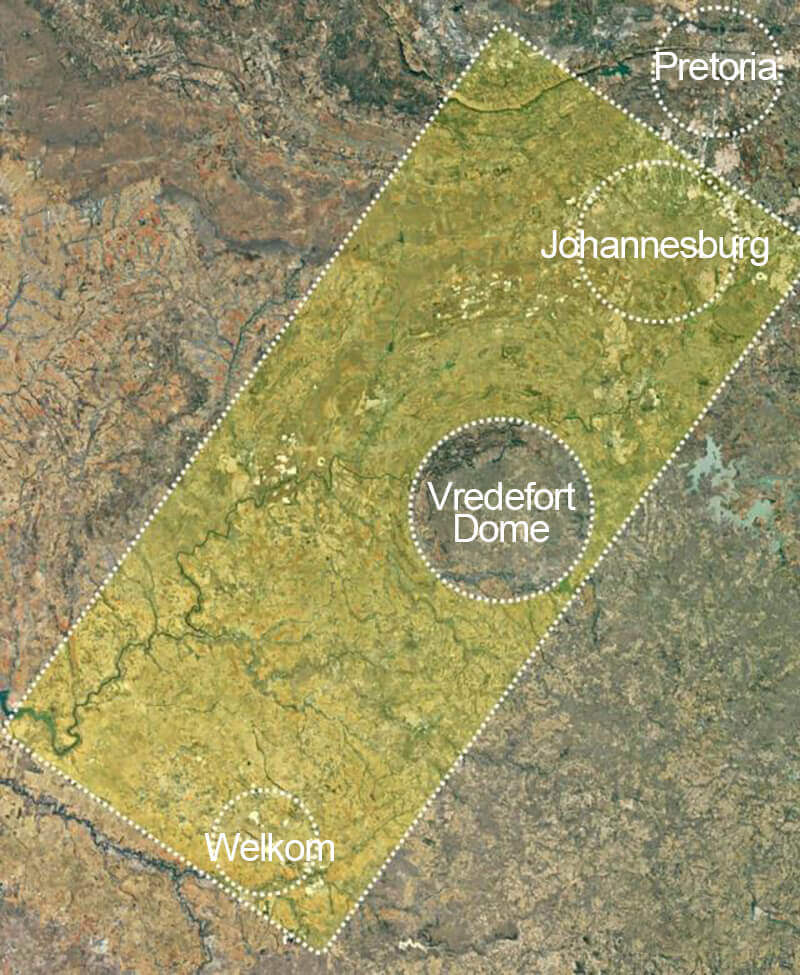
Gold Rush & Johannesburg’s Birth
1852: First gold discovery by a British prospector, kept secret
In 1852, a British miner discovered a gold mine on his farm. He privately mined and left the area after selling gold to the local government. A year later, a Frenchman found gold in the river. After reporting to the authorities, the information was sealed. But there isn’t a wall in the world that hasn’t had a crack. As the news spreads, more and more people come to the place to hunt for treasure. Most of them were explorers who failed in the digging in California and eastern Australia.
The local governor, who was afraid of trouble, offered a triangular temporary camping area for the gold diggers to stay. The gold diggers soon established permanent residences here. The prototype of Johannesburg was laid at this time, which is why the road in the center of Johannesburg is so narrow – the gold diggers of the year did not expect that the future would be a world-class city.
Minas de ouro de alto teor perto de Joanesburgo
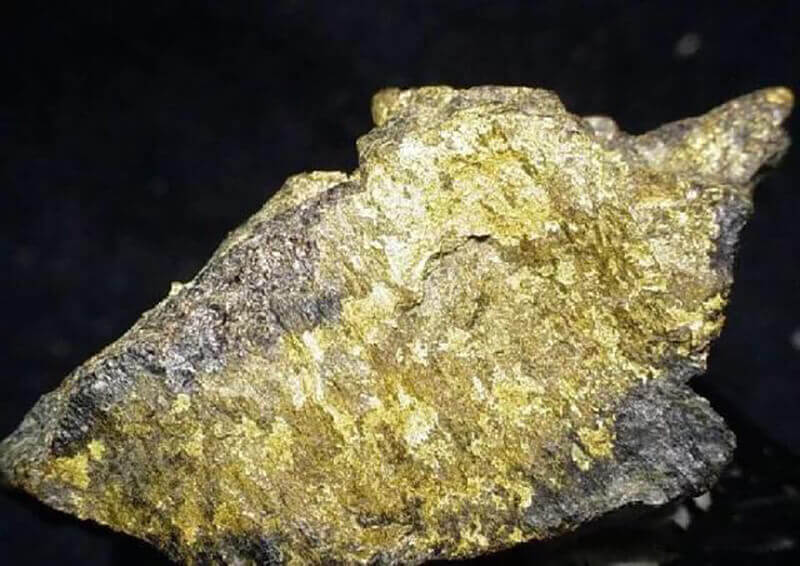
1886: A major gold rush triggered Johannesburg’s founding—a city built by fortune seekers
In less than a decade, Johannesburg has grown faster than the port city of Cape Town and has spawned South Africa’s first railway. Named after the two Dutch men who first settled in the mines (Johann and Johannes, the most common Dutch names of the time), the new city, and based on the city, continued to the south of the Witwatersrand gold belt expansion.
Produção de ouro em Witwatersrand de 1898 a 1910
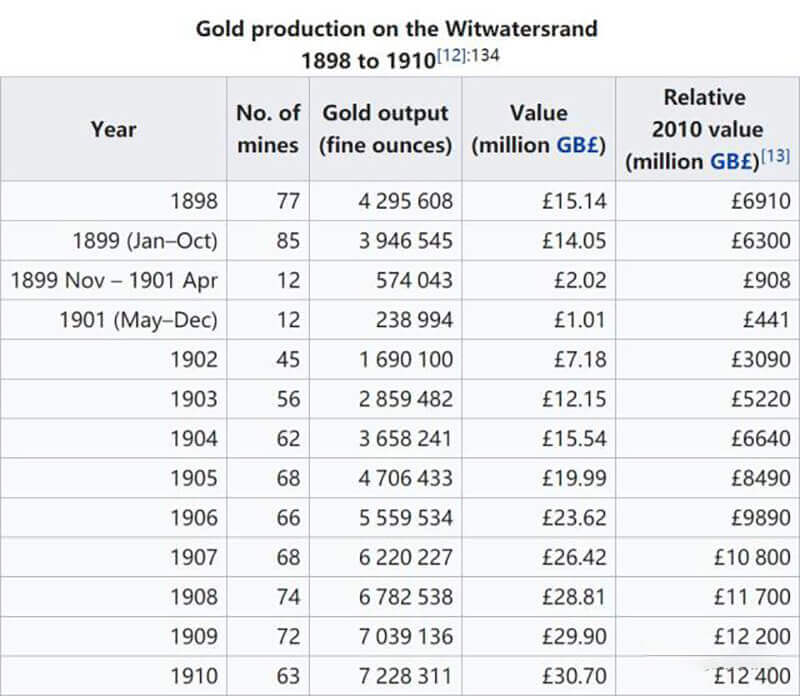
Mining is not as easy as opening a party. After all, gold left on the earth’s surface is only a small amount. As mining efforts continue to increase, exploration of the underground began.
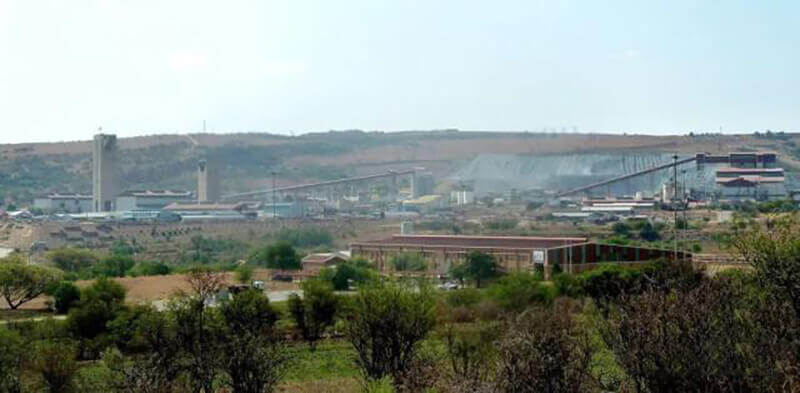
The most important old gold mine near Johannesburg is the deepest mine in the world. The deepest is 4 kilometers from the surface, and it takes more than an hour to go up and down. Miners come to the bottom of the gold mine, where the temperature has reached 66 °C. They have to rely on the cooling device to cool down to about 30 °C to continue working; the production conditions are extremely difficult.
Mina de ouro de Mponeng
Obviously, in the colonial era, such hard work was initially done by white gold diggers. Once the investment is to go deep into the ground and mechanized, the big capital will enter, and they will choose to use slaves.
As contradições étnicas que são importantes nos conflitos sociais na África do Sul estão a aprofundar-se gradualmente em relações laborais tão desiguais.
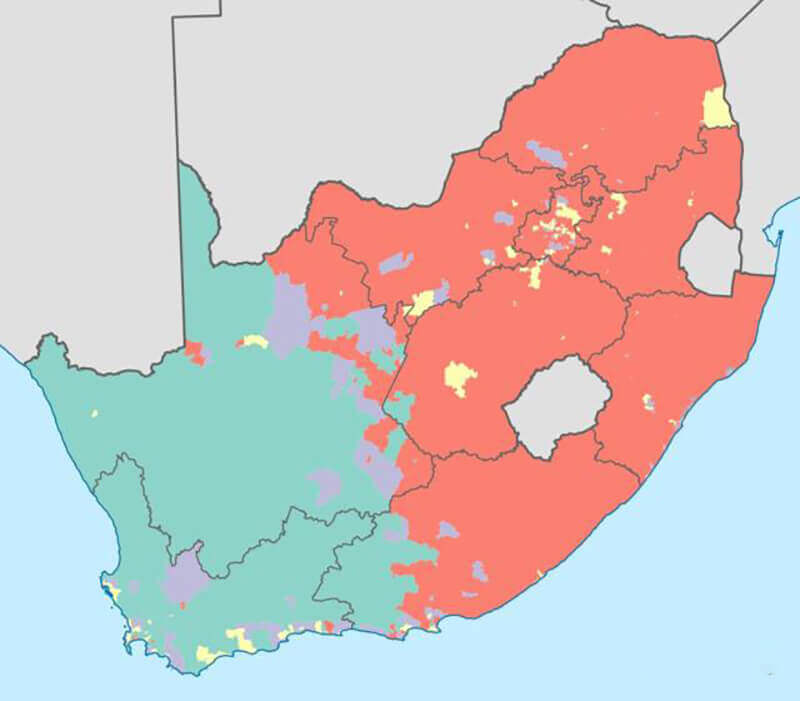
In the figure below, red represents blacks (about 80% of the total population); green represents people of color, mainly mixed; yellow represents whites, who account for only about 8% of the total population.
The good news is that South Africa has accumulated a lot of knowledge about metallurgy and gained wealth from it because of the early development of gold mines. Gold exports once accounted for 1/3 of South Africa’s exports, while steel, platinum, and silver associated with gold mines are also important export products. According to data released by the South African Mining Association in 2012, the mining industry provided 1 million jobs nationwide, accounting for 12% of national direct investment and absorbing 43% of foreign investment.
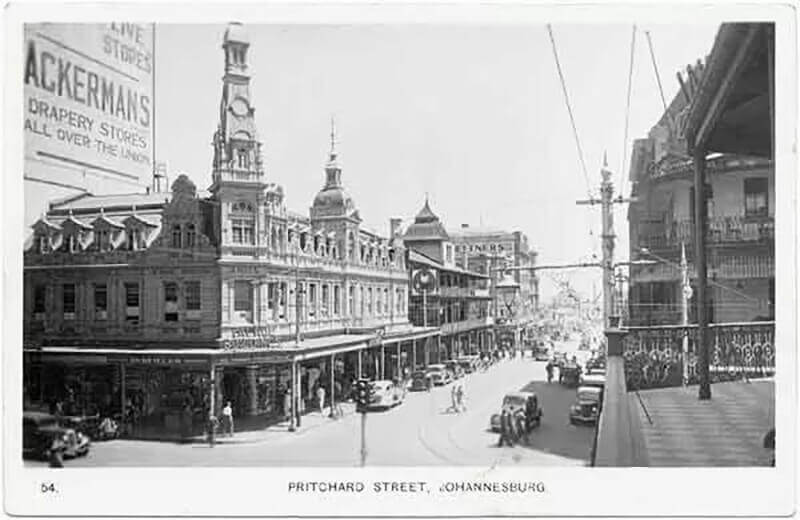
No African city in 1940 could compete with Johannesburg
The Fall of The Golden Kingdom
More than 100 years of mining have enabled South Africa to harvest much from its gold mines. But like all singular mineral industries, the South African gold mining industry is now heading for the end.
The South African Bureau of Statistics released data in early May. National gold production fell for 18 consecutive months, down 18% year-on-year, the longest contraction after the 2008 subprime crisis. As a result, the entire mining industry is in a downturn, total output continues to decline, and even the production of platinum group metals, the Pearl of South Africa’s industry, has declined.
A produção de ouro diminui de ano para ano
O pico de uma produção anual de 1.000 toneladas já não pode ser visto.
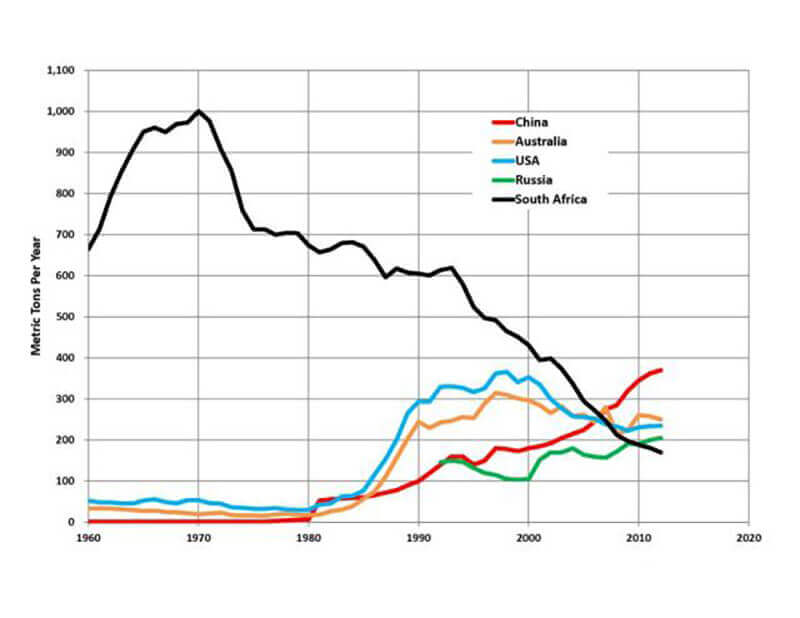
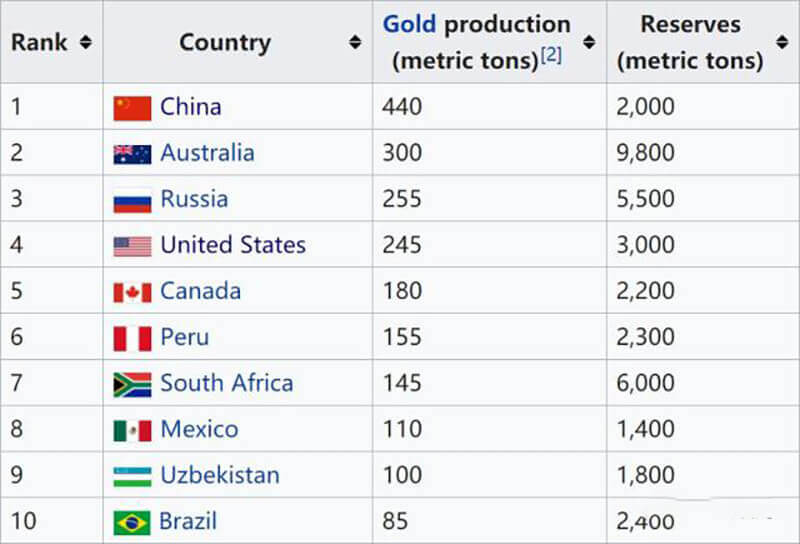
Frankly, the decline in mining capacity is not just in recent days. In 1970, South Africa mined 1,000 tons of gold, which set a new record for humans. In contrast, China ( the largest gold producer today) can only mine more than 400 tons a year, and the global gold production is only over 3,200 tons. This seems to be an inflection point. Since then, the amount of gold produced in South Africa has been declining year by year, and it has been surpassed by other major gold-producing countries.
The first column is the output quantity, and the second column is the reserve.
Classificação da produção de ouro em 2017
There are many reasons for the shrinking of production. The main reason is that it has been mined for more than a hundred years; even the South African Witwatersrand gold belt, which has rich gold reserves, could not carry on to be mined.
Mina de ouro de Mponeng e seus arredores
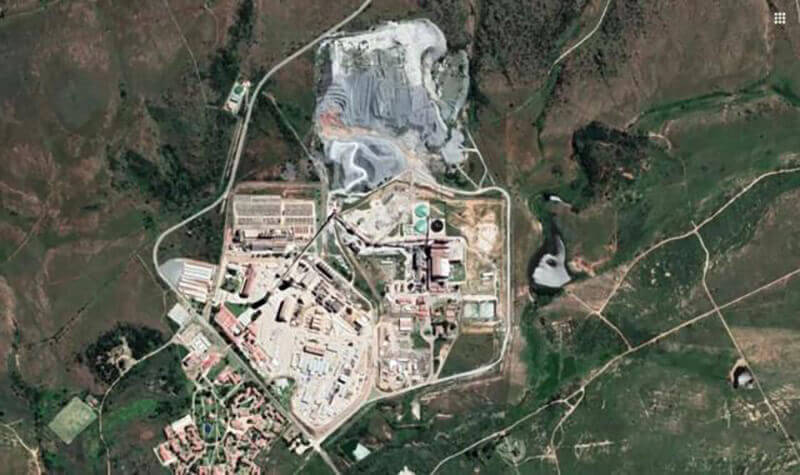
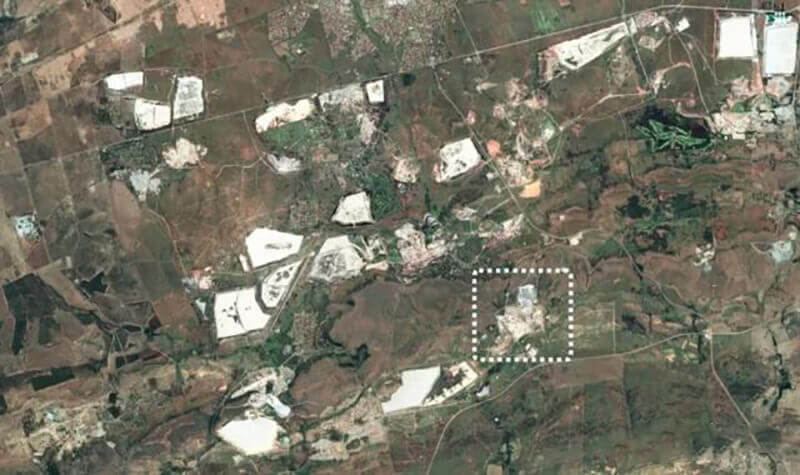
Driefontein, the old gold mine in South Africa, has recently faced a shutdown. The depth of the gold mine reached 3,200 meters. However, last year the output of this gold mine was only 300,000 ounces, which was 80% less than the peak capacity. In the face of the difficulty of refining, its owner has indicated that it will not extend the period of use.
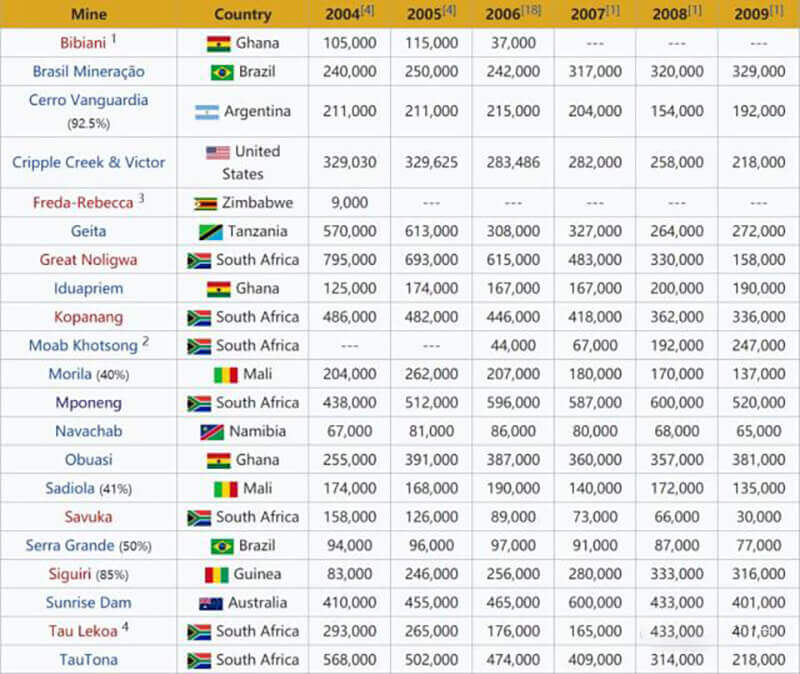
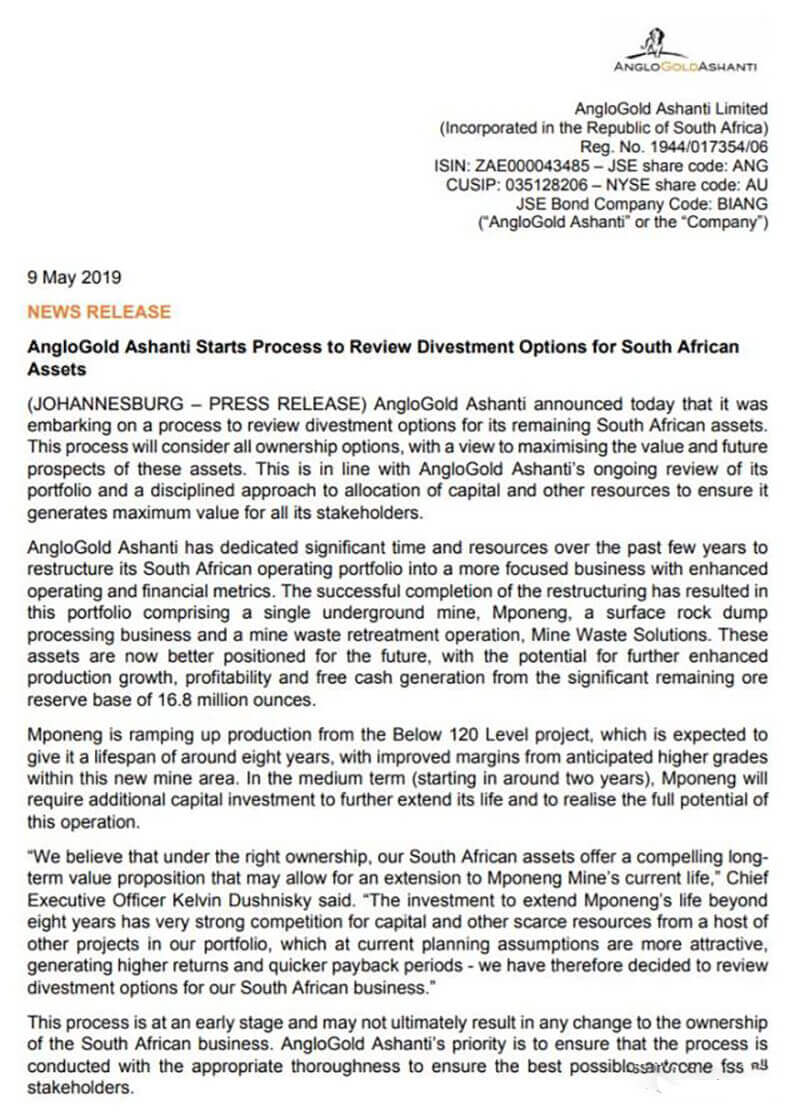
O Mponeng Gold Mine is also a fateful one. Its owner, AngloGold, South Africa’s largest mining company, recently announced that it will sell the legendary old gold mine. They intend to withdraw from the South African gold mining industry and concentrate on the development of other industrial minerals. It is hoped that other companies with rich financial resources will continue the life of Mponeng.
Of course, as a multinational giant, AngloGold can’t put resources into South Africa.
Como se pode ver na imagem abaixo, a África Ocidental e o Brasil são claramente também importantes locais de produção de ouro.
(A produção é em onças)
Political Factor
In the face of the reality of the decline in production capacity, which one of the pick-ups dares to take over?
Gold mining is a pillar industry in the South, and the debate on the ‘Nationalization of the gold mining industry’ in Congress has never stopped. Although the South African government and the ruling party said that it is impossible to nationalize, the radical left-wing party coalition is already discussing the details of licensing and franchise fees. Who knows which day the radical politicians will be in the upper position?
Devo dizer que já o estão a fazer.
The Mining and Petroleum Resources Development Act promulgated by South Africa in 2006 stipulates that if a mining company holds a mining permit for a piece of land but does not exploit it for many years, the local minerals will be nationalized and re-established. In this way, the mine owner wants to make a strategic layout in South Africa, and it is unrealistic to buy the land without a mine. The profit-seeking capital is, of course, far from the South African mining industry.
A AngloGold já está a planear retirar-se da África do Sul.
The Future: Reinventing the Gold Economy
Experts predict two paths:
Pessimistic View:
- Output drops to <80 tons/year by 2040
- State nationalization scares off FDI
Optimistic View:
- High-tech mining extends mine lives
- Value-added industries (jewelry, refining) grow
- Green mining tech reduces costs
Conclusion: A Fading Giant or a Phoenix?
South Africa’s gold era isn’t over—it’s evolving. The Witwatersrand still holds billions in untapped wealth, but extracting it requires:
- Political stability to attract investment
- Innovation to mine ultra-deep deposits
- Economic diversification beyond raw exports
As one Johannesburg miner put it: “Gold built this nation. It’s still here—we just need smarter ways to bring it up.”
The “Golden Kingdom” may never regain its 1970s peak, but with the right reforms, its gold industry could shine again—just differently.
【Estender a leitura】
Descrição e métodos de tratamento do ouro
Depósito de ouro de placer e beneficiamento de mineração
Como separar o ouro das areias?
PRODUTOS MAIS RECENTES
-

Inclined Vibrating Screen
The inclined vibrating screen is a simple and eff…
-
High Temperature & Pressure Gold Desorption Electrolysis System
High-Temperature & Pressure Gold Desorption Elect…
-
Normal Temperature & Pressure Gold Desorption Electrolysis System
The normal temperature & pressure gold desorption…


NOTÍCIAS MAIS RECENTES
- Modern Cyanide Residue Treatment Technologies for Gold Processing
- Traditional De-cyanidation Technologies for Gold Cyanide Residues
- Shaking Table, 3-Disc Dry Magnetic & Electrostatic Separator for W-Sn-Ta-Nb
- Mineral Analysis: The Foundation for Successful Mineral Processing Projects
- What Is Over-Grinding and How Can It Be Prevented?
 English
  French
  Spanish
  Portuguese
  Indonesian