



Ball mill steel balls are essential consumables in grinding plants. Their quantity, size, and quality significantly impact grinding efficiency and production rates. Too many or too few balls can reduce performance—optimal ball loading ensures maximum grinding capacity while minimizing energy consumption. This article explores the ideal number of steel balls for different ball mills, along with proper ball loading techniques.
Significance of Ball Mill Balls
O moinho de bolas is one of the necessary pieces of equipment for the mine beneficiation plant, and the investment in the ball mill accounted for a large proportion of the entire beneficiation plant. Steel balls grind ore into fine particles. While grinding the ore block, the steel balls continuously wear and become smaller until it fails, so the grinding balls’ consumption is extremely large. And the quality, quantity, and size of the ball mill balls will affect the grinding effect of the ball mill.
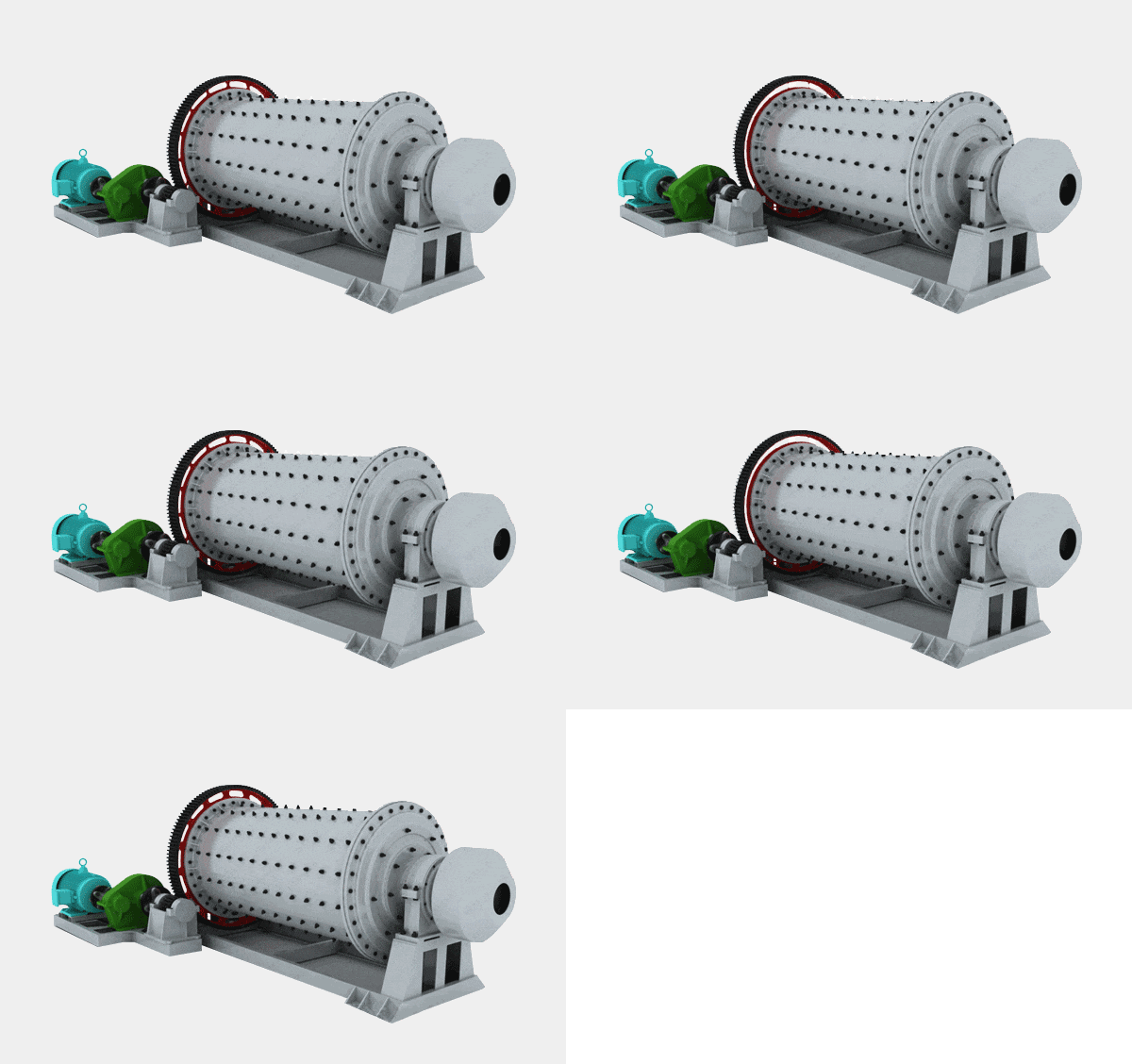
Key Factors Affecting Grinding Efficiency
- Ball quantity: If the ball mill is loaded with too many grinding balls, the steel balls are easily overlapped with each other, and the grinding effect is lost. Moreover, some of the steel balls are thrown before the height is raised, which reduces the grinding capacity as a whole and increases the power of the ball mill. If the ball mill contains too few balls and there is not enough capacity between the steel balls to grind the material, it will prolong the working time of the ball mill, which will not only consume a lot of energy but also cause low grinding efficiency. Therefore, the rationality of ball mill ball loading Very important.
- Ball size and quality: Large balls break down coarse ore, while smaller balls refine particles. Worn-out balls reduce efficiency and must be replaced.
How Many Balls?
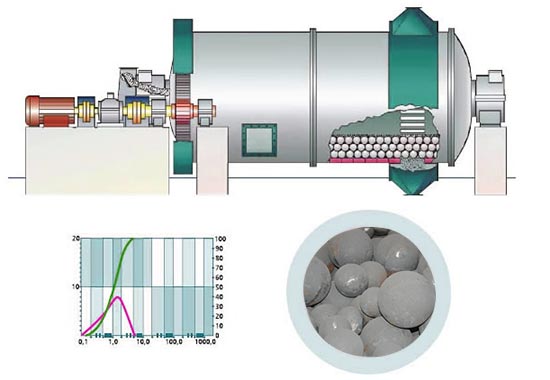
In general, the volume of the ball mill steel ball is lower than the horizontal line in the cylinder. It is better to control the ball amount at about 40-50%. For smaller ball mills, the balls account for about 35% at best; this can effectively ensure that the steel balls can fall freely, which creates a larger impact force.
Ball mill steel balls mainly include: cast iron balls, forged steel balls, rolled steel balls, and the diameter of ball mill steel balls is usually Φ20 mm ~ Φ120 mm, and the maximum steel ball diameter used by super large ball mills is Φ130mm ~ Φ150mm.
How to Add Milling Balls Proportionately?
Generally, the newly installed ball mill has a running-in process. During the running-in process, the number of steel balls is added for the first time, which accounts for 80% of the maximum ball load of the ball mill. Steel ball sizes are Φ120㎜, Φ100㎜, Φ80㎜, Φ60㎜, Φ40㎜.
For example, the 100-150 tons ball mill has a maximum ball loading capacity of 9.5-10 tons. For the first time, 30% – 40% of the steel balls (120mm and 100mm), 40% – 30% of the medium balls (80mm), and 30% of the small balls (60mm and 40mm) were added.
Why are only 80% of steel balls added in the running-in process of the ball mill? Because after the ball mill is installed, the large and small teeth of the ball mill need to mesh, and the handling capacity (ore volume) should be gradually increased. After two or three days of normal continuous operation of the ball mill, stop the ball mill and check the meshing condition of the large and small gears. When everything is normal, open the manhole cover of the ball mill and add the remaining 20% steel balls for the second time.
Reasonable Milling Balls Evaluation
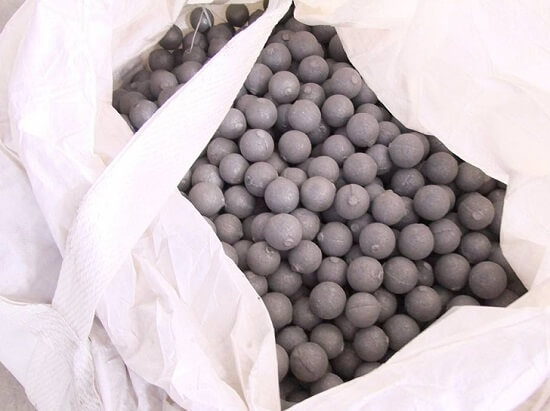
Falando por experiência própria, depois de utilizar o moinho de bolas durante algum tempo, se a bola precisar de ser enchida ou substituída, os dois pontos seguintes podem ser utilizados para determinar se a quantidade de carga das bolas é razoável.
1. Under the premise that the classifier overflow fineness and the ball mill’s ore supply amount are unchanged, the amount of sand returned is reduced, which indicates that the grinding function has been strengthened and the ball filling amount is suitable. At this time, the ball amount can be appropriately increased to increase grinding efficiency.
2. Observation of the sand return result of the classifier. If the particle size of the material close to the overflow is found to increase, it means that the ball mill steel ball proportion is insufficient, and the ball amount needs to be increased; otherwise, if the coarse particles increase in the return sand, it indicates that the number of big balls is relatively small, and it would be better to add some big balls.
Conclusão
Optimal ball mill efficiency requires:
- Maintaining a 40-50% ball fill ratio (lower for small mills)
- Balancing large & small balls for effective grinding
- Following a gradual ball addition process
- Regularly monitoring classifier output
For customized grinding solutions and ball mill pricing, contact our experts today! Fast response guaranteed.
PRODUTOS MAIS RECENTES
-

Inclined Vibrating Screen
The inclined vibrating screen is a simple and eff…
-
High Temperature & Pressure Gold Desorption Electrolysis System
High-Temperature & Pressure Gold Desorption Elect…
-
Normal Temperature & Pressure Gold Desorption Electrolysis System
The normal temperature & pressure gold desorption…


NOTÍCIAS MAIS RECENTES
- Modern Cyanide Residue Treatment Technologies for Gold Processing
- Traditional De-cyanidation Technologies for Gold Cyanide Residues
- Shaking Table, 3-Disc Dry Magnetic & Electrostatic Separator for W-Sn-Ta-Nb
- Mineral Analysis: The Foundation for Successful Mineral Processing Projects
- What Is Over-Grinding and How Can It Be Prevented?
 English
  French
  Spanish
  Portuguese
  Indonesian