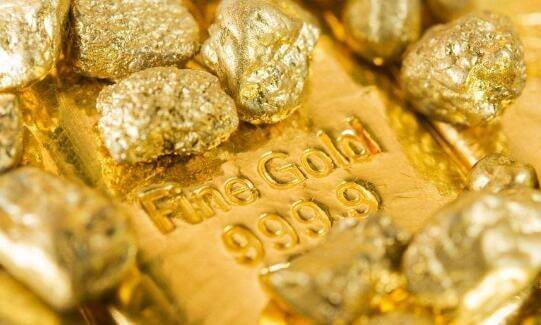
Segundo os relatórios, em 2016, um arqueólogo que trabalhava em escavações na Bulgária descobriu uma descoberta minúscula, mas significativa: uma conta de ouro com cerca de um oitavo de polegada de diâmetro, que os cientistas acreditam que pode ser descoberta até agora. A mais antiga joia de ouro refinado, que remonta a 4600 a.C.
Esta descoberta é importante não só para os cientistas, mas também para os investidores. Em suma, isto significa que os seres humanos têm estado a extrair e a refinar ouro há mais de 6.600 anos.
Se isto for verdade, os investidores em ouro podem pensar: Após sete mil anos de exploração mineira, quanto ouro resta no mundo para futuras descobertas, exploração mineira e refinação?
How Gold Was Formed?
Ouro is a heavy metal that is not easy to synthesize in the universe. Only when a supernova erupts to generate a neutron star, or when two neutron stars collide, can gold be synthesized. Gold is rare on Earth.
According to scientists, the Earth’s gold content is about one hundred millionth of the Earth’s mass, about 60 trillion tons. But most of this gold is located in the core of the Earth, and it cannot be mined at all with the current technology of mankind.
The vast majority of gold is concentrated in the depths of the earth because of its high density. When the early Earth’s material is in a molten state, heavy matter declines, and the differentiation of light matter rises to form such a result. Those gold have remained in the core of the earth since then. According to the theory of Earth formation, the precious metals on the Earth have already sunk into the core, and it is impossible for mankind to extract a large amount of gold.
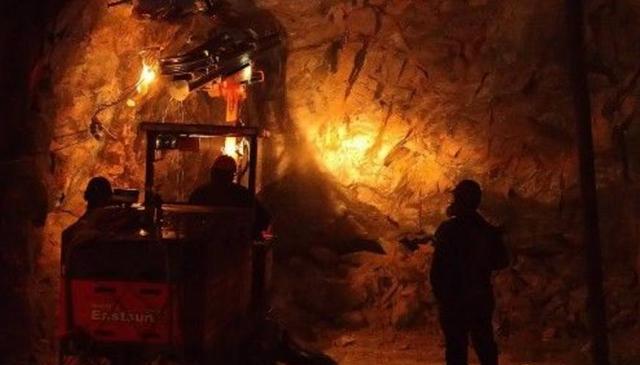
Na antiga mina de perfuração ultra-profunda de Kola, na União Soviética, foram descobertos depósitos de ouro na área subterrânea de mais de 9.000 metros, onde o teor de ouro da mina de ouro pode atingir 9 gramas por tonelada, muito superior ao teor de ouro à superfície.
Extração de ouro in South Africa has also been deep underground for 4 kilometers; some places where volcanic eruptions have occurred may also contain natural pure gold nuggets, which also indicates that the gold content of the core is higher than the surface.
How Much Gold Has Been Mined?
The Industrial Trade Organization, the World Gold Council (WGC), estimates that since the first gold bead was smelted, humans have extracted about 190,000 metric tons of gold, accounting for about 77% of the world’s recoverable reserves. Because gold is not easy to wear and is almost indestructible, most of the gold that is mined today still exists in the form of jewelry, gold coins, gold bars, and electronic products.
Interestingly, most of this gold was mined in the past half-century. Gold is considered valuable, and it has been used as jewelry and currency for most of recorded world history, dating back more than 7,000 years.
Nos primeiros 6800 anos desta história, ou seja, até 1835, a produção mundial de ouro foi inferior a 20.000 toneladas métricas. Entre 1848 e 1855, a corrida ao ouro na Califórnia fez com que a produção histórica mundial de ouro ultrapassasse as 20.000 toneladas métricas.
No século seguinte, no início da década de 1940, a produção acumulada de ouro triplicou para 60.000 toneladas métricas e, nos 30 anos seguintes, aumentou rapidamente em 50% para 90.000 toneladas métricas.
How Much Gold is Left to Be Mined?
It is reported that there may be 580 deposits with 1 million ounces (28.3 tons) of gold or more, and there may be 3.72 billion ounces of gold (115,700 tons) underground. The world’s remaining reserves account for only 30% of the reserves already produced.
Even under the best conditions, only 1.82 billion ounces (56,608 tons) of gold can be mined. The challenge for the current gold companies is not that there is no prospecting potential, but that the minas de ouro that are easy to find have been discovered and mined.
De acordo com a recente taxa de produção global de aproximadamente 3.100 toneladas métricas por ano, isto significa que, em menos de 20 anos, todas as reservas de ouro recuperáveis do mundo estarão esgotadas.
How Will The Mining Company be Affected?
As gold reserves dry up, it is harder to find new gold deposits, and production costs rise over time, which may curb the profitability of global gold mining companies.
Por exemplo, em 2004, a empresa de extração de ouro Ouro de Barrick informou que o custo médio de produção por onça de ouro extraído era de apenas $300. Em 2011, este número mais do que duplicou para $630 por onça e continuou a aumentar para $800 por onça em 2014. De acordo com os dados da S&P Global Market Intelligence, os custos de produção estabilizaram desde então, e a Barrick registou no ano passado um custo de produção de $780.
Por coincidência, o mesmo acontece com Mineração Newmont.
Mineração Newmont reported that the cost of gold production in 2004 was $278 per ounce, soaring to $752 in 2011, $920 in 2014, and the average of $922 in 2017.
Nos últimos 15 anos, o custo de produção do ouro registou um aumento acentuado, associado à rápida exploração das reservas de ouro recuperáveis que restam na Terra. Nos próximos anos, com o esgotamento do ouro inexplorado no mundo, é provável que os custos de produção comecem a subir novamente.
Will The Gold Market Reach Its Peak?
Alguns investidores estão preocupados com as reservas de petróleo do planeta. Da mesma forma, estão a começar a preocupar-se com a quantidade de ouro que pode ser extraída no mundo!
Há mais de uma década, quando os preços do petróleo bruto subiram para mais de $100 por barril, os analistas da Goldman Sachs fizeram as suas famosas previsões de que os preços do petróleo iriam subir para $200.
“The Earth is rapidly approaching and may even have exceeded the tipping point of the “peak oil production”, and consumers (whether car drivers or industrialists) are competing for each gallon of the remaining natural gas due to the lack of oil. Oil prices can only rise.”
É claro que não é esse o caso. O preço do petróleo começou por disparar, depois tropeçou, pairou no intervalo $100 e começou a cair a partir de meados de 2014.
De acordo com os dados financeiros, durante a maior parte de 2016, o preço do petróleo bruto foi inferior a $40/barril. Durante a maior parte de 2017, o preço do petróleo bruto por barril foi inferior a $50, e atualmente o preço está próximo de $70.
Then someone may have to ask: Does gold have the same thing? In this regard, The Motley Fool analyst Rich Smith said that it depends on the situation!
Why Does The Amount of Minable Gold Change Over Time?
Part of the reason why oil peaks did not appear at the beginning of this century, and part of the reason for the collapse in oil prices in 2014, is that the amount of world oil (or gold) is not a hard number at all. Instead, it fluctuates with the creativity and price of technology, as humans look for new ways to develop the resources they really want.
Em suma, quanto mais elevado for o custo do petróleo, mais o explorador pode gastar mais dinheiro para encontrar e extrair petróleo, o que torna o petróleo mais recuperável e as reservas maiores.
In the case of oil, the fracturing technology pioneered in the 1940s was exploited in the 21st century to release previously unexplored petroleum deposits. High prices are incubators for commercial fracturing of hydraulic fracturing and other technologies, such as horizontal drilling. When these technologies were commercially viable, they opened billions of barrels of oil that were previously thought to be unexploitable, and eventually led to today’s price drop.
Haverá uma situação semelhante no ouro? Talvez.
Is There a New Way to Mine Gold in The Future?
Como todos sabemos, o ouro é um elemento valioso, mas relativamente raro, representando apenas 0,001 milhões de partes por milhão na crosta terrestre e apenas 0,00001 milhões por tonelada métrica de água do mar.
O problema é que para tornar a extração de ouro economicamente viável, utilizando a tecnologia existente, os mineiros precisam de encontrar ouro em locais onde os depósitos de ouro estão concentrados.
Barrick Gold has a reserve of 1.5 grams per metric ton, and Newmont Mine has only 1.14 grams per metric ton.
Encontrar ouro não é fácil. Os especialistas dizem que há três formas possíveis de o ouro aparecer no futuro:
Under lower-density deposits
Experts speculate that even in the case of extreme dilution of the average concentration, only the first four kilometers of the crust contain up to 122 billion tons of gold (not to mention the gold in the ocean). This suggests that if new technologies are developed that allow for the lucrative exploitation of gold at below-normal gold densities, then the world’s remaining gold (discoverable, exploitable, and refinable) may be more than the current situation. many.
Seabed may be a new exploration field
A recente descoberta de depósitos de metais preciosos em torno de fontes hidrotermais submarinas sugere que alguns locais importantes do fundo do mar podem conter minas de ouro com concentrações até 6 gramas por tonelada métrica. Este valor é quatro vezes superior ao ativo médio da Barrick Gold e cinco vezes superior ao da Newmont. Se tais depósitos forem comuns, o aumento dos preços do ouro e a redução da oferta de ouro em terra poderão despoletar uma nova ronda de corrida ao ouro subaquático, que poderá ter duplicado a quantidade de ouro existente no mundo.
O ouro também pode existir no espaço
The astrophysicist Neil deGrasse Tyson believes that the individual space rocks that make up the asteroid belt have gold and may have half a ton or more of gold at the core of any asteroid.
Dr. Tyson did not commit to every asteroid in the asteroid belt, but there are more than 150 million asteroids over 100 meters in diameter in the asteroid belt. If even a small portion of these space rocks contains gold, it may dwarf the elements that are readily available on the Earth’s surface.
Resumo
Em suma, à medida que as reservas de ouro no planeta diminuem e o preço do ouro aumenta, isto pode levar os exploradores e os promotores a encontrarem novas fontes de ouro em locais onde anteriormente não havia mineiros.
In other words, how much gold you have in the future depends on how much you are willing to spend looking for it!









 English
  French
  Spanish
  Portuguese
  Indonesian