JXSC has designed a 20 TPH placer gold processing plant for a customer in Tanzania. The project is designed to process placer gold with stickly mud, so we used the gold trommel scrubber in this plant.
En mobile trommel scrubber in this placer processing plant breaks up clay and screens the washed material before it enters a two-stage gravity circuit. The circuit uses a centrifugal concentrator for primary recovery and a shaking table to clean the concentrate ahead of smelting.
1. Project Location: Tanzania
2. Processing Capacity: 20 TPH
3. Ore Types: Clay-rich placer gold ore
4. Gold Particle Size: Fine gold in the 0–5 mm range, with a reported 80% in this size fraction
5. Mobility requirement: Mobile washing and gravity separation sections
1. Alimentación
Raw placer material is fed at a controlled rate into the mobile trommel scrubber. Steady feeding gives the scrubber a more consistent load when the ore contains sticky clay lumps.
2. Washing and Screening
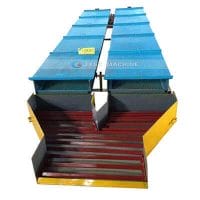
Water and the rotating drum break up clay lumps and release trapped gold-bearing material. The screen separates coarse gravel from the washed undersize, the biggest material is the wasters, medium material enter to the sluice box and the finest material after screening feeds the centrifugal concentrator.
3. Centrifugal Concentration
The concentrator applies centrifugal force to retain dense gold particles while lighter material passes through to tailings. The resulting rough concentrate goes to the shaking table. And the tailings enter to the other sluice box to recovey gold.
4. Shaking Table Cleaning
Water flow and deck motion separate the rough concentrate into streams. The gold-rich fraction is collected for smelting.
5. Gold Smelting
The cleaned concentrate is dried and smelted in the gold furnace. The molten metal is poured and allowed to solidify.
Why This Plant Layout Fits the Deposit?
Scrubbing before gravity separation helps release fine gold trapped in clay lumps. The centrifugal concentrator treats the washed undersize, so the shaking table handles only the smaller rough-concentrate stream. The mobile washing and separation sections can be relocated as mining advances to a new area.







 English
 French
 Spanish
 Portuguese
 Indonesian