
novato

Processo de extração de ouro com cianeto

Hora de publicação:20 dezembro 2018

Cyanide gold extraction, also known as cianetação, is the dominant method for extracting gold from ores and concentrates worldwide. This process leverages cyanide solutions to dissolve gold from raw materials efficiently. Below, we explore the key steps, variations, influencing factors, and process improvements in cyanide gold extraction.


Basic Cyanide Gold Extraction Process

The cyanide gold extraction process consists of four primary stages:

1. Cyanide Leaching – The gold-bearing ore or concentrate is mixed with a diluted cyanide solution (typically sodium cyanide, NaCN) under controlled conditions, dissolving the gold into a liquid form.

2. Washing & Leaching – The ore slurry is agitated or percolated to ensure thorough contact between cyanide and gold particles.

3. Gold Recovery – Dissolved gold is recovered using methods such as zinc precipitation (Merrill-Crowe process) or adsorption onto activated carbon (CIP/CIL).

4. Smelting & Refining – The recovered gold is further purified through smelting and refining to produce high-purity gold bars.


Métodos de extração de ouro com cianeto

The existing cyanide gold plant in China’s gold mines basically adopts two types of gold extraction process: one is a so-called conventional cyanidation process for gold extraction by continuous countercurrent washing with a espessante, and the other is replaced by zinc powder (CCD method and CCF). The other method is a non-filtered cyanide carbon slurry process (CIP método e CIL method), which does not require filtration and washing, and uses activated carbon to directly absorb and recover gold from cyanide pulp.

O conventional cyanidation gold extraction process é divided into two types according to the treatment materials: one is a cyanide plant that processes flotation gold concentrate or treats amalgam and re-selects tailings. The other is to treat muddy oxidized ore, using a full mud mixing cyanide gold extraction process plant.
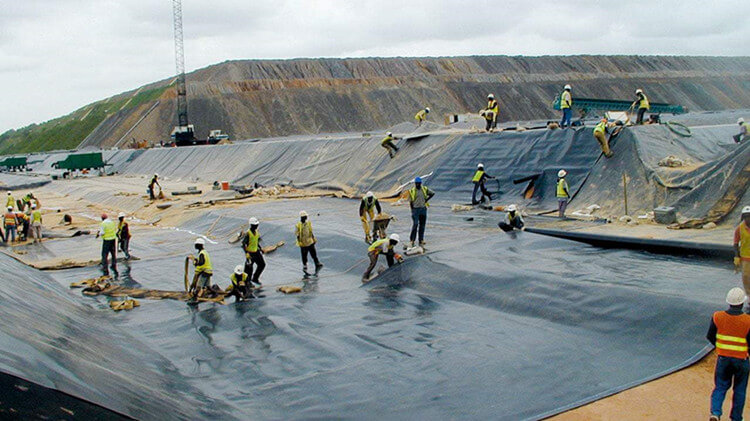
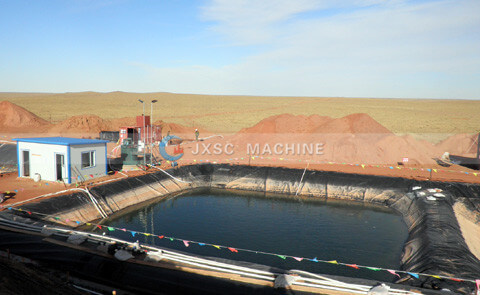
lixiviação em pilha de ouro

Factores de influência do processo de extração de ouro com cianeto

1. Slurry pretreatment

The gold ore cyanide leaching pulp contains a certain amount of Fe2+, Cu2+, Zn2+, S2-, Fe3+ plasma, in addition to the metal sulfide minerals pyrite, pyrrhotite, chalcopyrite, and sphalerite. The leaching process consumes a large amount of cyanide and dissolved oxygen, and reduces the cyanide leaching effect. Therefore, the slurry needs to be pretreated before cyanide leaching to try to eliminate its adverse effects.

The gold cyanide leaching effect of the slurry without alkali pretreatment is very poor. After the alkali pretreatment, the cyanidation gold extraction process’s leaching effect is greatly improved. However, as long as the alkali pretreatment reaches a certain level, the treatment time has little effect on the leaching effect. This is because the pulp is not pretreated, and the free CN- is the least, indicating that CN- is consumed by Fe2+, Zn2+, S2-plasma, and the Cu2+, Fe3+, and Zn2+ ions are also the lowest; after pretreatment, the free CN in the slurry – relatively high, Cu2+, Fe3+, Zn2+ ions are higher than non-pretreatment, indicating that the free CN-consumption after pretreatment is reduced, and the harmful ions are not consumed by CN-. Therefore, alkaline pretreatment before cyanide leaching can reduce cyanide consumption and help increase the cyanide leaching rate of gold. The whole mud cyanide carbon slurry process for gold treatment can effectively avoid the consumption of harmful ions to CN-, so that the gold recovery rate is greatly improved.

2. Slurry pH Control

The cyanide undergoes a hydrolysis reaction in the slurry to form HCN, and a part of it is volatilized from the solution to cause cyanide loss and environmental pollution. The solution must maintain certain alkalinity during cyanide leaching to prevent the decomposition of cyanide, but the alkalinity of the cyanide solution should not be too high; otherwise, the dissolution rate of gold will be reduced.

3. Cyanide Leaching Time

Com o prolongamento do tempo de lixiviação, a taxa de lixiviação do ouro aumenta, mas, após um certo grau, o tempo de lixiviação é prolongado e a taxa de lixiviação do ouro não aumenta muito. Por conseguinte, é necessário assegurar um determinado período de tempo para a lixiviação por cianetação, a fim de garantir uma lixiviação eficaz do ouro.

4. Cyanide Dosage

A concentração de cianeto é o principal fator que determina a taxa de dissolução do ouro. Por conseguinte, na lixiviação com cianetos, deve ser assegurada uma certa quantidade de CN- livre na lama para garantir a lixiviação do ouro com cianetos.

5. Leaching Agent

Due to the short-term cyanide toxicity, long cyanide leaching time, and a large amount of cyanide, the cyanidation method must be studied and improved. Adding a dipping agent can increase the effective dissolved oxygen in the slurry, improve the cyanide leaching environment, increase the leaching speed, shorten the cyanide leaching time, and reduce the amount of cyanide.

To achieve the best effect of cyanide leaching, the infusion agent should generally have the following functions in addition to increasing the “effective active oxygen” content in the slurry:
(1) Dispersion: The dispersion is used to fully disperse the slurry and increase the chance of effective contact between cyanide and gold.
(2) Impurity removal: the use of impurity removal eliminates or reduces the adverse effects of impurities in the slurry on gold leaching, and improves the leaching effect of gold.
(3) Chelation: The use of chelation to increase the dissolution of gold and eliminate the impurity elements that affect lixiviação de ouro.

lixiviação em pilha de ouro

Process Optimization Strategies

1. Oxidizing Agents

Use an oxidizing agent (pure oxygen or oxide) in the leaching process and extend the oxygen-absorbing carbon immersion process, such as oxygen resin leaching. The benefits of using auxiliary oxidants: one is to effectively increase the leaching rate of gold and silver; the second is to speed up the leaching and shorten the leaching time; the third is to reduce the consumption of cyanide and reduce the amount of lead nitrate. The leaching rate of the Longtoushan Gold Mine in Guangxi was increased by 4.31%. The use of auxiliary oxidants has been widely promoted throughout the world as the best technology for optimizing the cyanidation process.

2. Ammonia-Cyanide System

The copper-gold ore is leached by an ammonia-cyanide system, and the cyanide leaching of gold-copper ore and copper-bearing concentrate will show strong vitality.

3. Simultaneous Grinding & Leaching

The grinding process and leaching at the same time enhance the leaching effect. For example, the 216 Geological Team of Shanxi Geological Prospecting Bureau recently used TW type tower grinder to immerse the arsenic refractory gold concentrate with side grinding and immersion. The treatment capacity is 30 tons/day, and the grinding fineness is 95%-98%. Under the 400 mesh condition, the gold leaching rate increased by 8%. If the tower grinding machine is used to implement the edge grinding and immersion process in gold mines, it will be a major innovation in the cyanide gold extraction process.

The cyanide gold extraction process is also suitable for copper leaching, zinc leaching, silver leaching, etc.


Conclusão

Cyanide gold extraction remains the most efficient and widely adopted method for gold recovery, with CIP/CIL dominating modern operations. Process optimization—through pH control, oxygen enhancement, and tailored leaching strategies—can significantly improve recovery rates while reducing cyanide consumption and environmental impact.

    Contacte-nos agora

    PRODUTOS MAIS RECENTES

    Visão geral da privacidade
    logótipo

    Este sítio Web utiliza cookies para que possamos proporcionar ao utilizador a melhor experiência possível. As informações dos cookies são armazenadas no seu browser e desempenham funções como reconhecê-lo quando regressa ao nosso sítio Web e ajudar a nossa equipa a compreender quais as secções do sítio Web que considera mais interessantes e úteis.

    Cookies estritamente necessários

    O cookie estritamente necessário deve estar sempre ativado para que possamos guardar as preferências do utilizador relativamente às definições de cookies.

    Analytics

    Este sítio Web utiliza o Google Analytics para recolher informações anónimas, como o número de visitantes do sítio e as páginas mais populares.

    Manter este cookie ativado ajuda-nos a melhorar o nosso sítio Web.