1. Alluvial Gold Processing Line
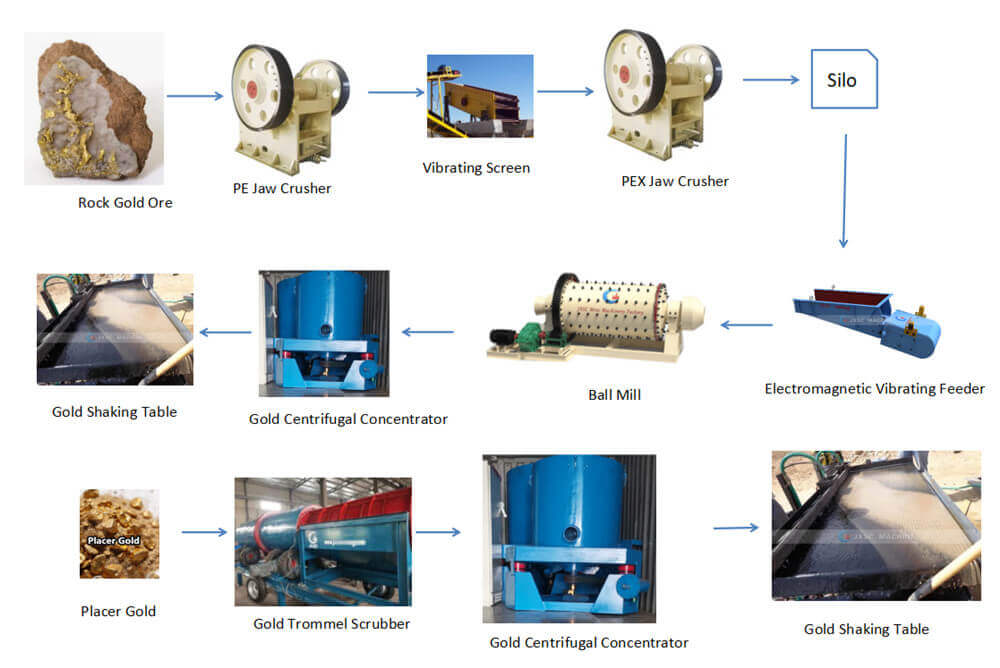
The alluvial gold processing line is specially designed to recover gold from placer deposits. It mainly consists of a feed hopper, mobile trommel scrubber, centrifugal concentrator, and shaking table.
Step 1. Feeding
Raw alluvial gold ore is loaded into the feed hopper by an excavator or loader. The hopper provides a continuous supply of raw material to the mobile trommel scrubber, ensuring stable feeding for the subsequent processing stages.
Step 2. Screening
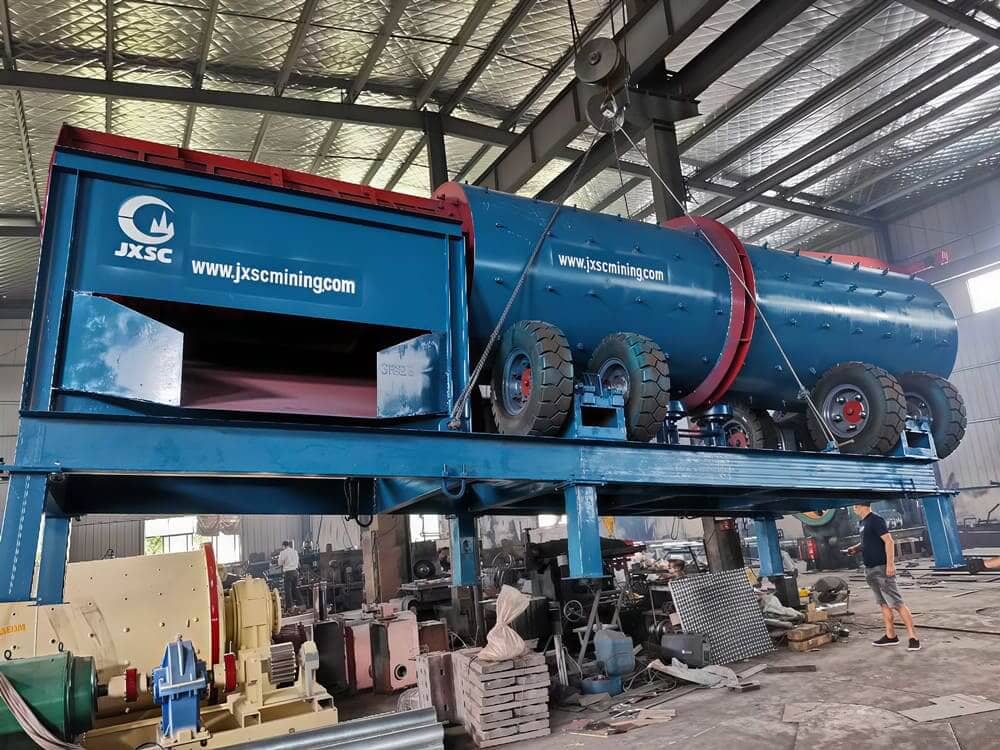
The raw material enters the mobile trommel scrubber, where it is screened according to particle size.
The trommel scrubber separates oversized stones, gravel, sand, and gold-bearing fine materials, helping remove large unwanted materials and preparing the qualified material for gravity separation.
Step 3. Centrifugal Concentration
The screened gold-bearing material is fed into the centrifugal concentrator.
The centrifugal concentrator uses centrifugal force to separate gold particles from lighter gangue minerals. Due to the high specific gravity of gold, fine gold particles can be effectively concentrated, improving the recovery of fine and relatively fine-grained gold.
Step 4. Gold Shaking Table
The concentrate from the centrifugal concentrator is further processed by a gold shaking table.
The shaking table separates gold from other heavy minerals according to differences in specific gravity and particle movement. It helps upgrade the gold concentrate and obtain a higher-grade final concentrate.
2. Rock Gold Processing Line
The rock gold processing line is designed for hard rock gold ore. It combines crushing, screening, grinding, and gravity separation to liberate gold particles from the host rock and recover the liberated gold.
Step 1. Feeding
Raw rock gold ore is loaded into the feed hopper and transferred to the primary jaw crusher through a trough feeder.
The trough feeder provides a stable and continuous feed rate, helping maintain smooth operation of the crushing system.
Step 2. Primary Crushing
The raw ore enters the primary jaw crusher for initial size reduction.
The jaw crusher uses compression force to break large rocks into smaller pieces, making the material suitable for subsequent screening and fine crushing.
Step 3. Screening and Fine Crushing
After primary crushing, the material is sent to the vibrating screen for particle-size separation.
Oversized material is further reduced by the fine jaw crusher to meet the required feed size for the grinding stage.
This crushing and screening arrangement helps improve crushing efficiency and prepares the ore for subsequent grinding.
Step 4. Storage and Feeding
The crushed ore is transferred to a storage hopper, which serves as a buffer between the crushing and grinding sections.
An electromagnetic vibrating feeder is installed below the hopper to provide controlled and continuous feeding to the ball mill, helping maintain stable grinding conditions.
Step 5. Grinding
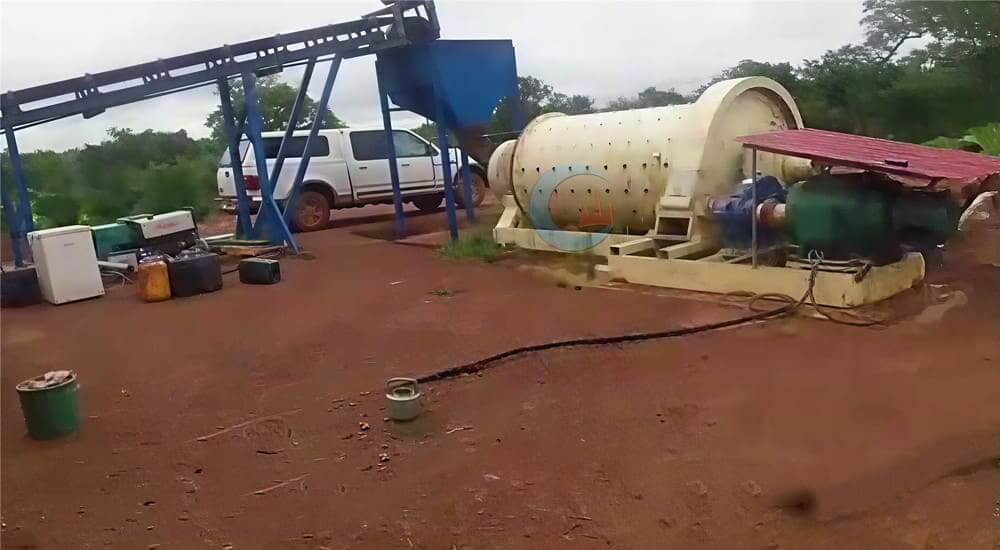
The crushed rock gold ore enters the ball mill for further size reduction.
The ball mill uses grinding media to grind the ore into finer particles, helping liberate gold from the surrounding gangue minerals.
The grinding fineness should be determined according to the gold particle size and ore liberation characteristics.
Step 6. Slurry Pumping
After grinding, the ore slurry is transferred by a slurry pump to the centrifugal concentrator.
The slurry pump provides stable slurry transportation and ensures continuous feeding to the gravity separation equipment.
Step 7. Centrifugal Concentration
The gold-bearing slurry enters the centrifugal concentrator for gravity separation.
The equipment generates strong centrifugal force to recover liberated gold particles from the slurry. It is particularly useful for recovering fine gold that may be difficult to capture through conventional gravity separation methods.
Step 8. Gold Shaking Table
The concentrate from the centrifugal concentrator is further upgraded by the gold shaking table.
Through the combined action of water flow and mechanical vibration, the shaking table separates gold from other heavy minerals and produces a higher-grade gold concentrate.







 English
 French
 Spanish
 Portuguese
 Indonesian