



In modern processamento de minerais, flotation is the core technology for separating and enriching valuable minerals. Its efficiency directly affects resource utilization and the economic benefits of enterprises. However, one longstanding challenge for metallurgical engineers is how to efficiently recover minerals of the same type but with significant particle size differences within the same flotation process. Traditional flotation processes, faced with the challenges of “coarse particle flotation difficulty” and “fine particle selection difficulty,” often fall short, resulting in the loss of valuable metal resources in tailings.
To tackle this challenge, a more refined and scientific process design concept known as sequential flotation has emerged. This doesn’t refer to a specific piece of equipment or reagent but rather an advanced systemic solution. This article delves into the core principles of “sequential flotation,” providing a framework of strategies that combines theoretical depth with practical guidance for mineral processing technicians.
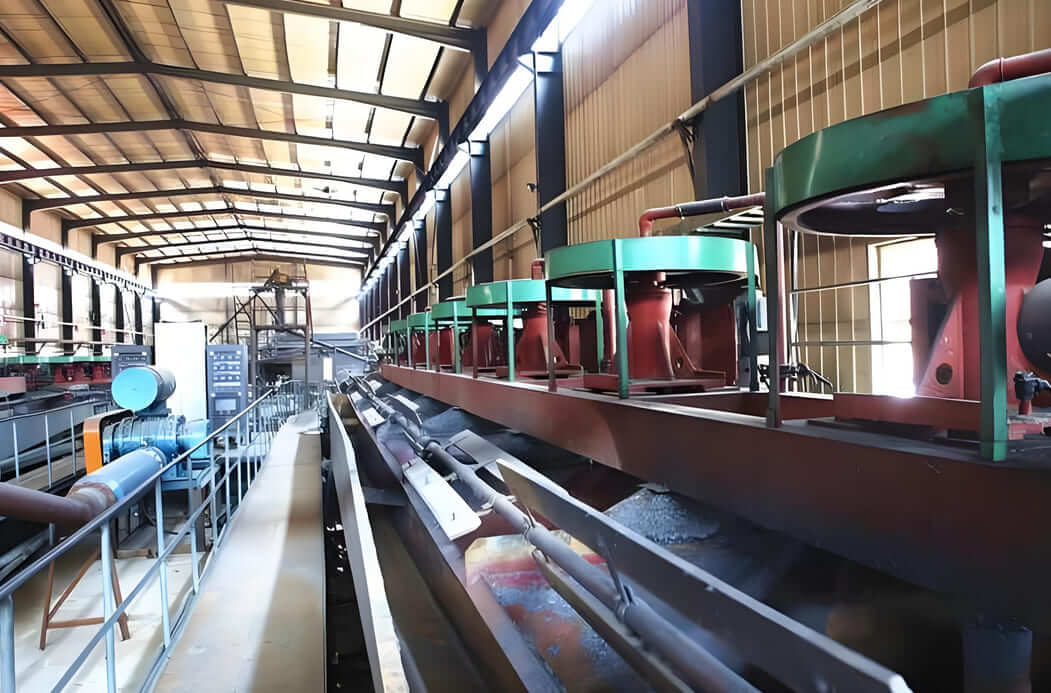
Why is Recovery Efficiency So Different Across Particle Sizes?
To understand sequential flotation, one must first recognize the fundamental impact of mineral particle size on flotation behavior. The essence of the flotation process is that hydrophobic target mineral particles collide and adhere to air bubbles, rising to the surface of the slurry in a frothy layer, thereby separating from gangue minerals. In this process, minerals of different particle sizes face distinct dynamic challenges.
The “Triple Difficulty” of Coarse Minerals (Typically > 0.15mm)
- Collision and Adhesion Difficulty: Coarse particles, due to their greater mass and inertia, struggle to alter their trajectory effectively for a successful collision with bubbles. Even when a collision occurs, the brief contact time makes stable adhesion difficult.
- Poor Adhesion Stability: Under the turbulent conditions of the máquina de flotação, the forces acting on coarse particles (shear and centripetal forces) often exceed the adhesion forces, leading to the fines easily detaching from the bubbles.
- Buoyancy Limitations: The gravitational force on particles increases with the cube of the diameter. Heavy particles may not receive sufficient buoyancy from one or several bubbles to rise to the froth layer, resulting in their sinking and loss in the slurry.
The “Triple Challenge” of Fine Minerals (Typically < 0.01mm)
- Low Collision Probability: Fine particles are light and easily follow the flow lines of the slurry, making it difficult to breach the fluid dynamic boundary layer around the bubbles and significantly reducing collision probability.
- Poor Selectivity: The large specific surface area of fine particles leads to high reagent consumption. Moreover, fine slimes can be indiscriminately entrained into the froth product or “cap” the target minerals’ surfaces, severely disrupting normal separation.
- Slow Flotation Rate: Due to the low collision probability and poor selectivity, the flotation rate constant for fine particles is often much lower than that of the medium-sized particles.
It is this dynamic difference based on particle size that renders traditional “one-size-fits-all” flotation processes ineffective in simultaneously recovering coarse, medium, and fine particles, resulting in the loss of valuable resources. The core idea of sequential flotation lies in breaking this deadlock by tailoring processes to suit different particle sizes.
What are The Core Principles of Sequential Flotation?
O essence of sequential flotation is to identify and exploit the differences in flotation dynamics associated with different particle sizes. By creating differentiated flotation environments and conditions, it aims to achieve “speed-based separation and demand-oriented recovery” for different particle sizes. Its core principle is based on the particle size and other characteristics of minerals, and involves systematic and strategic separation. The following is an overview of the key principles:
1. Redesigning the Slurry Fluid Dynamic Environment
Traditional mechanical agitation flotation machines aim to suspend particles and disperse air bubbles through vigorous stirring. However, this “one-size-fits-all” turbulent environment can counteract recovery efforts for both coarse and fine particles. Next-generation flotation technologies offer the potential to create differentiated fluid dynamic environments:
Strategies for Coarse Particle Flotation: “Calm” and “Fast”
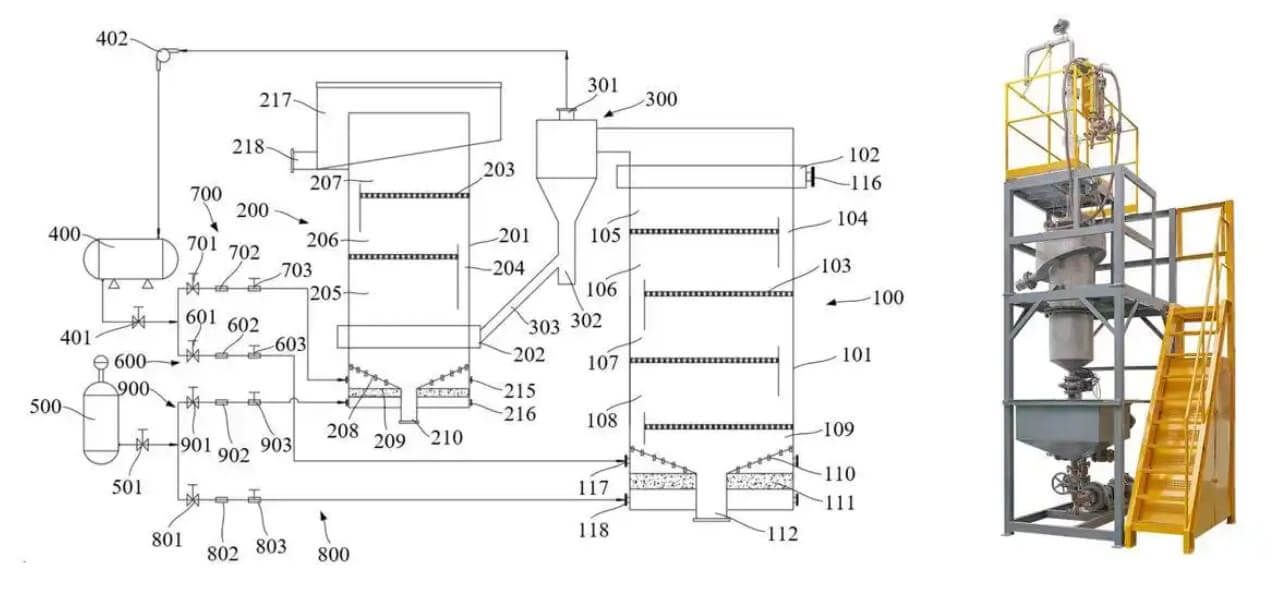
- Fluidized Bed Flotation Technologies(e.g., injected flotation machines, bubbling floating beds): These technologies control the upward flow of water to create a suspended or semi-suspended “fluidized” region, significantly reducing turbulence intensity and allowing smooth contact and strong adhesion between air bubbles and coarse particles. Thus, they can effectively recover mineral particles on the millimeter scale.
- Flash Flotation Technology: This technology is cleverly positioned within the grinding-classifying circuit to handle high-density underflow directly. Its core advantage is speed; by capturing coarse minerals immediately after the single particles are liberated but before they are overly ground into fine mud, it prevents overgrinding of valuable minerals and reduces their ineffective cycle in the grinding system.
Strategies for Fine Particle Flotation: “Concentrate” and “Capture”
- Micro/Nano-bubble Flotation: Since target particles are smaller, the “bullets” required to capture them should also be smaller. Using microbubbles (less than 100μm) can geometrically increase the number and specific surface area of bubbles, significantly improving collision probability and adhesion efficiency with fine particles.
- Carrier Flotation and Selective Flocculation Flotation: These are effective methods to “enlarge” fine particles. By adding appropriately sized carrier minerals or using polymer flocculants as “selective glue,” fine target mineral particles can adhere and aggregate into larger clusters, improving their flotation dynamics and making them easier to capture.
2. Precise Match and Coordination of Reagent Systems
Reagents are the soul of flotation. Sequential flotation necessitates that reagent formulations transition from “general-purpose” to “customized” to meet the different surface characteristics and kinetic demands of varying particle sizes.
For Coarse Particles: Enhancing Hydrophobicity and Adhesion
- High-Efficiency Collectors: It is essential to use collectors with stronger capture capabilities that form more stable hydrophobic films on mineral surfaces (e.g., modified xanthates, black medicine, etc.). Additionally, the use of non-polar neutral oils as auxiliary collectors can significantly enhance the hydrophobicity of coarse mineral surfaces and improve the adhesion strength of mineralized bubbles.
- Choice of Frother: Frothers that produce larger, mechanically robust bubbles are preferable to provide adequate lifting capacity for coarse particles and facilitate their rapid dehydration in the froth layer.
For Fine Particles: Improving Selectivity and Synergistic Effects
- High-Selectivity Collectors: Developing and applying highly selective collectors with targeted functional groups specific to the target mineral is crucial for fine particles that may easily co-adsorb with gangue minerals.
- Precise Adjustment of Dispersants and Modifiers: Proper use of dispersants (e.g., sodium silicate, hexametaphosphate) can prevent the coating of slimes and non-selective flocculation, clearing the way for selective adsorption of collectors. Moreover, the pH of the slurry should be accurately controlled to create optimal chemical conditions for the preferential interaction between the target mineral and reagents.
3. Innovative Construction of Process Flows
A single flotation process is often inadequate for the separation of material with a wide particle size distribution. Constructing innovative and differentiated process flows is essential for implementing sequential flotation.
- Coarse-Fine Classification and Asynchronous Flotation: This is the most critical structural element of sequential flotation. After grinding or before flotation, employing efficient classification devices like hidrociclones or fine screens can separate ore into coarse and fine (and even medium) particle sizes, sending them to their respective “tailored” flotation lines. For instance, a new process could be: “hydrocyclone classification → coarse particle settling into flash/fluidized bed flotation → re-grinding and re-selection of coarse concentrates → overflow fine mud entering microbubble flotation circuit.”
- Independent Treatment of Intermediate Products: Traditional processes often indiscriminately return intermediate products to rough flotation, potentially disrupting the stability of the original flotation conditions. In contrast, combining intermediate products from different sources and characteristics (especially those with substantial difficult-to-select intergrowth and slime) for thickening or re-grinding, followed by processing in a dedicated flotation circuit, can significantly enhance process stability and final yields.
Which Three Tips Can Achieve Efficient Recovery?
To facilitate understanding and application, we can summarize the strategies to enhance recovery efficiency across different particle sizes into three interlinked tips:
Equipment Tip: Diverging Paths
Select the most suitable “track” based on particle size. Utilize flash flotation, fluidized bed flotation, and similar low-turbulence, high-capacity equipment for coarse particles, and employ microbubble generators and efficient flocculation devices for fine particles to enhance collision and selectivity.
Reagent Tip: Precision Strategies
Move beyond “broad-spectrum” applications toward precise “drip irrigation.” Match strong hydrophobic and adhesive reagent combinations for coarse particles, and high selectivity and anti-interference reagent systems for fine particles.
Process Tip: Segmented Control
Break away from the traditional “one-pot” approach. By employing “coarse-fine classification, asynchronous flotation,” “flash flotation beforehand,” e “treatment of intermediate products,” construct a process that optimally provides recovery facilities for varying particle sizes.
As global mineral resources increasingly become “poor, fine, and mixed,” the demands placed on mineral processing technologies have never been greater. The introduction and implementation of the concept of sequential flotation provides a powerful weapon to confront these challenges. It requires mineral processors to delve into the essence of flotation dynamics, fully comprehend the profound influence of particle size on flotation behavior, and through systemic innovations and integrations in equipment, reagents, and processes, fundamentally address the production dilemma of “coarse and fine particles flying together, with recovery and grades declining together.” Mastering and skillfully applying the principles and strategies of sequential flotation will undoubtedly infuse powerful technical momentum into the enhancement of mineral resource utilization levels and propel the green, efficient development of the mineral processing industry.
PRODUTOS MAIS RECENTES
-

Inclined Vibrating Screen
The inclined vibrating screen is a simple and eff…
-
High Temperature & Pressure Gold Desorption Electrolysis System
High-Temperature & Pressure Gold Desorption Elect…
-
Normal Temperature & Pressure Gold Desorption Electrolysis System
The normal temperature & pressure gold desorption…


NOTÍCIAS MAIS RECENTES
- Modern Cyanide Residue Treatment Technologies for Gold Processing
- Traditional De-cyanidation Technologies for Gold Cyanide Residues
- Shaking Table, 3-Disc Dry Magnetic & Electrostatic Separator for W-Sn-Ta-Nb
- Mineral Analysis: The Foundation for Successful Mineral Processing Projects
- What Is Over-Grinding and How Can It Be Prevented?
 English
  French
  Spanish
  Portuguese
  Indonesian