



Talco is a versatile industrial mineral valued for its softness, high insulation properties, thermal stability, and strong oil adsorption capacity. However, naturally occurring talc ore is often mixed with impurities such as chlorite, magnesite, tremolite, dolomite, and iron-bearing minerals. These impurities affect the ore’s chemical composition and physical properties, necessitating beneficiation to meet industrial standards. To meet industry standards, four main beneficiation methods are used: flotation, hand sorting, electrostatic separation, and magnetic separation. The optimal approach depends on ore composition and application needs—whether producing ultra-low-iron talc for papermaking or high-purity grades for ceramics. Below, we break down each method’s principles, processes, and innovations that ensure maximum purity and performance.
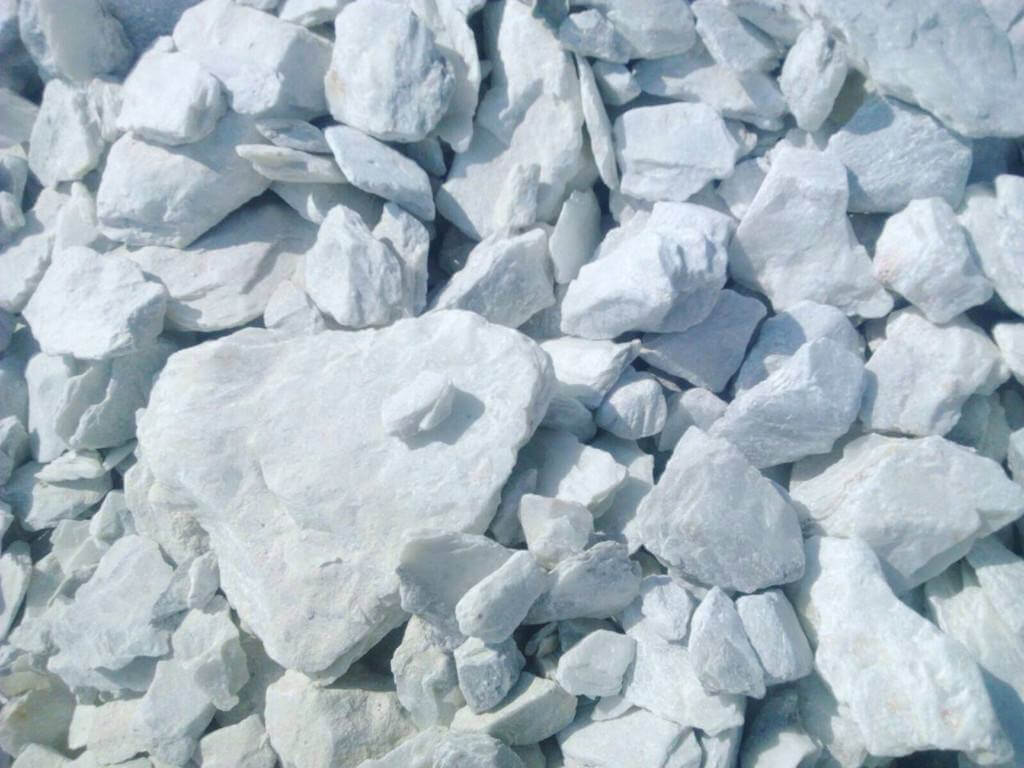
Key Talc Properties & Industrial Uses
Talco gets its name because of its softness and strong creaminess. Talc has high electrical insulation, thermal insulation, a high melting point, and strong oil adsorption performance, so it has a wide range of applications in industry. Among them, talc consumed by the paper industry accounts for about 60% of the total. In addition, talc is also widely used in many fields such as medicine, chemical industry, textiles, ceramics, and sculpture. The paper industry requires low iron content in talc. Therefore, the iron, manganese, níquele o titânio contidos no minério bruto têm de ser separados para obter talco de alta qualidade.
Talc Beneficiation Methods
1. Flotação
Princípio: Due to the natural floatability of talc, it can be floated with a hydrocarbon oil collector.
Coletor: The commonly used collector is kerosene, a flotation oil foaming agent.
Process: The flotation process of talc is relatively simple, requiring only one rough selection and sweep selection, and 3-4 selections.
Challenge: However, talc concentrate has a fine particle size and is difficult to dehydrate.
Equipamento: Mechanical or pneumatic máquinas de flotação.
2. Hand Sorting
Princípio: Hand sorting is selected by manual selection according to the difference in smoothness of talc and gangue minerals. Talc has good smoothness; the higher the grade, the better the smoothness, and it is easy to identify by hand.
Aplicação: Most domestic talc mines often produce high-grade talc blocks by hand selection.
Innovation: In recent years, foreign countries have successfully researched a sorting machine called rappeller, which can separate talc from gangue according to the different coefficient of friction of the ore, so as to realize the mechanization of manual talc selection.
3. Electrostatic Beneficiation
Princípio: In addition to talc, talc also contains minerals such as magnesite, magnetite, pyrite, tremolite, etc. The embedded particle size is about 0.5mm. In an electrostatic field, talc is negatively charged, and magnesite is positively charged. Both magnetite and pyrite are good conductors, so it is easy to separate the above minerals in an electric field.
Process: High-voltage electrostatic fields separate talc from magnesite, magnetite, and sulfides.
Equipamento: Electric separator
4. Magnetic Separation
Para além da finura e pureza exigidas para o concentrado de talco, este deve também possuir o Baidu n.º 1. Devido à existência de minerais de ferro tingidos no minério, a flotação por si só não é suficiente. Por vezes, é necessário utilizar a separação magnética para remover os materiais que contêm ferro. A União Soviética e o Canadá têm exemplos de separação magnética para remoção de ferro. A utilização da separação magnética húmida pode reduzir o teor de ferro do concentrado de talco de 4-5% para 0,7.
Equipamento: Separador magnético
Conclusão
The choice of beneficiation method depends on ore composition and end-use requirements. Flotation is the cornerstone for fine talc recovery, while hand sorting and electrostatic separation upgrade coarse ore. Magnetic separation ensures ultra-low iron levels for premium applications. Mechanized sorting technologies are transforming traditional practices, improving efficiency and purity.
By optimizing these processes, industries can produce high-quality talc tailored to diverse applications, from papermaking to high-performance ceramics.
PRODUTOS MAIS RECENTES
-

Inclined Vibrating Screen
The inclined vibrating screen is a simple and eff…
-
High Temperature & Pressure Gold Desorption Electrolysis System
High-Temperature & Pressure Gold Desorption Elect…
-
Normal Temperature & Pressure Gold Desorption Electrolysis System
The normal temperature & pressure gold desorption…


NOTÍCIAS MAIS RECENTES
- Modern Cyanide Residue Treatment Technologies for Gold Processing
- Traditional De-cyanidation Technologies for Gold Cyanide Residues
- Shaking Table, 3-Disc Dry Magnetic & Electrostatic Separator for W-Sn-Ta-Nb
- Mineral Analysis: The Foundation for Successful Mineral Processing Projects
- What Is Over-Grinding and How Can It Be Prevented?
 English
  French
  Spanish
  Portuguese
  Indonesian