



The froth flotation method is an essential mineral processing technique that separates valuable minerals from ore based on their differing physical and chemical properties. Oro y plata, classified under natural and non-ferrous heavy metal sulfides, exhibit excellent flotability due to their low surface wettability, making them ideal candidates for xanthate collector-based flotation.
Tiempo de publicación:20 diciembre 2018
Why Choose Froth Flotation for Gold & Silver Ore?
El método de flotación por espuma se utiliza ampliamente para tratar diversas vetas de minerales de oro y plata por las siguientes razones:
(1) Optimal Mineral Enrichment: In most cases, the froth flotation process can enrich gold and silver in sulfide concentrate to the greatest extent and discard a large amount of tailings, thus reducing the smelting cost.
(2) Polymetallic Ore Compatibility: Cuando el máquina de flotación is used to treat polymetallic gold and silver ores, concentrates containing gold, silver, and non-ferrous heavy metals can be effectively separated, which is conducive to the comprehensive utilization of valuable mineral resources.
(3) Solution for Refractory Ores: For refractory gold and silver ores that cannot be treated directly by mercury amalgamation or cyanidation, a combined process including flotation is needed.
Limitaciones: There are some limitations in flotation, such as ores with gold particles larger than 0.2-0.3 mm or pure quartz gold ores without metal sulfides, which are difficult to deal with by flotation separation alone.
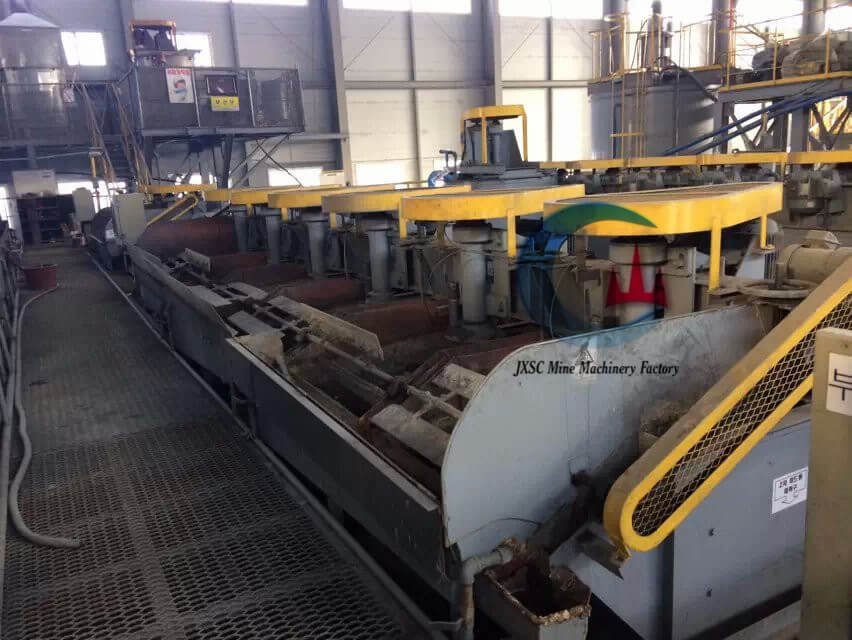
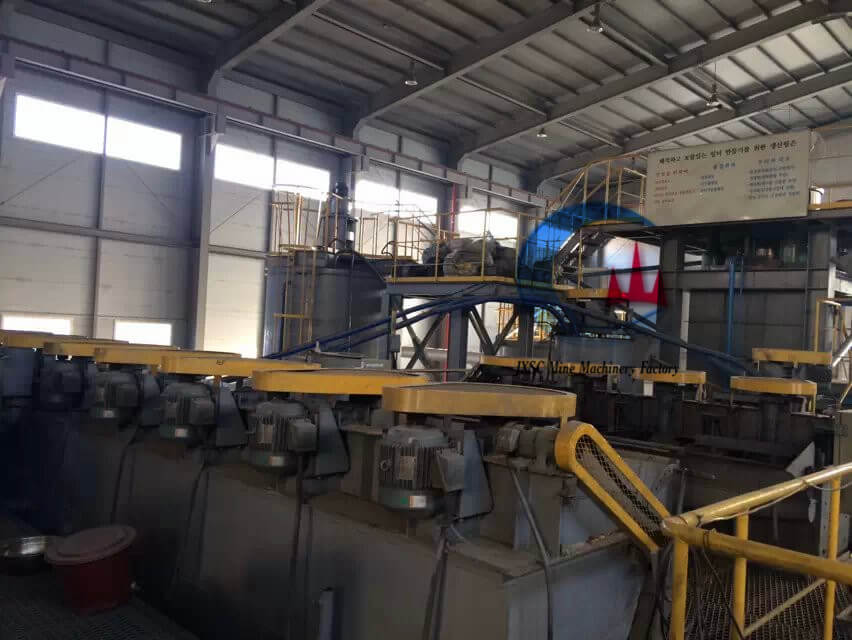
Commonly Used Froth Flotation Reagents & Their Functions
1. Collectors (Enhance Mineral Attachment to Bubbles)
Collectors commonly used in the flotation process of gold and silver ores include xanthate, black powder, and butylammonium black powder. Kerosene and transformer oil can be used as auxiliary collectors. Oleic acid can also be used as a collector for gold-copper oxide ores.
- Xantatos – Primary choice, dosage: 50–150 g/t (increases with ore grade/oxidation).
- Butylammonium Black Powder – Improves separation in quartz vein and polymetallic ores; acts as both collector & frother.
- Auxiliary Collectors: Kerosene, transformer oil (enhance recovery).
The greater the difference in solubility of Metal Xanthate in a cyanide solution, that is, the greater the difference of Ki/n, the easier the separation of two metal minerals in the cyanide solution. Gold, silver, and xanthate form insoluble xanthate. The order of solubility product is after Mercury and before bismuth and antimony, so it can be separated from other metal minerals.
When flotation of gold and silver sulfide ores, the general xanthate dosage is 50-150 g/t. Usually, the dosage increases with the increase of metal grade and oxidation degree. Experience shows that the use of mixed collectors is better than that of single collectors, which not only improves the selectivity of the flotation separation process, but also saves the dosage of reagents.
Butylammonium black powder is an anionic collector developed in recent years. It can strengthen the separation effect of gold-silver quartz vein ore and gold-silver ore associated with non-ferrous metals, and has the dual functions of collecting and foaming.
2. Foaming Agents (Stabilize Bubble Formation)
Foaming agent for separation of gold and silver ores, commonly used are 2 # oil, turpentine, camphor oil, dipyridine, and formic acid, the amount of which is generally 20-100 g/t. Camphor oil has good selectivity and is mostly used to obtain high-quality concentrates and priority flotation operations.
Una mina de oro de wolframio-antimonio de China ha obtenido buenos resultados con aceite de alcanfor en el proceso prioritario de flotación de mineral de antimonio-oro.
3. Regulators (Control pH & Mineral Behavior)
Cal: Lime is a commonly used medium regulator and also an effective inhibitor of sludge coagulant and pyrite. It also has a certain inhibitory effect on gold sludge. Its dosage is 1-5 kg/t.
Avoid Cyanide: Cyanide is a commonly used depressant in the flotation process of nonferrous sulfide ores. However, due to its strong inhibitory effect on gold and silver ores and its ability to dissolve precious metals such as gold and silver, it is better not to use it.
Sodium Sulfide: Sodium sulfide is not only an activator of Au-Ag oxides, but also can form a layer of metal sulfide film on the surface of Au-Ag minerals, which makes the refractory oxides float better. But it can inhibit natural gold. Therefore, the dosage should be strictly controlled in use, which is generally 20-200 g/t.
4. Activators
The commonly used activators are lead nitrate, lead acetate, and copper sulfate. Sulfur dioxide is also used as an activator in gold-bearing pyrite flotation abroad.
Pulp Chemistry Matters
The acidity and alkalinity of pulp often directly or indirectly affect the flotability of gold-bearing and silver-bearing minerals. The flotation of gold and silver minerals is mostly carried out in alkaline pulp medium, but for some gold-bearing pyrite and pyrrhotite, it is suitable for flotation in weak acid pulp medium.
Oxygen has an effect on the flotation process of gold-silver sulfide ore oxidized to different degrees. For example, when a factory flotation contains gold and silver sulfide ore, the use of a large amount of organic matter and anoxic lake water results in a poor flotation effect, which is not good. After mixing and aeration, the stable mineralization foam is obtained, and the recovery rate of gold is increased by 10%.
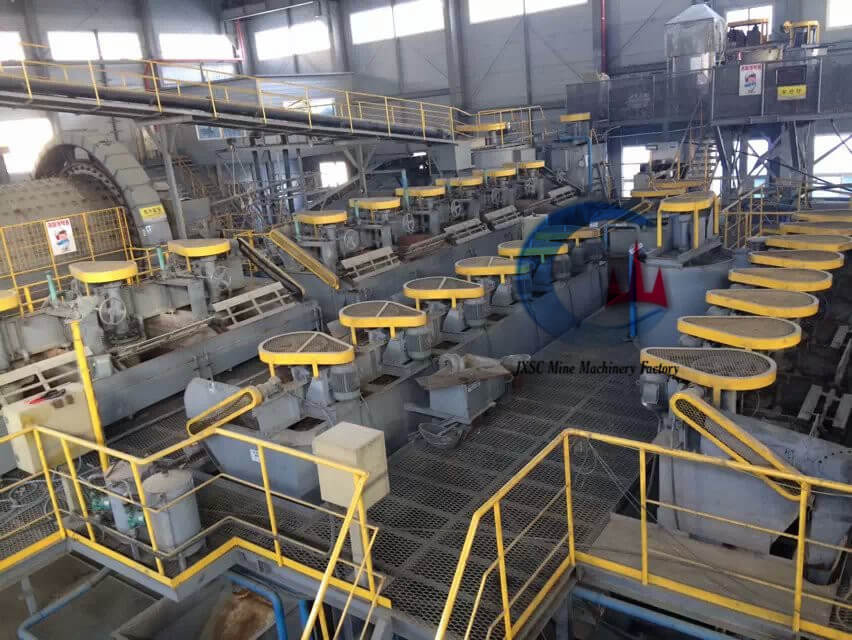
Método de flotación de minerales de oro y plata
The froth flotation method is usually based on the properties of gold and silver ores and product specifications. Common principles and processes are as follows:
1. Flotation + Cyanidation of Concentrate
Best for: Quartz vein sulfide ores.
Ventaja: Avoids full-ore fine grinding, cutting energy/space costs.
A small amount of concentrate is obtained from gold-silver quartz vein sulfide ore by flotation, and then cyanide treatment is carried out. Compared with the whole slime cyanidation process, the froth flotation method concentrate process has the advantages of no fine grinding of all ores, saving power consumption, a small plant area, and less capital investment.
2. Flotation + Concentrate Roasting + Calcination Cyanidation
Ideal para: Refractory gold-arsenic/antimony ores.
Proceso: Roasting removes cyanide-disruptive elements (As, Sb).
The process is often used to treat insoluble gold-arsenic ores, Gold-Antimony ores, and gold-pyrite ores with high sulfide content. The purpose of roasting is to remove arsenic and antimony, which are harmful to the cyanidation process.
3. Thermal Treatment of Flotation + Flotation Concentrate
The vast majority of polymetallic sulphide ores containing gold and silver are treated by this method. When flotation of such ores, gold and silver enter into the copper concentrate or lead concentrate, closely associated with them. The products are called copper-gold-silver concentrate, lead-gold-silver concentrate, etc. Then they are sent to the smelter to recover gold and silver.
4.Cyanidation of Flotation + Flotation Tailings or Middlings + In-situ roasting of Flotation Concentrates
This froth flotation method is used to treat quartz sulfide ores or gold-silver-bearing pyrite and pyrrhotite containing gold telluride, pyrrhotite, chalcopyrite, and other sulfide minerals. The floatable gold telluride in the ores is first produced as a concentrate, and then roasted and cyanided to expose gold and silver ores in sulfides and tellurides. Because the middle and tailings after flotation generally contain high gold and silver, they need to be recovered by cyanidation.
5. Cyanidation of Raw Ore + Flotation of Cyanide Tailing
Cuando el oro y la plata no pueden recuperarse completamente por cianuración, la recuperación de oro y plata puede mejorarse por flotación después del tratamiento de cianuración. Se han descrito ejemplos nacionales y extranjeros de recuperación de oro y plata por flotación a partir de residuos antiguos tratados con cianuro.
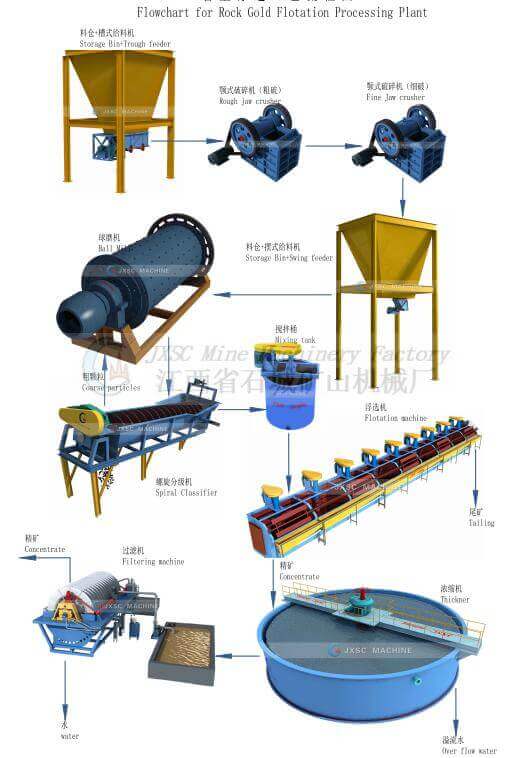
Maximizing Recovery with Integrated Solutions
Froth flotation often pairs with:
- Cyanide Leaching
- Carbon-in-Pulp (CIP) / Carbon-in-Leach (CIL)
- Lixiviación en pilas
Para equipo de flotación y tailored mineral solutions, explore our global offerings across Africa, Asia, and South America.
Related Reads
ÚLTIMOS PRODUCTOS
-

SFM-8 Lab Grinder
【Max. Power Consumption】 150W 【Morta…
-
Cyclosizer
【Feeding Capacity】< 100g/time 【Feeding …
-
JKZ/2JKZ Mine Shaft Sinking Hoist
【Power Source】Electric Motor Drive 【Motor Spee…


 English
  French
  Spanish
  Portuguese
  Indonesian