



Introducción
In mineral processing, steel ball consumption can account for approximately 40–50% of the grinding costs of a molino de bolas. As energy prices continue to rise and mining operations face increasing pressure to improve sustainability, reducing grinding energy and steel ball consumption has become an important way to improve overall plant efficiency and profitability.
Ball mill performance depends on several interconnected factors, including the ore hardness and grindability, feed particle size, steel ball diameter and strength, ball filling rate, pulp conditions, and mill rotational speed. An appropriate combination of these parameters can improve grinding efficiency, reduce media wear, and maintain the required product particle size.
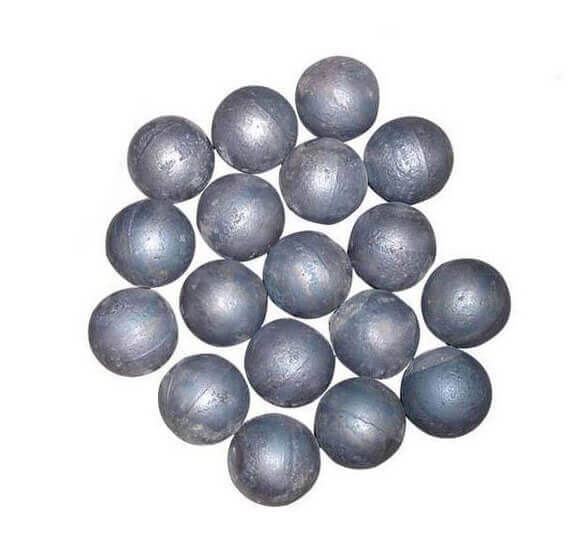
When a new ball mill is commissioned, the initial ball charge and ball size distribution are particularly important. Newly installed grinding media also require a running-in period as they interact with the mill liners and ore. The initial ball charge should therefore be designed according to the mill’s effective volume, operating conditions, liner design, ore characteristics, and the results of grinding tests. Most of the balls just installed will have a certain running-in period with the liner of the ball mill. The amount of bearing steel balls added for the first time should account for 90% of the ball mill. In addition, we add the proportion of bearing steel balls according to the size of steel balls (ф140mm, ф150mm, ф90mm, ф65mm, ф50mm).
During continuous operation, steel balls are gradually lost through wear, impact, and corrosion. Regular replenishment is necessary to maintain a stable ball charge and an appropriate size distribution. Rather than simply adding balls according to a fixed quantity, operators should monitor mill performance, ball consumption, feed characteristics, and product fineness to determine the appropriate makeup-ball strategy.
So, how can mineral processing plants reduce steel ball consumption and grinding energy while maintaining the required grinding performance? The following six strategies provide practical approaches.
Consejos para reducir el consumo de energía de las bolas de acero en los molinos de bolas
1. Change The Grindability of Iron Ore
The particle size distribution of the raw materials fed into the ball mill is the first reason that affects the energy consumption of the steel balls of the ball mill. Generally, the smaller the grindability of the feed particle size distribution, the easier it is for iron ore to grind, the less damage to the steel balls of the ball mill is also smaller, and the energy consumption is also lower. And vice versa.
En la producción y fabricación específicas, si se encuentra con mineral de hierro difícil de moler o se requiere que el mineral de hierro esté finamente molido, se puede considerar a fondo añadir el mineral de hierro necesario durante el proceso de molienda cuando el desarrollo económico y las normas del emplazamiento lo permitan. Analizar los preparados químicos para mejorar el efecto de molienda y aumentar la velocidad de molienda; o calentar el mineral de hierro para cambiar el rendimiento del proceso de todo el mineral de hierro y reducir la dureza del mineral. Estos dos métodos pueden reducir el consumo de energía del molino de bolas.
2. Reduce The Feed Particle Size Distribution
La distribución granulométrica del molino de bolas es grande, y el efecto del molino de bolas sobre las materias primas también aumenta. Si desea superar la distribución granulométrica de molienda especificada, la carga de trabajo del molino de bolas aumentará, por lo que el consumo de energía de las bolas de acero del cojinete también aumentará.
Para reducir el consumo de energía del molino de bolas, puede reducir la distribución granulométrica del alimentador vibratorio para la molienda. Así que requiere que la distribución de tamaño de partícula del mineral triturado debe ser pequeña, es decir, "más trituración y menos molienda."
3. Effective Bearing Steel Ball Filling Rate
Cuando la velocidad del molino de bolas supera un determinado nivel, la tasa de llenado es alta, y las bolas de acero del cojinete tienen inspecciones cada vez más estrictas sobre las materias primas. El área de molienda es grande, y el daño es rápido. Si la tasa de llenado es demasiado alta, cambiará el estado de movimiento de las bolas de acero del molino de bolas y se reducirá el efecto de la inspección estricta de los materiales de partículas grandes y finas. Por el contrario, la tasa de llenado es baja, y el efecto de molienda no es mejor.
The filling rate of bearing steel balls in the grinding operation of mining plants is generally 50%~60%. It is not an effective filling rate based on each dressing plant’s specific conditions. Therefore, it must be determined according to the beneficiation test.
4. Adequate Steel Ball Specifications and Configurations
Debido a que las bolas de acero de rodamiento en el molino de bolas están en contacto puntual con las materias primas, si el diámetro de las bolas de acero de rodamiento es demasiado grande, la fuerza de aplastamiento será demasiado grande, y el daño será demasiado rápido. A veces provocará fácilmente la rotura de las materias primas en la dirección de la fuerza de penetración, afectando a la velocidad de molienda. Por otra parte, la tasa de llenado de bolas de acero de rodamiento en la misma situación, si el diámetro de la bola es demasiado grande, la cantidad de bolas de acero de rodamiento será menor, la probabilidad de fractura es baja, la sobre-molienda es cada vez más grave, y la distribución del tamaño de partícula del producto no es uniforme; Si la bola de acero de rodamiento es demasiado pequeña, la fuerza de interacción de trituración sobre el mineral de hierro es pequeña, y la velocidad de molienda es baja. Por lo tanto, una configuración eficaz de la especificación de la bola de acero reducirá el consumo de acero del molino de bolas y aumentará razonablemente la velocidad de molienda.
5. Effective Grinding Solubility
El tamaño de la solución de molienda afectará a la proporción de la pulpa, al grado de adherencia de las materias primas alrededor de las bolas de acero para rodamientos y a la tasa de pérdida de la pulpa. Si la solubilidad de molienda es alta, el grado de adherencia de la materia prima cerca de la bola de acero para rodamientos es bueno, el efecto de vibración y molienda de la bola de acero para rodamientos sobre la materia prima también es excelente, y el daño de la bola de acero para rodamientos es más rápido.
In actual production, we can control the amount of ore supply or water output of the supply station or adjust the classification function to control the grinding solubility.
6. Control the Speed of the Ball Mill
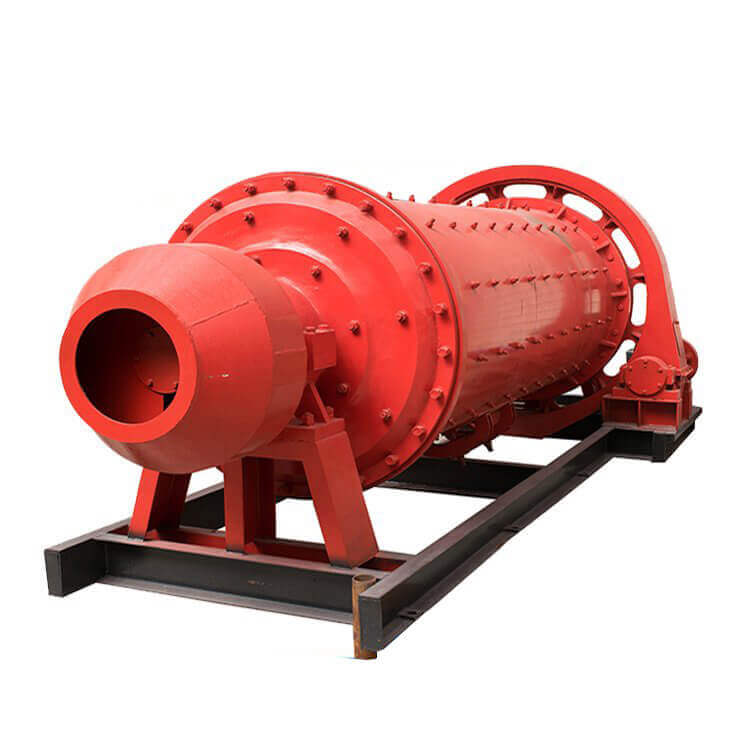
Under the condition that the steel balls of the ball mill are configured and practical, as the rotating speed of the ball mill increases, and the steel balls of the cylindrical bearings will drop into piles; When the speed of rotation increases as necessary, the power exceeds the maximum, the grinding effect is the best, and the ball friction of the ball mill is also the most effective.
The critical value of the basic knowledge of the ball mill is usually 74 to 98%. Due to the type of raw material and other factors, we adjust the specific situation to determine the speed of the ball mill.
Conclusión
Reducing steel ball consumption and energy consumption in ball milling requires more than simply changing the amount of grinding media. The performance of a ball mill is determined by the interaction of ore grindability, feed particle size, ball filling rate, ball size distribution, pulp density, and mill speed.
The six strategies discussed above can help mineral processing operations improve grinding efficiency:
- Improve ore grindability where economically and technically feasible.
- Reduce and stabilize the ball mill feed size through efficient crushing and screening.
- Optimize the steel ball filling rate rather than using an excessive or insufficient ball charge.
- Use an appropriate ball-size distribution based on ore characteristics and grinding requirements.
- Maintain an optimum pulp density for efficient wet grinding and classification.
- Control mill speed to achieve the most effective grinding-media motion.
In addition, steel ball consumption should be monitored continuously through makeup-ball records, mill power, throughput, product particle size, circulating load, and grinding performance. The optimum operating parameters are specific to each ore and grinding circuit, so laboratory testing, plant trials, and ongoing process monitoring are essential.
By systematically optimizing these factors, mining operations can reduce unnecessary grinding energy and media wear while maintaining the required product size and throughput, ultimately improving the economic efficiency and sustainability of ball milling operations.
ÚLTIMOS PRODUCTOS
-

Inclined Vibrating Screen
The inclined vibrating screen is a simple and eff…
-
High Temperature & Pressure Gold Desorption Electrolysis System
High-Temperature & Pressure Gold Desorption Elect…
-
Normal Temperature & Pressure Gold Desorption Electrolysis System
The normal temperature & pressure gold desorption…


ÚLTIMAS NOTICIAS
- Modern Cyanide Residue Treatment Technologies for Gold Processing
- Traditional De-cyanidation Technologies for Gold Cyanide Residues
- Shaking Table, 3-Disc Dry Magnetic & Electrostatic Separator for W-Sn-Ta-Nb
- Mineral Analysis: The Foundation for Successful Mineral Processing Projects
- What Is Over-Grinding and How Can It Be Prevented?
 English
  French
  Spanish
  Portuguese
  Indonesian