



Antimony, a lustrous gray metalloid, plays a pivotal role in modern industries due to its unique properties like flame resistance, hardness, and alloy-forming capabilities. As demand grows for flame retardants, batteries, and semiconductor materials, efficient antimony ore processing becomes crucial. This article delves into the applications of antimony, the essential equipment for its beneficiation, and the innovative methods used to extract this valuable resource.
Applications of Antimony
Antimony and its compounds were first used in wear-resistant alloys, printing type alloys, and the military industry. With the development of science and technology, the application of antimony has been widely expanded to the following fields:
- Flame-retardant materials (accounting for 70% of global antimony consumption)
- Used in combination with halogens as antimony trioxide, widely applied in:
√ Plastic casings for electronic devices (computers, mobile phones, etc.)
√ Automotive interior materials
√ PVC materials for construction
√ Safety standards for children’s toys
- Lead-acid batteries (accounting for approximately 20%)
- Lead-antimony alloys as plate additives
- Enhancing battery strength and charging performance
- Especially stable demand in automotive start-stop batteries
- Semiconductor new materials
- Used in the production of infrared detectors
- Key material for quantum dot display technology
- Research and development of next-generation solar cells (e.g., copper indium gallium selenide thin films)
- Military special applications
- Armor-piercing projectile core material
- Smoke grenade propellant
- Submarine sound-dampening tile material
- Enamel and Glass (Traditional Core Applications)
- Glass Industry: Eliminate bubbles and improve light transmission (especially crystal glass and optical glass)
- Enamel Products: Enhance the whiteness and luster of the glaze, commonly used in tableware and bathroom fixtures
- Rubber, Coatings, and Pigments (Functional Additives)
- Rubber Industry: Antimony disulfide (Sb₂S₅) is used as a vulcanization accelerator to enhance tire wear resistance
- Paints and Pigments:
√Antimony white (Sb₂O₃): Replaces part of titanium dioxide to reduce costs;
√ Antimony yellow (Pb₃(SbO₄)₂): Traditional yellow pigment (use increasingly restricted due to lead content)
- Ceramics and Plastics (Performance Enhancers)
- Ceramic glazes: Antimony oxide lowers the melting temperature and improves glaze flowability
- Plastic products: Antimony trioxide acts as a synergistic flame retardant for engineering plastics (e.g., nylon, ABS)
- Fireworks, Pharmaceuticals, and Chemicals (High-Value-Added Applications)
- Fireworks: Antimony sulfide (Sb₂S₃) produces a flash-burning effect (Note the trend toward environmentally friendly fireworks)
- Medicine: Potassium antimony tartrate (formerly known as tartar emetic) was once used to treat schistosomiasis (now rarely used due to toxicity)
- New research direction: Anticancer research on antimony preparations (e.g., antimony trioxide induces apoptosis in cancer cells)
- Chemical catalysts: Antimony compounds are used as condensation catalysts in the production of PET resin (raw material for plastic bottles)
Antimony Ore Beneficiation Equipment
As an important non-ferrous metal mineral, antimony ore processing has always been an integral part of China’s mineral industry. With advances in science and technology and increasing environmental protection requirements, modern antimony ore processing equipment has developed into a complete system. The following will introduce the complete process flow of typical antimony ore processing and its core equipment configuration, and provide a detailed analysis of the technical characteristics and application points of each piece of equipment, offering professional reference for plant construction and technological upgrades.
Typical Antimony Ore Beneficiation Equipment
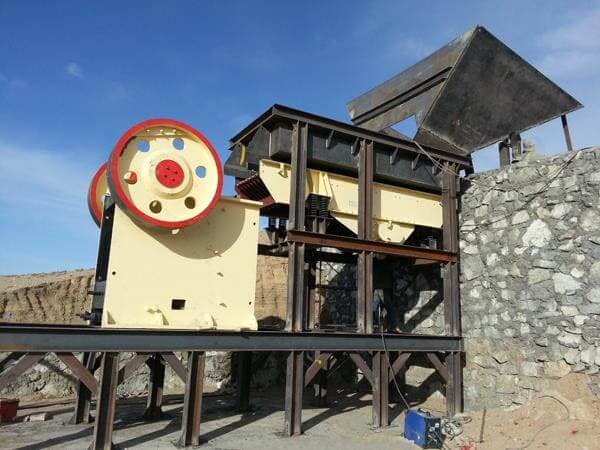
- PE jaw crusher: The first crushing process in a mineral processing plant. The raw ore (≤500 mm) is coarsely crushed to 150-200 mm to prepare for subsequent medium crushing.
- PEX jaw crusher: Medium/fine crushing operation. The ore crushed by the PE is further crushed to 25-30mm, ensuring uniform feed particle size for the ball mill. Some plants adopt a “PE+PEX” stepped crushing process, which saves 15%-20% energy compared to single-stage crushing.
- Tolva+Alimentador vibratorio electromagnético: Interlocking control. The buffer storage of the material bin works in conjunction with the vibrating feeder to supply material at a constant speed, reducing “idling” or “overloading” of the molino de bolas.
- Molino de bolas: Grind the ore to approximately 0.074 mm (200 mesh) to ensure complete liberation of the antimony minerals. Suitable for sulfide antimony ore (stibnite).
- Clasificador espiral: Separate the ground product into coarse and fine fractions, with the qualified fine fraction proceeding to flotation and the coarse fraction returned to the ball mill. Ball mills and spiral classifiers form a closed-circuit grinding system.
- Flotation machine (roughing): Preliminary separation of antimony minerals produces rough concentrate and tailings.
- Flotation machine (scrubbing/concentrate):Scrubbing: Re-selection of rough tailings to reduce antimony loss. Concentrate: Re-floating of rough concentrate to improve antimony grade (up to 50%-60% Sb).
- Espesante: Concentrate the flotation concentrate to a concentration of 40%-50% to reduce the subsequent dewatering pressure.
- Filter/Press filter: En filter machine (vacuum) is suitable for small and medium-sized operations, with a concentrated moisture content of 15%-20%. The plate and frame filter press is suitable for high moisture requirements (<15%), producing drier filter cakes.
- Secadora: Further reduce the moisture content of the concentrate (<10%) to facilitate transportation and smelting.
Features of Antimony Ore Beneficiation Equipment
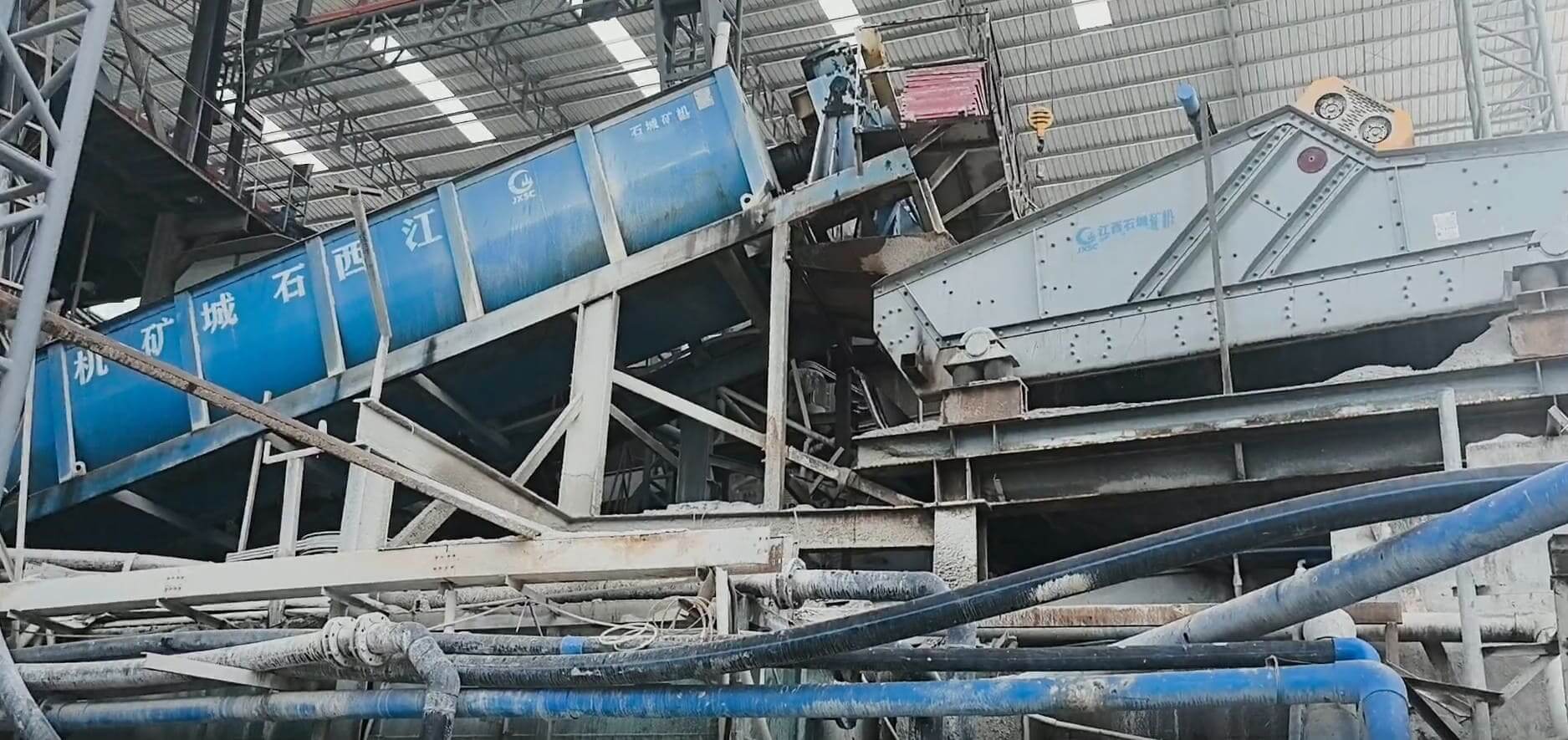
Modern equipment is designed for efficiency and sustainability:
- Corrosion Resistance: Lined with wear-resistant materials (e.g., rubber or polyurethane) to handle abrasive ores.
- Automation: Advanced control systems optimize parameters like pulp density and pH in real time.
- Energy Efficiency: High-pressure grinding rolls (HPGR) reduce power consumption by 20–30% compared to traditional mills.
- Modularity: Containerized units enable rapid deployment in remote mining sites.
These features address the challenges of complex antimony ore compositions and environmental regulations.
Advanced Antimony Beneficiation Methods
Flotation Process (Dominant Method)
Key Reagents: Lime (pH modifier), lead nitrate (activator), and frothers like MIBC.
Optimization: Stibnite floats at pH 6–8, while depressants (e.g., sodium sulfite) suppress iron sulfides.
Gravity Concentration
Ideal for coarse-grained ores; plantillas o concentradores centrífugos achieve recoveries up to 85%.
Combined Techniques
Flotation-Gravity Hybrid: Enhances recovery for mixed ore types.
Bioleaching (Emerging): Bacteria like Acidithiobacillus oxidize sulfides, reducing chemical usage.
Environmental Innovations
Dry Stack Tailings: Minimizes water usage and contamination risks.
Sensor-Based Sorting: X-ray transmission pre-concentrates ore, cutting energy costs by 15%.
The Future of Antimony Processing
Antimony’s irreplaceable role in safety-critical industries drives continuous advancements in beneficiation technology. From automated celdas de flotación to green chemistry approaches, the sector balances productivity with sustainability. As research focuses on tailings reprocessing and renewable energy integration, antimony mining is poised to meet global needs responsibly.
Investing in modern equipment and adopting hybrid methods will remain key to unlocking this metalloid’s full potential.
ÚLTIMOS PRODUCTOS
-

Inclined Vibrating Screen
The inclined vibrating screen is a simple and eff…
-
High Temperature & Pressure Gold Desorption Electrolysis System
High-Temperature & Pressure Gold Desorption Elect…
-
Normal Temperature & Pressure Gold Desorption Electrolysis System
The normal temperature & pressure gold desorption…


ÚLTIMAS NOTICIAS
- Modern Cyanide Residue Treatment Technologies for Gold Processing
- Traditional De-cyanidation Technologies for Gold Cyanide Residues
- Shaking Table, 3-Disc Dry Magnetic & Electrostatic Separator for W-Sn-Ta-Nb
- Mineral Analysis: The Foundation for Successful Mineral Processing Projects
- What Is Over-Grinding and How Can It Be Prevented?
 English
  French
  Spanish
  Portuguese
  Indonesian