



Abstract: Magnetic separation technology plays a pivotal role in modern mineral processing, with equipment design directly impacting efficiency and sustainability. From dry to wet systems, weak to high-gradient magnetic fields, this guide explores the diverse types of magnetic separators available—each tailored to specific ore characteristics and industrial needs. Discover how advancements in permanent magnet materials and superconducting technology are driving cleaner, more energy-efficient solutions for the mining sector.
Introducción
Si el equipo de separación magnética is reasonable, advanced, and efficient determines the overall effectiveness of the beneficiation process. Paying attention to research on magnetic separation equipment can further optimize the mine beneficiation process. Centralized crushing and centralized sorting may become the trend of the future mining industry. With the increasing scarcity of mineral resources and the continuous improvement of production requirements, the sorting requirements of energy and mining materials will continue to increase.
The particle size of magnetite inclusions is not uniform. To separate individual magnetite particles that meet process requirements, the minimum inclusion particle size must be used as the grinding standard. In the design of magnetic separation equipment, mechanical factors that facilitate material separation—such as air force, centrifugal force, gravity, electric field force, and water capacity—should be incorporated to achieve efficient separation.
Although magnetic separation equipment is a clean separation method, it inevitably consumes large amounts of electricity and water. As the mining industry places increasing emphasis on energy conservation and emissions reduction, the upgrading and retrofitting of magnetic separation equipment have become an important component of these efforts. Magnetic separation is a material separation and processing technology widely used across numerous industrial sectors. In the field of mineral processing, magnetic separation technology has made significant progress. Thanks to advancements in permanent magnet materials, improvements in their performance, and the gradual increase in the magnetic energy product of permanent magnets, magnetic separation equipment has also experienced rapid development. Magnetic separators come in a wide variety of configurations, and there are numerous classification methods.
- Según la intensidad del campo magnético, se divide en weak magnetic separator, medium magnetic separator, and strong magnetic separator;
- Según el medio de separación, se divide en el separador magnético en seco y el separador magnético en húmedo;
- According to the magnetic source, it is divided into the permanent magnet magnetic separator and the electromagnetic magnetic separator.
What Types of Magnetic Separators Are There?
1. Separador magnético fuerte en seco
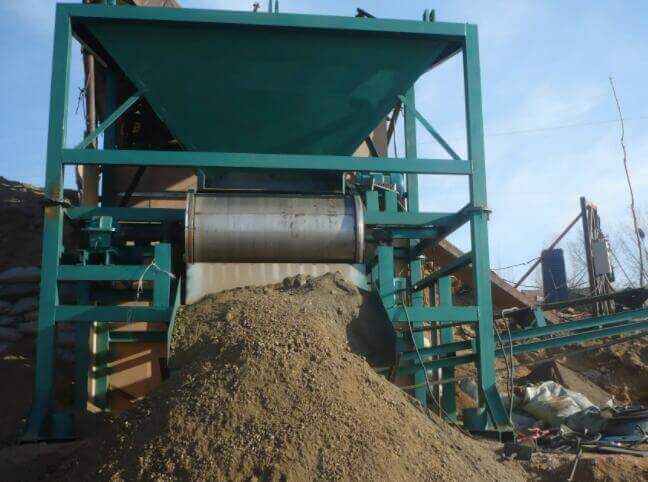
Dry strong magnetic separators have been used in industry for more than 50 years, mainly for the separation of coarse-grained minerals. With the development of rare earth permanent magnet materials, a permanent magnet roller magnetic separator with a higher magnetic force than a strong magnetic field electromagnetic separator has been manufactured. Although the magnetic induction intensity is not easy to adjust, it is possible to design a roller magnetic separator that can handle materials with different particle sizes and different specific magnetic susceptibility by selecting the permanent magnet material reasonably and optimizing the geometry of the roller. The weight and size of the permanent magnet roller magnetic separator are smaller than those of the electromagnetic induction roller magnetic separator, and there is no air gap, which can handle large particles, making the permanent magnet roller magnetic separator have a great technical and economic effect. First, magnets of different grades and sizes can be used to reduce costs; second, electromagnetic modeling software can be used to optimize magnet design. For the dry pre-selection of weak magnetic iron ore, in recent years, the dry-type strong magnetic separator has been used to replace the gravity separation equipment, so the pre-selection index has been significantly improved.
2. Dry Weak Magnetic Separator
El objetivo principal del separador magnético débil en seco es eliminar las limaduras de hierro y las impurezas ferromagnéticas o enriquecer los componentes ferromagnéticos útiles. Los imanes suspendidos, las poleas magnéticas, los imanes de placa o los imanes de barra de rejilla se utilizan generalmente para eliminar las limaduras de hierro y las impurezas ferromagnéticas, mientras que los tambores magnéticos se utilizan principalmente para enriquecer los componentes ferromagnéticos útiles. En la actualidad, los separadores magnéticos débiles secos se utilizan comúnmente en las minas de mi país para preseleccionar los minerales magnéticos fuertes. Antes de la trituración gruesa, la trituración media, la trituración fina y la molienda, el uso de la separación magnética débil en seco de mineral en trozos puede arrojar más de 80% de la roca estéril mezclada con el mineral, lo que aumenta la capacidad de procesamiento de la molienda, mejora el grado del mineral para moler y reduce el consumo de energía.
3. Wet Weak Magnetic Separator
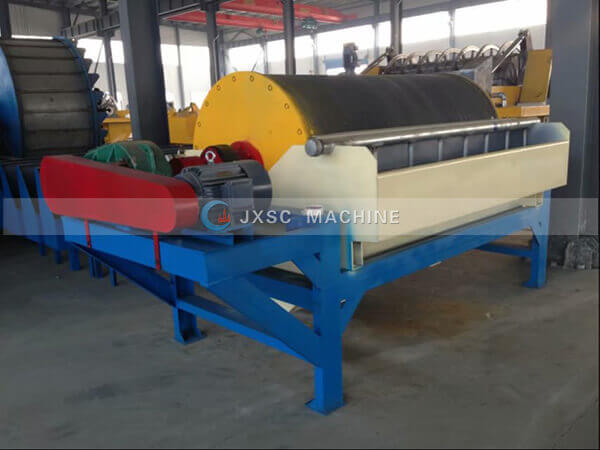
The magnetic drum separator is the most commonly used wet-weak magnetic separator. With the emergence of NdFeB permanent magnet materials, the permanent magnet magnetic separator has almost completely replaced the electromagnetic drum magnetic separator. This magnetic separator is mainly used to recover the medium in heavy medium beneficiation, such as magnetite and ferrosilicon. The enrichment of strong magnetic minerals is another application of this magnetic separator. The use of rare earth permanent magnets and further improvements in their properties have expanded the wet-type magnetic separator to separate medium-magnetic and weakly-magnetic materials.
Los imanes del separador de tambor de imanes permanentes están disponibles en dos diseños: configuración radial y configuración axial.
- En la configuración radial, la polaridad de los imanes permanentes se alterna a lo ancho del cilindro;
- In the axial configuration, the polarity of the permanent magnets alternates along the barrel’s circumference.
The radial configuration se utiliza generalmente para mejorar la tasa de recuperación de materiales ferromagnéticos. El cambio en la polaridad de los imanes dispuestos axialmente hace que las partículas clasificadas giren sobre la superficie de los imanes, liberando así las partículas no magnéticas arrastradas del producto magnético, lo que puede mejorar el grado del concentrado magnético.
A separador magnético de tambor húmedo es el principal equipo de clasificación de mineral de hierro fuertemente magnético. En la actualidad, se han realizado grandes avances en el método de alimentación del mineral, el diseño del sistema magnético, el tipo de tanque, el mecanismo de transmisión, a gran escala, la especialización y la alta eficiencia.
The selection equipment for strong magnetic iron ore includes low-field-strength multi-pole magnetic separators, magnetic aggregation machines, magnetic separation columns, vertical pulse vibration magnetic separators, low-field-strength pulsation magnetic separators, low-field-strength self-weight jumper Elimination machines, etc. Its typical feature is to use the combined action of a weak magnetic field and gravitational field to remove the magnetically mixed gangue and improve the iron grade of the concentrate. Moreover, the selection effect is good.
4. Wet Magnetic Separator and High Gradient Magnetic Separator
Introducing the medium into the magnetic circuit of the magnetic separator can make the magnetic separation method process the materials that were considered too fine and too weak to select other materials in the past. Jones studied this in 1960 and combined the Frantz concept of magnetized media with strong magnetic fields. A more advanced magnetic separator design according to the Jones concept is the SALA high-gradient magnetic separator. Although a variety of multi-cycle and continuous wet high-gradient magnetic separators have been designed and manufactured, only a few magnetic separators can meet the mining industry’s requirements. The purification of kaolin and the beneficiation of iron ore and placer are examples of successful applications of this magnetic separator.
El mineral de hierro de grano fino y magnetismo débil debe separarse con equipos de separación magnética fuerte. En la actualidad, en las plantas nacionales de procesamiento de mineral de hierro se utilizan ampliamente dos tipos de SHP y SLON. El representante típico de este tipo de equipos es el separador magnético de anillo vertical pulsante de alto gradiente, que es un equipo de separación magnética de alta eficiencia adecuado para clasificar minerales magnéticos débiles de grano fino.
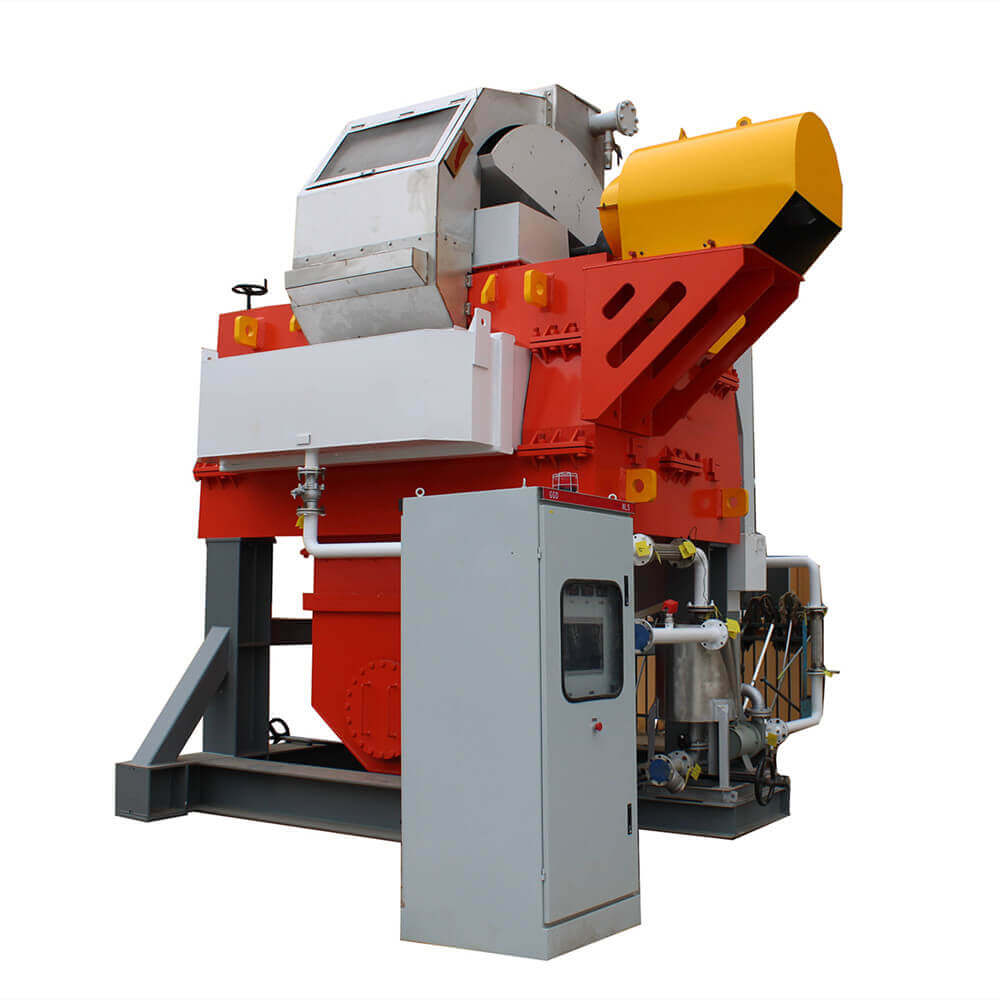
The advantages of the vertical ring pulsating high gradient magnetic separator:
- Gran proporción de enriquecimiento
- Alta eficacia de clasificación
- El medio magnético no es fácil de bloquear
- Gran adaptabilidad a la fluctuación del tamaño de las partículas de alimentación, la concentración y el grado.
- Trabajo fiable
- Fácil de manejar y mantener
Aplicación de la tecnología superconductora a la separación magnética
Aunque la aplicación de la tecnología superconductora a los equipos de proceso de separación magnética es de gran trascendencia, su importancia en la separación magnética no parece manifestarse. Dado que la necesidad de inducción magnética por encima de 2T aún no es evidente, las principales ventajas de los imanes superconductores son la reducción del consumo de energía y del peso del separador magnético. Los imanes superconductores también pueden aplicarse en una configuración helicoidal de gradiente abierto sin utilizar un medio para generar fuertes fuerzas magnéticas en grandes volúmenes. La eliminación de óxidos de hierro y titanio magnéticos débiles cuasi coloidales para purificar el caolín es el objetivo principal de un separador magnético superconductor de alto gradiente.
En los últimos años, la aplicación a gran escala de imanes permanentes de tierras raras ha acelerado enormemente el proceso de magnetización permanente de los equipos de separación magnética. Debido a la aplicación de alta tecnología y al desarrollo del control automático, la precisión de clasificación de los equipos de separación magnética es cada vez mayor. Principalmente en la mejora de la precisión de clasificación, la ampliación de los campos de aplicación, el aumento de la capacidad de procesamiento, la adopción de nuevos materiales magnéticos, el ahorro de energía, la reducción del consumo, etc. Los equipos a gran escala, especializados y que ahorran energía son el centro de la tendencia de desarrollo futuro y de la competencia en el mercado de equipos de separación magnética.
Magnetic Separators From JXSC
JXSC provides a comprehensive range of magnetic separation equipment designed for various mineral processing applications. Its product portfolio includes dry magnetic separators, wet drum magnetic separators, high-intensity magnetic separators, high-gradient magnetic separatorsy electromagnetic separators, covering everything from rough separation and concentration to the recovery of weakly magnetic minerals.
Engineered with high-performance magnetic materials, optimized magnetic field distribution, and robust structural design, JXSC magnetic separators offer advantages such as stable separation performance, low energy consumption, easy maintenance, and long service life. These systems are widely used for processing iron ore, manganese ore, ilmenite, wolframite, cassiterite, rare earth minerals, quartz sand, feldspar, and the recycling of industrial materials.
Whether for small-scale operations or large industrial beneficiation plants, JXSC can provide customized magnetic separation solutions based on ore properties, processing requirements, and production capacity, helping customers improve recovery rates while reducing operating costs and environmental impact.
ÚLTIMOS PRODUCTOS
-

Handheld Rock Drills
【Drilling Hole Diameter】30-45 mm 【Dill Hole De…
-
Hydraulic Rock Drills
【Drive Method】 Driven by high-pressure hyd…
-
Gasoline Rock Drills
【Engine Type】 Gasoline engine …


ÚLTIMAS NOTICIAS
- Low-Grade Phosphate Ore Flotation
- Kanyika Niobium-Tantalum Project in Malawi: Processing Priorities
- Modern Cyanide Residue Treatment Technologies for Gold Processing
- Traditional De-cyanidation Technologies for Gold Cyanide Residues
- Shaking Table, 3-Disc Dry Magnetic & Electrostatic Separator for W-Sn-Ta-Nb
 English
  French
  Spanish
  Portuguese
  Indonesian