



Résidus miniers, the residual materials left after mineral extraction, represent both an environmental challenge and an untapped resource. As the mining industry shifts toward sustainable practices, tailings retreatment has emerged as a critical solution—transforming waste into value while reducing ecological risks. Whether through reprocessing for residual minerals, advanced dewatering techniques, or innovative backfilling methods, tailings management now plays a pivotal role in responsible resource recovery. In this article, we explore the latest technologies and strategies for tailings retreatment, offering insights into how the mining sector can turn legacy waste into economic and environmental opportunities.
What Are Mine Tailings?
Mine tailings are waste materials left after extracting valuable minerals from ore. Unlike overburden or waste rock, tailings consist of finely ground particles and residues from beneficiation processes. They vary in composition depending on the ore type, beneficiation method, and particle size.
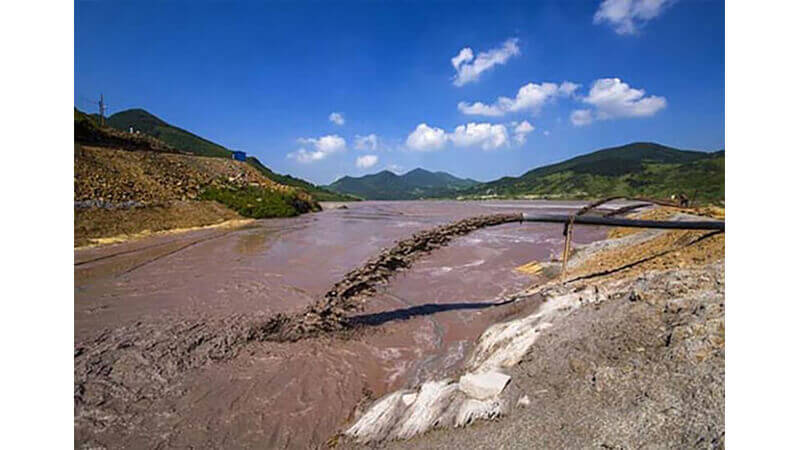
Tailings can be classified into several categories:
- Hand-picking tailings
- Gravity separation tailings
- Magnetic separation tailings
- Flotation tailings
- Chemical beneficiation tailings
- Electrification tailings
Why Should We Re-treat Tailings?
Usually, the ore tailings are stored in the tailings dam. The remaining toxic chemicals, wastewater, and heavy metal ions in the beneficiation process will not only cause pollution and ecological damage to the surrounding environment but also increase the potential safety hazard of the tailings dam, may induce landslides, mudslides, tailings dam breaks, and other accidents, so tailings treatment has been highly valued. Retreating tailings mitigates these risks while recovering valuable minerals, promoting sustainable mining practices.
Key Tailings Retreatment Methods
At present, tailings treatment has three main directions: tailings re-concentration, tailings dewatering, and tailings filling the mined-out areas. Below, we will explain these three parts separately.
1. Tailings re-concentration: Extracting Hidden Value
Although the content of useful components in tailings is relatively low, the use of advanced technology and a reasonable process for re-treating tailings can also recover these components to a greater extent, thereby fully recycling resources and reducing waste. The final production of tailings will alleviate the pressure on the environment.
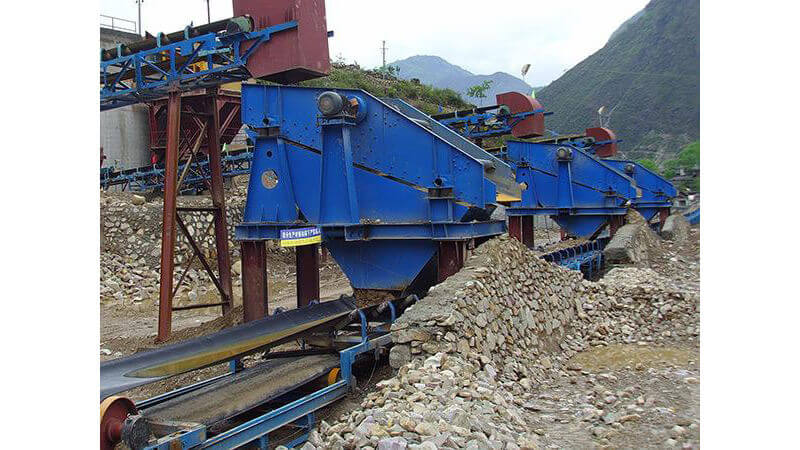
Processus de flottation
Using the flotation process to treat tailings containing minerals such as colemanite, zinc oxide, and apatite. Due to the development of new chemicals and new processes, some tailings with relatively simple processes, especially some old tailings, can recycle concentrate product by the flotation process.
Nouveau procédé de séparation par gravité
New gravity separation equipment can recover fine-grained minerals from tailings. Many traditional équipement de séparation par gravité can separate fine-grained and ultra-fine tailings after being invented and perfected, such as vertical centrifugal concentrators, composite gold shakers, compound centrifugal concentrators, and so on.
Traitement microbien et technologie de lixiviation
This technology mainly uses the biochemical action of microorganisms to improve the tailings’ properties, and extracts harmful metal ions in tailings by means of microbial leaching or microbial mineralization to avoid environmental pollution.
2. Tailings Dewatering Process: Enhancing Safety & Efficiency
In the mineral beneficiation stage, the slurry often contains much water. The high water content of the tailings is likely to lead to a tailing dam accident. Therefore, in the concentrating plant, tailings concentration and dehydration are also important parts.
Hydrocyclone
As a kind of equipment for solid-liquid separation using centrifugal force, the hydrocyclone has the characteristics of a small area and high underflow concentration. This kind of concentration process mainly uses a hydrocyclone and a thickener to form a series of closed circuits to obtain high concentrate product.
Acheter un hydrocyclone
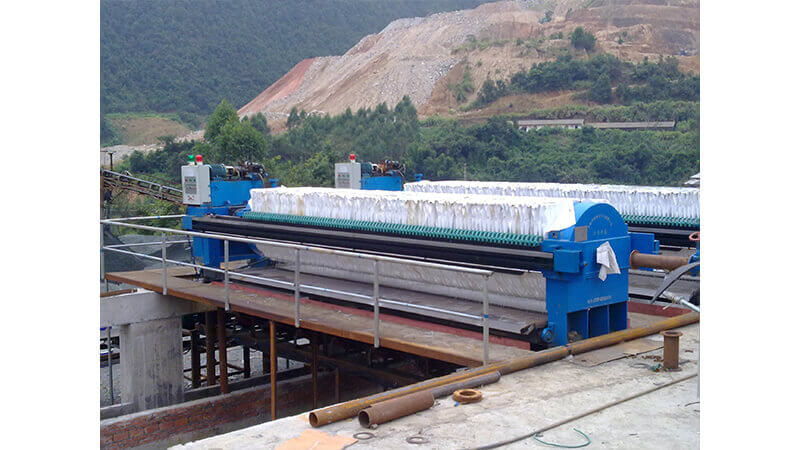
Filtre-presse
Le filtre-presse est également utilisé dans le traitement des résidus des mines d'or. Cette méthode présente les caractéristiques suivantes : faible teneur en eau du gâteau de filtration et retour du filtrat. Cependant, en raison de la faible capacité de traitement d'une seule machine, il est difficile d'étendre le traitement des résidus à grande échelle.
Acheter un filtre-presse
Décharge sèche des résidus
It is a new process using a dewatering-type cyclone, high-frequency dewatering screen, and high-efficiency deep cone thickener. It can reduce the water content in tailings to less than 15%, and save costs, which can effectively avoid environmental pollution.
3. Backfilling Mined-Out Areas: Sustainable Waste Disposal
Les résidus qui remplissent le goaf servent à recharger les déchets de résidus dans la zone exploitée afin de protéger le terrain et de réduire le coût de la digue à résidus.
Technologie de remplissage du ciment par le sable des résidus
The full tailings cement filling is mixed with cement, ash, etc., to form a filling aggregate with a hardness of 1~2 MPa, and the filling slurry is fed into the filling zone by the pipeline self-flow to achieve the purpose of filling the goaf.
Technologie de remplissage de sable par consolidation de l'eau
High-water consolidation full tail sand filling is similar to full tail sand cementing, except that high-water materials are used as cementitious materials rather than cement. This method uses alumina, sulphoaluminate-based material, and agglomerate, quicklime, and coagulant-based material, which are separately pulped and mixed before filling, and have a fast setting speed.
Conclusion
Tailings retreatment is no longer just a compliance obligation—it’s a strategic imperative for the future of mining. By adopting re-concentration, dewatering, or backfilling technologies, operators can mitigate environmental liabilities, unlock residual value, and align with circular economy principles. However, success hinges on selecting the right method for specific tailings profiles and site conditions. Collaborating with experts and leveraging innovative equipment will be key to optimizing these processes. As the industry continues to evolve, tailings retreatment stands as a testament to how sustainability and efficiency can go hand in hand, turning historical waste into tomorrow’s resource.
DERNIERS PRODUITS
-

Inclined Vibrating Screen
The inclined vibrating screen is a simple and eff…
-
High Temperature & Pressure Gold Desorption Electrolysis System
High-Temperature & Pressure Gold Desorption Elect…
-
Normal Temperature & Pressure Gold Desorption Electrolysis System
The normal temperature & pressure gold desorption…


DERNIÈRES NOUVELLES
- Shaking Table, 3-Disc Dry Magnetic & Electrostatic Separator for W-Sn-Ta-Nb
- Mineral Analysis: The Foundation for Successful Mineral Processing Projects
- What Is Over-Grinding and How Can It Be Prevented?
- Fluorspar vs Graphite vs Quartz: Non-Metal Minerals Beneficiation Differences
- Tailings Dam Safety: 5 Critical Parameters to Monitor
 English
  French
  Spanish
  Portuguese
  Indonesian