




Pneumatic Rock Drills
【Power Source】 Compressed air driven
【Working Air Pressure】0.4–0.63 MPa
【Air Consumption】≤88 L/s
【Impact Energy】≥50 J
【Max Drilling Depth】6 m
【Application】 Mining, quarrying, tunneling, construction, and rock excavation
【Drilling Material】Rock, stone, concrete, and other hard formations
 Chat en ligne sur WhatsApp
Avantages
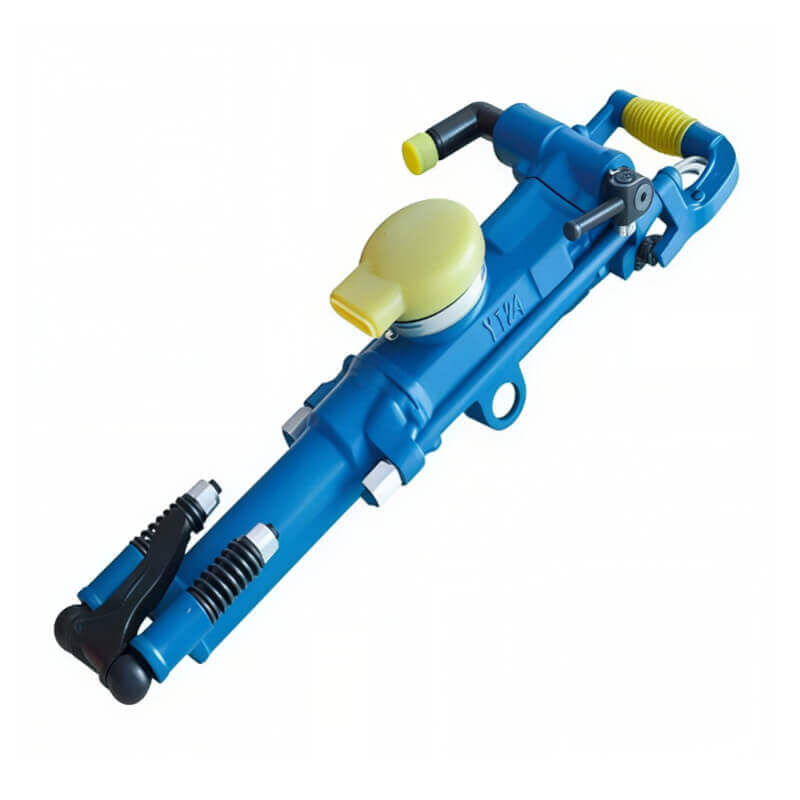
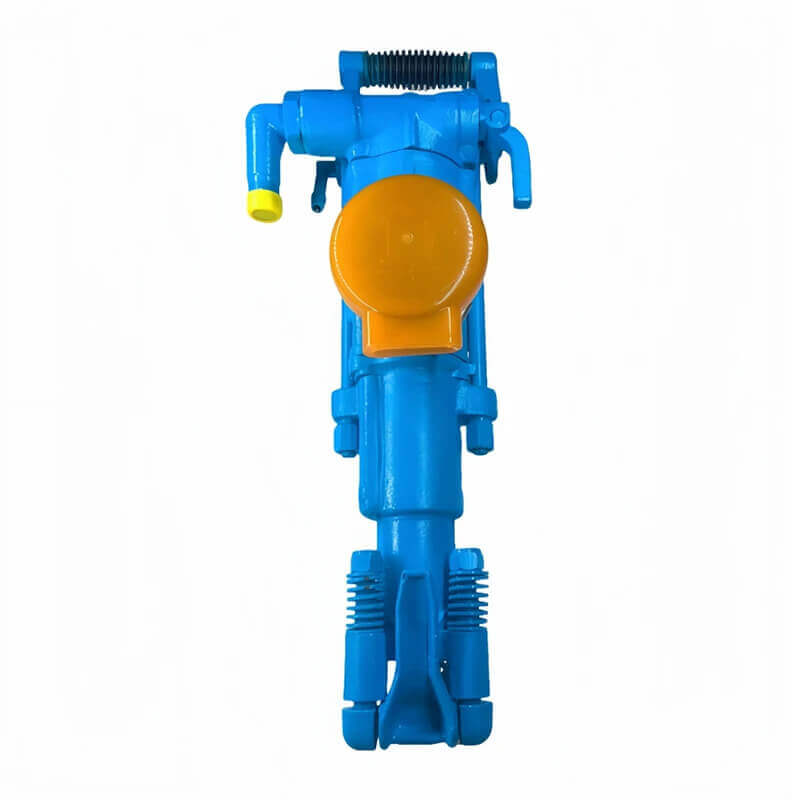
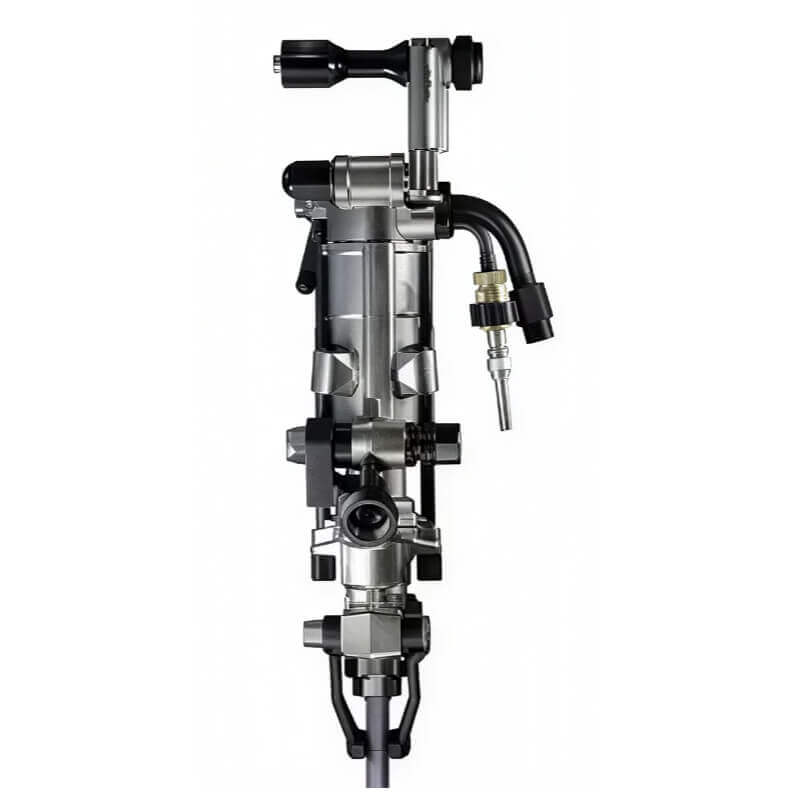
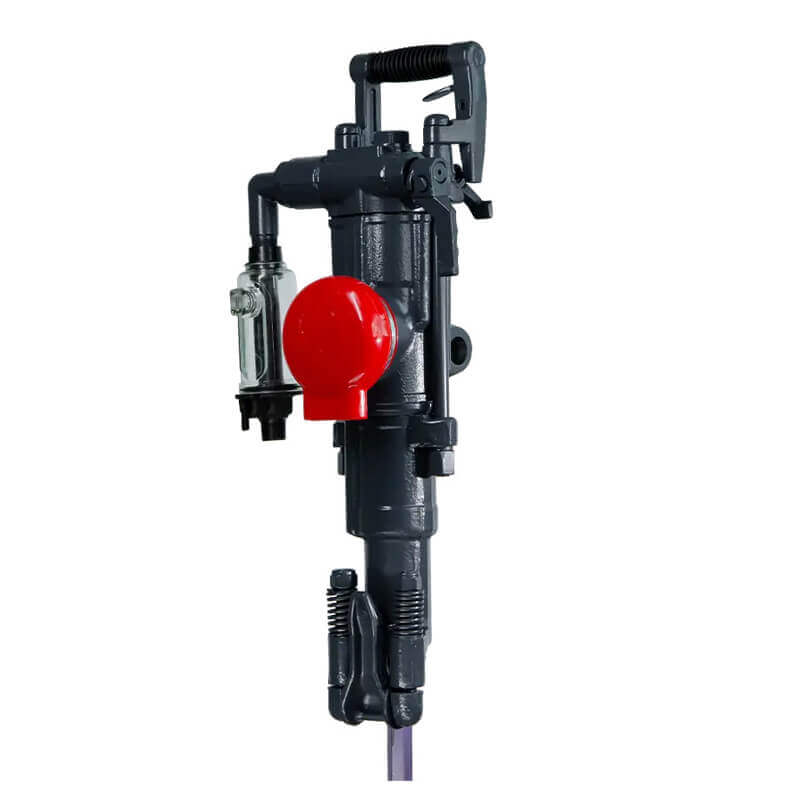
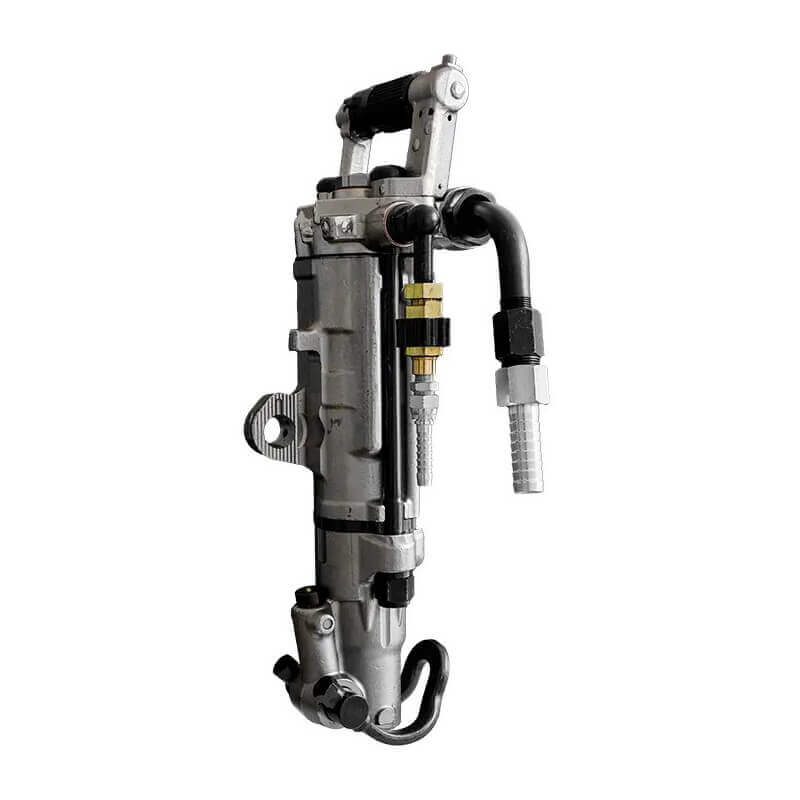
A pneumatic rock drill, also known as an air-powered rock drill or air drill, is a compressed-air-powered drilling machine designed for drilling holes in rock, stone, concrete, and other hard materials.
Pneumatic rock drills are widely used in mining, quarrying, tunneling, construction, and underground operations, particularly in working environments where compressed-air systems are readily available.
【Types of Pneumatic Rock Drills】
- Hand-held Drills– Lightweight, portable drills used for small-scale drilling (e.g., Jackhammers).
- Sinker Drills– Vertical drilling for deep holes (e.g., in shaft sinking).
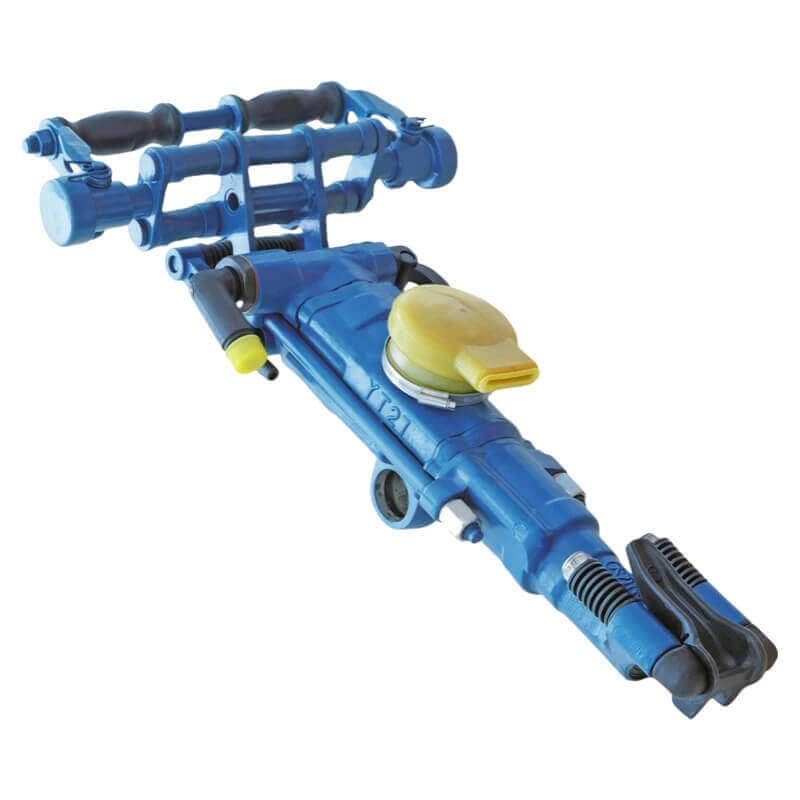
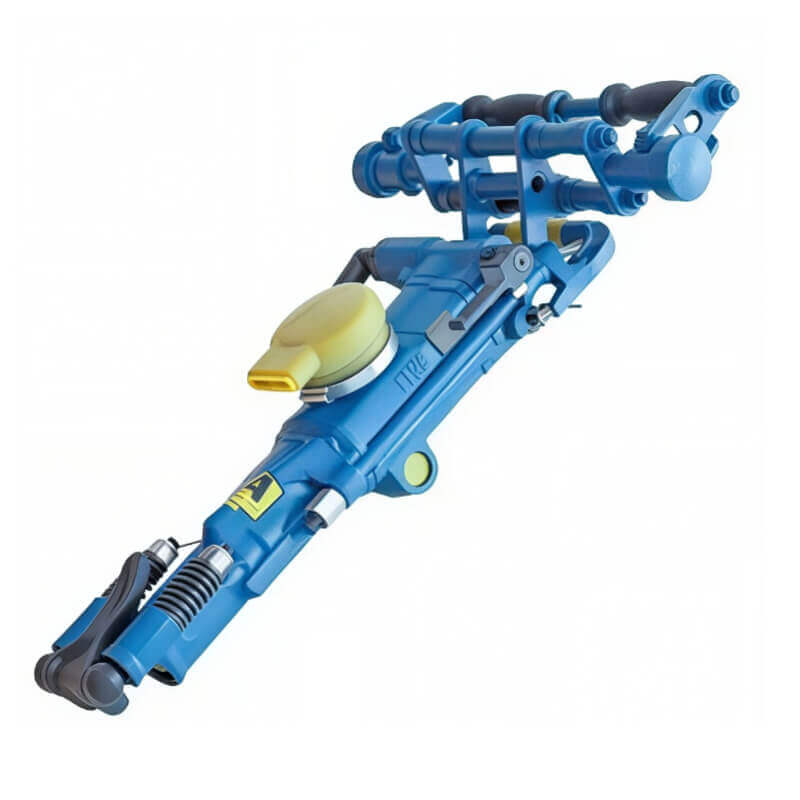
- Pusher-leg/Air-leg/JacklegDrills– Supported and fed by a pneumatic leg, commonly used for horizontal and inclined drilling in underground mining and tunneling.
- Stoper drill– Pneumatic rock drills supported and advanced by a telescopic pneumatic leg, mainly used for upward drilling.
- Drifter Drills– Mounted on rigs for larger boreholes (e.g., tunneling, mining), used for horizontal, vertical, or inclined drilling.
- Top Hammer Drills– Used for downward or horizontal drilling in surface & underground mining.
【Pros and Cons】
Pros: Compact yet powerful; airflow helps cool the drill bit and expel rock cuttings; explosion-proof, suitable for wet/dusty conditions.
Cons: Noisy and vibrates heavily, relies on a continuous air supply, and is less energy-efficient than hydraulic/electric rock drills.


Structure du produit
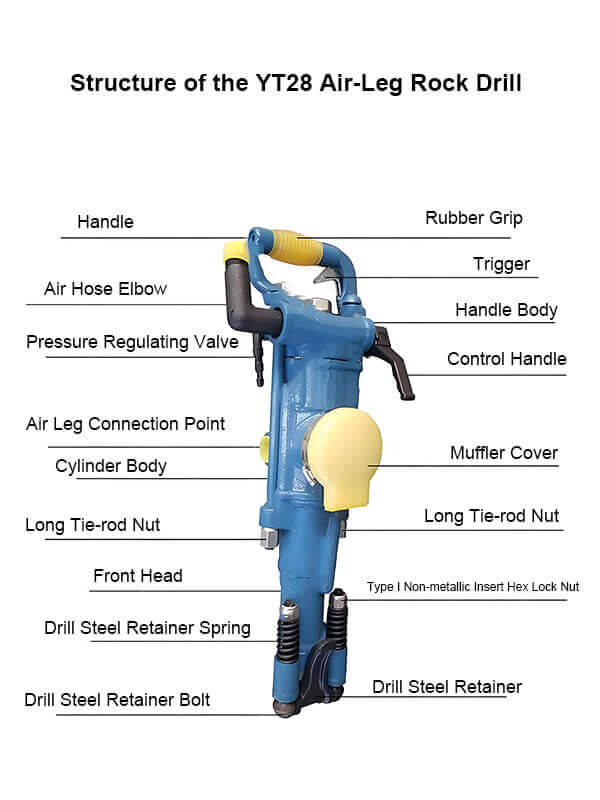
【Pneumatic Rock Drills Structure】
The main components of a pneumatic rock drill generally include the air inlet, air-control mechanism, impact mechanism, rotation mechanism, drill chuck, handle/support structure, and drill rod/bit assembly. These components work together to convert compressed air energy into impact and rotational motion, enabling the drill bit to break rock and create boreholes.
The structure of a pneumatic rock drill varies by type. Leg-supported models use an FT-series air leg for support and automatic feed, rail-mounted models feature dovetail sliding surfaces for installation on drilling jumbos, and hand-held models have a compact structure for manual operation in shallow-hole drilling and small-scale rock breaking.
In general, the core drilling mechanisms remain similar across different pneumatic rock drill types, while the support and feed structures are adapted to meet different operating requirements.
【Pneumatic Rock Drills Working Principle】
The working principle of a pneumatic rock drill is based on compressed air energy.
1. Compressed air from an air compressor enters the rock drill through the air inlet.
2. The air pressure drives the internal piston or impact mechanism to reciprocate at high speed, delivering repeated impacts to the drill rod and bit to break the rock.
3. At the same time, the rotation mechanism rotates the drill bit to improve drilling efficiency, while the exhaust system releases used air to complete the operating cycle.
The combined impact and rotation action breaks the rock at the bottom of the hole. As the operator or feed system advances the drill, the hole gradually reaches the required depth. The drilling efficiency is influenced by air pressure, air consumption, rock hardness, bit design, hole diameter, drilling depth, and operating conditions.
Paramètres techniques
| Modèle | YT24 | YT24C | YT27 | YT28 | YT29A | S82 | S83 | S250 |
| Poids (kg) | 24 | 24 | 27 | 26 | 26.5 | 26.5 | 33.4 | 35 |
| Overall Length (mm) | 678 | 628 | 668 | 661 | 659 | - | 688 | 710 |
| Working Air Pressure (MPa) | 0.4–0.63 | 0.4–0.63 | 0.4–0.63 | 0.4–0.63 | 0.4–0.63 | 0.4–0.63 | 0.63 | 5.0 bar (approx. 0.5 MPa) |
| Air Consumption (L/s) | ≤67 | ≤80 | ≤86 | ≤81 | ≤88 | ≤88 (0.63 MPa); ≤63.5 (0.5 MPa); ≤52 (0.4 MPa) | ≤53.3 | 3.7m³/5.0bar |
| Percussive Frequency (Hz) | ≥31 | ≥37 | ≥39 | ≥37 | ≥39 | ≥39 (0.63 MPa); ≥37 (0.5 MPa); ≥36 (0.4 MPa) | ≥41 | 2050@5.0 / Min Bar |
| Impact Energy (J) | ≥65 | ≥65 | ≥75 | ≥70 | ≥78 | ≥78 (0.63 MPa); ≥69 (0.5 MPa);
≥50 (0.4 MPa) |
- | - |
| Air Pipe Diameter (mm) | 19 | 25 | 19 | 25 | 25 | - | - | - |
| Shank Dimension (mm) | 22×108 | 22×108 | 22×108 | 22×108 | 22×108 | 22×108 | 22×108 | - |
| Bit Diameter (mm) | 34–42 | 34–42 | 34–45 | 34–42 | 34–45 | 34–45 | 34–45 | - |
| Drilling Depth (m) | 5 | 5 | 5 | 5 | 5 | 5 | 6 | - |
| Cylinder Diameter (mm) | 70 | 76 | 80 | 80 | 82 | 82 | - | 79.4 |
| Piston Stroke (mm) | 70 | 60 | 60 | 60 | 60 | 60 | 76.2; 118 | 73.25 |
| Duty Grade | Light-medium | Medium Universal | Medium-high Efficiency | Mid-heavy Duty | Mid-heavy Enhanced | Flagship Ultra-Heavy | Medium-heavy Dust-Control | |
| Best Suitable Rock Hardness | f=4–10 soft-medium rock | f=6-14 medium-hard rock | f=7-16 medium-hard rock | f=8-17 hard rock | f=8-17 hard rock | f=8-18 ultra-hard rock | f=7-16 medium-hard rock | |
| Core Positioning | Compact entry jackleg drill | Classic mainstream mining drill | Best-selling mass production drill | Heavy daily production drill | Upgraded torque variant of YT29A | Top-tier hard rock flagship drill | Specialized wet drilling model | |
| Typical Application Scenarios | Narrow small mine crosscuts, small tunnel trimming, small-scale quarry secondary breaking, anchor hole shallow drilling | Conventional underground coal/metal mine roadway advancing, general quarry blast hole drilling, small hydropower tunnel excavation | Large coal mine development, highway tunnel main face drilling, mid-sized granite quarry bench blasting | Medium-depth metal mine hard rock drifting, large slope anchor support drilling | Iron, copper mine hard rock horizontal blast hole drilling, long-distance tunnel driving | Deep gold/copper mine ultra-hard granite/basalt drilling, large open-pit quarry deep blast holes, long-distance mountain highway tunnel hard rock excavation | Urban metro tunnel construction, underground mines with strict dust emission limits, urban infrastructure excavation |
Cas réussis


Nous contacter
Si vous avez des questions sur nos produits, n'hésitez pas à remplir le formulaire ci-dessous et nous vous contacterons dans les 24 heures. Soyez assuré que nous ne divulguerons vos informations à personne.
 English
  French
  Spanish
  Portuguese
  Indonesian