



The world’s readily accessible gold ore deposits are declining due to prolonged mining activity. Understanding different gold ore types and extraction methods is crucial for efficient resource recovery. In this comprehensive guide, we examine five easily extracted gold ores and eight processing techniques used in gold mining.
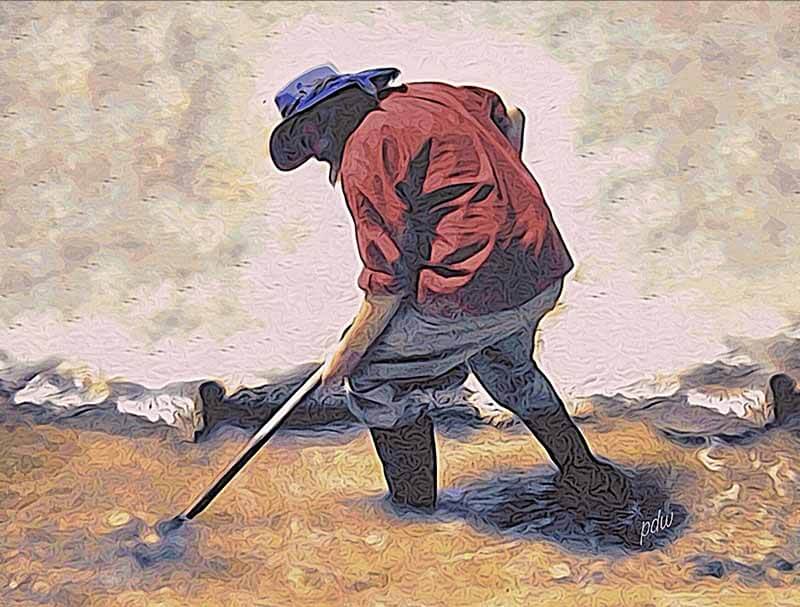
Qu'est-ce que l'or facile à extraire ?
Easily extracted gold refers to gold deposits that require minimal processing for recovery due to favorable physical characteristics, such as:
- Shallow burial depth
- Simple mineral composition
- Coarse gold particle size
- High natural purity
These qualities significantly reduce processing costs compared to refractory ores.
5 Major Types of Easily Extracted Gold Ores
1. Placer Gold Ore
Gisements d'or placérien are formed by primary gold deposits broken up by mechanical and chemical weathering and transported, sorted, and deposited by external forces. There are many kinds of placer gold deposits, such as eluvial gold deposits, slope gold deposits, diluvial gold deposits, riverbed alluvial gold deposit and shore gold deposits, etc.
Les caractéristiques de ce type de gisement sont les suivantes : mou, peu profond, généralement de 5 à 10 m, parfois de 20 à 30 m ; l'épaisseur du gisement aurifère est généralement de 1 à 5 m, parfois jusqu'à 10 m ; la largeur de la ceinture est de 50 à 300 m en moyenne, et la longueur peut atteindre plusieurs kilomètres ou dizaines de kilomètres ; la pente du gisement aurifère est très faible, généralement de 0,002 à 0,02.
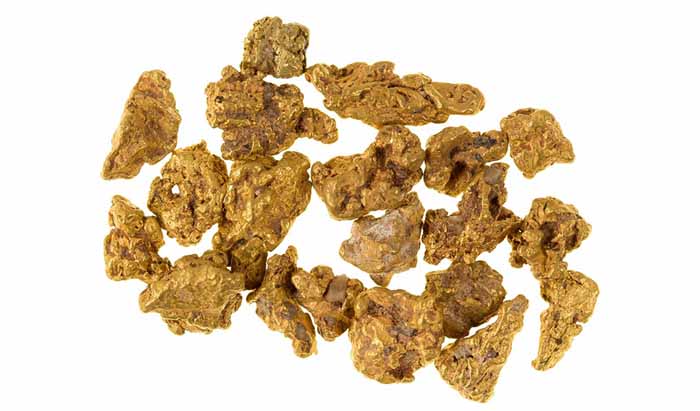
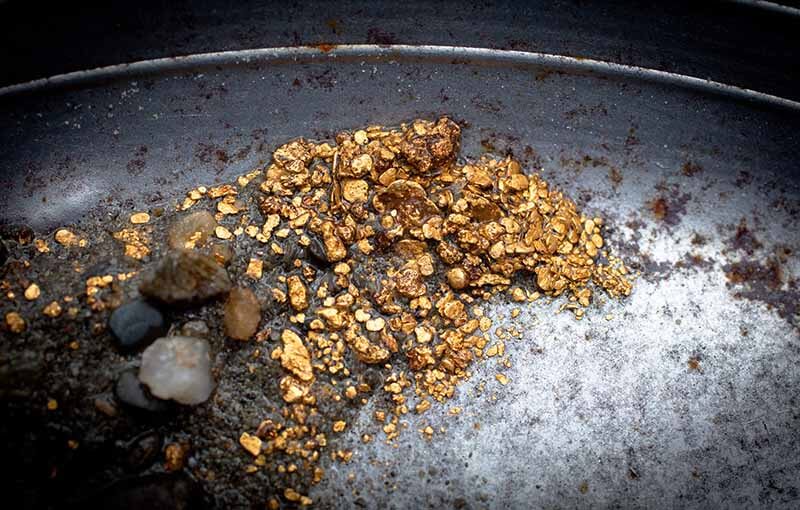
The gold ore is generally simple in composition, mostly in granular or scaly shape, and the particle size is usually 0.5~2mm, with an average density of about 17.5~18.0g/cm3. According to the particle size, gold can be divided into a large piece of gold (greater than 5mm), coarse gold (5~1.65mm), medium gold (1.65~0.83mm), fine gold (0.83~0.42mm), and extra fine gold (0.42~). 0.15mm) and the most particulate gold (or floating gold, less than 0.15mm).
2. Gold-bearing Quartz Vein Ore
The basic composition of ore is quartz, with a content of more than 90%, and almost no heavy metal sulfide. Natural gold is mostly filled in the crack and cleavage surface of quartz in coarse grains, or disseminated in quartz veins in fine grains. Gold is easy to dissociate after concassage et broyage.
3. Sulfide-Containing Quartz Vein Ore (1-5% Sulfides)
This ore is most common in gold-bearing quartz veins and generally contains 1% to 5% of metal sulfides. According to the state of gold production, it can be divided into two types: one is associated with sulphide ore, and the other is associated with gangue minerals such as quartz.
(1) Associate with sulphide ore
The composition of such ore is relatively simple. Pyrite is the main metal sulfide, and the content of sulfides such as copper, lead, zinc, and antimony is very small. The relative content of natural gold in pyrite is more than 60%, and the remaining gold is present in gangue minerals such as quartz and other metal sulfides. This type of ore is most suitable for flotation. For the very fine gold contained in the flotation tailings, tailings cyanidation can be carried out. When the grinding product contains coarse particles of free gold, it should be added with mercury or gravity separation before flotation.
(2) Associate with gangue minerals
The main feature of this ore is that the metal sulfide content is low, and more than 70% of the natural gold is symbiotic with quartz. The metal minerals in the ore are mainly pyrite. In addition, there is a small amount of chalcopyrite, pyrrhotite, stibnite, galena, etc., but no arsenic, antimony, clay, or carbonaceous materials.
Ces minerais se prêtent mieux au traitement par la méthode "mercure + cyanure" ou par la méthode de cyanuration de la boue entière.
4. Quartz Vein Containing Gold Oxide Ore
Oxidized ores are generally present in the shallower surface oxidation zone. According to the degree of oxidation, it can be divided into partially oxidized ore and oxidized ore. Most of the natural gold is found in gangue minerals and metal oxide minerals. The gold content of the ore is high, mostly between 10 and 20 gt. The surface of the gold particles often has an iron oxide film, and the degree of pollution increases with the increase in the oxidation rate of the ore. The commonly used processing method is “mercury (or gravity separation) and cyanide”; partially oxidized ore can use the flotation process.
When the gold particles in the ore are coarse, the surface of the gold particles is clean, and the ore is not muddy, 70%~80% of the gold can be recovered from the ore by using the “single amalgamation” or “mixed mercury gravity separation” process.
When the ore has a high oxidation degree, high content of mud, and severe surface pollution, even though the particle size is coarse, it is not suitable to be directly treated by amalgamation. It must be gravity separated first, and the heavy sand (concentrate) is selected to be scrubbed by a grinding machine to remove the surface contamination, then mixed with the mercury.
Le minerai à particules fines et à faible degré d'oxydation est généralement traité par flottation.
As for the fine particle ore with a high oxidation degree, and dispersed in non-sulfide minerals, even if the surface of the gold particles is not contaminated, the gold particles are too fine to be treated by the amalgam method. The only feasible treatment method is the whole mud cyanidation process, the gold leaching rate can reach 96%~98%.
5. Pyrite gold-bearing Quartz Vein Ore (5-15% Sulfides)
The mineral composition of this type of ore is similar to that of a small amount of sulfide quartz vein ore. The difference is that the sulfide content is high (5% to 15%). Metal minerals include pyrite, pyrrhotite, galena, sphalerite, chalcopyrite, and porphyrite, but pyrite accounts for more than 80%. The gangue minerals are mainly quartz, followed by calcite, feldspath, chlorite, sericite, and the like.
Natural gold has a very close relationship with pyrite, so this type of ore is very suitable for flotation treatment, and the recovery rate can reach 93%~96%. If the ore contains coarse particles of free gold, it should undergo gravity separation before the flotation. When there are refractory gold-containing sulfide mineral particles in the flotation tailings, they can be recovered by the gold shaker.

8 Gold Processing Methods
Le processus d'enrichissement du minerai d'or facile à séparer comprend l'amalgamation, la séparation par gravité, la flottation et le cyanure. Le choix de la méthode d'extraction dépend de la nature du minerai et des exigences relatives à la forme du produit.
Le processus d'enrichissement couramment utilisé est le suivant.
Vous pouvez être intéressé par solutions pour le traitement de l'orLe site Web de l'Institut de recherche sur les mines d'or (IRM) permet de connaître les conditions et les exigences des différentes mines d'or, les machines de traitement de l'or utilisées et la configuration de l'installation de lavage de l'or.
1. Amalgamation
This procedure is suitable for the quartz primary ore and oxidized ore containing coarse gold. Simple layout, low investment, and fast effect, which is suitable for a small gold processing plant.
Article connexe : Traitement de l'extraction de l'or et prise en compte de l'environnement
2. Amalgamation + Gravity Separation
Two schemes: first amalgamation and then gravity separation, or first gravity separation and then amalgamation. The former one is suited for the treatment of simple gold-bearing quartz vein sulphide ore, the amalgamation process can recover the coarse particle-free gold, then gravity separation to select the heavy metal sulfide concentrate containing gold. The latter scheme, first gravity separation and then amalgamation, is suited for those oxidized coarse particle ore, and placer gold ore with a low grade.
3. Gravity Separation ( or Amalgamation) + Cyanide Process
This flow design is for gold-bearing quartz vein oxidized ores.
4. Flotation Separation
The flotation process is commonly used to process the gold-bearing quartz vein ore, which contains fine particle gold and good flotability sulfide ore, and process gold sulfide ore, which contains several valuable metals (such as copper, lead, zinc). The flotation process can enrich gold and other valuable metals to the maximum extent, and waste tailings can be obtained with low production cost.
5. Mercury – Flotation Combined Process
The basic premise of using this process is that the coarse gold in the ore can be recovered by amalgamation. The great feature of this process is that it can achieve a higher recovery rate than a single flotation process. In addition to the ore processed by the above flotation process, gold-bearing oxidized ore and ore associated with free gold are suitable.
6. Cyanidation (Full Mud Cyanidation) Process
As for such gold ore, in the presence of a fine particle in quartz gangue minerals, which are deeply oxidized and do not contain Cu, As, Sb, Bi, and carbonaceous materials, it is suited for adopting cyanidation.
Avantages : low cyanide consumption, high leaching rate, high efficiency, and easy control.
7. Flotation – Cyanide Process
This combination is mainly used to process gold-bearing quartz vein ore and quartz-pyrite ore that have a close symbiosis relationship of sulfide. Compared with the cyanidation process, the flotation – cyanide process has the following advantages as following:
- Does not require a fine ground particle, saving consumption.
- Lesser washing and mixing step.
- Smaller area required, low investment.
8. Flotation – Gravity Separation
It is mainly based on flotation, and is suitable for the ore that is closely symbiotic with GOL and sulfide, and can only be recovered by smelting. Due to the small amount of non-floating sulphide ore particles (mostly pyrrhotite) in the flotation tailings, it needs to be recovered by using a gold shaker table, chute en spirale, and cyclone.
Key Considerations for Gold Processing
The optimal method depends on ore characteristics:
- Gold particle size and distribution
- Mineral associations
- Oxidation state
- Presence of interfering elements
Complex ores often require customized combinations of these methods for maximum recovery.
Gold Processing Equipment & Solutions
If you have questions in flowsheet design, mining machine configuration, gold plant optimization, gold processing techniques support, and the like, we are here to help.
JXSC, a 40+ years gold mining machine manufacturer, has been supplying effective and safe équipement d'extraction de l'or for hundreds of gold mining companies around the world, Australia, USA (like California, Colorado, Georgia, Alaska), India, Congo, South Africa, Ghana, Tanzania, and so on.
DERNIERS PRODUITS
-

Inclined Vibrating Screen
The inclined vibrating screen is a simple and eff…
-
High Temperature & Pressure Gold Desorption Electrolysis System
High-Temperature & Pressure Gold Desorption Elect…
-
Normal Temperature & Pressure Gold Desorption Electrolysis System
The normal temperature & pressure gold desorption…


DERNIÈRES NOUVELLES
- Shaking Table, 3-Disc Dry Magnetic & Electrostatic Separator for W-Sn-Ta-Nb
- Mineral Analysis: The Foundation for Successful Mineral Processing Projects
- What Is Over-Grinding and How Can It Be Prevented?
- Fluorspar vs Graphite vs Quartz: Non-Metal Minerals Beneficiation Differences
- Tailings Dam Safety: 5 Critical Parameters to Monitor
 English
  French
  Spanish
  Portuguese
  Indonesian