



Introduction
In mineral processing, steel ball consumption can account for approximately 40–50% of the grinding costs of a broyeur à boulets. As energy prices continue to rise and mining operations face increasing pressure to improve sustainability, reducing grinding energy and steel ball consumption has become an important way to improve overall plant efficiency and profitability.
Ball mill performance depends on several interconnected factors, including the ore hardness and grindability, feed particle size, steel ball diameter and strength, ball filling rate, pulp conditions, and mill rotational speed. An appropriate combination of these parameters can improve grinding efficiency, reduce media wear, and maintain the required product particle size.
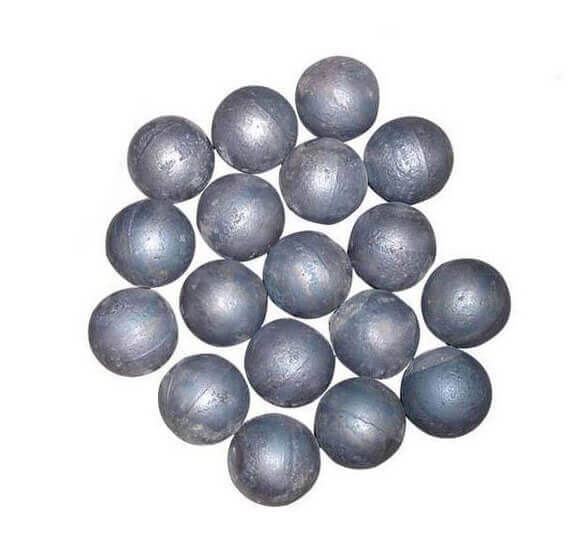
When a new ball mill is commissioned, the initial ball charge and ball size distribution are particularly important. Newly installed grinding media also require a running-in period as they interact with the mill liners and ore. The initial ball charge should therefore be designed according to the mill’s effective volume, operating conditions, liner design, ore characteristics, and the results of grinding tests. Most of the balls just installed will have a certain running-in period with the liner of the ball mill. The amount of bearing steel balls added for the first time should account for 90% of the ball mill. In addition, we add the proportion of bearing steel balls according to the size of steel balls (ф140mm, ф150mm, ф90mm, ф65mm, ф50mm).
During continuous operation, steel balls are gradually lost through wear, impact, and corrosion. Regular replenishment is necessary to maintain a stable ball charge and an appropriate size distribution. Rather than simply adding balls according to a fixed quantity, operators should monitor mill performance, ball consumption, feed characteristics, and product fineness to determine the appropriate makeup-ball strategy.
So, how can mineral processing plants reduce steel ball consumption and grinding energy while maintaining the required grinding performance? The following six strategies provide practical approaches.
Conseils pour réduire la consommation d'énergie des billes d'acier dans les broyeurs à boulets
1. Change The Grindability of Iron Ore
The particle size distribution of the raw materials fed into the ball mill is the first reason that affects the energy consumption of the steel balls of the ball mill. Generally, the smaller the grindability of the feed particle size distribution, the easier it is for iron ore to grind, the less damage to the steel balls of the ball mill is also smaller, and the energy consumption is also lower. And vice versa.
Dans le cadre d'une production et d'une fabrication spécifiques, si vous rencontrez un minerai de fer difficile à broyer ou si le minerai de fer doit être finement broyé, vous pouvez envisager d'ajouter le minerai de fer nécessaire au cours du processus de broyage lorsque le développement économique et les normes du site le permettent. Analyser les préparations chimiques pour améliorer l'effet de broyage et augmenter la vitesse de broyage ; ou chauffer le minerai de fer pour modifier les performances du processus de l'ensemble du minerai de fer et réduire la dureté du minerai. Ces deux méthodes permettent de réduire la consommation d'énergie du broyeur à boulets.
2. Reduce The Feed Particle Size Distribution
La distribution granulométrique du broyeur à boulets est importante et l'effet du broyeur à boulets sur les matières premières augmente également. Si vous souhaitez dépasser la distribution granulométrique de broyage spécifiée, la charge de travail du broyeur à boulets augmentera, de même que la consommation d'énergie des billes d'acier de roulement.
Pour réduire la consommation d'énergie du broyeur à boulets, il est possible de réduire la distribution granulométrique de l'alimentateur vibrant pour le broyage. Il faut donc que la distribution granulométrique du minerai concassé soit faible, c'est-à-dire "plus de concassage et moins de broyage".
3. Effective Bearing Steel Ball Filling Rate
Lorsque la vitesse du broyeur à billes dépasse un certain niveau, le taux de remplissage est élevé et les billes d'acier des roulements sont soumises à des inspections de plus en plus strictes sur les matières premières. La zone de broyage est large et les dommages sont rapides. Si le taux de remplissage est trop élevé, il modifie l'état de mouvement des billes d'acier du broyeur à billes et réduit l'effet de l'inspection stricte sur les matériaux à particules fines et de grande taille. En revanche, si le taux de remplissage est faible, l'effet de broyage n'est pas meilleur.
The filling rate of bearing steel balls in the grinding operation of mining plants is generally 50%~60%. It is not an effective filling rate based on each dressing plant’s specific conditions. Therefore, it must be determined according to the beneficiation test.
4. Adequate Steel Ball Specifications and Configurations
Étant donné que les billes d'acier du broyeur à billes sont en contact ponctuel avec les matières premières, si le diamètre des billes d'acier est trop grand, la force de broyage sera trop importante et les dommages seront trop rapides. Parfois, les matières premières se briseront facilement dans la direction de la force de pénétration, ce qui affectera la vitesse de broyage. D'autre part, le taux de remplissage des billes d'acier est dans la même situation, si le diamètre de la bille est trop grand, la quantité de billes d'acier sera moindre, la probabilité de fracture est faible, le surbroyage devient de plus en plus grave et la distribution de la taille des particules du produit n'est pas uniforme ; si la bille d'acier est trop petite, la force d'interaction de broyage sur le minerai de fer est faible, et la vitesse de broyage est faible. Par conséquent, une configuration efficace des spécifications des billes d'acier réduira la consommation d'acier du broyeur à boulets et augmentera raisonnablement la vitesse de broyage.
5. Effective Grinding Solubility
La taille de la solution de broyage affecte la proportion de pulpe, le degré d'adhérence des matières premières autour des billes de roulement et le taux de perte de la pulpe. Si la solubilité du broyage est élevée, le degré d'adhésion des matières premières à la bille d'acier du roulement est bon, la vibration et l'effet de broyage de la bille d'acier du roulement sur la matière première sont également excellents, et l'endommagement de la bille d'acier du roulement est plus rapide.
In actual production, we can control the amount of ore supply or water output of the supply station or adjust the classification function to control the grinding solubility.
6. Control the Speed of the Ball Mill
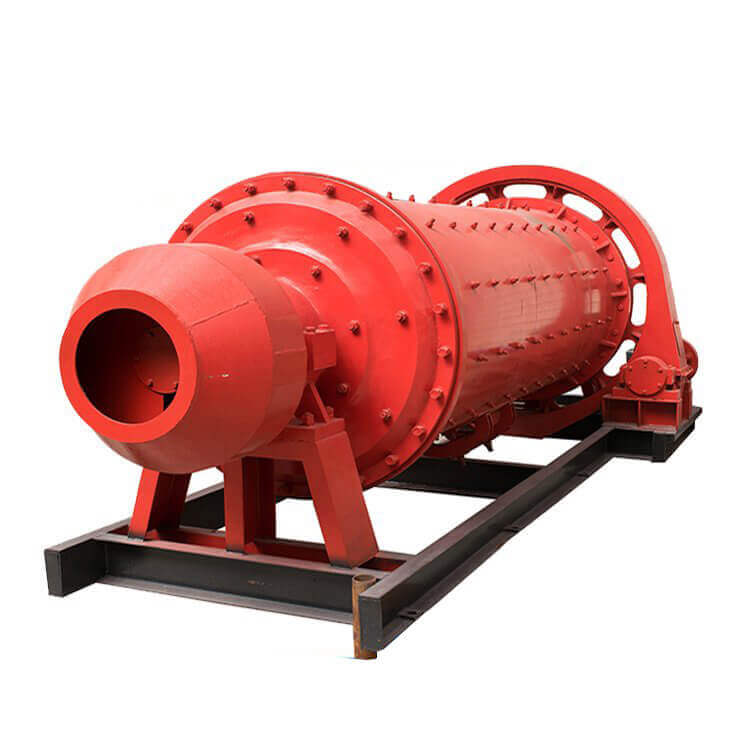
Under the condition that the steel balls of the ball mill are configured and practical, as the rotating speed of the ball mill increases, and the steel balls of the cylindrical bearings will drop into piles; When the speed of rotation increases as necessary, the power exceeds the maximum, the grinding effect is the best, and the ball friction of the ball mill is also the most effective.
The critical value of the basic knowledge of the ball mill is usually 74 to 98%. Due to the type of raw material and other factors, we adjust the specific situation to determine the speed of the ball mill.
Conclusion
Reducing steel ball consumption and energy consumption in ball milling requires more than simply changing the amount of grinding media. The performance of a ball mill is determined by the interaction of ore grindability, feed particle size, ball filling rate, ball size distribution, pulp density, and mill speed.
The six strategies discussed above can help mineral processing operations improve grinding efficiency:
- Improve ore grindability where economically and technically feasible.
- Reduce and stabilize the ball mill feed size through efficient crushing and screening.
- Optimize the steel ball filling rate rather than using an excessive or insufficient ball charge.
- Use an appropriate ball-size distribution based on ore characteristics and grinding requirements.
- Maintain an optimum pulp density for efficient wet grinding and classification.
- Control mill speed to achieve the most effective grinding-media motion.
In addition, steel ball consumption should be monitored continuously through makeup-ball records, mill power, throughput, product particle size, circulating load, and grinding performance. The optimum operating parameters are specific to each ore and grinding circuit, so laboratory testing, plant trials, and ongoing process monitoring are essential.
By systematically optimizing these factors, mining operations can reduce unnecessary grinding energy and media wear while maintaining the required product size and throughput, ultimately improving the economic efficiency and sustainability of ball milling operations.
DERNIERS PRODUITS
-

Inclined Vibrating Screen
The inclined vibrating screen is a simple and eff…
-
High Temperature & Pressure Gold Desorption Electrolysis System
High-Temperature & Pressure Gold Desorption Elect…
-
Normal Temperature & Pressure Gold Desorption Electrolysis System
The normal temperature & pressure gold desorption…


DERNIÈRES NOUVELLES
- Modern Cyanide Residue Treatment Technologies for Gold Processing
- Traditional De-cyanidation Technologies for Gold Cyanide Residues
- Shaking Table, 3-Disc Dry Magnetic & Electrostatic Separator for W-Sn-Ta-Nb
- Mineral Analysis: The Foundation for Successful Mineral Processing Projects
- What Is Over-Grinding and How Can It Be Prevented?
 English
  French
  Spanish
  Portuguese
  Indonesian