



Scories is a valuable by-product generated during metallurgical and industrial processes, including iron and steelmaking and the production of non-ferrous metals such as aluminium, cuivre, plombet le zinc. Although slag has traditionally been treated as industrial waste, it often contains recoverable metals and useful mineral components. Slag sorting equipment and modern slag processing technologies can separate these valuable materials, improve resource recovery, reduce waste, and support more sustainable industrial production.
A typical slag sorting and processing process includes cooling and crushing, screening, magnetic separation, gravity separation, and, when necessary, additional separation technologies. The specific process and equipment configuration depend on the type, composition, particle size, and target products of the slag.
This article explains the composition and comprehensive utilization of slag, as well as the main steps of slag processing.
Composition du laitier
La composition des scories dépend de facteurs tels que le type de four qui les produit et le processus de production. Le laitier se compose principalement d'oxydes (par ex, siliceLes oxydes de fer (oxyde de fer, alumine, oxyde de calcium, oxyde de magnésium) contiennent de petites quantités de sulfures et de métaux. Parmi ceux-ci, les oxydes de fer ont une teneur élevée, qui peut atteindre plus de 30% de la masse totale du laitier. Les scories peuvent également contenir de petites quantités d'éléments métalliques et non métalliques, notamment du calcium, du magnésium, de l'aluminium, du potassium, du sodium et du soufre. Dans le processus métallurgique, le laitier élimine les impuretés nocives de l'acier fondu, telles que le soufre, le phosphore et les gaz, par le biais de réactions physico-chimiques, et joue un rôle d'affinage. En fonction des différents processus métallurgiques, le laitier peut être divisé en laitier de fusion et laitier d'affinage. En outre, les scories peuvent également être divisées en scories alcalines, scories acides et scories neutres en fonction de leur nature.

L'utilisation globale des scories
L'utilisation complète des scories est un moyen important de parvenir à une économie circulaire. Outre l'utilisation des composants métalliques et non métalliques mentionnée ci-dessus, les scories peuvent également être utilisées dans les domaines suivants :
- Utilisé comme engrais : Slag contains trace elements and minerals. After appropriate treatment, slag can be used as organic fertilizer to promote plant growth.
- Remblayage des terres : After slag is harmlessly treated, it can be used as land backfill material, increasing land value.
- Production de matériaux de construction respectueux de l'environnement : Les scories peuvent être mélangées à d'autres matériaux pour produire des matériaux de construction respectueux de l'environnement, tels que des briques de scories, du béton de scories, etc.
Tri des scories
The treatment and recycling of slag are important links in industrial production. Slag sorting equipment is the key equipment in this process, and its efficient and accurate sorting ability is of great significance in improving resource utilization and reducing environmental pollution. The process steps of slag sorting equipment include la préparation et le prétraitement des matières premières, le démarrage et la mise en service des équipements, le processus de tri des scories, l'entretien et la réparation des équipements, ainsi que la protection de l'environnement et les mesures de sécurité. Below, we will introduce the steps for slag sorting equipment in detail.
1. Raw Material Preparation and Pretreatment
After the slag is collected from the production line, it is transported to the separating area through special conveying equipment. Before formal separation, the slag needs to be pre-treated, including cooling, crushing, screening, and other steps to ensure that the slag’s particle size meets the separating equipment’s requirements. This link helps to improve separation efficiency and reduce equipment wear.
Cooling
Hot slag must be cooled to a suitable temperature before it enters downstream processing equipment. Cooling methods depend on the slag type and plant design.
Broyage
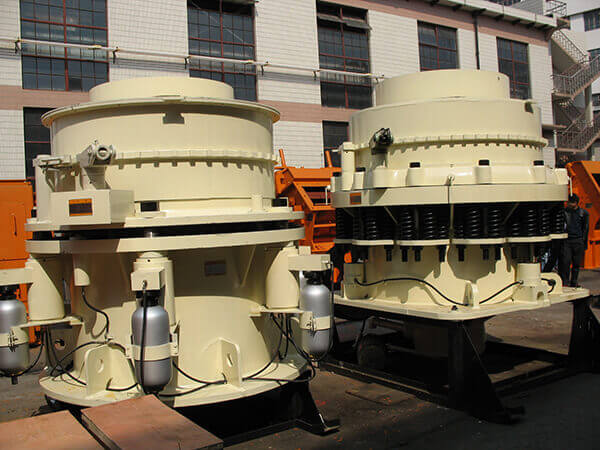
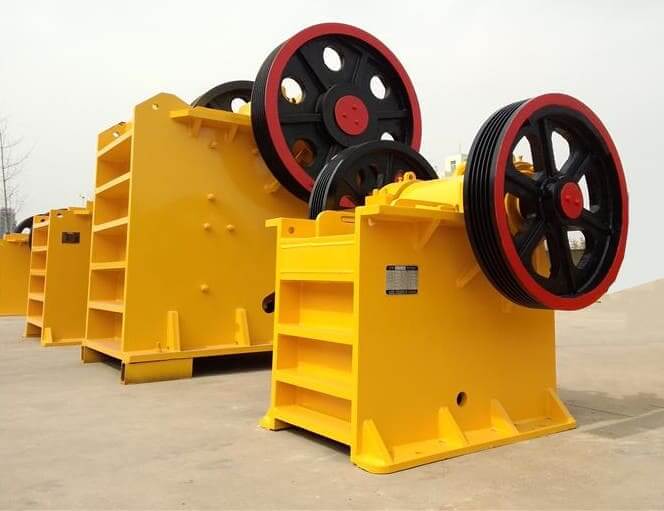
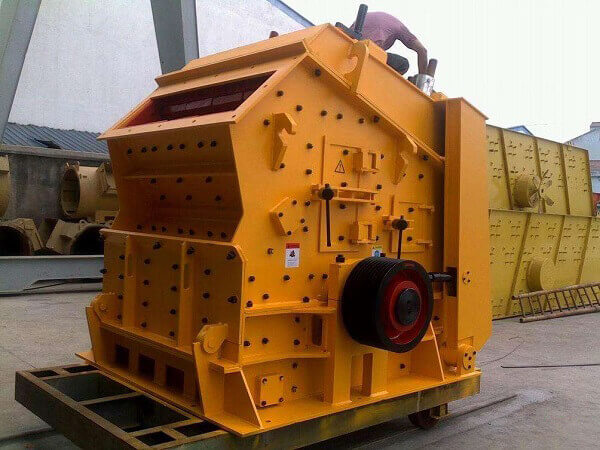
Crushing reduces large slag lumps to a more manageable particle size and helps liberate metallic particles from the surrounding mineral matrix.
Jaw crushers, cone crushers, impact crushers, and other matériel de broyage may be selected according to the material characteristics and required particle size.
 |
 |
 |
Dépistage
Screening separates slag into different particle-size fractions. This improves the efficiency of subsequent sorting equipment because different particle sizes may require different separation conditions.
2. Equipment Startup and Commissioning
After confirming that the slag is ready, start the slag sorting equipment. Before starting the equipment, perform the necessary debugging work, including checking whether the equipment components are intact, adjusting the sorting parameters, and so on. After the debugging is completed, the equipment enters the standby state, waiting for the input of slag.
3. Slag Sorting Process
Alimentation
Les scories prétraitées sont introduites uniformément dans l'équipement de séparation par l'intermédiaire de l'alimentateur. Pour garantir l'effet de séparation, la vitesse d'alimentation doit être ajustée en fonction de la capacité de traitement de l'équipement.
Séparation
After the slag enters the sorting equipment, it will be subjected to a variety of forces (such as gravity, magnetism, airflow, etc.) inside the equipment, so as to realize the effective separation of different components. In the process of separation, the equipment will automatically adjust the sorting conditions according to the preset parameters and the characteristics of the slag, in order to achieve the popular separating effect.
(1) Physical separation
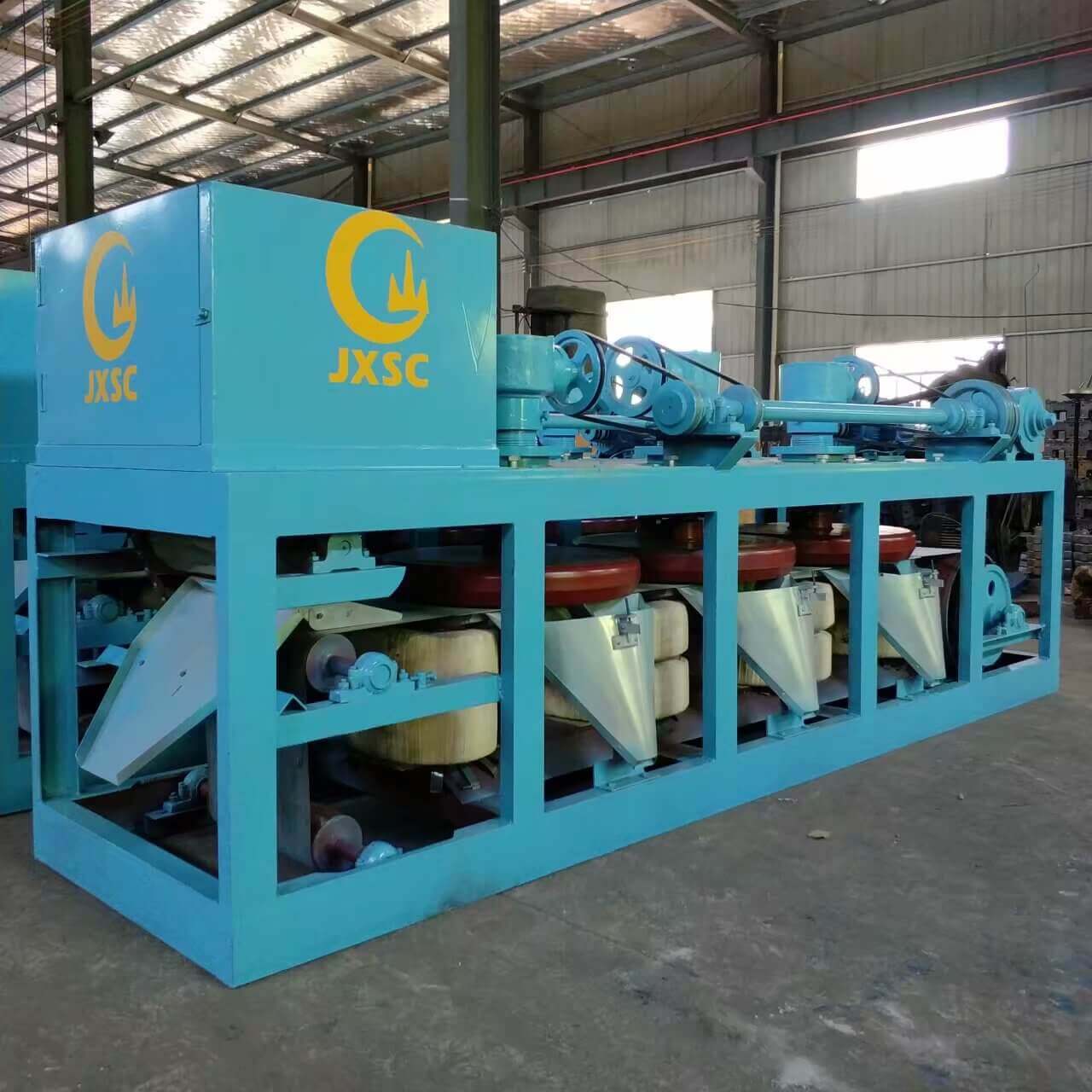
Magnetic separation and gravity separation are used to separate metal and non-metal components by utilizing the responsiveness of metal to the magnetic field and the difference in material density. Magnetic separation can separate iron, nickel, and other magnetic metals, while re-election separates heavy and light components according to the density difference.
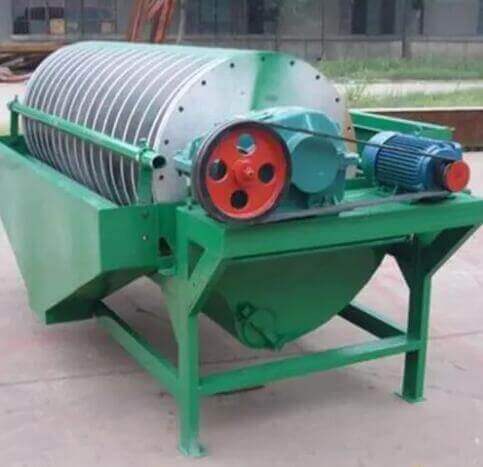
Séparation magnétique
Magnetic separation is one of the most widely used methods in slag processing, particularly when recovering iron-bearing or other magnetic metallic materials.
After crushing and screening, the slag passes through a magnetic separator. Magnetic particles are attracted to the magnetic field while non-magnetic materials continue through the separation system.
Depending on the material, magnetic separation may be used to recover:
- Metallic iron
- Iron-bearing particles
- Other magnetic materials
Séparateurs magnétiques can be configured at different stages of a processing line to improve metal recovery.
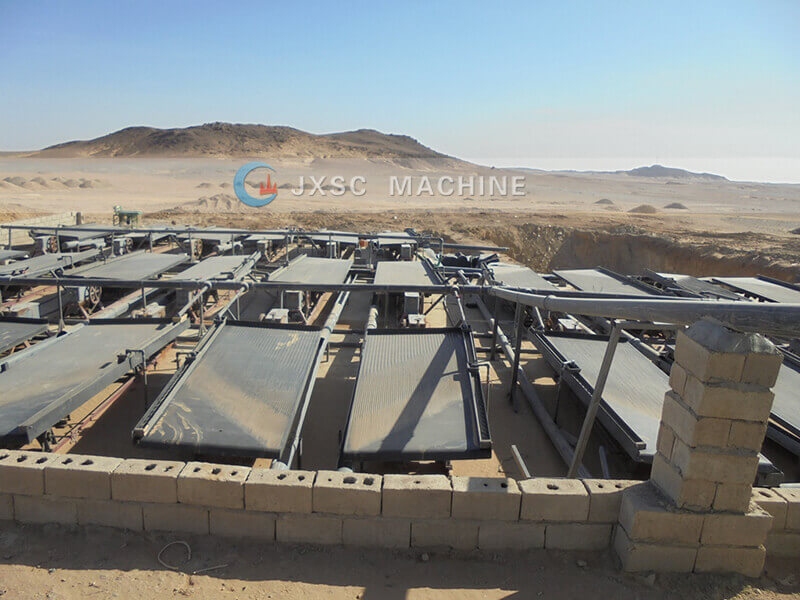
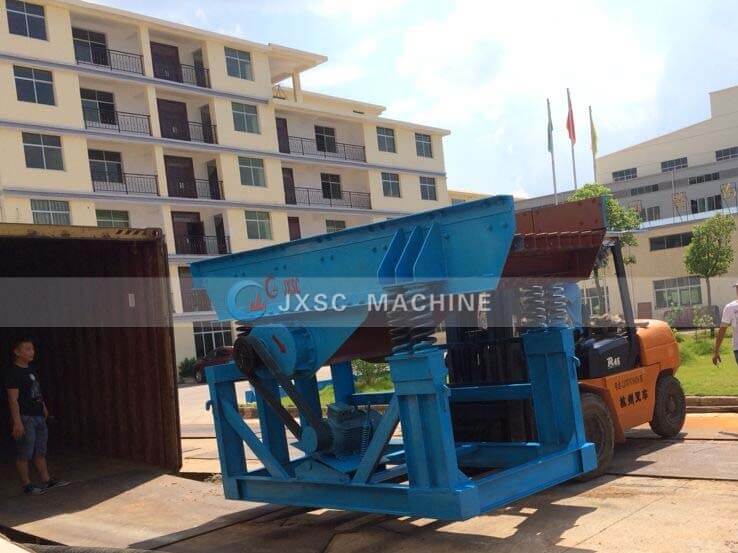
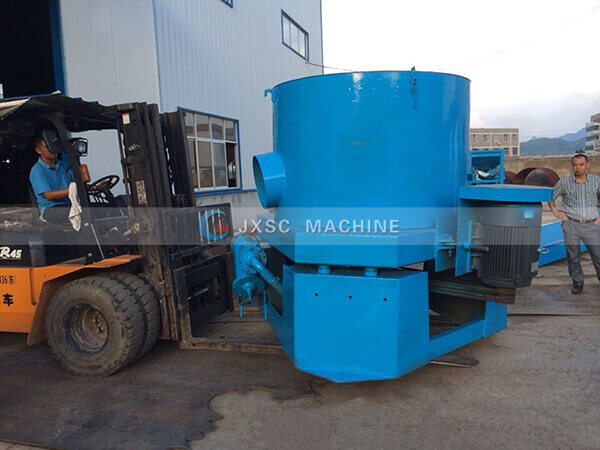
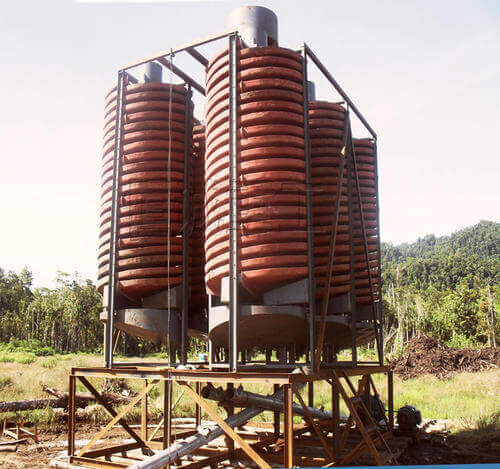
Séparation par gravité
When the target materials have significant differences in density, séparation par gravité can be used to further separate heavy and light fractions.
For example, after magnetic separation removes magnetic materials, gravity-based equipment may help concentrate heavier metallic particles from lighter mineral materials.
The appropriate équipement de séparation par gravité depends on the particle size and density characteristics of the feed material.
 |
 |
 |
 |
 |
 |
(2) Chemical separation
Pour les composants qui ne peuvent pas être complètement séparés par des méthodes physiques, des méthodes chimiques peuvent être utilisées, en utilisant des réactifs chimiques pour réagir avec des composants spécifiques afin de générer des substances solubles ou insolubles, réalisant ainsi la séparation.
Collecte et classification
After separation is completed, slags of different compositions will be collected separately. Usually, the equipment will be equipped with multiple outlets so that different types of slag can be discharged separately. The collected slag can be further treated or recycled according to its nature.
Traitement des matériaux après séparation
- Traitement des composants métalliques : Après séparation, les composants métalliques peuvent être raffinés ou fondus pour en extraire des métaux précieux tels que le fer, le cuivre, le zinc, etc.
- Traitement des composants non métalliques : Les composants non métalliques tels que le silicate, l'alumine, etc., peuvent être utilisés comme matériaux de construction ou matières premières de remplissage pour la fabrication de briques et de tuiles, de ciment, de céramiques et d'autres produits.
4. Equipment Maintenance
In the long-term use of slag sorting equipment, it is inevitable that there will be wear and tear or failure. Regular maintenance and repair of equipment is crucial. This includes checking the wear and tear of various parts of the equipment, replacing damaged parts, and cleaning up the dust inside the equipment. Through effective maintenance and repair, the service life of the equipment can be extended, and the sorting efficiency can be improved.
5. Environmental Protection and Safety Measures
In the process of sorting slag, attention should be paid to environmental protection and safety. Equipment should be equipped with effective dust removal devices to reduce dust pollution; operators should comply with safety regulations and wear the necessary protective equipment to ensure personal safety.
Conclusion: Advancing Sustainable Industry Through Slag Recycling
Slag sorting equipment and modern processing technologies play a pivotal role in transforming industrial by-products into valuable resources. By effectively separating metallic and non-metallic components, these systems not only enhance resource recovery but also contribute to environmental sustainability by reducing landfill waste. The integration of physical and chemical separation methods ensures high efficiency, while advancements in cooling, crushing, and screening further optimize the process.
The recycled materials—metals for industrial reuse, mineral components for construction, and even nutrient-rich slag for agriculture—underscore the economic and ecological potential of slag utilization. Moving forward, continued innovation in sorting technologies and stricter adherence to safety and environmental protocols will further solidify slag recycling as a cornerstone of the circular economy.
By investing in these solutions, industries can achieve cleaner production, lower costs, and a reduced ecological footprint, paving the way for a more sustainable industrial future.
DERNIERS PRODUITS
-

Inclined Vibrating Screen
The inclined vibrating screen is a simple and eff…
-
High Temperature & Pressure Gold Desorption Electrolysis System
High-Temperature & Pressure Gold Desorption Elect…
-
Normal Temperature & Pressure Gold Desorption Electrolysis System
The normal temperature & pressure gold desorption…


DERNIÈRES NOUVELLES
- Modern Cyanide Residue Treatment Technologies for Gold Processing
- Traditional De-cyanidation Technologies for Gold Cyanide Residues
- Shaking Table, 3-Disc Dry Magnetic & Electrostatic Separator for W-Sn-Ta-Nb
- Mineral Analysis: The Foundation for Successful Mineral Processing Projects
- What Is Over-Grinding and How Can It Be Prevented?
 English
  French
  Spanish
  Portuguese
  Indonesian