



Introduction
Tourmaline, diopside, and amazonite are important silicate minerals with different crystal structures, physical properties, and industrial applications. They commonly occur in igneous and metamorphic environments, particularly in granitic pegmatites, skarns, and metamorphic rocks.
Although these minerals have different chemical compositions, their beneficiation processes may involve several physical separation techniques, including gravity separation, magnetic separation, electrostatic separation, and optical sorting.
The main objective of tourmaline beneficiation is to separate valuable tourmaline crystals from quartz, feldspar, mica, and other associated minerals. Diopside processing generally focuses on removing carbonate minerals, iron-bearing impurities, and other silicate gangue. Amazonite beneficiation places greater emphasis on preserving the natural blue-green color and crystal integrity while removing associated minerals.
This guide introduces the mineral characteristics, beneficiation methods, and typical processing flowsheets for tourmaline, diopside, and amazonite.
Tourmaline Beneficiation
Formule chimique : NaMg₃Al₆(BO₃)₃Si₆O₁₈(OH)₄
Tourmaline Introduction
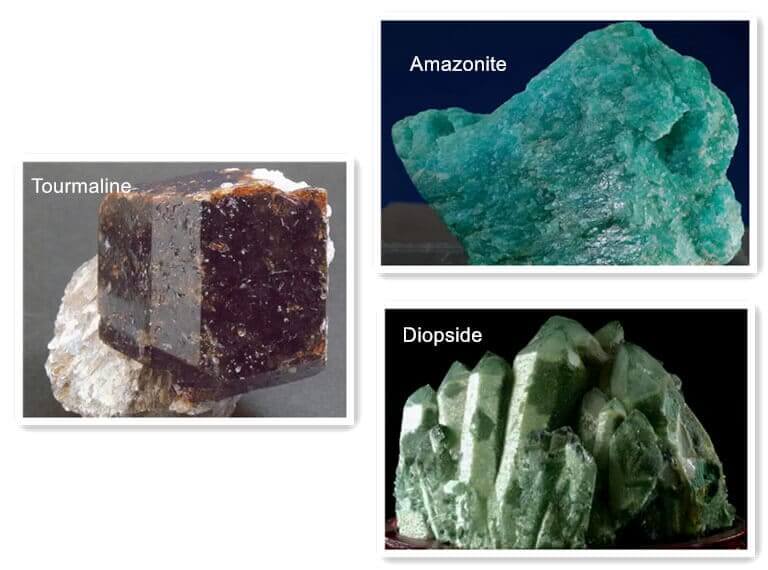
Tourmaline is a complex boron-bearing cyclosilicate mineral belonging to the tourmaline group. It commonly occurs in granitic pegmatites, metamorphic rocks, and hydrothermal deposits. Tourmaline exhibits a wide range of colors, including black, green, pink, blue, and multicolored varieties.
From a mineral processing perspective, the main challenge is separating tourmaline from associated quartz, feldspath, mica, and other silicate minerals. Differences in density, magnetic susceptibility, electrical conductivity, and surface properties may provide opportunities for selective beneficiation.
For gem-quality tourmaline, preserving crystal integrity and minimizing breakage are particularly important. For industrial-grade tourmaline, the main objective is to improve mineral purity and concentrate grade.
Tourmaline Beneficiation Methods
Potential beneficiation methods for tourmaline include:
1. Hand Sorting
Hand sorting is suitable for coarse-grained ores containing visually distinguishable tourmaline crystals. Workers can select valuable crystals based on color, transparency, crystal shape, and visible impurities.
This method is particularly useful for gemstone-grade tourmaline, where preserving crystal size and appearance is essential.
2. Gravity Separation
Tourmaline generally has a higher specific gravity than quartz and some feldspar minerals. Gravity separation may therefore be used to concentrate tourmaline from lighter gangue minerals.
Depending on particle size and liberation characteristics, suitable equipment may include shaking tables and other gravity concentration devices.
3. Magnetic Separation
The magnetic properties of tourmaline vary according to its chemical composition, particularly its iron content.
Magnetic separation may be investigated to separate tourmaline from associated minerals with different magnetic responses. The appropriate magnetic field intensity and separation conditions should be determined through laboratory testing.
4. Electrostatic Separation
Electrostatic separation may be considered when tourmaline and associated minerals exhibit sufficiently different electrical conductivities or charging characteristics.
It is generally more suitable for relatively dry, liberated particles with controlled particle-size distributions.
5. Flotation
Flotation may be considered for fine-grained ores where tourmaline must be separated from quartz, feldspar, mica, or other silicate gangue.
Reagent selection and flotation conditions should be established through laboratory experiments because tourmaline surface properties vary with mineral composition and processing conditions.
Typical Processing Flowchart of Tourmaline
A conceptual beneficiation flowsheet for tourmaline can be expressed as:
Run-of-Mine Ore → Crushing → Screening → Grinding → Classification → Gravity Separation → Magnetic Separation / Flotation → Concentrate Thickening → Filtration and Drying → Tourmaline Concentrate
For coarse, gem-bearing material, a simplified circuit may be sufficient:
Ore → Hand Sorting → Gentle Crushing → Screening → Manual Selection → Tourmaline Concentrate
Diopside Beneficiation
Formule chimique : CaMgSi₂O₆
Diopside Introduction
Diopside is a calcium-magnesium pyroxene mineral belonging to the clinopyroxene group. It commonly occurs in metamorphic rocks, skarns, and certain igneous rocks. Diopside generally exhibits green, light green, white, or colorless appearances and may occur as granular aggregates or well-developed crystals.
Diopside is used in ceramics, glass-ceramics, refractory materials, and other industrial applications. Its beneficiation mainly aims to remove associated minerals such as calcite, quartz, wollastonite, garnet, and iron-bearing minerals.
Les principal processing challenge is the similarity in physical and chemical properties between diopside and other silicate minerals. Effective liberation and selective separation are therefore essential for obtaining a high-quality concentrate.
Diopside Beneficiation Methods
1. Crushing and Grinding
Crushing and grinding are used to liberate diopside from associated gangue minerals.
The grinding fineness should be determined according to the mineral dissemination characteristics. Excessive grinding may generate fine particles and reduce the efficiency of subsequent separation.
2. Gravity Separation
Gravity separation may be considered when diopside and associated gangue minerals have sufficient differences in specific gravity.
It may help separate diopside from lighter quartz and feldspar, depending on the ore characteristics and particle-size distribution.
3. Magnetic Separation
Magnetic separation can be investigated to remove magnetite and other iron-bearing impurities.
The magnetic response of diopside itself should also be evaluated to avoid unnecessary losses of valuable minerals.
4. La flottation
Flotation may be useful for fine-grained diopside ores requiring separation from calcite, quartz, wollastonite, and other silicate minerals.
Direct or reverse flotation may be investigated depending on the mineral assemblage and surface characteristics of the valuable and gangue minerals.
Reagent systems should be selected through laboratory flotation tests to achieve satisfactory selectivity and recovery.
5. Optical Sorting
Optical sorting may be considered for coarse-grained ores when diopside exhibits distinguishable colors or optical characteristics compared with associated minerals.
This method may reduce the amount of material entering subsequent grinding and processing stages.
Typical Processing Flowchart of Diopside
For relatively coarse-grained diopside ore:
Run-of-Mine Ore → Crushing → Screening → Hand Sorting / Optical Sorting → Gravity Separation → Magnetic Separation → Diopside Concentrate
For complex or fine-grained diopside ore:
Run-of-Mine Ore → Crushing → Screening → Grinding → Classification → Magnetic Separation → Flotation → Concentrate Thickening → Filtration and Drying
The selection of gravity separation, magnetic separation, and flotation should be based on mineralogical analysis and beneficiation test results.
Amazonite Beneficiation
Formule chimique : KAlSi₃O₈
Amazonite Introduction
Amazonite is a blue-green variety of microcline, which belongs to the potassium feldspar group. It commonly occurs in granitic pegmatites and is valued for its distinctive blue-green color and decorative appearance.
Amazonite is primarily used as a gemstone, ornamental stone, and decorative material. Its beneficiation requirements differ from those of ordinary industrial feldspar because crystal appearance, color uniformity, transparency, and structural integrity are important factors affecting product value.
Common associated minerals include quartz, albite, muscovite, biotite, and iron-bearing minerals. The main processing challenge is to recover high-quality amazonite crystals while minimizing mechanical damage and removing unwanted associated minerals.
Amazonite Beneficiation Methods
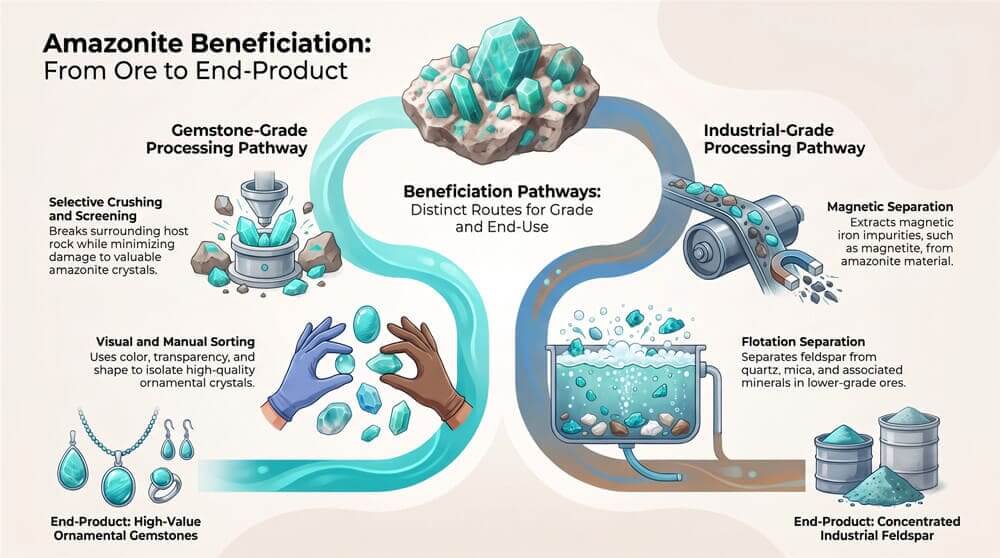
1. Hand Sorting
Hand sorting is one of the most important methods for high-quality amazonite.
Workers can select crystals based on color, transparency, size, crystal shape, and visible defects.
It is particularly suitable for gemstone and ornamental-grade material.
2. Selective Crushing and Screening
Selective crushing is used to break the surrounding host rock while minimizing damage to valuable amazonite crystals.
Screening separates different particle-size fractions and prepares material for further processing.
3. Optical Sorting
Optical sorting may be considered for coarse material with distinguishable color and surface characteristics.
It can help separate amazonite-bearing particles from waste rock and reduce the amount of material entering downstream processing.
4. Gravity Separation
Gravity separation may be considered when amazonite can be distinguished from associated minerals through differences in specific gravity.
Its effectiveness depends on the mineral assemblage, liberation degree, and particle size.
5. Magnetic Separation
Magnetic separation can be used to remove magnetic iron-bearing impurities, such as magnetite, from amazonite-bearing material.
High-intensity magnetic separation may be investigated for certain weakly magnetic impurities, subject to mineralogical testing.
6. Flotation
For lower-grade amazonite-bearing feldspar ores, flotation may be considered to separate feldspar from quartz, mica, and other associated minerals.
The appropriate flotation method depends on the mineral composition and intended product specifications.
Typical Processing Flowchart of Amazonite
For gemstone-grade amazonite:
Run-of-Mine Ore → Selective Crushing → Screening → Hand Sorting → Optical Inspection → Cleaning → Amazonite Crystals
For industrial-grade amazonite-bearing feldspar:
Run-of-Mine Ore → Crushing → Grinding → Classification → Washing and Desliming → Magnetic Separation → Flotation (If Required) → Concentrate Dewatering → Amazonite Feldspar Concentrate
General Considerations for These Three Minerals
Although tourmaline, diopside, and amazonite are all silicate minerals, their beneficiation requirements are different.
| Minéraux | Main Beneficiation Methods | Primary Objective |
| Tourmaline | Gravity separation, magnetic separation, electrostatic separation, flotation | Separate tourmaline from quartz, feldspar, and mica |
| Diopside | Gravity separation, magnetic separation, flotation | Remove carbonate, iron-bearing, and silicate impurities |
| Amazonite | Hand sorting, optical sorting, magnetic separation, flotation | Recover high-quality crystals and remove associated impurities |
Conclusion
Beneficiating tourmaline, diopside, and amazonite requires different combinations of physical separation methods based on their mineralogical characteristics and final applications.
Gravity separation and magnetic separation may be useful for tourmaline and diopside, while electrostatic separation can be investigated for tourmaline when suitable electrical property differences exist.
For amazonite, hand sorting and optical sorting are particularly important to preserve valuable crystals and maintain product quality.
A suitable beneficiation flowsheet should always be developed through mineralogical characterization, liberation analysis, and laboratory separation tests.
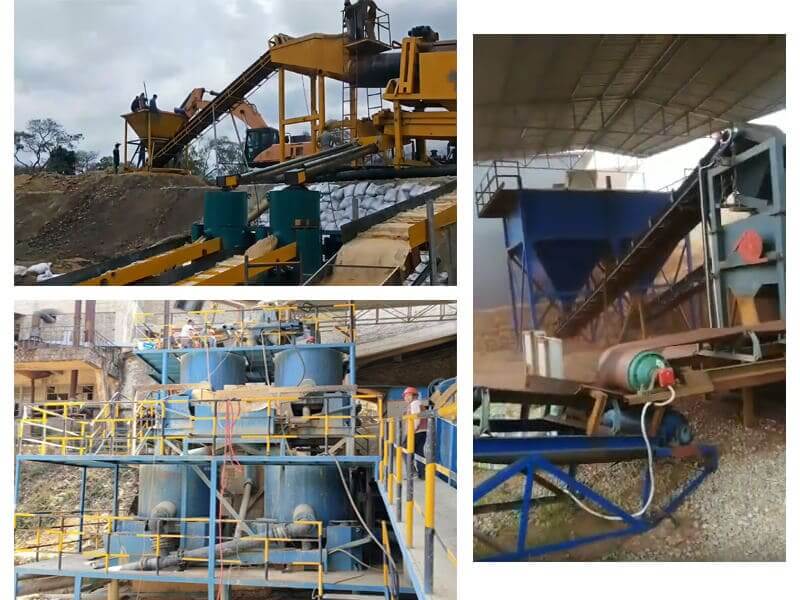
JXSC fournit équipement de traitement des minerais et customized beneficiation solutions for different ore characteristics and production requirements.
DERNIERS PRODUITS
-

Handheld Rock Drills
【Drilling Hole Diameter】30-45 mm 【Dill Hole De…
-
Hydraulic Rock Drills
【Drive Method】 Driven by high-pressure hyd…
-
Gasoline Rock Drills
【Engine Type】 Gasoline engine …


 English
 French
 Spanish
 Portuguese
 Indonesian