



Low-grade phosphate ore flotation is an important process for improving phosphate concentrate quality and recovering valuable phosphorus resources. This article explores the characteristics of low-grade phosphate ore and compares four major flotation methods: direct flotation, reverse flotation, combined direct-reverse flotation, and double-reverse flotation.
Introduction
Phosphate rock is a key raw material for fertilizer production and other industrial applications. As demand for phosphorus resources grows, the efficient utilization of low-grade phosphate ore has become increasingly important. However, complex mineral associations, fine particle sizes, and the presence of silicate and carbonate gangue can make beneficiation challenging.
Flotation separates phosphate minerals from unwanted impurities by exploiting differences in their surface properties. Selecting an appropriate flotation process is essential for balancing concentrate grade, phosphorus recovery, and operating costs. Understanding the characteristics of the ore and the advantages and limitations of different flotation methods provides a practical basis for developing an effective beneficiation flowsheet.
Resource and Mineralogical Characteristics of Low-Grade Phosphate Ore
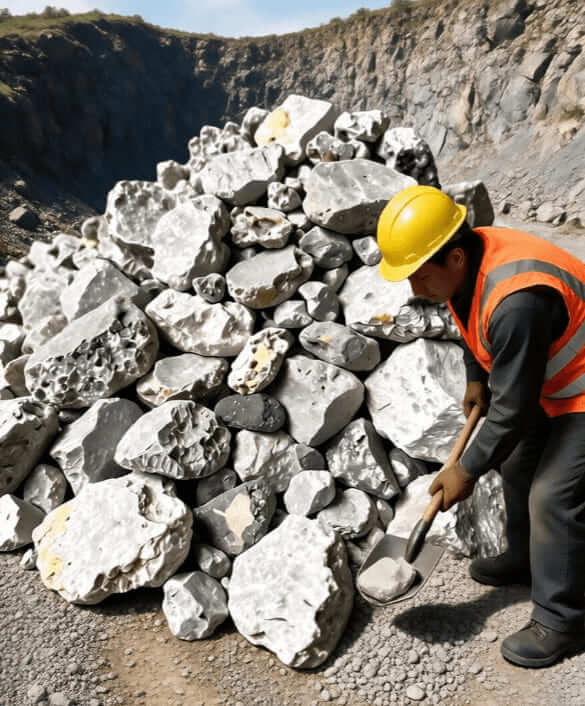
Phosphate rock resources are distributed unevenly across the world, with major reserves concentrated in North Africa, particularly Morocco and Western Sahara, as well as other regions of the Middle East, Asia, South America, and Australia. The grade and mineralogical composition of phosphate deposits vary considerably according to their geological origin.
Low-grade phosphate ore commonly contains apatite or other phosphate-bearing minerals associated with silicate and carbonate gangue. Quartz is a major silicate impurity, while calcite and dolomite are common carbonate minerals. Depending on the deposit, clay minerals and other impurities may also affect processing performance.
Three characteristics are particularly important for flotation:
- Complex mineral associations: Phosphate minerals may be closely intergrown with gangue, limiting separation efficiency.
- Variable mineral surface properties: Phosphate minerals and certain carbonate minerals may exhibit similar flotation responses, making selective separation difficult.
- Fine particle sizes: Fine particles may reduce separation efficiency, increase reagent consumption, and promote gangue entrainment.
These characteristics mean that no single flotation flowsheet is suitable for every low-grade phosphate ore. Process selection should be based on mineralogical characterization, liberation analysis, and laboratory flotation testing.
Major Flotation Processes for Low-Grade Phosphate Ore
Phosphate flotation processes are generally classified according to whether phosphate minerals or gangue minerals are preferentially recovered into the froth product.
The principal approaches are direct flotation, reverse flotation, combined direct-reverse flotation, and double-reverse flotation. Their suitability depends on the type and abundance of gangue, the liberation characteristics of the ore, and the required concentrate specifications.
1. Direct Flotation
Direct flotation is a process in which phosphate minerals are selectively rendered hydrophobic and recovered in the froth product, while gangue minerals are preferentially retained in the pulp.
Fatty acid collectors and their derivatives are commonly used in phosphate flotation. Depressants and dispersants, such as sodium silicate or sodium hexametaphosphate, may be incorporated to control the flotation behavior of selected gangue minerals, depending on the ore and reagent scheme.
Les main advantages of direct flotation include its potential to achieve effective phosphate recovery and its suitability for ores in which phosphate minerals can be selectively floated.
However, direct flotation may become less selective when phosphate minerals and carbonate gangue have similar surface properties. Excessive reagent consumption, sensitivity to water chemistry, and the difficulty of separating fine or intergrown particles can also limit performance.
To improve direct flotation, researchers commonly investigate collector modification, depressant selection, pulp chemistry, and grinding conditions. The objective is to enhance phosphate recovery without excessively increasing gangue flotation or operating costs.
2. Reverse Flotation
Reverse flotation is designed to float selected gangue minerals while retaining phosphate minerals in the pulp.
This approach is particularly relevant when the ore contains significant quantities of carbonate or silicate impurities. Depending on the gangue mineral and ore characteristics, different reagent systems may be used to promote the flotation of the unwanted minerals.
For example, amine-based cationic collectors are frequently used to float silicate minerals such as quartz. Carbonate removal may require different collectors, pH conditions, or depressant systems. Acidic conditions can be beneficial in certain phosphate-carbonate separation systems, but the appropriate chemistry depends on the specific minerals and reagents involved.
Les principal advantage of reverse flotation is that it can remove impurities while maintaining phosphate minerals in the non-froth product. This can be useful when direct flotation cannot provide adequate selectivity.
Nevertheless, reverse flotation may be sensitive to pulp pH, water chemistry, slime content, and collector dosage. Excessive gangue entrainment or unintended phosphate losses can reduce the overall beneficiation performance.
3. Combined Direct-Reverse Flotation
Combined direct-reverse flotation integrates two separation stages to address ores containing multiple types of gangue or exhibiting complex flotation behavior.
In a typical configuration, direct flotation is initially used to enrich phosphate minerals, followed by reverse flotation to remove residual impurities. The sequence, number of cleaning stages, and reagent scheme can be adjusted to suit the mineralogical characteristics of the ore.
Les major benefit of this approach is its flexibility. Direct flotation and reverse flotation can be optimized for different separation objectives, potentially improving concentrate grade while maintaining an acceptable phosphorus recovery rate.
However, additional flotation stages increase equipment requirements, reagent consumption, water use, and process-control complexity. The economic benefit must therefore be assessed against the additional capital and operating costs.
4. Double-Reverse Flotation
Double-reverse flotation generally consists of two successive reverse-flotation stages designed to remove different groups of gangue minerals.
For example, one stage may target silicate impurities, while another may be designed to remove carbonate minerals. The exact sequence and operating conditions depend on the ore’s mineral composition and the separation behavior of its constituent minerals.
Les main advantage of this approach is its potential to improve impurity removal through staged separation. By controlling each stage separately, it may be possible to reduce the content of multiple gangue components without directly floating the phosphate minerals.
However, double-reverse flotation is not universally suitable for every low-grade phosphate ore. Its effectiveness depends on the selectivity of the individual stages, mineral liberation, reagent compatibility, and the degree to which the target gangue minerals respond differently to changes in flotation conditions.
The additional stages may also increase process complexity and operating costs, making laboratory and pilot-scale validation important before industrial implementation.
Comparison of Major Phosphate Flotation Processes
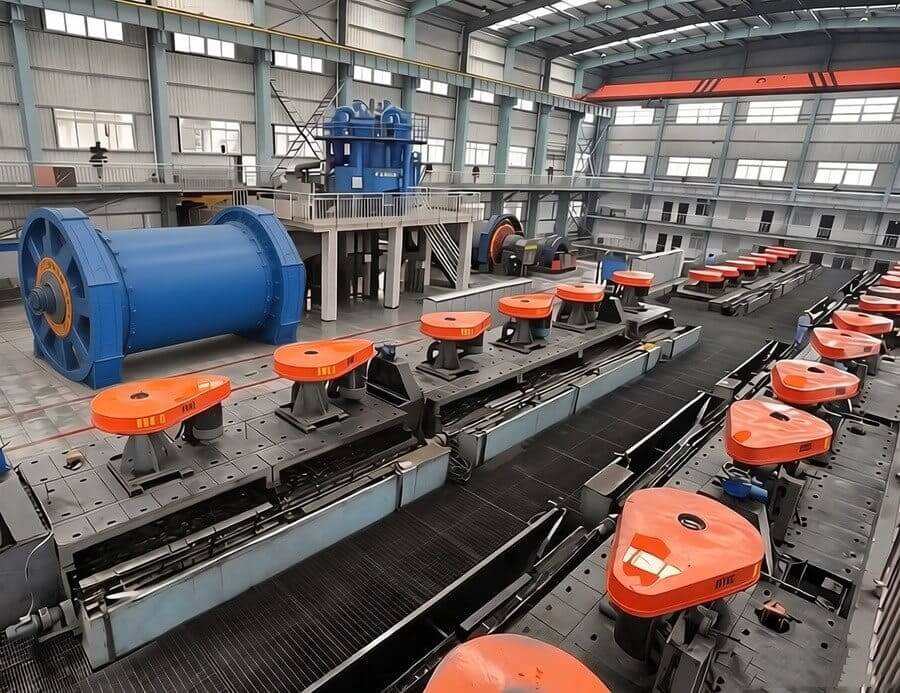
The following table provides a general comparison of the principal flotation approaches. Actual performance depends on ore mineralogy, reagent chemistry, and operating conditions.
| Processus de flottation | Main separation objective | Potential advantages | Key limitations |
| Flottation directe | Float phosphate minerals | Can provide effective phosphorus recovery when selectivity is favorable | May struggle with carbonate gangue and high reagent consumption |
| Reverse flotation | Float selected gangue minerals | Can remove impurities while retaining phosphate minerals in the pulp | Requires selective gangue flotation and control of phosphate losses |
| Direct-reverse flotation | Enrich phosphate, then remove residual gangue | Offers flexibility for complex ores | More equipment, stages, and operating costs |
| Double-reverse flotation | Remove different gangue groups in successive stages | Can improve staged impurity removal | Requires selective reagents and careful process control |
How to Select an Appropriate Flotation Flowsheet?
Selecting the most suitable flotation process requires more than identifying the dominant gangue mineral. A systematic assessment should consider the following factors:
- Mineralogical composition: Determine the relative proportions of phosphate, silicate, carbonate, and other minerals.
- Liberation characteristics: Establish whether grinding is required and identify the particle size at which satisfactory liberation can be achieved.
- Flotation response: Compare the behavior of phosphate and gangue minerals under different reagent and pH conditions.
- Product specifications: Define the required P₂O₅ grade and acceptable impurity levels.
- Recovery and cost: Evaluate phosphorus recovery alongside reagent consumption, energy use, water demand, and downstream processing requirements.
- Process stability: Determine whether the flowsheet can accommodate variations in ore composition and water chemistry.
Laboratory flotation tests, mineralogical analysis, and pilot-scale studies can be used together to establish a suitable process configuration.
Future Trends in Phosphate Flotation
Future developments in low-grade phosphate ore flotation will focus on improving separation efficiency, reducing reagent consumption, and promoting sustainable resource utilization. Key priorities include optimizing grinding and flotation conditions, developing more selective and environmentally responsible reagents, and integrating suitable beneficiation technologies to improve phosphorus recovery while controlling operating costs.
Among these priorities, flotation reagent optimization and froth regulation play important roles in improving mineral selectivity and controlling gangue entrainment. Selecting appropriate collectors, optimizing reagent combinations, and controlling froth stability can help balance concentrate grade and phosphorus recovery. For a more detailed discussion, see our related article on [Flotation Collectors and Froth Regulation for Low-Grade Phosphate Ore].
Conclusion
Low-grade phosphate ore is an important resource for the phosphate industry, but its beneficiation is often complicated by low phosphorus content, complex mineral associations, and the presence of silicate and carbonate gangue.
Direct flotation, reverse flotation, combined direct-reverse flotation, and double-reverse flotation provide different approaches to improving phosphate concentrate quality and phosphorus recovery. Direct flotation focuses on recovering phosphate minerals, whereas reverse flotation removes selected gangue. Combined and double-reverse approaches provide additional separation stages for ores that require more complex impurity removal.
No single flotation process is optimal for every phosphate deposit. The most appropriate flowsheet should be selected according to mineralogical composition, liberation characteristics, reagent response, concentrate specifications, and economic feasibility.
A systematic understanding of ore characteristics and flotation mechanisms provides the basis for more efficient phosphate beneficiation and improved utilization of low-grade phosphate resources.
DERNIERS PRODUITS
-

Hydraulic Rock Drills
【Drive Method】 Driven by high-pressure hyd…
-
Gasoline Rock Drills
【Engine Type】 Gasoline engine …
-
Pneumatic Rock Drills
【Air Consumption】≤88 L/s 【Impact Energy】≥5…


DERNIÈRES NOUVELLES
- Low-Grade Phosphate Ore Flotation
- Kanyika Niobium-Tantalum Project in Malawi: Processing Priorities
- Modern Cyanide Residue Treatment Technologies for Gold Processing
- Traditional De-cyanidation Technologies for Gold Cyanide Residues
- Shaking Table, 3-Disc Dry Magnetic & Electrostatic Separator for W-Sn-Ta-Nb
 English
  French
  Spanish
  Portuguese
  Indonesian