



What Are Tungsten Tailings?
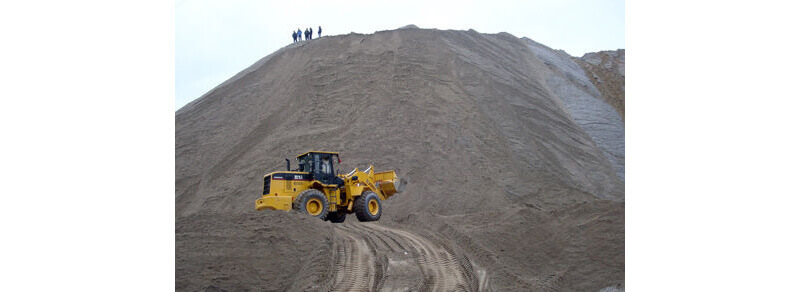
Résidus de tungstène are residual materials generated after extracting tungsten from ore slurry. Composed primarily of gangue minerals and surrounding rock, they contain fluorite, quartz, garnet, feldspar, mica, and calcite, along with trace amounts of valuable metals such as molybdenum, niobium, tin, copper, lead, zinc, and even precious metals like gold and silver.
Proper utilization of tungsten tailings not only enhances tungsten product quality but also maximizes mineral resource efficiency, reducing environmental waste.
How to Effectively Use Tungsten Tailings?
Récupérer les métaux utiles dans les résidus de tungstène tels que l'étain, le molybdène, le niobium, le cuivre, le plomb, le zinc, l'antimoine, le bismuth, le cobalt, l'or, l'argent, etc. Il permet non seulement d'améliorer la qualité des produits de tungstène, mais aussi d'utiliser efficacement les ressources minérales.
The valuable metals currently recovered are mainly tungsten, molybdenum, and rhenium.
You may be interested in the propriété du minerai de tungstène et méthodes de traitement
Recovering Valuable Metals from Tungsten Tailings
Tungstène
La récupération des résidus de tungstène est un moyen efficace d'améliorer le taux de récupération du minerai de tungstène.
The recovery of tungsten from tungsten tailings and fine tungsten mud is achieved by a combined metallurgical process, and the recovery rate of WO3 is up to 82.6%.
Les flotation method for tungsten ore is extended to tungsten tailings and fine mud, and 18% tungsten crude concentrate of WO3 grade is obtained. The crude concentrate is directly alkali-decomposed, and the leaching efficiency is remarkably improved.
Les micro-bubble technology was used to recover fine-grained scheelite from scheelite flotation tailings, and the recovery rate in the range of 5~38μm was 65%.
La séparation magnétique à haut gradient a été utilisée pour récupérer la wolframite des résidus de flottation de la scheelite. Après une sélection grossière, un balayage et une séparation magnétique forte, on a constaté que le concentré magnétique fort de wolframite de 0,43% f WO3 obtenu à partir des résidus de 0,20% WO3, le taux de récupération du tungstène est de 73,26%.
Molybdenum, Bismuth Recovery
De nombreux gisements de tungstène sont associés à des degrés variables de molybdène et de bismuth. Bien qu'une partie du molybdène et du bismuth puisse être récupérée au cours des opérations de séparation par gravité, le molybdène et le bismuth sont souvent entraînés dans les résidus en raison de leur flottabilité naturelle, ce qui se traduit par un faible taux de récupération du molybdène et du bismuth.
Résidus gravimétriques de tungstène - flottation directe de molybdène et de bismuth
Résidus de boue fine - concentration d'abord, puis flottation
Non-metallic Minerals Recovery
The non-metallic minerals in tungsten metal are mainly quartz, feldspar, mica, garnet, fluorite, and calcite; among them, fluorite and garnet have recovery value.
1. Fluorite
Fluorite is an important non-metallic mineral widely used in chemical, metallurgical, and building materials industries. The grade of fluorite ore in China is generally low, and the associated deposits account for 43%. The recovery of fluorite minerals in tungsten tailings is of great significance.
2. Garnet
Garnet is a weak magnetic mineral with high hardness and chemical stability. It is mainly used in abrasives, building materials, and polymer fillers. The garnet ore grade is not high, and the industrial-grade requirement is more than 14%. It is the basis of deep processing of garnet by magnetic separation and gravity to increase the garnet grade.
Tungsten Tailings For Building Materials
Les principaux composants des résidus de tungstène sont des oxydes de silicium et d'aluminium, qui sont similaires aux matériaux de construction traditionnels. En outre, les résidus de tungstène sont plus fins et n'ont pas besoin d'être broyés, ce qui présente l'avantage d'une faible consommation d'énergie et d'un faible coût.
1. Tungsten Tailings for The Cement Industry
The use of tungsten tailings as a raw material for the production of cement can reduce the amount of fluorite. When the mass fraction of WO3 in raw meal is 1×10~6×10, it can improve the burnability of raw materials and is beneficial to the formation of cement clinker mineral Elite. The escape rate of tungsten is almost zero, and it can reduce the escape of lead, mercury, and fluorine, and can be used as an environmentally friendly cement clinker mineralizer.
L'utilisation des résidus de tungstène comme matière première pour le clinker réduit la pollution par le fluor et le soufre.
Cependant, les résidus de tungstène sont utilisés comme matières premières pour la production de ciment afin de contrôler la quantité d'ajout, et des quantités excessives peuvent entraîner des effets secondaires.
2. Tungsten Tailings for Glass-ceramics
La vitrocéramique est un nouveau matériau de construction très brillant et résistant. Dès le début des années 1960, l'ex-Union soviétique a mené des recherches et produit de la vitrocéramique pour la préparation des résidus, qui s'est ensuite développée dans de nombreux pays et a fait l'objet d'une production à grande échelle.
Tungsten glass-ceramics prepared by the cast-forming method using tungsten tailings as the main raw material without adding a crystal nucleating agent, simple and low cost, the main crystal phase of which is β-wollastonite, and its nucleation and crystallization mechanism belongs to surface nucleation and crystallization.
3. Other Applications of Tungsten Tailings
Outre les applications susmentionnées, les résidus de tungstène sont également utilisés dans d'autres applications telles que les biocéramiques, les matériaux minéraux polymères, les carreaux de céramique, etc.
The tungsten tailings are used as raw materials, and the slag, fly ash, and clay are used as auxiliary materials. The porous bioceramic filter material can be produced by roasting.
Les résidus de tungstène et le métakaolin sont les principales matières premières, et le verre soluble et le NaOH sont des activateurs alcalins pour produire des matériaux minéraux polymères.
Il est également possible d'utiliser les résidus de flottation du tungstène comme matière première pour produire des carreaux de céramique, ce qui permet de réduire efficacement la température de cuisson et le coût de production.
At present, the domestic reserves of tungsten resources are declining year by year, the grade of raw ore is getting lower and lower, and tungsten tailings resources are being recovered for valuable metals and non-metallic minerals, which can effectively improve resource utilization.
Conclusion: Maximizing Resource Efficiency
As tungsten ore grades decline, tailings recycling is essential for sustainable resource management. Whether recovering valuable metals or converting waste into construction materials, effective processing ensures economic and environmental benefits.
JXSC Mine Machinery – With 40+ years of expertise, we provide:
- Équipement minier (Crushers, screens, separators, gravity separator, flotation machines, magnetic separator, conveyor belt, etc.)
- Custom Processing Flowcharts
Optimize your tungsten tailings recovery—enhance productivity and sustainability today!
DERNIERS PRODUITS
-

High Temperature & Pressure Gold Desorption Electrolysis System
High-Temperature & Pressure Gold Desorption Elect…
-
Normal Temperature & Pressure Gold Desorption Electrolysis System
The normal temperature & pressure gold desorption…
-
ABS Spiral Chutes
【Capacity】0.15-6 tph 【Feeding Size】0.02-…


DERNIÈRES NOUVELLES
- What Is Over-Grinding and How Can It Be Prevented?
- Fluorspar vs Graphite vs Quartz: Non-Metal Minerals Beneficiation Differences
- Tailings Dam Safety: 5 Critical Parameters to Monitor
- What Is the Beneficiation Process for Ultra-pure Iron Concentrate?
- How to Comprehensively Recover Valuable Metals from Copper Slag?
 English
  French
  Spanish
  Portuguese
  Indonesian