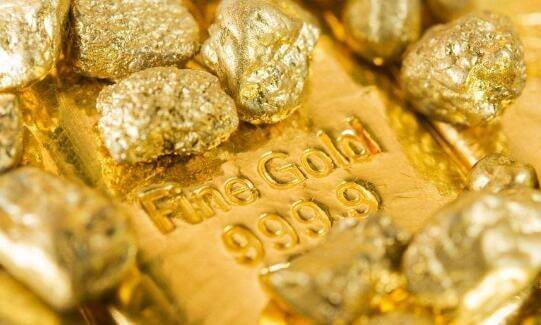
Selon certaines informations, en 2016, un archéologue travaillant sur des sites de fouilles en Bulgarie a fait une découverte minuscule mais importante : une perle d'or d'environ un huitième de pouce de diamètre, qui, selon les scientifiques, pourrait être la plus ancienne découverte à ce jour. Le plus ancien bijou en or raffiné, qui remonte à 4600 av.
Cette découverte est importante non seulement pour les scientifiques, mais aussi pour les investisseurs. En bref, cela signifie que l'homme extrait et raffine l'or depuis plus de 6 600 ans.
Si c'est le cas, les investisseurs en or peuvent réfléchir : Après sept mille ans d'exploitation minière, combien d'or reste-t-il dans le monde ? pour de futures découvertes, l'exploitation minière et le raffinage ?
How Gold Was Formed?
L'or is a heavy metal that is not easy to synthesize in the universe. Only when a supernova erupts to generate a neutron star, or when two neutron stars collide, can gold be synthesized. Gold is rare on Earth.
According to scientists, the Earth’s gold content is about one hundred millionth of the Earth’s mass, about 60 trillion tons. But most of this gold is located in the core of the Earth, and it cannot be mined at all with the current technology of mankind.
The vast majority of gold is concentrated in the depths of the earth because of its high density. When the early Earth’s material is in a molten state, heavy matter declines, and the differentiation of light matter rises to form such a result. Those gold have remained in the core of the earth since then. According to the theory of Earth formation, the precious metals on the Earth have already sunk into the core, and it is impossible for mankind to extract a large amount of gold.
Dans le puits de forage ultra-profond de Kola, en ex-Union soviétique, des gisements d'or ont été découverts dans une zone souterraine de plus de 9 000 mètres, où la teneur en or de la mine d'or peut atteindre 9 grammes par tonne, ce qui est bien plus élevé que la teneur en or à la surface.
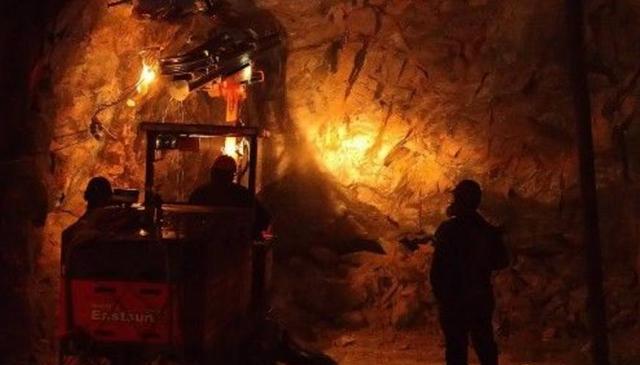
Exploitation minière de l'or in South Africa has also been deep underground for 4 kilometers; some places where volcanic eruptions have occurred may also contain natural pure gold nuggets, which also indicates that the gold content of the core is higher than the surface.
How Much Gold Has Been Mined?
The Industrial Trade Organization, the World Gold Council (WGC), estimates that since the first gold bead was smelted, humans have extracted about 190,000 metric tons of gold, accounting for about 77% of the world’s recoverable reserves. Because gold is not easy to wear and is almost indestructible, most of the gold that is mined today still exists in the form of jewelry, gold coins, gold bars, and electronic products.
Interestingly, most of this gold was mined in the past half-century. Gold is considered valuable, and it has been used as jewelry and currency for most of recorded world history, dating back more than 7,000 years.
Au cours des 6800 premières années de cette histoire, c'est-à-dire jusqu'en 1835, la production mondiale d'or était inférieure à 20 000 tonnes métriques. Entre 1848 et 1855, la ruée vers l'or en Californie a permis à la production mondiale d'or de dépasser les 20 000 tonnes métriques.
Au siècle suivant, au début des années 1940, la production cumulée d'or a triplé pour atteindre 60 000 tonnes métriques et, au cours des 30 années suivantes, elle a augmenté rapidement de 50% pour atteindre 90 000 tonnes métriques.
How Much Gold is Left to Be Mined?
It is reported that there may be 580 deposits with 1 million ounces (28.3 tons) of gold or more, and there may be 3.72 billion ounces of gold (115,700 tons) underground. The world’s remaining reserves account for only 30% of the reserves already produced.
Even under the best conditions, only 1.82 billion ounces (56,608 tons) of gold can be mined. The challenge for the current gold companies is not that there is no prospecting potential, but that the mines d'or that are easy to find have been discovered and mined.
Si l'on se réfère à la production mondiale récente d'environ 3 100 tonnes métriques par an, cela signifie que dans moins de 20 ans, toutes les réserves d'or récupérables dans le monde seront épuisées.
How Will The Mining Company be Affected?
As gold reserves dry up, it is harder to find new gold deposits, and production costs rise over time, which may curb the profitability of global gold mining companies.
Par exemple, en 2004, l'entreprise d'extraction d'or Barrick Gold a indiqué que le coût de production moyen par once d'or extraite n'était que de $300. En 2011, ce chiffre a plus que doublé pour atteindre $630 par once et a continué à augmenter pour atteindre $800 par once en 2014. Selon les données de S&P Global Market Intelligence, les coûts de production se sont stabilisés depuis lors, et Barrick a annoncé un coût de production de $780 pour l'année dernière.
Par coïncidence, il en va de même pour Newmont Mining.
Newmont Mining reported that the cost of gold production in 2004 was $278 per ounce, soaring to $752 in 2011, $920 in 2014, and the average of $922 in 2017.
Au cours des 15 dernières années, le coût de production de l'or a fortement augmenté, parallèlement à l'exploitation rapide des dernières réserves d'or récupérables de la planète. Dans les prochaines années, avec l'épuisement de l'or non exploité dans le monde, les coûts de production devraient recommencer à augmenter.
Will The Gold Market Reach Its Peak?
Certains investisseurs s'inquiètent des réserves de pétrole de la planète. De même, ils commencent à s'inquiéter de la quantité d'or qui peut être extraite dans le monde !
Il y a plus de dix ans, alors que les prix du pétrole brut grimpaient à plus de $100 le baril, les analystes de Goldman Sachs ont fait leur célèbre prédiction selon laquelle les prix du pétrole grimperaient jusqu'à $200.
“The Earth is rapidly approaching and may even have exceeded the tipping point of the “peak oil production”, and consumers (whether car drivers or industrialists) are competing for each gallon of the remaining natural gas due to the lack of oil. Oil prices can only rise.”
Bien sûr, ce n'est pas le cas. Le prix du pétrole a d'abord grimpé en flèche, puis a trébuché, a oscillé dans la fourchette $100, avant de commencer à plonger après la mi-2014.
Selon les données financières, pendant la majeure partie de l'année 2016, le prix du pétrole brut était inférieur à $40/baril. Pendant la majeure partie de l'année 2017, le prix du pétrole brut par baril était inférieur à $50, et aujourd'hui le prix est proche de $70.
Then someone may have to ask: Does gold have the same thing? In this regard, The Motley Fool analyst Rich Smith said that it depends on the situation!
Why Does The Amount of Minable Gold Change Over Time?
Part of the reason why oil peaks did not appear at the beginning of this century, and part of the reason for the collapse in oil prices in 2014, is that the amount of world oil (or gold) is not a hard number at all. Instead, it fluctuates with the creativity and price of technology, as humans look for new ways to develop the resources they really want.
En bref, plus le coût du pétrole est élevé, plus l'explorateur est en mesure de dépenser davantage d'argent pour trouver et extraire le pétrole, ce qui rend le pétrole plus récupérable et les réserves plus importantes.
In the case of oil, the fracturing technology pioneered in the 1940s was exploited in the 21st century to release previously unexplored petroleum deposits. High prices are incubators for commercial fracturing of hydraulic fracturing and other technologies, such as horizontal drilling. When these technologies were commercially viable, they opened billions of barrels of oil that were previously thought to be unexploitable, and eventually led to today’s price drop.
La situation est-elle la même pour l'or ? Peut-être.
Is There a New Way to Mine Gold in The Future?
Comme nous le savons tous, l'or est un élément précieux mais relativement rare, puisqu'il ne représente que 0,001 million de parties par million dans la croûte terrestre et seulement 0,00001 million par tonne métrique d'eau de mer.
Le problème est que pour rendre l'extraction de l'or économiquement viable, en utilisant la technologie existante, les mineurs doivent trouver de l'or dans des endroits où les gisements d'or sont concentrés.
Barrick Gold has a reserve of 1.5 grams per metric ton, and Newmont Mine has only 1.14 grams per metric ton.
Il n'est pas facile de trouver de l'or. Selon les experts, l'or peut apparaître de trois manières différentes à l'avenir :
Under lower-density deposits
Experts speculate that even in the case of extreme dilution of the average concentration, only the first four kilometers of the crust contain up to 122 billion tons of gold (not to mention the gold in the ocean). This suggests that if new technologies are developed that allow for the lucrative exploitation of gold at below-normal gold densities, then the world’s remaining gold (discoverable, exploitable, and refinable) may be more than the current situation. many.
Seabed may be a new exploration field
La découverte récente de gisements de métaux précieux autour des cheminées hydrothermales sous-marines suggère que certains sites importants des fonds marins pourraient contenir des mines d'or à des concentrations allant jusqu'à 6 grammes par tonne métrique. Cela représente quatre fois l'actif moyen de Barrick Gold et cinq fois celui de Newmont. Si de tels gisements sont courants, l'augmentation du prix de l'or et la réduction de l'offre d'or sur terre pourraient déclencher une nouvelle ruée vers l'or sous-marin, qui pourrait avoir doublé la quantité d'or restant dans le monde.
L'or peut aussi exister dans l'espace
The astrophysicist Neil deGrasse Tyson believes that the individual space rocks that make up the asteroid belt have gold and may have half a ton or more of gold at the core of any asteroid.
Dr. Tyson did not commit to every asteroid in the asteroid belt, but there are more than 150 million asteroids over 100 meters in diameter in the asteroid belt. If even a small portion of these space rocks contains gold, it may dwarf the elements that are readily available on the Earth’s surface.
Résumé
En bref, la diminution des réserves d'or de la planète et l'augmentation du prix de l'or peuvent inciter les explorateurs et les développeurs à trouver de nouvelles sources d'or dans des endroits où aucun mineur n'a été impliqué auparavant.
In other words, how much gold you have in the future depends on how much you are willing to spend looking for it!









 English
  French
  Spanish
  Portuguese
  Indonesian