casebg

80TPH Alluvial & Rock Gold Processing Plant in Guinea

80TPH Alluvial & Rock Gold Processing Plant in Guinea

Published Date:21 novembre 2026

JXSC has designed two 80 TPH gold processing plants for a mining customer in Guinea, West Africa. The project is designed to process both alluvial and hard-rock gold ore, with two separate processing lines to recover gold from different deposit types.

Considering the different characteristics of alluvial gold and rock gold ore, JXSC developed a customized gold processing solution consisting of an alluvial gold processing line and a rock gold crushing and grinding line.

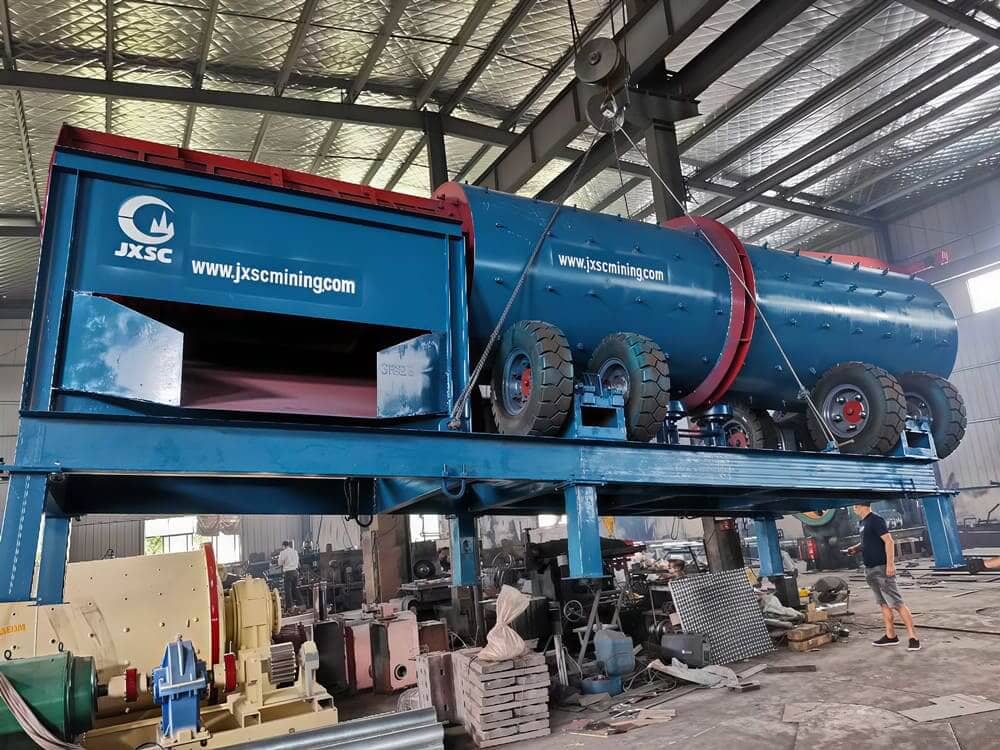
The alluvial gold processing line adopts a mobile trommel scrubber, centrifugal concentrator, and gold shaking table for gold recovery. The rock gold processing line integrates crushing, screening, grinding, and gravity separation processes to liberate and recover gold from hard rock ore.

By combining these two processing systems, the plant provides a comprehensive gold recovery solution for the customer’s mining operations in Guinea.

Situation de la mine du client

1. Project Location: Guinea, West Africa

2. Processing Capacity: 80 TPH

3. Ore Types: Alluvial gold and hard rock gold ore

4. Processing Plant Type: Mobile alluvial gold washing plant and hard-rock gold gravity separation

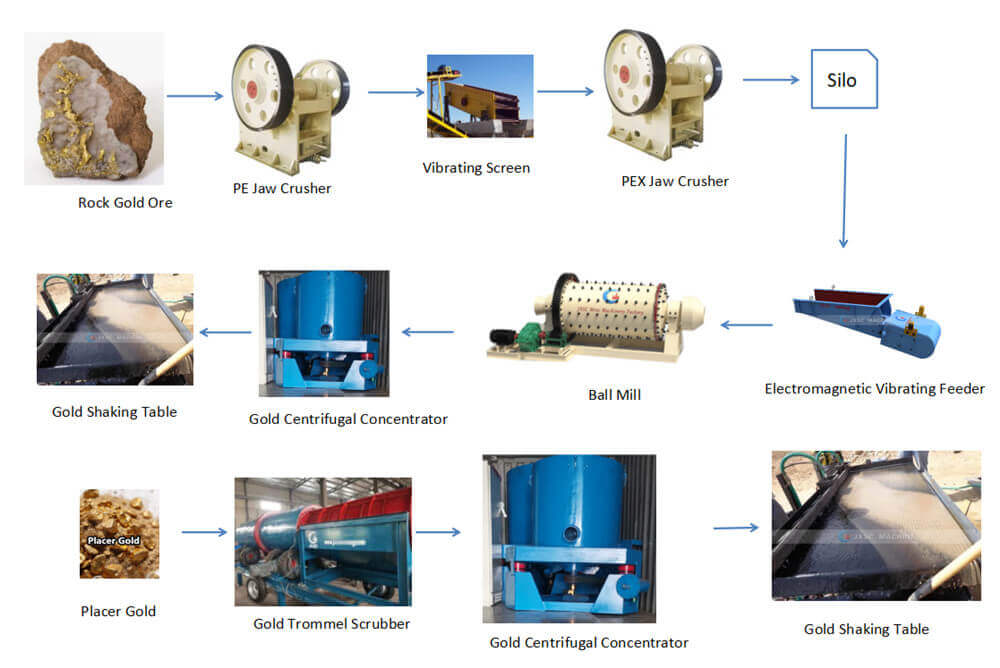
80TPH Gold Processing Plant in Guinea Flowchart

80TPH Alluvial & Rock Gold Processing Plant in Guinea Flowchart

The plant consists of two independent processing lines designed for different gold-bearing materials.

1. Alluvial Gold Processing Line

Process Flow:

Feed Hopper → Mobile Trommel Scrubber → Gold Centrifugal Concentrator → Gold Shaking Table

2. Rock Gold Processing Line

Process Flow:

Feed Hopper → Trough Feeder → Primary Jaw Crusher → Vibrating Screen → Fine Jaw Crusher → Storage Hopper → Electromagnetic Vibrating Feeder → Ball Mill → Slurry Pump → Gold Centrifugal Concentrator → Gold Shaking Table

Flowchart Detailed Explanation

1. Alluvial Gold Processing Line

The alluvial gold processing line is specially designed to recover gold from placer deposits. It mainly consists of a feed hopper, mobile trommel scrubber, centrifugal concentrator, and shaking table.

Step 1. Feeding

Raw alluvial gold ore is loaded into the feed hopper by an excavator or loader. The hopper provides a continuous supply of raw material to the mobile trommel scrubber, ensuring stable feeding for the subsequent processing stages.

Step 2. Screening

The raw material enters the mobile trommel scrubber, where it is screened according to particle size.

The trommel scrubber separates oversized stones, gravel, sand, and gold-bearing fine materials, helping remove large unwanted materials and preparing the qualified material for gravity separation.

Step 3. Centrifugal Concentration

The screened gold-bearing material is fed into the centrifugal concentrator.

The centrifugal concentrator uses centrifugal force to separate gold particles from lighter gangue minerals. Due to the high specific gravity of gold, fine gold particles can be effectively concentrated, improving the recovery of fine and relatively fine-grained gold.

Step 4. Gold Shaking Table

The concentrate from the centrifugal concentrator is further processed by a gold shaking table.

The shaking table separates gold from other heavy minerals according to differences in specific gravity and particle movement. It helps upgrade the gold concentrate and obtain a higher-grade final concentrate.

2. Rock Gold Processing Line

The rock gold processing line is designed for hard rock gold ore. It combines crushing, screening, grinding, and gravity separation to liberate gold particles from the host rock and recover the liberated gold.

Step 1. Feeding

Raw rock gold ore is loaded into the feed hopper and transferred to the primary jaw crusher through a trough feeder.

The trough feeder provides a stable and continuous feed rate, helping maintain smooth operation of the crushing system.

Step 2. Primary Crushing

The raw ore enters the primary jaw crusher for initial size reduction.

The jaw crusher uses compression force to break large rocks into smaller pieces, making the material suitable for subsequent screening and fine crushing.

Step 3. Screening and Fine Crushing

After primary crushing, the material is sent to the vibrating screen for particle-size separation.

Oversized material is further reduced by the fine jaw crusher to meet the required feed size for the grinding stage.

This crushing and screening arrangement helps improve crushing efficiency and prepares the ore for subsequent grinding.

Step 4. Storage and Feeding

The crushed ore is transferred to a storage hopper, which serves as a buffer between the crushing and grinding sections.

An electromagnetic vibrating feeder is installed below the hopper to provide controlled and continuous feeding to the ball mill, helping maintain stable grinding conditions.

Step 5. Grinding

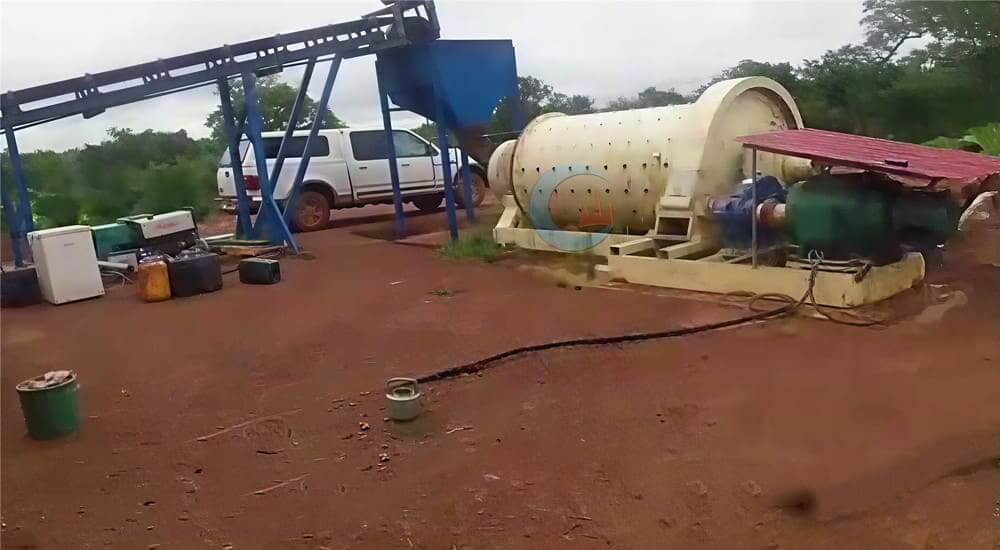
The crushed rock gold ore enters the ball mill for further size reduction.

The ball mill uses grinding media to grind the ore into finer particles, helping liberate gold from the surrounding gangue minerals.

The grinding fineness should be determined according to the gold particle size and ore liberation characteristics.

Step 6. Slurry Pumping

After grinding, the ore slurry is transferred by a slurry pump to the centrifugal concentrator.

The slurry pump provides stable slurry transportation and ensures continuous feeding to the gravity separation equipment.

Step 7. Centrifugal Concentration

The gold-bearing slurry enters the centrifugal concentrator for gravity separation.

The equipment generates strong centrifugal force to recover liberated gold particles from the slurry. It is particularly useful for recovering fine gold that may be difficult to capture through conventional gravity separation methods.

Step 8. Gold Shaking Table

The concentrate from the centrifugal concentrator is further upgraded by the gold shaking table.

Through the combined action of water flow and mechanical vibration, the shaking table separates gold from other heavy minerals and produces a higher-grade gold concentrate.

1. Alluvial Gold Processing Line

The alluvial gold processing line is specially designed to recover gold from placer deposits. It mainly consists of a feed hopper, mobile trommel scrubber, centrifugal concentrator, and shaking table.

Step 1. Feeding

Raw alluvial gold ore is loaded into the feed hopper by an excavator or loader. The hopper provides a continuous supply of raw material to the mobile trommel scrubber, ensuring stable feeding for the subsequent processing stages.

Step 2. Screening

The raw material enters the mobile trommel scrubber, where it is screened according to particle size.

The trommel scrubber separates oversized stones, gravel, sand, and gold-bearing fine materials, helping remove large unwanted materials and preparing the qualified material for gravity separation.

Step 3. Centrifugal Concentration

The screened gold-bearing material is fed into the centrifugal concentrator.

The centrifugal concentrator uses centrifugal force to separate gold particles from lighter gangue minerals. Due to the high specific gravity of gold, fine gold particles can be effectively concentrated, improving the recovery of fine and relatively fine-grained gold.

Step 4. Gold Shaking Table

The concentrate from the centrifugal concentrator is further processed by a gold shaking table.

The shaking table separates gold from other heavy minerals according to differences in specific gravity and particle movement. It helps upgrade the gold concentrate and obtain a higher-grade final concentrate.

80TPH Alluvial & Rock Gold Processing Plant in Guinea

2. Rock Gold Processing Line

The rock gold processing line is designed for hard rock gold ore. It combines crushing, screening, grinding, and gravity separation to liberate gold particles from the host rock and recover the liberated gold.

Step 1. Feeding

Raw rock gold ore is loaded into the feed hopper and transferred to the primary jaw crusher through a trough feeder.

The trough feeder provides a stable and continuous feed rate, helping maintain smooth operation of the crushing system.

Step 2. Primary Crushing

The raw ore enters the primary jaw crusher for initial size reduction.

The jaw crusher uses compression force to break large rocks into smaller pieces, making the material suitable for subsequent screening and fine crushing.

Step 3. Screening and Fine Crushing

After primary crushing, the material is sent to the vibrating screen for particle-size separation.

Oversized material is further reduced by the fine jaw crusher to meet the required feed size for the grinding stage.

This crushing and screening arrangement helps improve crushing efficiency and prepares the ore for subsequent grinding.

Step 4. Storage and Feeding

The crushed ore is transferred to a storage hopper, which serves as a buffer between the crushing and grinding sections.

An electromagnetic vibrating feeder is installed below the hopper to provide controlled and continuous feeding to the ball mill, helping maintain stable grinding conditions.

Step 5. Grinding

The crushed rock gold ore enters the ball mill for further size reduction.

The ball mill uses grinding media to grind the ore into finer particles, helping liberate gold from the surrounding gangue minerals.

The grinding fineness should be determined according to the gold particle size and ore liberation characteristics.

Step 6. Slurry Pumping

After grinding, the ore slurry is transferred by a slurry pump to the centrifugal concentrator.

The slurry pump provides stable slurry transportation and ensures continuous feeding to the gravity separation equipment.

Step 7. Centrifugal Concentration

The gold-bearing slurry enters the centrifugal concentrator for gravity separation.

The equipment generates strong centrifugal force to recover liberated gold particles from the slurry. It is particularly useful for recovering fine gold that may be difficult to capture through conventional gravity separation methods.

Step 8. Gold Shaking Table

The concentrate from the centrifugal concentrator is further upgraded by the gold shaking table.

Through the combined action of water flow and mechanical vibration, the shaking table separates gold from other heavy minerals and produces a higher-grade gold concentrate.

Reasons and Advantages of the Processing Plant Design

The 80TPH gold processing plant in Guinea is designed to handle two different types of gold-bearing materials. Its main advantages include:

  • Two Independent Processing Lines
    The plant includes separate processing systems for alluvial gold and rock gold ore. Each line adopts a suitable processing flow based on the characteristics of the raw material, improving the adaptability of the overall plant.
  • Efficient Alluvial Gold Recovery
    The alluvial gold line combines a mobile trommel scrubber, centrifugal concentrator, and shaking table. This configuration integrates screening and gravity concentration to recover gold from placer deposits.
  • Integrated Rock Gold Crushing and Grinding
    The rock gold line adopts primary crushing, screening, fine crushing, and ball milling to progressively reduce ore particle size and liberate gold minerals.
  • Combination of Centrifugal Concentration and Shaking Table
    Both processing lines use centrifugal concentration followed by shaking table separation. This combination helps recover gold particles and further upgrade the gravity concentrates.

Main Machines & Accessorie


 Non. Nom du produit Modèle QTY(set)
1 Mobile Trommel Scrubber 1200*4000 mm 1
2 Concentrateur centrifuge pour l'or STLB60,STLB80  
3 Table à secousses / 4
4 Trough Feeder / 1
5 Primary Jaw Crusher PE250*400  
6 Tamis vibrant / 1
7 Fine Jaw Crusher / 1
8 Alimentateur vibrant électromagnétique   1
9 Moulin à boulets 1500*3000 mm 1
10 Pompe à boues    
11 Convoyeur à bande 650*1500  

Production, Shipping & On-site

80TPH Alluvial & Rock Gold Processing Plant in Guinea

JXSC est un fabricant professionnel d'équipements miniers et un expert en solutions minières. Il a à son actif de nombreuses réussites telles que des usines d'extraction d'or, des solutions pour les diamants, etc. nous contacter.

Nous contacter

Si vous avez des questions sur nos produits, n'hésitez pas à remplir le formulaire ci-dessous et nous vous contacterons dans les 24 heures. Soyez assuré que nous ne révélerons vos informations à personne.

    Consultation gratuite avec nos équipes de vente et d'ingénierie


    • Vos informations sont en sécurité. Vérifiez notre avis de confidentialité pour plus de détails.

    • Nous n'offrons pas d'emplois et nous n'achetons ni ne vendons de minéraux. Nous vendons UNIQUEMENT du matériel minier !

    • Nous ne sommes pas intéressés par la coopération et l'investissement !

    Vue d'ensemble de la protection de la vie privée
    logo

    Ce site web utilise des cookies afin de vous offrir la meilleure expérience utilisateur possible. Les informations contenues dans les cookies sont stockées dans votre navigateur et remplissent des fonctions telles que vous reconnaître lorsque vous revenez sur notre site web et aider notre équipe à comprendre quelles sont les sections du site web que vous trouvez les plus intéressantes et les plus utiles.

    Cookies strictement nécessaires

    Strictement nécessaire Le cookie doit être activé à tout moment afin que nous puissions enregistrer vos préférences en matière de paramètres de cookies.

    Statistiques

    Ce site utilise Google Analytics pour collecter des informations anonymes telles que le nombre de visiteurs du site et les pages les plus populaires.

    L'activation de ce cookie nous aide à améliorer notre site web.