



Gisements d'or placérien are exploitable ore bodies formed by the enrichment of gold particles in loose sediments through geological weathering processes. As one of the earliest mined gold deposit types in human history, their shallow burial depth and ease of extraction have triggered multiple “gold rushes” worldwide. Based on depositional environments, transport mechanisms, and emplacement settings, placer gold deposits are systematically classified into six major types: residual/colluvial, alluvial, fluvial, glacial/moraine, and marine/coastal placers. Each type exhibits distinct characteristics in gold particle morphology, size distribution, and beneficiation requirements, directly influencing exploration strategies and economic viability. This article provides a detailed analysis of the genetic mechanisms, diagnostic features, key exploitation considerations, and processing methods for each placer type, offering professional references for mineral resource evaluation.
Six Major Placer Gold Deposits
Placer gold deposits are exploitable ore bodies formed by the enrichment of gold elements in loose sediments. They are primarily classified into six major types: residual placer deposits, colluvial placer deposits, alluvial placer deposits (the most common), fluvial placer deposits, glacial placer deposits, and coastal placer deposits. Classification criteria include the depositional environment, transport mechanism, and location of deposition. Below are detailed classifications and typical characteristics:
Residual Placer Gold Deposits
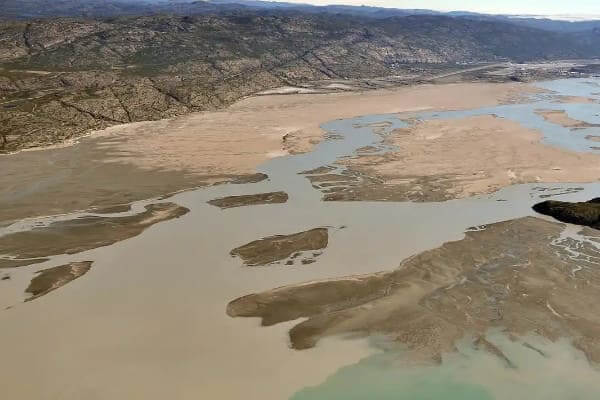
These deposits form in areas where gold grains accumulate in situ after weathering of gold-bearing geological bodies under surface conditions. They typically occur in low mountain and hilly terrain, serving as important indicators for locating lode gold deposits, though their industrial value is relatively low.
Formation cause: Primary gold deposits (e.g., lode gold deposits) undergo weathering and erosion, causing gold grains to accumulate in situ without undergoing long-distance transport.
Caractéristiques
- Gold particles exhibit distinct edges (unrounded), often coexisting with residual fragments from primary veins.
- High grades, but typically small in scale.
Typical Locations: Steep mountain slopes or near outcrops of primary gold deposits (e.g., certain mining areas in Shandong, China).
Méthodes de traitement
- Primarily gravity separation (panning/sluicing) due to coarse gold grains near the source rock.
- Simple washing and screening to remove large debris since weathering is incomplete.
Typical Flow: Scrubbing → Screening (to remove clays/rocks) → Gravity separation (jigs, tables à secousses, spiral concentrators).
Colluvial Placer Gold Deposits
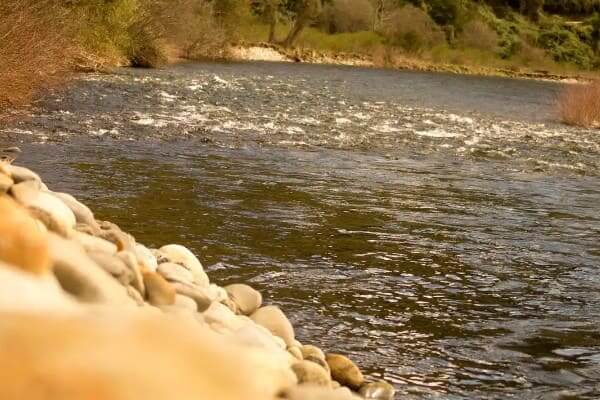
Formed when gold-bearing material, after weathering and fragmentation, moves downslope under the influence of gravity or surface water and deposits in favorable locations such as the foot of the slope. These deposits often connect with residual deposits and are sometimes collectively termed residual-slope deposits. They are generally small in scale but can serve as prospecting clues for rock gold deposits.
Formation Mechanism: Residual gold deposits undergo short-distance movement and accumulation along slopes due to gravity or rainwater erosion.
Caractéristiques
- Gold particles exhibit slight rounding, mixed with colluvial clay and rock debris.
- Deposits occur in fan-shaped or banded distributions.
Typical Locations: Slope bases in hilly terrain (e.g., foothills of the Ural Mountains, Russia).
Processing Methods: Gravity separation dominates, as gold is slightly transported but not well-sorted.
Typical Flow: Screening → Rough sluicing → Fine gold recovery (concentrateurs centrifuges like Knelson/Falcon).
Alluvial Placer Gold Deposits
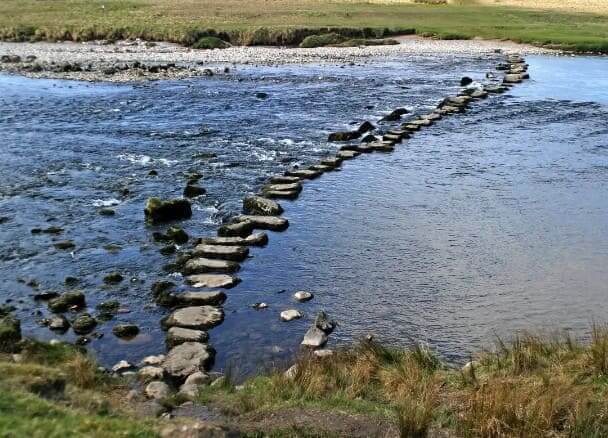
This is the most common type of placer deposit, formed by the transport, sorting, and deposition of gold-bearing material by flowing water, primarily occurring in river valley environments. Based on their location, they can be further subdivided into riverbed placer deposits, floodplain placer deposits, and terrace placer deposits. Such deposits are typically shallowly buried, have relatively stable grades, and are easily mined.
Formation Mechanism: Rivers transport gold particles, depositing them in riverbeds, floodplains, or terraces.
Caractéristiques
- Gold particles exhibit a high degree of rounding, predominantly in flake or grain form, concentrated at the base of gravel layers (“gold-rich layers”).
- Large-scale deposits with favorable accessibility have been the primary target of gold rushes.
Subtypes
- Modern riverbed placer deposits (e.g., Yukon River, Alaska, USA).
- Paleochannel placer deposits (e.g., Heihe region, Heilongjiang Province, China).
Méthodes de traitement
- Highly efficient gravity separation due to good natural sorting by water.
- Often supplemented by mercury amalgamation (where legal) or cyanidation for fine gold.
Typical Flow: Trommel screening → Sluice boxes → Shaking tables/spiral concentrators → Amalgamation/CIL (optional).
Fluvial Placer Gold Deposits
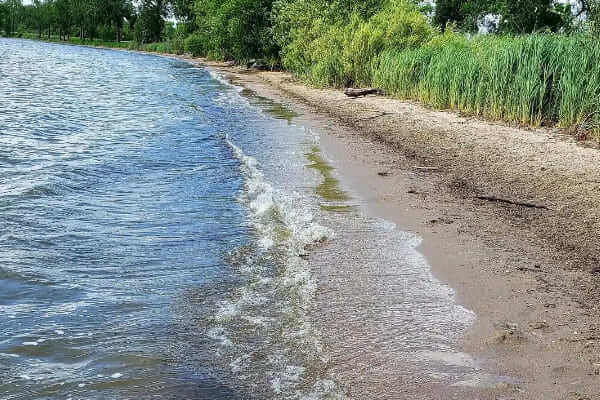
Fluvial placer deposits primarily form in mountainous regions or foreland areas. They are created when torrential rains or seasonal floods transport weathered, gold-bearing clastic material over short distances, depositing it in areas such as alluvial fans and fluvial fans. Gold grains in these deposits typically exhibit angular or subrounded shapes with poor sorting characteristics. They are often intermixed with gravel and sandy soil in shallow deposits, though grades vary considerably. Enrichment zones often occur in the middle to lower sections of the fan body, making them suitable for small-scale mechanized or manual mining operations. Alluvial placer deposits are common in arid and semiarid regions, although they are typically small-scale with moderate industrial value. They serve as important clues for locating upstream primary gold deposits.
Formation cause: Seasonal floods transport gold particles to accumulate in foreland alluvial fans or valley mouths.
Caractéristiques
- Uneven gold distribution, often mixed with coarse gravel.
- Complex ore body morphology requires exploration to identify enrichment zones.
Typical locations: Foreland areas in arid-semi-arid regions (e.g., Kalgoorlie, Australia).
Méthodes de traitement
- Requires robust scrubbing due to clay-bound gravels.
- Gravity-based recovery with a broader particle size range.
Typical Flow: Scrubber/screen → La pêche à la turlutte → Shaking tables → Tailings reprocessing (if nuggetty).
Glacial Placer Gold Deposits
Glacial deposits and placer deposits form when glacial activity transports gold-bearing debris, which concentrates within the glacial till left behind after retreat. These deposits are primarily found in regions with intense glacial activity, such as Northern Europe and North America. Gold grains often retain angular shapes with visible glacial striations on their surfaces, intermingled within glacial till gravel, silt, and sand sediments without distinct stratification. Due to the glacier’s immense transport capacity, gold grains can migrate over long distances. However, the ore body distribution is uneven, making extraction challenging and requiring specialized processing equipment to handle viscous glacial deposits. Although their industrial value is relatively limited, certain large glacial placer deposits still hold significant economic potential.
Formation Cause: Glacial movement erodes gold-bearing strata; gold grains concentrate upon the melting of glacial deposits.
Caractéristiques
- Gold particles exhibit sharp edges and coexist with glacial erratics.
- Deposits form irregular bands, posing significant exploration challenges.
Typical Locations: Former glacial activity zones (e.g., Yukon Territory, Canada).
Méthodes de traitement
- Challenging due to poorly sorted, clay-rich moraine material.
- Often requires attrition scrubbing and advanced gravity separation.
Typical Flow: Aggressive scrubbing → Screening → Jigs/spirals → Magnetic separation (for iron-rich sediments).
Coastal Placer Gold Deposits
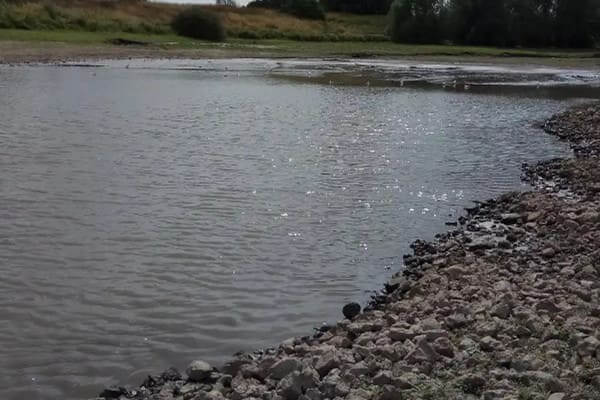
Coastal placer deposits form through the long-term action of ocean waves and coastal currents, which transport, sort, and concentrate gold-bearing clastic material from terrestrial or nearshore sources. They are primarily found in coastal landforms such as beaches, sandbars, or submerged sandbars. Due to prolonged seawater erosion, gold grains are typically highly rounded and concentrate alongside heavy minerals like ilmenite and zircon within black sand layers, forming distinct cross-bedding structures. Coastal placer deposits are commonly found along modern or ancient coastlines and are significantly influenced by sea-level fluctuations. Their grades are relatively stable, and deposits can vary in size. They are suitable for mechanized mining and hold significant economic value, particularly in tropical and subtropical regions such as Alaska and West Africa.
Formation: Waves and coastal currents modify alluvial gold, depositing it on beaches or nearshore areas.
Caractéristiques
- Gold particles are extremely fine and rounded, often associated with heavy minerals like ilmenite and zircon.
- Mining requires managing tidal cycles and seawater erosion.
Typical locations: Nome Beach, Alaska, USA; West Coast, New Zealand.
Méthodes de traitement
- Focus on ultra-fine gold recovery due to wave action rounding grains.
- Often combined with heavy mineral sand processing (e.g., zircon, ilmenite).
Typical Flow: Screening → Spiral concentrators → Wet shaking tables → Electrostatic/magnetic separation (for co-products).
Conclusion
The diversity of placer gold deposit types reflects the complex interplay between geological forces and gold mobilization-enrichment processes. From the “proximal-source” nature of residual placers to the “wave-concentrated” effect in beach deposits, different placer types serve both as critical indicators for lode gold exploration and supplementary resources for gold production. With increasingly stringent environmental regulations and advances in fine-particle recovery technology, modern placer mining emphasizes eco-friendly processing methods, such as combined gravity-flotation circuits for ultra-fine coastal placers. Future breakthroughs may emerge from integrated remote sensing and geochemical techniques targeting paleochannel and glacial deposits. Only by understanding the classification essence of placer deposits can sustainable resource utilization be achieved.
DERNIERS PRODUITS
-

SFM-8 Lab Grinder
【Max. Power Consumption】 150W 【Morta…
-
Cyclosizer
【Feeding Capacity】< 100g/time 【Feeding …
-
JKZ/2JKZ Mine Shaft Sinking Hoist
【Power Source】Electric Motor Drive 【Motor Spee…


 English
  French
  Spanish
  Portuguese
  Indonesian