



The dissemination characteristics of metal ores—their texture, mineral association, and grain size distribution—play a pivotal role in determining efficient mineral processing strategies. These geological factors dictate the crushing and grinding requirements needed to achieve optimal mineral liberation while minimizing energy consumption and processing costs. Deposits of different genesis types exhibit significant differences in mineral coexistence, dissemination size, and structural characteristics. As ore grades decline globally, understanding dissemination properties has become crucial for sustainable resource extraction.
This paper systematically analyzes the dissemination characteristics of two typical types of metallic ore deposits: disseminated and massive. Based on the principle of mineral liberation, it explores in depth the selection of efficient grinding process paths for ores with different dissemination types. Further, we explore advanced grinding technologies and data-driven optimization strategies to enhance liberation efficiency and economic viability.
Dissemination Characteristics of Metal Deposits
The textural properties of metal ores—particularly the spatial distribution, intergrowth relationship, and grain size of valuable minerals—fundamentally dictate their processing requirements. Whether minerals occur as disseminated grains or form massive interlocking networks, these distinct dissemination patterns demand tailored approaches in comminution and mineral liberation to achieve optimal metallurgical performance.
Disseminated Metal Deposits
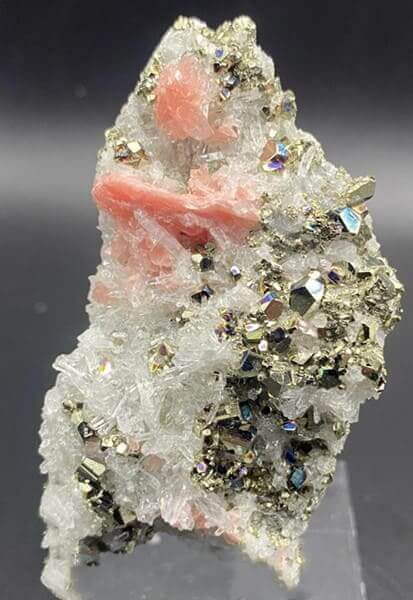
Some metal ores exhibit dense, massive characteristics, wherein valuable minerals are primarily disseminated. In other words, valuable minerals are distributed like scattered dots within the matrix composed of gangue minerals. Their distribution is relatively uniform but tightly integrated with the gangue, forming a dense mass. Under such dissemination characteristics, the ore structure is relatively stable, and the bonding force between minerals is strong. To effectively separate valuable minerals from the dense massive structure, appropriate crushing and grinding processes are required to expose the valuable minerals from the compact matrix.
Massive Metal Deposits
Other metal ores exhibit dense intergrowth and mutual interlocking dissemination characteristics. Different minerals are tightly intertwined, forming a complex interlocking structure with often indistinct boundaries. Mineral grains are mutually encapsulated and interpenetrated. In such cases, the bonding between valuable minerals and gangue or other worthless minerals is very tight, making separation more challenging. Moreover, the dissemination grain size in such ores is often uneven, with some mineral grains being larger and others extremely fine, resulting in a mixture of coarse and fine particles. This poses greater challenges for the grinding process.
Selection of Grinding Processes
For ores with different dissemination characteristics, adopting a reasonable grinding process is of paramount importance. Grinding, as a key step in ore processing, aims to crush the ore to a certain particle size so that valuable minerals can achieve effective monomer liberation or favorable intergrowth liberation, thereby creating favorable conditions for subsequent separation operations.
Tailored Strategies for Disseminated Ores
For ores that are massive and primarily disseminated, the grinding process must consider the ore’s compactness and the distribution characteristics of valuable minerals. Generally, it is necessary to first perform coarse and medium crushing to break the bulk ore to a suitable size, followed by fine grinding in equipment such as broyeurs à billes. During the grinding process, it is essential to control the grinding time and the proportion of grinding media. The goal is to grind the ore to a particle size that fully exposes valuable minerals while avoiding excessive grinding, which would increase energy consumption and cause overgrinding of valuable minerals. Excessive grinding not only raises production costs but may also lead to the loss of valuable minerals in subsequent separation processes due to excessively fine particles, thereby reducing mineral recovery rates.
Coarse-to-fine grinding: Initial jaw/concasseur à cône followed by ball milling ensures progressive liberation without excessive fines.
Circulating load optimization: Controlled classifier cut-points (~150 µm) balance liberation efficiency and throughput.
Future trends: Machine learning-based grinding control adjusts mill parameters in real-time for peak efficiency.
Advanced Approaches for Massive Ores
For ores with dense intergrowth, mutual interlocking, and uneven dissemination of grain sizes, the design of the grinding process must be more precise and reasonable. Due to the significant variation in mineral particle sizes, a single grinding process often cannot meet the requirements. In such cases, a staged grinding process may be necessary. This involves initially coarse grinding the ore to liberate larger mineral grains, followed by classification of the coarse-ground product using screening equipment. Mineral particles that have already reached the liberation size are promptly separated for subsequent concentration, while coarser particles proceed to the next stage of fine grinding. This approach prevents finer particles from being overground during the grinding process while improving grinding efficiency and reducing energy consumption. The selection of grinding media must also be adjusted based on the ore’s hardness and dissemination characteristics. For ores with high hardness and tight interlocking, grinding media with higher hardness and stronger impact forces may be required to ensure effective grinding.
Staged grinding-classification: Coarse grinding → screening → regrinding of middlings improves energy efficiency (e.g., Escondida copper mine, Chile).
Pre-concentration: Sensor-based sorting (XRT, LIBS) discards low-grade material early, reducing grinding costs by 20–40%.
Hybrid liberation: Combining HPGR with stirred milling enhances fine-grained liberation (Newmont’s Yanacocha gold mine).
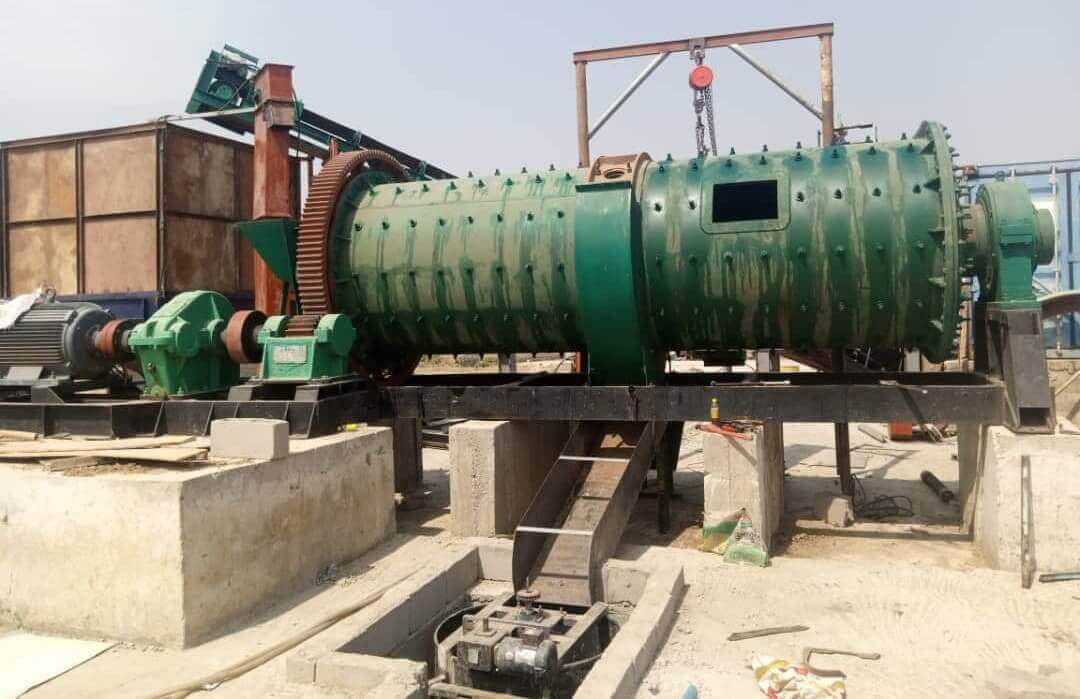
A rational grinding process not only improves the liberation degree of valuable minerals but also reduces the difficulty of subsequent separation operations and enhances mineral processing indicators. If the grinding process is unreasonable—for example, if the grinding size is insufficient and valuable minerals cannot be fully liberated—large amounts of valuable minerals may be discarded along with gangue during separation, resulting in resource wastage. Conversely, if the grinding size is too fine, although it may improve the liberation degree of valuable minerals, it increases grinding costs and the difficulty of subsequent separation operations. For instance, in flotation processes, excessively fine particles tend to form slimes, affecting the efficacy of flotation reagents and reducing flotation efficiency.
Environmental and Economic Considerations
Carbon footprint: Every 10% reduction in overgrinding cuts CO₂ emissions by 4 kg/t ore.
Water savings: Optimized grinding-classification circuits reduce fresh water demand (20% savings in Chilean copper ops).
Cost implications: Proper dissemination-based grinding design can lower OPEX by USD 1–3/t ore in large-scale mines.
Conclusion
Thoroughly understanding the dissemination characteristics of different metal deposits and, based on this, formulating and adopting rational grinding processes are of great significance for improving ore processing efficiency, reducing production costs, and achieving effective resource utilization. In practical mining production, detailed process mineralogy studies of ores are required to accurately grasp their dissemination characteristics. This knowledge is then combined with actual production conditions to optimize grinding process parameters, achieving the best grinding results and laying a solid foundation for the smooth progress of the entire processus de traitement des minerais.
The shift toward “smart grinding”, integrating mineralogical data with AI-driven process control, heralds a new era in mineral processing. Future innovations—such as nanobubble-assisted grinding and in-line particle analyzers—promise further efficiency leaps. By aligning grinding strategies with ore dissemination properties, operators can achieve higher recoveries, lower costs, and sustainable resource utilization.
DERNIERS PRODUITS
-

Inclined Vibrating Screen
The inclined vibrating screen is a simple and eff…
-
High Temperature & Pressure Gold Desorption Electrolysis System
High-Temperature & Pressure Gold Desorption Elect…
-
Normal Temperature & Pressure Gold Desorption Electrolysis System
The normal temperature & pressure gold desorption…


DERNIÈRES NOUVELLES
- Modern Cyanide Residue Treatment Technologies for Gold Processing
- Traditional De-cyanidation Technologies for Gold Cyanide Residues
- Shaking Table, 3-Disc Dry Magnetic & Electrostatic Separator for W-Sn-Ta-Nb
- Mineral Analysis: The Foundation for Successful Mineral Processing Projects
- What Is Over-Grinding and How Can It Be Prevented?
 English
  French
  Spanish
  Portuguese
  Indonesian