



Gold has captivated humanity for millennia, but few understand its extraordinary geological journey. This precious metal’s story begins in the cosmos and involves billions of years of planetary evolution. Let’s explore gold’s remarkable origins, distribution, and formation processes that create the precious deposits we value today.
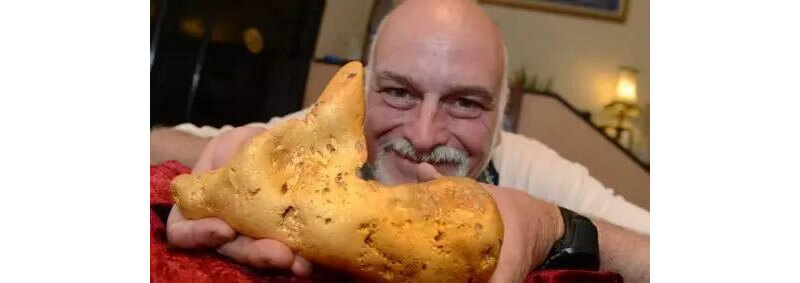
Cosmic Origins: How Gold Came to Earth
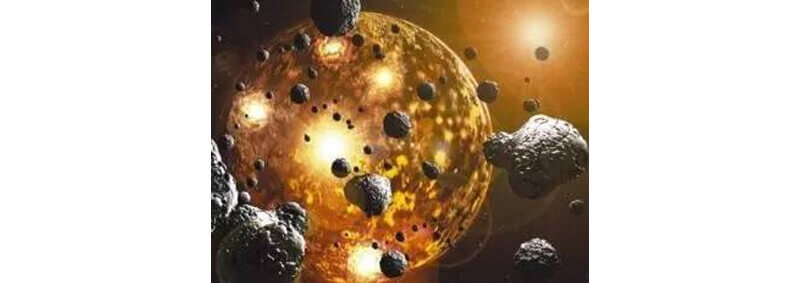
4.5 billion years ago, Earth formed as a molten fireball with temperatures high enough to melt most minerals. Gold arrived through meteorite impacts during Earth’s early formation:
- Meteors carried metallic elements including gold
- Upon impact, the meteorites melted while gold survived
- Due to gold’s high density (19.3 g/cm³), it sank toward Earth’s core
- This explains why most gold deposits require underground mining today
Earth’s Gold Distribution: A Rare Metal
According to scientists’ measurements and estimates, the Earth’s total gold reserves are about 4.8 billion tons, while about 4.7 billion tons are distributed in the core, and the mantle is 86 million tons, while the distribution to the Earth’s crust is less than 100 million tons.
More than 99% of the gold on the Earth enters the core. This distribution of gold is formed during the long-term evolution of the Earth.
The Earth’s crust formed in the early stage of the Earth’s development has a high abundance of gold. Therefore, it can represent the Archean greenstone belt composed of the early residual crust, especially the combination of mafic and ultramafic volcanic rocks, which may become the earliest gold deposits.
Shown in the table: Scientific estimates reveal an extraordinary concentration of gold in Earth’s core
| Localisation | Gold Quantity | Percentage of Total |
|---|---|---|
| Core | 4.7 billion tons | 98% |
| Mantle | 86 million tons | 1.8% |
| Crust | <100 million tons | <0.2% |
Formation of Gold Deposits
The gold treasures on the Earth are mainly buried in the form of rock gold and alluvial/placer gold. In addition, associated gold.
After Celestial bodies’ movement, Earth formation, volcanic eruptions, ancient mountain movements, magma spurts, and gold elements are entrained from the core, the rock gold is formed.
The mountains were rich in gold from the alluvial gold during the processes of sunshine, weathering, thunder and lightning, violent storms, landslides, mudslides, flooding, and sedimentation in stable waters.
That is, the primary gold mine undergoes weathering and geological action, is broken and transported by flowing water to a suitable place to form the alluvial mine (placer gold).
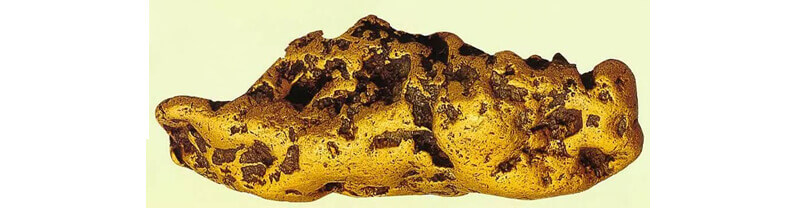
According to scientific measurements and inferences, about 2.6 billion years ago in the Archean, volcanic eruptions brought a large amount of gold elements from the core to the mantle and the crust along the fissures, followed by ocean deposition and regional metamorphism. The role of the formation of the original gold source. About 100 million years ago in the Mesozoic, due to the powerful role of crustal deformation, pleats were exposed to the sea surface, gold material activation, migration, and accumulation, forming a gold ore field, that is, what we call L'or en roche.
Natural gold is a kind of mineral formed in hydrothermal geological action. The natural gold deposit of natural gold is collectively called rock gold or vein gold. The primary gold deposits are irregularly distributed in the formation formed by hydrothermal geology. In the gold-bearing quartz vein, gold can coexist with minerals such as pyrite, arsenopyrite, galena, and sphalerite.
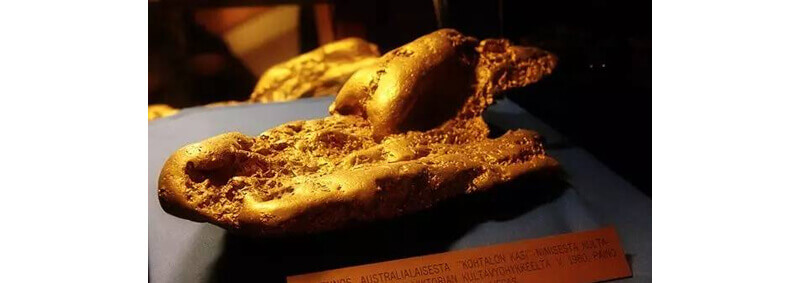
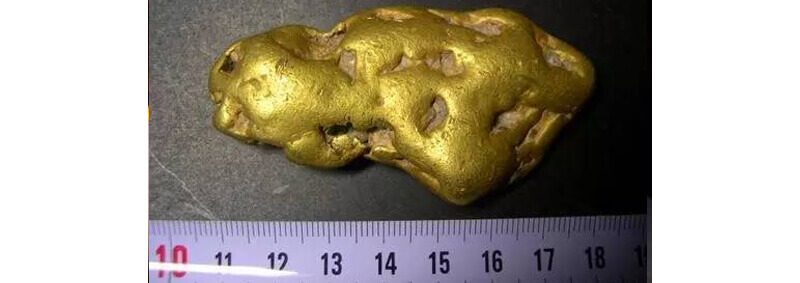
In the rock-rich enrichment zone, after the rock is oxidized, many natural gold and superficial layers of rock gold are often left. After tens of millions of years of weathering and denudation, the rock becomes sand. Because of the stable nature of gold, it is dissociated into monomers; in the process of river water transportation, because of their heavier density, they are deposited in the stable water of the river, thus forming a sand gold mine. So far, the largest gold nugget discovered by humans weighs 280 kg, which was found in California, United States.
Classification and Reserves of Gold Deposits
The gold deposits formed during the change of nature can be roughly divided into three categories: rock gold deposits, sand gold deposits, and associated deposits. In the world, the ratio of reserves of rock gold, associated gold, and sand gold is about 70:15:15.
Among them, the rock gold deposit can be divided into several genetic types: magmatic-hydrothermal type, metamorphic hydrothermal type, volcanic hydrothermal type, sedimentary metamorphism type, hot water leaching type, and metamorphic conglomerate type.
The proportion of various types of gold deposits in the world’s total reserves is 56.2% of metamorphic conglomerate type, 12.4% of metamorphic hydrothermal type, 9.5% of associated gold, 8.9% of sand gold, magmatic-hydrothermal type and volcanic heat. The liquid type is 7.0%, and the hot water leaching type is 0.9%.
Globally, according to the geotectonic units produced by gold mines, they can be divided into four categories: ground shield metallogenic areas, platform and marginal metallogenic areas, geosyncline fold belt metallogenic areas and the Pacific Rim metallogenic belt. Among them, the gold reserves produced by the shields accounted for 25.6–27.8% of the world’s total reserves; the local Mesozoic activation zones of the ancient platform caprocks accounted for 1.1–1.3%, and the excellent ground trough areas accounted for 12.9-15.6%; The area of the ground trough, accounting for 1.1–1.2%; and the area of the ancient platform cover, accounting for 47.1–47.7%.
Gold’s Enduring Legacy
The geology of native gold reveals an incredible narrative spanning billions of years – from stellar origins in distant supernovae to the precious nuggets we mine today. Understanding gold’s geological journey not only satisfies scientific curiosity but also helps explain why this noble metal remains so rare and valuable.
Next time you hold a piece of gold jewelry or see a gold bar, consider the remarkable cosmic and geological processes that concentrated these precious atoms in mineable deposits. The gold we cherish represents just a tiny fraction that escaped Earth’s core, surviving asteroid impacts, volcanic eruptions, and eons of geological transformation to become humanity’s most coveted metal.
This scientific perspective gives us profound appreciation for gold’s true value – not just as currency or decoration, but as a tangible connection to Earth’s ancient past and our planet’s dynamic geological processes. While we’ve uncovered many secrets about gold’s formation, new discoveries continue to reveal more about this extraordinary element’s geologic story.
For gold mining insights, see:
Les 10 premières mines d'or du monde 2019
Liste des 10 premières sociétés minières d'or dans le monde 2019
Matériel d'extraction d'or à vendre
DERNIERS PRODUITS
-

SFM-8 Lab Grinder
【Max. Power Consumption】 150W 【Morta…
-
Cyclosizer
【Feeding Capacity】< 100g/time 【Feeding …
-
JKZ/2JKZ Mine Shaft Sinking Hoist
【Power Source】Electric Motor Drive 【Motor Spee…


 English
  French
  Spanish
  Portuguese
  Indonesian