



Lead-zinc ores are important sources of non-ferrous metals and play a vital role in batteries, alloys, corrosion-resistant materials, radiation protection, and other industrial applications. As easily processed deposits become increasingly limited and environmental requirements become more stringent, the lead-zinc beneficiation industry is shifting toward higher recovery, lower reagent consumption, intelligent process control, and more sustainable production.
Les main challenges in lead-zinc ore beneficiation include complex mineralogy, fine-grained dissemination, over-grinding and sliming, changing ore properties, and the difficulty of achieving efficient separation while controlling environmental impacts. Flotation remains the dominant beneficiation method for sulfide lead-zinc ores, while advances in reagents, classification, équipement de flottation, automation, and digital technologies are opening new possibilities for difficult-to-process ores.
This article reviews the characteristics of China’s lead-zinc resources, current beneficiation technologies, reagent selection, flotation processes, equipment upgrades, and future development trends, providing a practical overview of the industrial application of modern lead-zinc beneficiation technology.
Characteristics of China’s Lead and Zinc Minerals
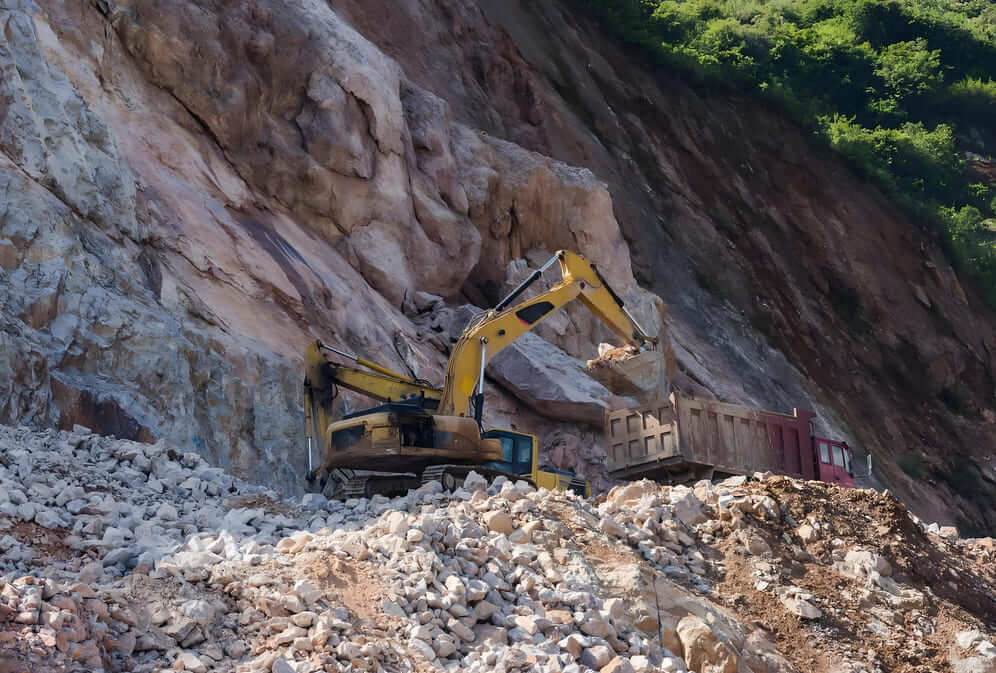
China is rich in lead and zinc ore resources. After more than 40 years of development and the gradual expansion of production bases, reserves now exceed 90 million tons, currently ranking first in the world. 90% of the minerals are primary sulfide ores. Lead’s physical properties make it crucial for industrial development and applications. It is widely used in lead-acid batteries and other applications and has specialized uses in the manufacture of radiation-protective equipment. Zinc is also abundant, accounting for over 90% of China’s total plomb and zinc production. Zinc is a chemically active element that readily reacts with other substances. At room temperature, it reacts with air to form a thin, dense film of basic zinc carbonate on the surface, which inhibits the oxidation of the lead and zinc ore.
Discussion on Lead-zinc Ore Dressing Technology
With the continued development and utilization of mineral resources, lead and zinc ore, as a key nonferrous metal resource, is attracting increasing industry attention for its efficient and environmentally friendly beneficiation technologies. Next, we explore the current status and future trends of lead and zinc ore beneficiation technologies, focusing on key topics such as reagent application, beneficiation process optimization, flotation process characteristics, and equipment development, aiming to provide technical references for the industry.
Types and Applications of Reagents
The main controlling factor of lead-zinc ore beneficiation technology is the selection of reagents for the flotation of lead-zinc ore. The flotation reagents of lead-zinc ore include three categories, the main components of which are xanthate, black reagent, and sulfur-nitrogen reagent. Xanthate is a typical flotation reagent for lead-zinc sulfide ores and is mainly used for the flotation of galena and sphalerite. The commonly used black reagent is a toluene-based black reagent, which is mainly used for lead-zinc sulfide ores containing pyrite. Compared with xanthate, black reagent has relatively weaker collection ability, but better selectivity and foaming effect. For example, when it is used in the flotation of sulfide ores that need to suppress the flotation of lead and copper from pyrite, the application of black reagent can effectively reduce the amount of pyrite inhibitor and improve the concentrate grade.
Ore Dressing and Problem-solving Methods
The floatability of lead-zinc ores is not much different, and the difference in mineral specific gravity and magnetic properties is not obvious, which makes its ore dressing method relatively simple. The main lead-zinc mines in my country mainly adopt the flotation enrichment and recovery of lead and zinc valuable minerals. The main problem in the flotation process of lead-zinc ore is the serious phenomenon of mineral over-grinding and sliming. In practical production, our ore dressing plant also faces changes in deep mineral properties, such as the emergence of carbonaceous lead-zinc ore and other unfavorable flotation phenomena. The appearance of ore slime and carbonaceous minerals seriously affects the smooth application and development of lead-zinc ore dressing technology and causes a change in the flotation sulfiding agent. The concentration of sulfiding agent will decrease during the flotation process. Under the influence of these comprehensive factors, the solubility of the ore pulp gradually increases, and the amount of mineralizer will also gradually increase. Professional technicians can use hydrocyclones, spiral classifiers, ore washing equipment, etc., to separate the desliming, and on this basis, treat the lead-zinc ore.
Flotation Process and Its Characteristics
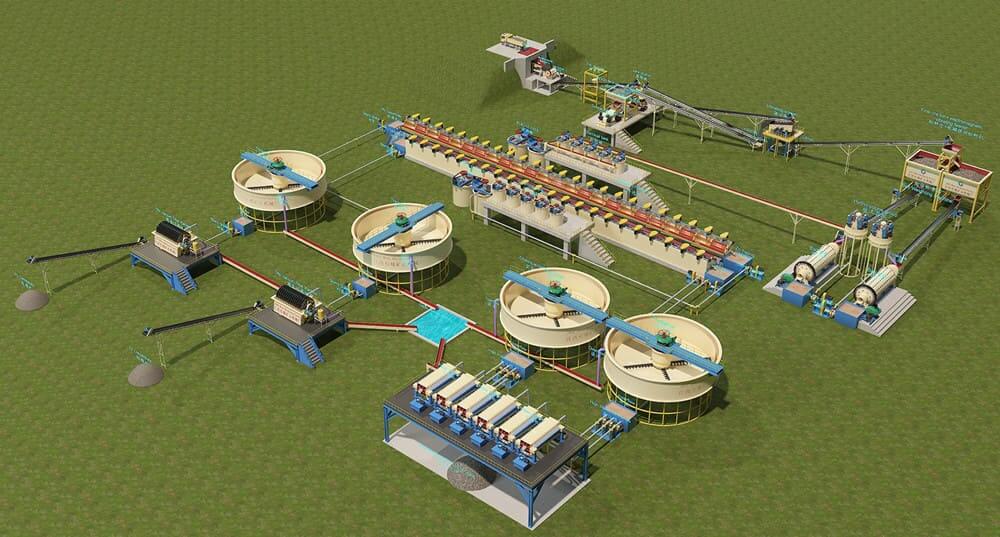
China’s lead-zinc ore resources are mostly sulfide lead-zinc ores and a few oxidized lead-zinc ores. There are many poor ores and few rich ores. In the flotation process, the treatment method for oxidized lead-zinc ore is usually to first sulfidize it. In the application process, the treatment method of lead first and then zinc is often adopted. The flotation process also maintains the order of sulfur first, then oxygen. The direct priority flotation process has the advantages of a simple principle, convenient operation, and low cost, making it suitable for production in small industrial plants. The mixed flotation process is suitable for ores with dense mineral clusters. It has requirements for subsequent process work and requires a certain investment. The iso-flotation process was developed based on the above two flotation processes. This method avoids the influence of physical and chemical phenomena and has the following advantages. First, in the iso-floatable area where lead is mainly selected, the floating amount of zinc reaches approximately 30%, and the floating amount of sulfur reaches approximately 55%. The iso-flotation process does not require corresponding additives and has a certain degree of suppression ability. Therefore, the lead content in the lead concentrate can reach over 70%, zinc reaches 3%, and sulfur reaches 16%, and the other contents are also very stable.
Current Status and Development of Lead-Zinc Ore Dressing Technology and Equipment
As an important component of lead-zinc ore dressing technology, équipement de traitement des minerais is of great significance to the acquisition of mineral processing indicators and the development of mineral processing technology. In the context of rapid social development, when reforming and developing, established mineral mining, flotation, and processing enterprises need to improve and optimize their equipment and facilities based on the original equipment technology and keep abreast of the innovative ideas and application results of mineral processing technology of other domestic and foreign enterprises, learn from them, and optimize them for their development.
Core Equipment Upgrade
- Flotation Machine: Aerated mechanical stirring type (such as KYF type) is the mainstream, and large-scale (single tank volume up to 320m³) reduces unit energy consumption.
- Classification Equipment: Hydrocyclone is combined with a high-frequency fine screen to improve the classification accuracy to -0.038 mm, accounting for more than 85%.
Intelligent Transformation
- An online ore particle size analysis system based on machine vision to adjust grinding parameters in real time.
- Digital twin technology is applied to flotation process simulation, and the fault prediction accuracy is increased to 90%.
Future Trends
1. Short-process equipment integration: For example, integrated “grinding-flotation” modules reduce intermediate steps.
2. New energy adaptation: Electric flotation columns combined with photovoltaic energy storage systems reduce carbon emissions.
The Future of Lead-Zinc Ore Beneficiation
The lead-zinc beneficiation sector stands at a technological inflection point, where innovative processing solutions are delivering unprecedented efficiency while addressing critical environmental concerns. Modern advancements have demonstrated that:
- Dual Benefit Solutions – Next-generation reagent systems and smart flotation circuits now simultaneously boost recovery rates (typical increases of 3-8%) while reducing chemical consumption by 15-25%
- Digital Transformation – AI-powered process control systems and machine vision monitoring are achieving >90% operational consistency, significantly reducing human error in complex mineral separation processes
- Sustainable Processing – Emerging technologies like electric flotation columns coupled with renewable energy integration are proving that environmental responsibility and production economics aren’t mutually exclusive
The roadmap ahead focuses on three critical areas:
- Refractory Ore Breakthroughs – Developing selective collectors for carbonaceous and ultra-fine disseminated ores
- Closed-Loop Systems – Implementing zero-discharge water recycling and tailings valorization
- Cognitive Plants – Deploying self-optimizing systems using real-time mineralogical scanners and predictive analytics
For mining operations, the message is clear: adopting these integrated technological solutions isn’t just about maintaining competitiveness—it’s about future-proofing operations in an era where mineral efficiency and sustainability metrics directly impact market valuation and social license to operate.
As processing thresholds continue to rise, the operations that will thrive are those leveraging these advancements to turn mineral complexity into competitive advantage while meeting stringent ESG benchmarks.
DERNIERS PRODUITS
-

Inclined Vibrating Screen
The inclined vibrating screen is a simple and eff…
-
High Temperature & Pressure Gold Desorption Electrolysis System
High-Temperature & Pressure Gold Desorption Elect…
-
Normal Temperature & Pressure Gold Desorption Electrolysis System
The normal temperature & pressure gold desorption…


DERNIÈRES NOUVELLES
- Modern Cyanide Residue Treatment Technologies for Gold Processing
- Traditional De-cyanidation Technologies for Gold Cyanide Residues
- Shaking Table, 3-Disc Dry Magnetic & Electrostatic Separator for W-Sn-Ta-Nb
- Mineral Analysis: The Foundation for Successful Mineral Processing Projects
- What Is Over-Grinding and How Can It Be Prevented?
 English
  French
  Spanish
  Portuguese
  Indonesian