



Magnetic minerals play a crucial role in traitement des minerais and various industrial applications. Understanding their classification and properties is essential for efficient separation and utilization. Among magnetic minerals, strongly magnetic minerals are particularly important due to their unique characteristics and ease of separation.
Classification of Magnetic Minerals
Minerals can be effectively classified based on their specific magnetic susceptibility (X), which measures how strongly a material becomes magnetized in a magnetic field. This classification system helps determine the appropriate magnetic separation techniques for different minerals.
1. Strongly Magnetic Minerals (X > 4.0×10^-5 m³/kg)
Definition and Characteristics
Strongly magnetic minerals are those with high specific magnetic susceptibility that can be easily recovered using weak magnetic separators with magnetic field strengths ranging from 480 to 1,840 kA/m. These minerals exhibit ferrimagnetic properties, making them highly responsive to magnetic fields.
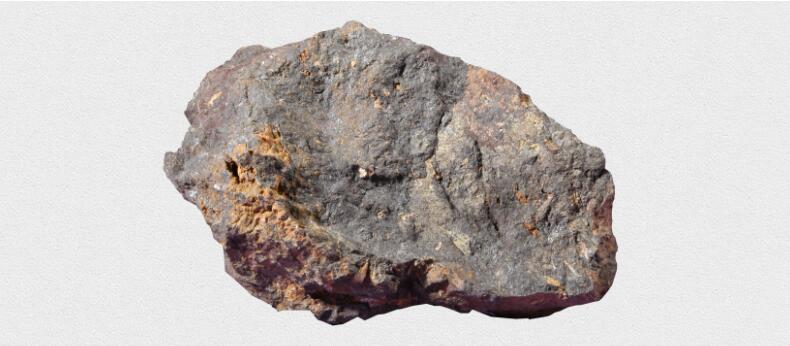
Major Strong Magnetic Minerals
Magnetite (Fe₃O₄)
- The most common and economically important strong magnetic mineral
- Black in color with metallic luster and often an octahedral crystal habit
- Comprises about 72% iron by weight, making it prized as an iron ore
- Forms through both igneous and metamorphic processes
Maghemite (γ-Fe₂O₃)
- A magnetic iron oxide with similar properties to magnetite
- Forms from oxidation of magnetite or dehydration of lepidocrocite
- Important in iron ore deposits and surface environments
Titanomagnetite (Fe₃₋ₓTiₓO₄)
- Solid solution series between magnetite and ulvöspinel
- Contains titanium substitutions in the crystal structure
- An important source for both iron and titanium extraction
- Magnetic properties vary with titanium content
Pyrrhotite (Fe₁₋ₓS)
- Iron sulfide mineral with variable composition
- Exhibits ferrimagnetism in its monoclinic form
- An important source of sulfur and sometimes a nickel byproduct
- Commonly associated with nickel and copper deposits
Zinc-Ferrite (ZnFe₂O₄)
- Member of the spinel mineral group
- Contains both zinc and iron in its structure
- Occurs in some zinc-rich ore deposits
- Sometimes targeted when zinc is the primary economic mineral
Practical Applications of Strong Magnetic Minerals
- Iron Ore Processing: Magnetite accounts for a significant portion of global iron production.
- Industrial Minerals: Used in the manufacturing of ferrites for electronics.
- Environmental Applications: Employed in water treatment and pollution control.
- Geophysical Exploration: Serve as indicators in magnetic surveying.
- Biomedical Uses: Certain forms are used in medical imaging and drug delivery.
Separation Technology
These strong magnetic minerals can be effectively separated using:
- Low-intensity magnetic separators (LIMS)
- Drum separators
- Wet or dry magnetic separation techniques
⇒ Combien de types de séparateurs magnétiques ??
2. Medium Magnetic Minerals (X = 1.26×10^-7 to 7.5×10^-6 m³/kg)
Definition and Characteristics: Medium magnetic minerals require stronger magnetic fields for separation, typically between 480-1,840 kA/m. This group includes:
- Iron-manganese minerals (hematite, specularite, siderite, etc.)
- Titanium, chromium, and tungsten-bearing minerals (ilmenite, chromite, wolframite)
- Many rock-forming minerals (biotite, chlorite, garnet)
3. Weak Magnetic Minerals (X < 1.26×10^-7 m³/kg)
Definition and Characteristics: These minerals are not economically recoverable using current magnetic separation technology. They include:
- Many metallic minerals (molybdenite, galena, gold)
- Most non-metallic minerals (coal, sulfur, diamond)
- Common rock-forming minerals (quartz, feldspar)
Factors Affecting Magnetic Classification
It’s important to note several key considerations:
- Technological Limitations: Current classification boundaries may change with advances in magnetic separation technology.
- Mineral Characteristics: Particle size and shape significantly affect magnetic behavior.
- Practical Measurement: Actual magnetic susceptibility measurements are necessary for precise classification.
- Regional Variations: Classification standards may vary between countries and research institutions.
Conclusion
Strongly magnetic minerals like magnetite, pyrrhotite, and maghemite play a vital role in industrial applications due to their high magnetic susceptibility and ease of separation. By classifying minerals based on their magnetic properties, we can optimize separation techniques for efficient resource extraction. Low-intensity magnetic separators (LIMS) work effectively for these minerals, while medium and weakly magnetic counterparts demand different approaches.
Advancements in magnetic separation technology may refine these classifications further, improving mineral processing efficiency. Understanding these distinctions ensures better resource management, enhances industrial applications, and supports sustainable mining practices. Whether in iron ore beneficiation, environmental remediation, or material science, strongly magnetic minerals remain indispensable across multiple fields.
Interested in practical applications? Explore magnetic separators’ types and functions to see how these minerals are processed in real-world scenarios.
DERNIERS PRODUITS
-

SFM-8 Lab Grinder
【Max. Power Consumption】 150W 【Morta…
-
Cyclosizer
【Feeding Capacity】< 100g/time 【Feeding …
-
JKZ/2JKZ Mine Shaft Sinking Hoist
【Power Source】Electric Motor Drive 【Motor Spee…


 English
  French
  Spanish
  Portuguese
  Indonesian