


solutionbg

50TPH Rock Diamond Processing Plant

50TPH Rock Diamond Processing Plant

Release time:16 October 2025

Diamond is one of the hardest naturally occurring minerals (10 on the Mohs scale) and forms deep within the Earth’s mantle under high pressure and temperature. It consists of pure carbon atoms arranged in a cubic crystal structure, giving it exceptional durability and brilliance. Diamonds are predominantly found in kimberlite pipes, volcanic rock formations that bring them to the surface via explosive eruptions.

Key Properties

  • Extreme Hardness – Resistant to scratching, ideal for industrial cutting tools
  • High Thermal Conductivity – Used in electronics & heat dissipation
  • Optical Brilliance – Superior light refraction makes it valuable in jewelry
  • Rare Formation – Requires specific geological conditions

Uses

  • Gemstones (after cutting/polishing)
  • Industrial abrasives & drill bits
  • High-performance semiconductors
  • Precision cutting & grinding tools

Mining methods vary based on deposit type (kimberlite pipes, alluvial deposits), with open-pit mining being common for primary sources. Synthetic diamonds (HPHT & CVD methods) are increasingly used for industrial applications due to cost efficiency.

Rock Diamond Processing

Since most natural diamonds occur in kimberlite or lamproite pipes, processing involves multiple stages to extract diamonds from the hard rock matrix. Here’s a detailed breakdown of the conventional processing methods.

1. Crushing & Scrubbing

  • Primary Crushing: Large chunks of ore (~1m) are reduced to ~150mm using jaw crushers or gyratory crushers.
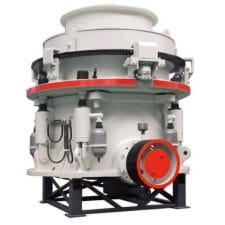
  • Secondary Crushing & Scrubbing: Further crushed (~50mm) in cone crushers or HPGRs (High-Pressure Grinding Rolls).
  • Attrition Scrubbing: Breaks down clay & soft materials, freeing diamond-bearing gravel.


2. Screening & Density Separation

  • Vibrating Screens: Separate finer material (<10-25mm) for further processing.
  • Dense Media Separation (DMS):
    • Uses a ferrosilicon slurry (density ~3.3 g/cm³) to float lighter gangue minerals, while diamonds & dense minerals sink.
    • Recoverable diamonds are typically +1mm (larger stones may bypass DMS).

3. X-Ray Sorting (XRT) & Optical Fluorescence

  • Automated XRT Sorters: Detect diamonds based on atomic density; diamond reflects X-rays differently than the surrounding rock.
  • UV Fluorescence Sorting: Some diamonds fluoresce under UV light, aiding recovery.


4. Final Recovery & Hand Sorting

  • Grease Belt Extraction: Diamonds stick to grease-coated belts while waste particles wash away (works due to the diamond’s hydrophobic nature).
  • Manual Inspection: Trained sorters pick remaining diamonds from concentrate.


5. Kimberlite Tailings Management

  • Waste rock is stored responsibly to prevent landslides & environmental contamination.
  • Some mines reprocess tailings with advanced technologies (laser sorting, ultra-fine recovery).

50TPH Rock Diamond Processing Plant

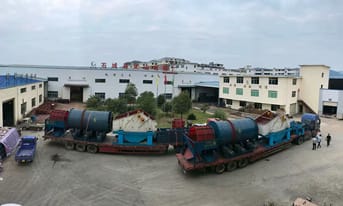
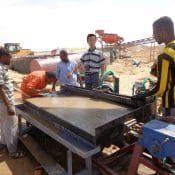
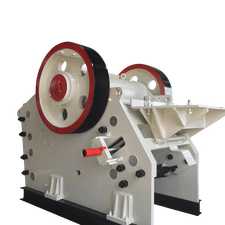
The complete system is a 50 tph rock diamond ore processing plant, configured with a vibrating feeder, jaw crusher, belt conveyor, high-frequency vibrating screen, and jig separator.

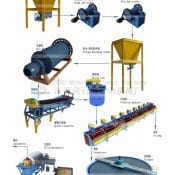
50TPH Rock Diamond Processing Plant Flowchart

The Raw Ore Information is As Below

1. Processing capacity is 50 tons per hour

2. Diamond size range is 2-25mm

3. Over 70mm of rock is waste stone


The Whole Process is As Below

1. Use an excavator or loader to send raw ore into the raw ore material hopper, through a vibrating feeder, and evenly feed the No.1 jaw crusher. The vibrating feeder with grizzly bar, gap 70mm, so over 70mm rock will be sent to the waste stockpile by belt conveyor.

2. The discharged ore from the No.1 jaw crusher through the belt conveyor goes to a high-frequency vibrating screen. The vibrating screen has a two-layer screen, mesh sizes 2mm and 25mm, screening out 0-2mm, 2-25mm, and over 25mm. 0-2mm go to the slurry tank, over 25mm go to the No.2 jaw crusher for reprocessing by belt conveyor, and the discharged ore from the No.2 jaw crusher goes to the high-frequency vibrating screen by belt conveyor.

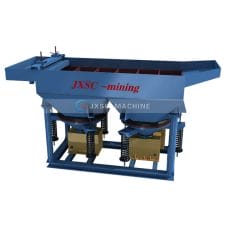
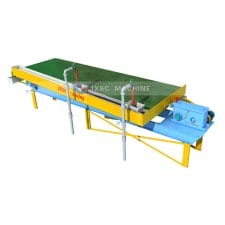
3. 2-25mm from the high-frequency vibrating screen go to a transit hopper, through a guiding chute, and go to the jig separator. Jig separator recovers diamonds by the gravity principle.

The whole setup has the feature of high recovery and affordable cost, very suitable for any type of rock diamond ore with less than 50tph processing capacity.

Contact Us Now

If you have some questions about our products, please feel free to fill out the form below, and we will contact you within 24 hours. Rest assured that we won't reveal your information to anyone.

    Free Consultation With Our Sales And Engineering Teams


    • Your information is safe. Check our privacy notice for more details.

    • We do not offer jobs and buy or sell minerals. We ONLY sell mining equipment!

    • We have no interest in cooperation and investment!

    Privacy Overview
    logo

    This website uses cookies so that we can provide you with the best user experience possible. Cookie information is stored in your browser and performs functions such as recognising you when you return to our website and helping our team to understand which sections of the website you find most interesting and useful.

    Strictly Necessary Cookies

    Strictly Necessary Cookie should be enabled at all times so that we can save your preferences for cookie settings.

    3rd Party Cookies

    This website uses Google Analytics to collect anonymous information such as the number of visitors to the site, and the most popular pages.

    Keeping this cookie enabled helps us to improve our website.