
casebg

200TPD Rock Gold CIL Processing Plant in Burkina Faso

200TPD Rock Gold CIL Processing Plant in Burkina Faso

Published Date:27 October 2026

JXSC has supplied a complete set of mineral processing equipment and all necessary accessories for a 200-ton-per-day Rock Gold CIL (Carbon-in-Leach) Processing Plant to our client in Burkina Faso. The client is a well-established local gold mining company with an experienced engineering team; they were able to handle the plant installation independently, eliminating the need for our engineers to provide on-site installation services.

To ensure successful project execution, we provided:

  • Detailed Process Flow Design – Optimized for Burkina Faso’s rock gold ore characteristics
  • Comprehensive Foundation Construction Drawings – Including equipment layout and structural requirements
  • Complete Equipment Supply – All machinery and spare parts for the entire CIL process
Client’s Mine Situation

1. The client required a processing capacity of 200 tpd.
2. Maximum feeding size: 340 mm
3. Ore type: Hard Rock Gold

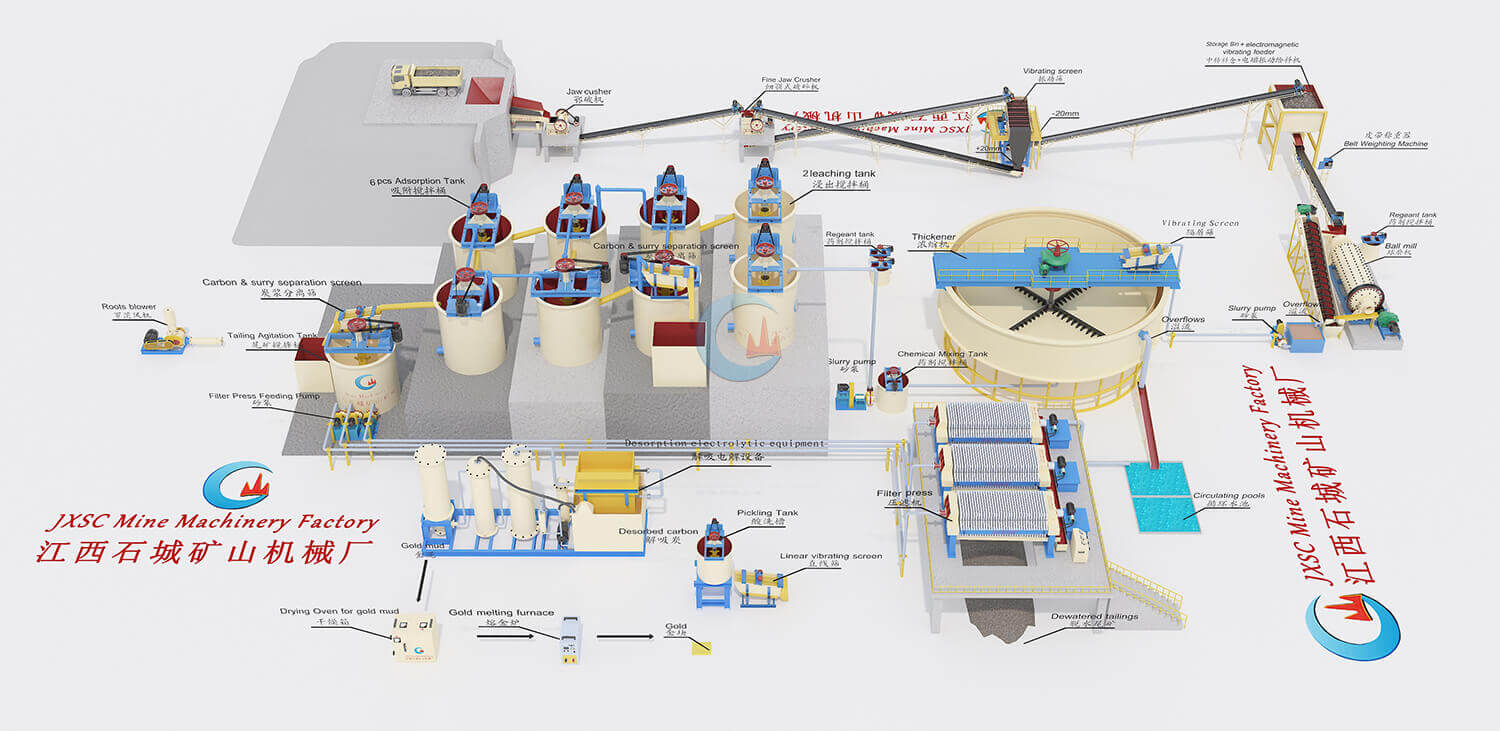
200TPD Rock Gold CIL Processing Plant in Burkina Faso Flowchart

Flowchart of 200TPD Rock Gold CIL Processing plant

Flowchart Detailed Explanation

Feeding and Crushing System (8–10 hours per day)

  1. A loader or excavator feeds the raw gold ore into the raw material hopper. A chute feeder installed beneath the hopper feeds the ore evenly into the jaw crusher. The hopper can be constructed at the mine site according to the actual site conditions.
  2. The primary jaw crusher reduces the large rocks from a maximum size of 340 mm to below 100 mm. The crushed material is then transported by a belt conveyor to the secondary jaw crusher.
  3. The secondary jaw crusher further reduces the ore from approximately 60 mm to below 25 mm. The crushed material is then transported by a belt conveyor to a vibrating screen for size classification.
  4. Oversized material larger than 25 mm is returned to the secondary jaw crusher for further crushing, forming a closed-circuit crushing system. Material smaller than 25 mm is transported by a belt conveyor to the storage hopper before the ball mill.
  5. An electromagnetic vibrating feeder installed beneath the storage hopper feeds the 0–25 mm crushed ore evenly into the ball mill, ensuring stable feeding and providing a buffer between the crushing and grinding systems.

Grinding System (24 hours per day)

  1. The ball mill grinds the crushed ore into fine particles to liberate the gold contained within the rock.
  2. The ground slurry is discharged from the ball mill and transported to a spiral classifier for particle size classification.
  3. The coarse particles discharged from the bottom of the spiral classifier are returned to the ball mill for further grinding, while the fine particles overflow from the classifier and proceed to the next processing stage.
  4. The grinding system is designed to achieve a final particle size in which at least 90% of the classifier overflow passes through a 200-mesh screen (0.074 mm), helping to ensure sufficient gold liberation for subsequent leaching.

Leaching Pretreatment System (24 hours per day)

  1. The overflow slurry from the spiral classifier is pumped toward the thickener. Before entering the thickener, the slurry passes through a safety screen to remove unwanted coarse impurities. The undersized material flows directly into the thickener.
  2. Flocculant is added to the thickener to promote solid-liquid separation. The clarified overflow water is discharged into settling ponds, where further sedimentation takes place before the water is recycled for reuse in the processing plant.
  3. The thickener underflow, containing concentrated slurry, flows into a mixing tank, where the slurry is conditioned and prepared for the subsequent leaching process.
  4. A slurry pump transfers the conditioned slurry from the mixing tank into two pre-leaching tanks. The required chemicals are added according to the ore characteristics and process requirements to prepare the slurry for the subsequent gold leaching and adsorption stage.

Gold Leaching and Activated Carbon Adsorption System

  1. The pretreated slurry enters six double-impeller agitation adsorption tanks arranged in series.
  2. The required leaching chemicals and activated carbon are introduced into the tanks according to the process design. The slurry is continuously agitated to promote gold dissolution and adsorption.
  3. Roots blowers supply air to the agitation tanks where required by the process, helping maintain suitable operating conditions for leaching and adsorption.
  4. Gold dissolves into the leach solution and is subsequently adsorbed onto the activated carbon. The gold-loaded carbon is collected for the subsequent desorption and electrolysis stage.

Gold-Loaded Carbon Desorption and Electrolysis System

  1. The gold-loaded activated carbon is transferred to a safety screen to separate the carbon from the process slurry and prevent unwanted materials from entering the desorption system.
  2. The screened gold-loaded carbon is processed in a normal-temperature, normal-pressure desorption and electrolysis system to recover the gold from the activated carbon.
  3. The recovered gold-bearing material is collected as gold mud and transferred to a drying oven to remove moisture.
  4. The dried gold mud is fed into a gold smelting furnace, where it is melted and cast into gold bars.

Activated Carbon Washing System

  1. Used activated carbon is transferred into a pickling and mixing tank.
  2. Hydrochloric acid is added to the tank to soak and pickle the activated carbon, removing mineral deposits and other materials that block the pores on the carbon surface.
  3. After washing and appropriate rinsing or conditioning, the activated carbon is prepared for reuse in the leaching and adsorption system.
  4. A drying kiln is provided to dry the activated carbon when required by the selected process.
  5. Activated carbon can generally be washed and reused approximately three to four times, depending on its condition, adsorption performance, and regeneration requirements.

Tailings and Water Recycling System

  1. Tailings discharged from the six adsorption agitation tanks are transported to a linear vibrating screen to remove large impurities and coarse debris.
  2. The undersized slurry from the vibrating screen flows into a tailings mixing tank, where it is mixed and adjusted to achieve suitable slurry conditions for filtration.
  3. A filter feed pump transfers the slurry from the mixing tank into filter presses for solid-liquid separation.
  4. The filter presses separate the tailings solids from the water. The recovered water is directed to settling ponds for further sedimentation before being recycled for reuse in the processing plant.
  5. The filtered tailings cake is collected for appropriate storage or disposal in accordance with the site design and applicable environmental regulations.
  6. If a tailings water recycling system is not installed, the tailings and process water must still undergo appropriate cyanide detoxification before discharge or disposal. A suitable treatment method, potentially involving calcium hypochlorite-based reagents, must be selected according to the cyanide concentration, pH, water chemistry, and applicable environmental requirements. Cyanide-bearing tailings must not be discharged to a tailings dam or the environment without adequate treatment and verification of compliance.

Important note: Cyanide detoxification requires carefully controlled operating conditions. Bleaching powder must not be added indiscriminately to cyanide-containing slurry, particularly under acidic conditions, because toxic cyanogen chloride gas may be released. The detoxification system should be designed and operated by qualified personnel with appropriate process controls and monitoring.

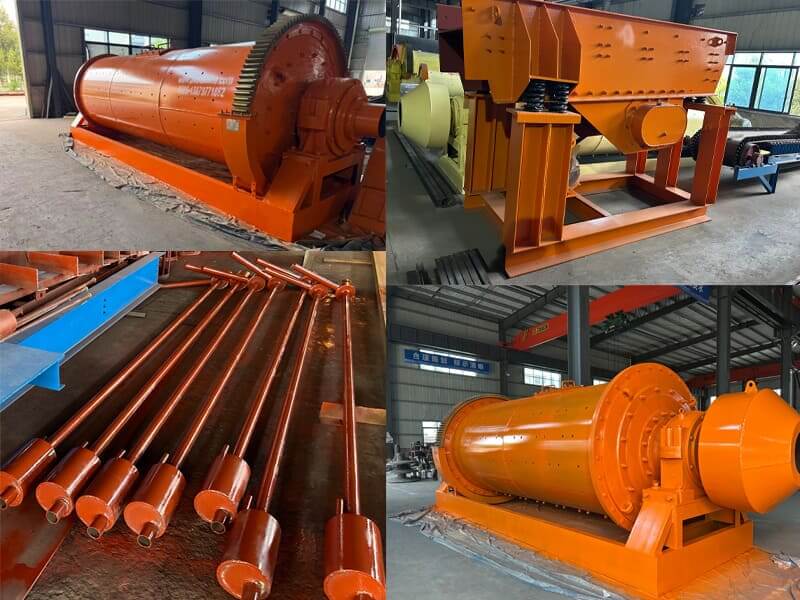
200TPD Rock Gold CIL Processing Plant in Burkina Faso

Main Machines & Accessorie

 No. Product Name Model QTY(set)
1 Hopper 10 m3 1
2 Vibrating Feeder DN3000*800 1
3 Jaw Crusher PE400*600, PEX250*1000 Each for 1
4 Belt Conveyor 650*15m, 650*17m, 650*14.5m, 650*30m, 650*12.5m Each for 1
5 Vibrating Screen YD1530 1
6 Electromagnetic Vibrating Feeder GZ2 1
7 Belt Weigher ICB-PLR-650 1
8 Grate-Discharge Ball Mill MQZ 1845, with 15 tons of steel balls 1
9 Spiral Classifier FG-15 1
10 Slurry Pump 65ZJ-I-A30 2
11 Hydrocyclone Cluster FX-200 2
12 Thickener Φ12000 mm 1
13 Linear Vibrating Screen 400×1500 mm 4
14 Mixing Tank Φ1500mm*1500mm 1
15 Reagent Mixing Tanks RJ-1000 3
16 Reagent Pump   1
17 Dual-impeller leaching tank Φ4000*4500mm 1
18 Dual-impeller leaching and adsorption tank Φ4000*4500mm 1
19 Tailings agitation tank Φ3500*4000mm 1
20 Roots Blower   1
21 Carbon Lifter Φ108 1
22 Carbon Screen   6
23 Electrolytic Equipment 500 kg/batch 1
24 Gold Sludge Drying Oven 101-2 1
25 Gold Melting Furnace 25 A 1
26 Feed Pump for Plate-and-Frame Filter Press 50ZJ-I-A33 3
27 Plate-and-Frame Filter Press 150㎡ 3
28 Conical Mixing Tank   1
29 Pickling Tank φ1500 1
30 Slurry Pump 3/2 inch 1
31 Large Water Pump 3-inch 1
32 Return Tank Water Pumps IS65-50-160 2
33 Diesel generator 400 KW 3

Production, Shipping & On-site

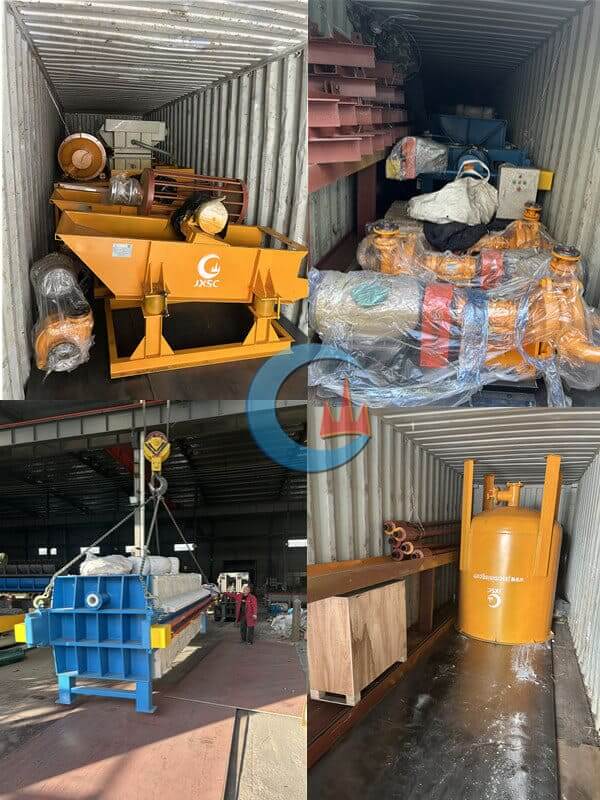
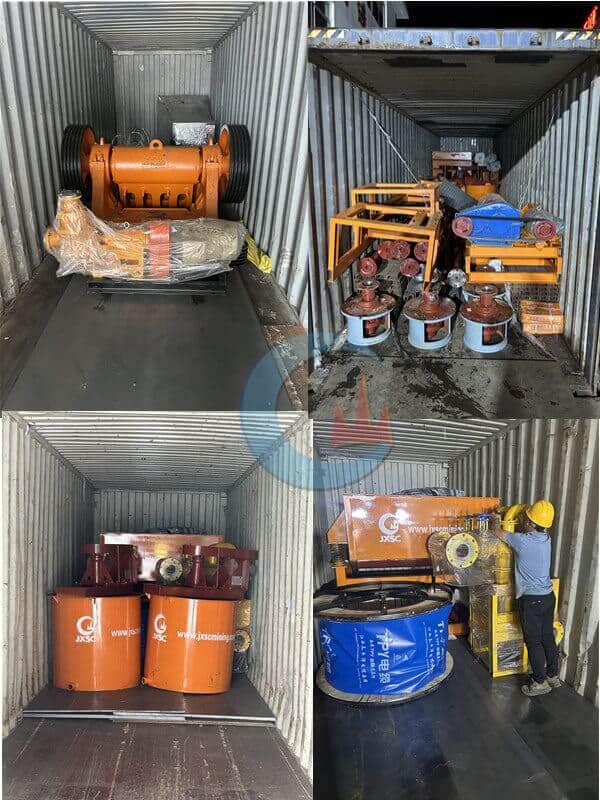
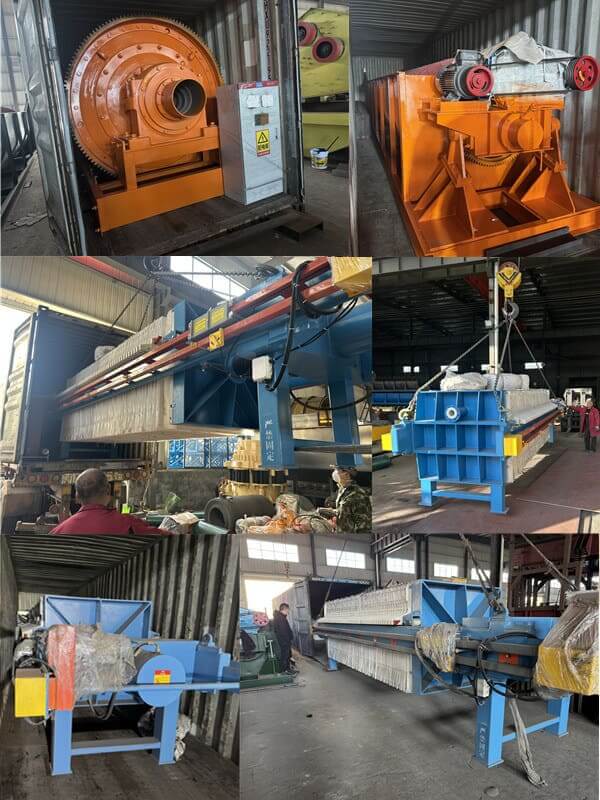
200TPD Rock Gold CIL Processing Plant in Burkina Faso Deliveryjpg

JXSC is a professional mining equipment manufacturer & mining ore solution expert. It has many successful cases such as gold plants, diamond solutions, etc., If you need such a service please contact us.

Contact Us Now

If you have some questions about our products, please feel free to fill out the form below, and we will contact you within 24 hours. Rest assured that we won't reveal your information to anyone.

    Free Consultation With Our Sales And Engineering Teams


    • Your information is safe. Check our privacy notice for more details.

    • We do not offer jobs and buy or sell minerals. We ONLY sell mining equipment!

    • We have no interest in cooperation and investment!

    Privacy Overview
    logo

    This website uses cookies so that we can provide you with the best user experience possible. Cookie information is stored in your browser and performs functions such as recognising you when you return to our website and helping our team to understand which sections of the website you find most interesting and useful.

    Strictly Necessary Cookies

    Strictly Necessary Cookie should be enabled at all times so that we can save your preferences for cookie settings.

    3rd Party Cookies

    This website uses Google Analytics to collect anonymous information such as the number of visitors to the site, and the most popular pages.

    Keeping this cookie enabled helps us to improve our website.