



In the design of ore dressing plants, the selection and design of mineral processing equipment are determined based on the materials to be processed in each operation and the corresponding product quality proposed in the design process flow, taking into account the mechanical and physical properties of the materials, particle size composition, equipment performance, and manufacturing quality, the production quotas of similar enterprises, and the working system of the ore dressing plant.
What Are The Principles For Equipment Selection?
Equipment Selection General Principles
- The selected equipment should be adapted to the production capacity of the ore dressing plant, the characteristics of the design process flow, and local conditions.
- The selected equipment should be technologically advanced and reliable in performance, ensuring production and leaving room for operation and maintenance.
- According to the scale of the ore dressing plant, select the corresponding equipment as large as possible to save land and investment, and improve labor and efficiency.
- Investigate and study the main equipment, and select after comparing multiple technical and economic schemes. The technical and economic comparison indicators of the main equipment include equipment weight, installed power, equipment investment, area and volume of equipment installed in the workshop, etc.
- Pay attention to the auxiliary equipment while selecting the main equipment. The selection and design of auxiliary equipment are related to the smooth progress of the trial run and production. It is necessary to be as thoughtful as possible to avoid modification and replacement during the trial run and production, which will affect the official production period.
- When selecting equipment in each series, the specifications and models of the same type of equipment should be as similar as possible to facilitate maintenance, and replacement of parts and reduce the storage of spare parts.
- Pay attention to energy saving and select high-efficiency energy-saving equipment.
Principles for Selecting Non-metallic Mineral Processing Equipment
- Non-metallic mineral processing plants mainly select special equipment in the design based on product requirements, such as crystal size, length, etc.
- The crushing of asbestos ore mainly considers the use of impact force to crush the ore along the joints. This crushing equipment must have this feature, such as impact crusher and hammer crusher.
- Crushing and grinding for graphite ore, consideration should be given to avoiding the crushing of large flake graphite, and a grinding mill or ball mill should be selected; if a ball mill is selected, the speed should not be too high, and the ball should be loaded appropriately.
- Wollastonite has a needle-like structure similar to asbestos, but it is difficult to crush. At present, the United States has developed special equipment for crushing wollastonite. The crushed product is a needle-like powder with an aspect ratio of 7:1 to 8:1.
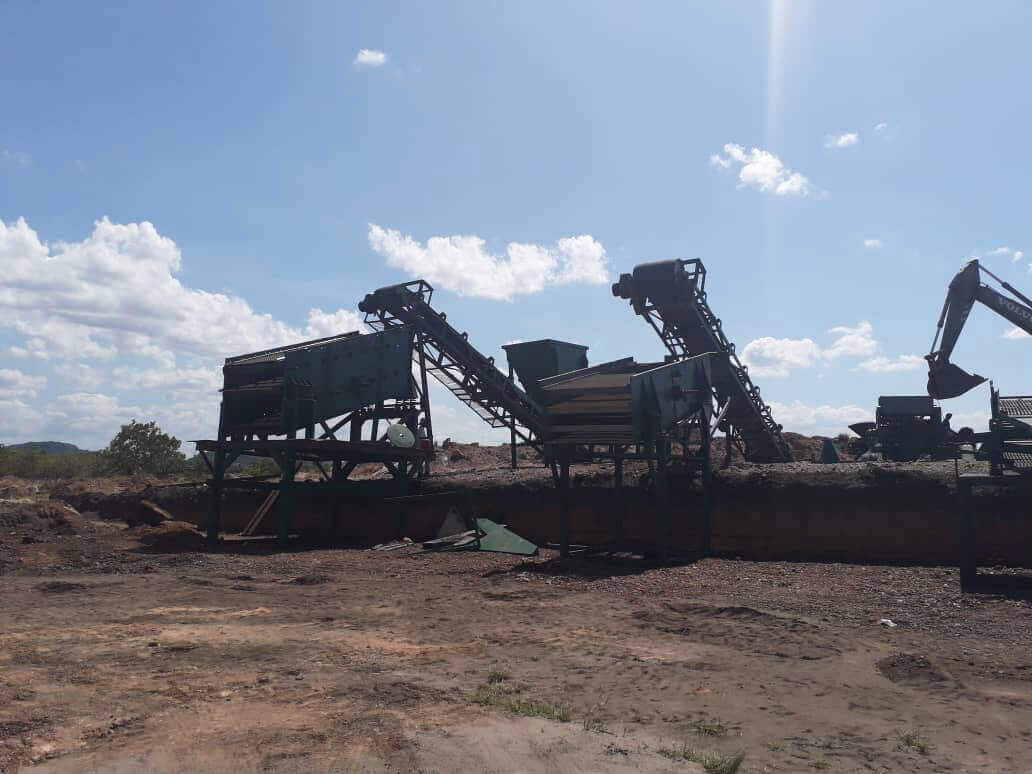
What Should Be Paid Attention to When Selecting Equipment?
1. Crushing System
The main equipment and auxiliary equipment of the crushing system should be adapted to the maximum processing capacity of the crusher.
To ensure production and maintenance, and give full play to the production capacity of medium and fine crushing, large-scale ore dressing plants often have intermediate ore piles between coarse, medium, and fine crushing, and sometimes intermediate ore bins are also set between medium and fine crushing. In this case, the auxiliary equipment between the intermediate ore piles should be calculated according to the maximum production capacity of coarse crushing. The auxiliary equipment after the intermediate ore pile should be adapted to the system production capacity of medium and fine crushing. If an intermediate ore bin is set up between medium and fine crushing, the auxiliary equipment of the fine crushing workshop should be adapted to the system production capacity of the fine crusher.
2. Separation System
The production capacity of the main equipment and auxiliary equipment of the main workshop of the separation system should be adapted to the processing capacity of the grinding mill.
3. Dehydration System
The production capacity of the main and auxiliary equipment of the dehydration system should generally be compatible with the grinding and separation capacity.
Generally, adopt three-stage dehydration or two-stage dehydration (i.e., concentration-filtration-drying or concentration-filtration). In cold areas, in order to prevent the concentrate from freezing during transportation or when the smelter has special requirements, drying operations must be set up. If the filtration operation uses a filter press or adds filter aids to reduce the moisture content of the concentrate, the drying operation should be omitted as much as possible to save fuel and prevent environmental pollution.
Some non-ferrous metal concentrators have a small amount of concentrate (such as molybdenum concentrate, etc.). The dehydration workshop is intermittent. The concentrate is generally stored in the concentrator, and the filtration is usually a one-shift operation. Therefore, its auxiliary equipment can be adapted to the filter.
4. Separation Workshop Series
The number of separation workshop series should be determined by comparing the schemes according to the equipment conditions. It is best to consider using large equipment with fewer series in the design. The advantages are: reducing maintenance; simplifying the automatic control facilities of the mineral processing process; improving labor and peace efficiency; and reducing the floor space. It also has the advantage of being convenient for centralized dosing for flotation plants. 1 to 2 series are preferred for small and medium-sized mineral processing plants. The number of equipment series for large or extra-large mineral processing plants can be determined through research and technical and economic comparisons based on whether the construction plan is phased or not or whether different ore types are processed.
5. Material Measurement Data
The data of some materials required for equipment selection are as follows:
- When designing, some equipment selection requires mineral ores measurement data for calculation. Such as ore density, loose density, grinding difficulty, and Bond Working Index. The selection and calculation of autogenous mills or semi-autogenous mills requires autogenous and semi-autogenous semi-industrial test data. A semi-industrial test of autogenous and semi-autogenous mills requires 25 to 50 tons of representative ore samples, with a maximum ore particle size of 200 mm (8 inches), and the test uses an autogenous mill with a diameter of 1.83 meters (6 feet).
- The concentration and dehydration of concentrates and tailings require sedimentation test data. If flocculants are added, sedimentation test comparison data with and without flocculants are required to select the thickener. The selection and calculation of the filter requires a filtration test and filter cake moisture data. If a filter press is used, filter press test data is required.
- Equipment tests and production capacity data are required when using new equipment or special equipment.
- The selection of sintering and briquetting equipment requires sintering and briquetting test data.
Selecting and designing equipment for ore dressing plants requires a thorough understanding of the ore characteristics, equipment selection principles, careful process selection, each stage’s precautions, etc., By following these steps, you can get efficient and effective mining equipment for ore dressing plants.
LATEST PRODUCTS
-

Inclined Vibrating Screen
The inclined vibrating screen is a simple and eff…
-
High Temperature & Pressure Gold Desorption Electrolysis System
High-Temperature & Pressure Gold Desorption Elect…
-
Normal Temperature & Pressure Gold Desorption Electrolysis System
The normal temperature & pressure gold desorption…


LATEST NEWS
- Modern Cyanide Residue Treatment Technologies for Gold Processing
- Traditional De-cyanidation Technologies for Gold Cyanide Residues
- Shaking Table, 3-Disc Dry Magnetic & Electrostatic Separator for W-Sn-Ta-Nb
- Mineral Analysis: The Foundation for Successful Mineral Processing Projects
- What Is Over-Grinding and How Can It Be Prevented?
 English
  French
  Spanish
  Portuguese
  Indonesian