



Abstract
Vanadium is a vital strategic metal characterized by high strength, corrosion resistance, high-temperature stability, and excellent redox properties; it is widely utilized in sectors such as iron and steel, aerospace, chemicals, energy storage, catalysis, and specialty materials. In nature, vanadium rarely exists in its elemental form but rather occurs in association with elements such as iron, titanium, lead, and copper; it is primarily extracted from vanadium-titanium magnetite, stone coal, and other vanadium-bearing minerals.
From the perspective of resource utilization, the development of vanadium ore involves far more than simple mining; it encompasses a series of processes including crushing, grinding, beneficiation, roasting, leaching, precipitation, and refining. The importance of vanadium resources has grown significantly with the development of industries such as high-strength steel manufacturing and all-vanadium redox flow batteries. This article provides a systematic overview of vanadium ore, covering its fundamental properties, physicochemical characteristics, primary minerals, resource distribution, and the processes involved in beneficiation and crushing.
Vanadium Introduction
What is Vanadium?
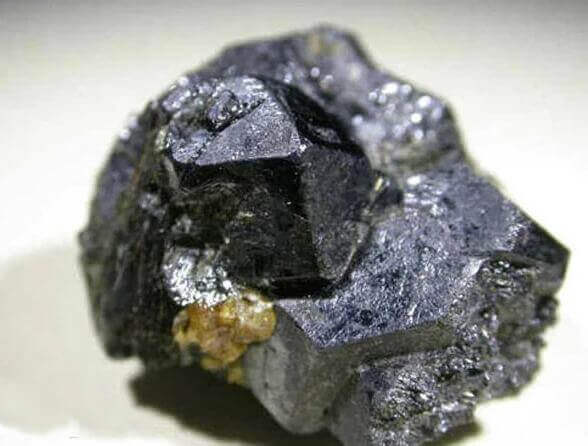
Vanadium is a chemical element with the symbol V and atomic number 23. It is a hard, silvery-grey, malleable transition metal. The elemental metal is rarely found in nature, but once isolated artificially, forming an oxide layer (passivation) somewhat stabilizes the free metal against further oxidation.
What is The Group Name for Vanadium?
Vanadium belongs to the family of elements called transition metal elements. Transition metal elements belong to the d-block of the periodic table (groups 3-12) and include other elements like Iron, Gold, and Titanium.
Is Vanadium a Rare Earth Element?
Vanadium is not a rare earth element. It is found in period 4 of group 5B of the periodic table and is therefore considered a transition metal element.
Is Vanadium Harmful to Humans?
Vanadium is considered toxic to humans in large doses. Higher doses might cause stomach discomfort, diarrhea, nausea, problems with the nervous system, and kidney damage. However, it’s also a trace mineral that is used in biological processes like bone growth and is a part of the human diet (0.01 mg per day)
Characteristics of Vanadium
Vanadium is a gray-white metal with good corrosion resistance and strength. It is often used as an alloy additive in steel smelting, which can significantly improve the strength, hardness, and wear resistance of steel. It is also used in batteries, chemicals, aerospace, and other fields.
What Are The Five Uses of Vanadium?
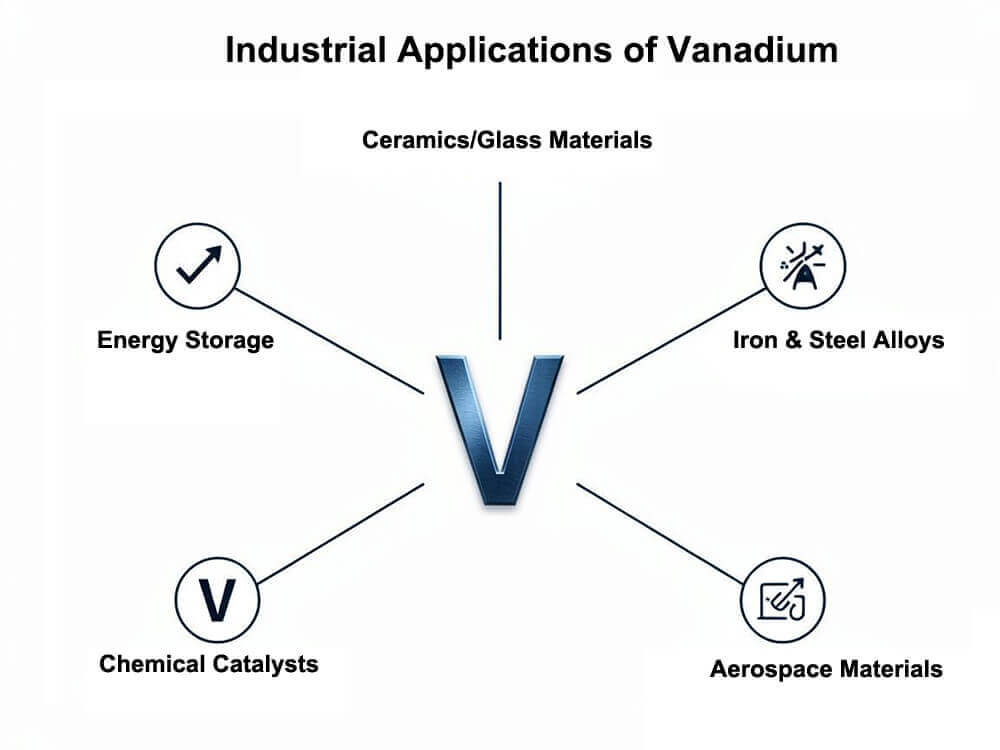
Vanadium has a wide range of industrial applications; the following five categories are the most representative:
- Iron, steel, and alloy materials: This is one of vanadium’s most important traditional applications. Vanadium is added to steel as a micro-alloying element to enhance strength, hardness, toughness, and wear resistance. It is used in materials such as high-strength low-alloy (HSLA) steel, tool steel, and high-speed steel.
- Aerospace materials: Vanadium forms high-performance alloys with elements such as titanium and aluminum. These materials offer high strength, heat resistance, and excellent strength-to-weight ratios, making them suitable for use in aero-engines, aircraft structures, and other high-performance equipment.
- Chemical catalysts: Vanadium pentoxide is a key industrial catalyst that plays a vital role in chemical processes such as sulfuric acid production. Additionally, vanadium compounds are used in various oxidation reactions.
- Energy storage: Vanadium plays a crucial role in all-vanadium redox flow batteries. This technology stores and releases electrical energy through redox reactions involving vanadium ions in different oxidation states; it is characterized by a long cycle life and the relative independence of capacity and power, making it suitable for certain large-scale energy storage applications.
- Ceramics, glass, and other specialty materials: Certain vanadium compounds serve as colorants or functional materials in industries such as ceramics, glass, and pigments. Vanadium is also used in specific electronic materials and specialty chemicals.
Vanadium Main Minerals
Vanadium is not found in its metallic form in nature but occurs in more than 60 minerals as a trace element in a range of rock types, including Vanadiferous Titanomagnetite, graphite, Vanadium Oxides, etc. It occurs most commonly in titaniferous magnetite deposits and uraniferous sandstone and siltstone, as well as bauxites and phosphorites. Vanadiferous Titanomagnetite is the most important vanadium-producing ore, containing a high vanadium content.
What Are The Sources of Vanadium Ore?
Vanadium ore typically contains minerals that are rich in vanadium. Some common minerals that contain vanadium include:
- Vanadinite: A mineral composed of vanadium, lead, and oxygen, often appearing as red hexagonal crystals.
- Carnotite: A yellow mineral containing vanadium, uranium, and potassium.
- Roscoelite: A green mica mineral that may contain vanadium.
- Patronite: A vanadium sulfide mineral.
- Magnetite: While primarily an iron ore, magnetite can contain significant amounts of vanadium, often used in steel production.
These minerals are typically mined for their vanadium content, which is used in various industrial applications, particularly in steelmaking and as a catalyst in chemical reactions.
Vanadium Resource Distribution
Vanadium is present in crude oil in the Caribbean basin, parts of the Middle East, and Russia, as well as in tar sands in western Canada. Coal in parts of China and the USA contains vanadium. The major vanadium resources are distributed in South Africa, China, Russia, the United States, Australia, and other places.
Who is The Biggest Producer of Vanadium?
In 2022, the country with the highest vanadium production was China, at nearly 78,100 metric tons. Russia ranked second, but by a wide margin, with a production volume of some 21,000 metric tons of the metal that year.
Does The US Produce Vanadium?
Secondary vanadium production continued in Arkansas, Ohio, and Pennsylvania, where processed waste materials (petroleum residues, spent catalysts, utility ash) were used to produce ferrovanadium, vanadium-bearing chemicals or specialty alloys, and vanadium pentoxide.
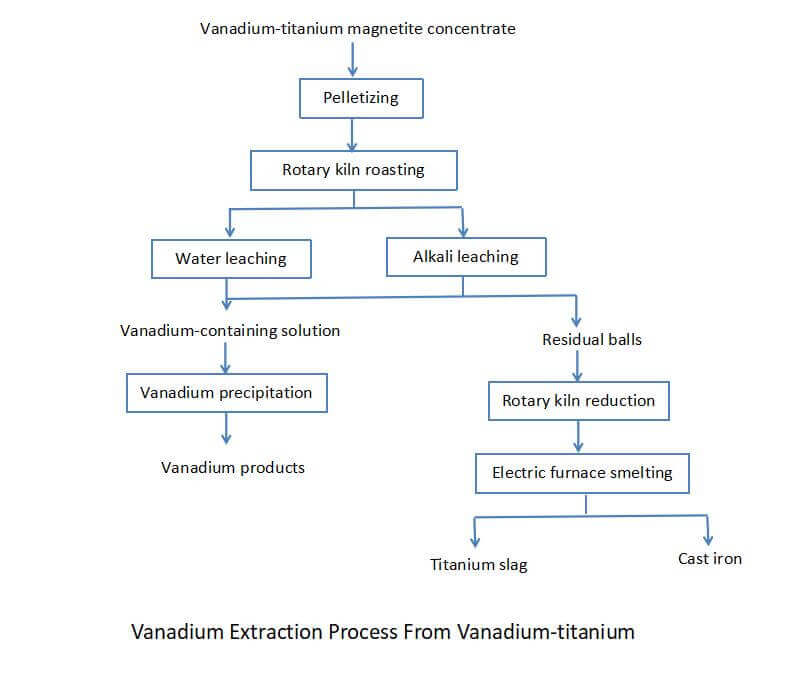
Vanadium Ore Beneficiation And Refining Process
- Ore crushing and grinding: The original vanadium ore is crushed and ground to reach a particle size suitable for subsequent processing.
- Flotation: Use flotation to separate useful minerals from non-useful minerals in the ore. Commonly used flotation agents can separate vanadium minerals from other minerals to form a flotation slurry.
- Flotation concentration: The flotation slurry is subjected to a multi-stage flotation process to gradually concentrate the vanadium-containing flotation foam and reduce the content of non-useful minerals.
- Extraction of vanadium concentrate: Extract vanadium-containing concentrate from the slurry after flotation concentration.
- Sintering of vanadium concentrate: Sinter the vanadium concentrate to convert it into oxide.
- Oxide reduction: The oxide is reduced to extract vanadium from the oxide to obtain metallic vanadium.
- Refining and purification: The extracted metallic vanadium is refined and purified to meet the purity requirements for commercial use.
Vanadium Crushing Process
The vanadium ore crushing process mainly includes the following steps:
- Raw material pretreatment: After vanadium ore is collected from the mine, it is first necessary to carry out preliminary processing of the raw materials, including removing impurities, classification, and grading, so that the subsequent crushing process can be carried out more efficiently.
- Primary crushing: The pretreated vanadium ore is sent to the primary crushing equipment, usually using a jaw crusher or a rotary crusher for coarse crushing, and the raw ore is initially crushed into smaller particles.
- Secondary crushing: The ore particles after primary crushing are usually still large and need to go through a secondary crushing process. The secondary crushing equipment can use a cone crusher, an impact crusher, or a roller crusher to further crush the particles into the required size.
- Fine crushing and grinding: Sometimes, vanadium ore needs to be further refined and ground to meet the requirements of the subsequent mineral processing process. Fine crushing can be carried out using equipment such as a ball mill or a mining mill to grind the ore into finer particles.
- Screening and classification: The crushed vanadium ore is screened and classified by screening equipment. The ore is divided into different particle size grades according to the particle size, preparing for the subsequent mineral processing.
The specific steps and equipment selection of the vanadium ore crushing process will vary according to the hardness and particle size requirements of the original ore and the needs of the subsequent mineral processing technology, and need to be specifically designed and optimized based on actual conditions.
Conclusion
Although vanadium is not a rare-earth element, it is a critical metal of significant industrial value and strategic importance. From high-strength steels to aerospace materials, and from chemical catalysts to all-vanadium redox flow batteries, vanadium has become integral to numerous sectors of modern industry.
Vanadium resources are characterized by diverse sources and multi-metal associations. Vanadium-titanium magnetite, stone coal, and various vanadium-bearing secondary resources collectively form the foundation of vanadium supply. Concurrently, the development of vanadium deposits is shifting from a singular focus on vanadium recovery toward the comprehensive utilization of multiple elements, including iron, titanium, and vanadium.
The processing of vanadium ore involves a series of interconnected stages: crushing, grinding, beneficiation, roasting, leaching, and refining. Selecting an appropriate process route—based on the specific mineral composition and the mode of vanadium occurrence—is essential for maximizing resource recovery rates and minimizing production costs.
Driven by the growth of high-performance steels, aerospace materials, and large-scale energy storage industries, the application value of vanadium resources warrants continued attention. Looking ahead, comprehensive resource utilization, low-carbon metallurgy, secondary resource recovery, and efficient vanadium extraction technologies will be key drivers of the vanadium industry’s development.
LATEST PRODUCTS
-

Inclined Vibrating Screen
The inclined vibrating screen is a simple and eff…
-
High Temperature & Pressure Gold Desorption Electrolysis System
High-Temperature & Pressure Gold Desorption Elect…
-
Normal Temperature & Pressure Gold Desorption Electrolysis System
The normal temperature & pressure gold desorption…


LATEST NEWS
- Shaking Table, 3-Disc Dry Magnetic & Electrostatic Separator for W-Sn-Ta-Nb
- Mineral Analysis: The Foundation for Successful Mineral Processing Projects
- What Is Over-Grinding and How Can It Be Prevented?
- Fluorspar vs Graphite vs Quartz: Non-Metal Minerals Beneficiation Differences
- Tailings Dam Safety: 5 Critical Parameters to Monitor
 English
  French
  Spanish
  Portuguese
  Indonesian