



Introduction: In the mineral processing area, the trommel screens(aka rotary drum screens) and vibrating screens are both widely used screening & classification equipment. But what’s the difference between the trommel screens and vibrating screens, and how to choose the most suitable screens for your mineral processing application? Or even how should we choose the right screening equipment for specific mining conditions?
Is The Trommel Screen Better Than The Vibrating Screen?
Though we all may know that they are both widely used screening equipment, the different working methods and principles also mean the difference in output, as well as the types of materials suitable for screening processing. So in this article, we will help you analyze the difference between the trommel screen and the vibrating screen from the following 7 aspects. And this comprehensive comparison will help you make an informed decision.
The Difference Between Trommel Screen and Vibrating Screen
1. Different Screening Methods
Vibrating screens and trommel screens are both screening equipment, but the two work using different screening methods:
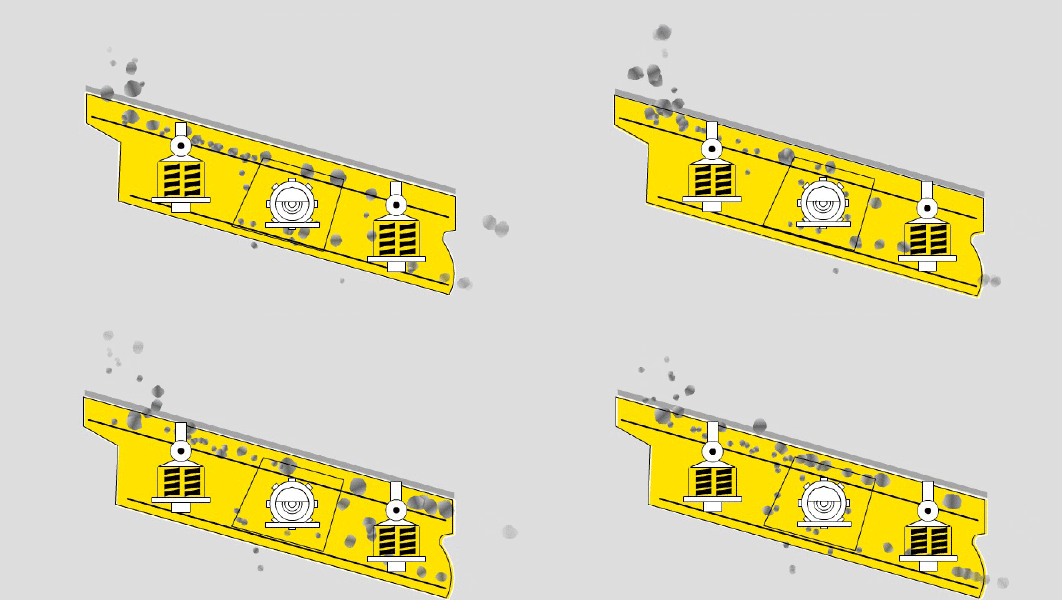
Vibrating screens are screened using the exciting force generated by a vibrating motor and belong to vibrating screens. Commonly used mine vibrating screens include circular vibrating screens and linear screens.
The trommel screen is another screening form. During the screening process, the equipment will not vibrate, but generally, the motor and reducer drive the drum to rotate through the bearing. The material in the drum passes through the screen from high to low due to the rotation of the drum. It is successfully screened out, so the trommel screen belongs to a type of rolling screening.
2. Different Shapes and Structure
The two are very different in appearance and can be easily distinguished.
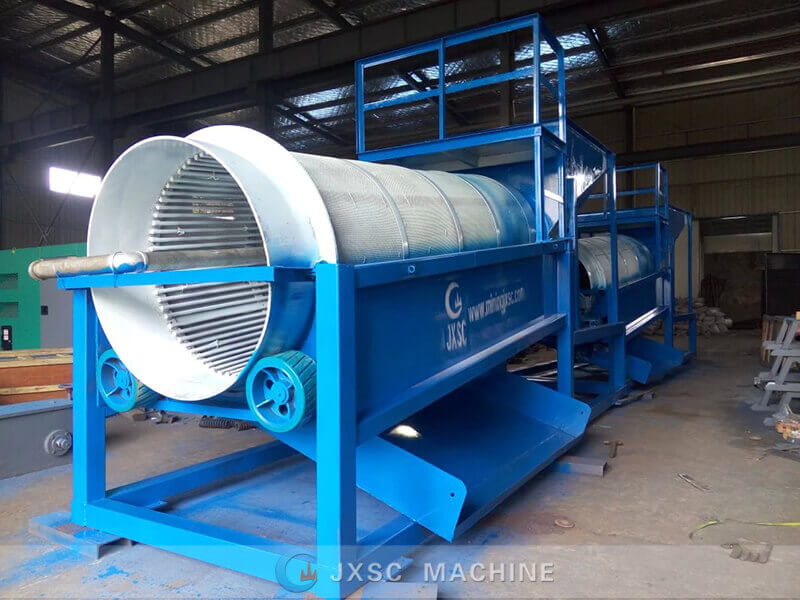
Trommel screen: It is a cylinder. The outer surface of the cylinder uses one or more layers, or several sections of screens to increase the screening specifications. The volume of the trommel screen is generally large, mainly including motors, reducers, drum devices, screens, and machines. It is composed of a frame, a sealing cover, and an inlet and an outlet. A steel ring must be added to the drum device to prevent the trommel screen from deforming.
Vibrating screen: The vibrating screen is mainly composed of a screen box, a screen frame, a screen mesh, a vibrating motor, a motor base, a vibration-damping spring, and a bracket.
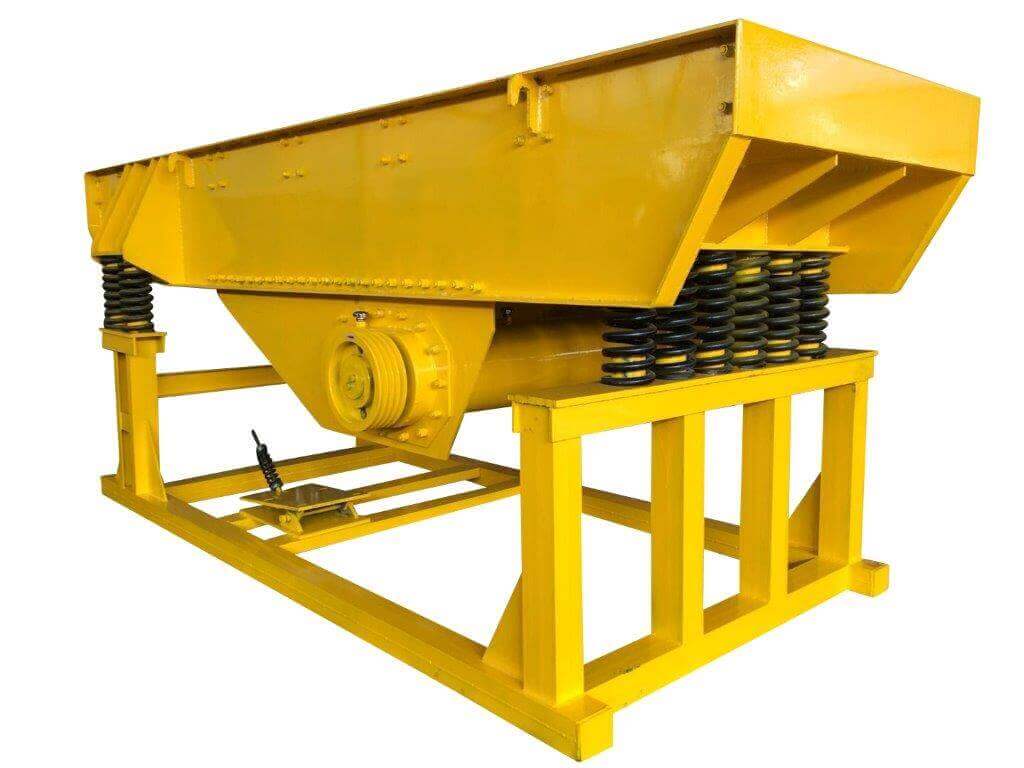
- Linear vibrating screen: Two vibrating motors are installed at the bottom of the equipment, which can be divided into several layers.
- Circular vibrating screen: also known as a single-shaft vibrating screen, its support methods include suspension support and seat support.
The trommel and vibrating screen are generally composed of a woven screen or a punched screen, and the screen size is generally 6-8 mm.
3. The Working Principle is Different
- Trommel Screen
The roller device is installed on the frame obliquely. The motor is connected with the roller device through a coupling and a reducer, and drives the roller device to rotate around its axis. When the material enters the drum device, due to the tilt and rotation of the drum device, the material on the screen surface is turned and rolled. The qualified materials (products under the screen) are discharged through the outlet at the bottom of the rear end of the drum, and the unqualified materials (on the screen) are discharged through the discharge port at the end of the drum.
- Linear Vibrating Screen
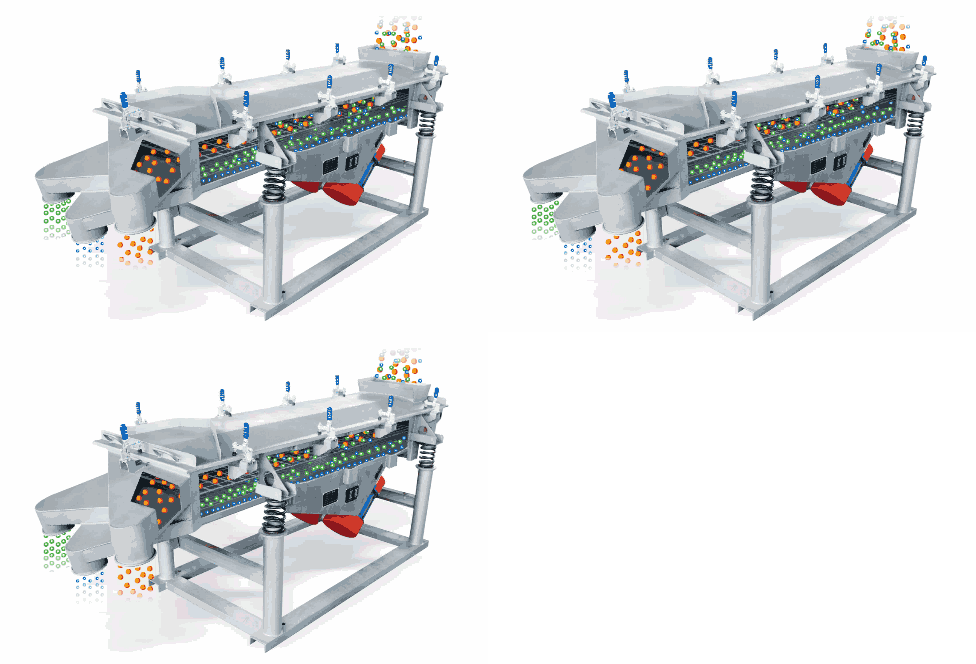
Using the vibration motor as the vibration source, the material is thrown up on the screen while moving forward in a straight line. The material enters the inlet of the screening machine evenly from the feeder, and produces several kinds of screens through the multi-layer screen. The upper and lower objects are discharged from their respective outlets.
- Circular Vibrating Screen
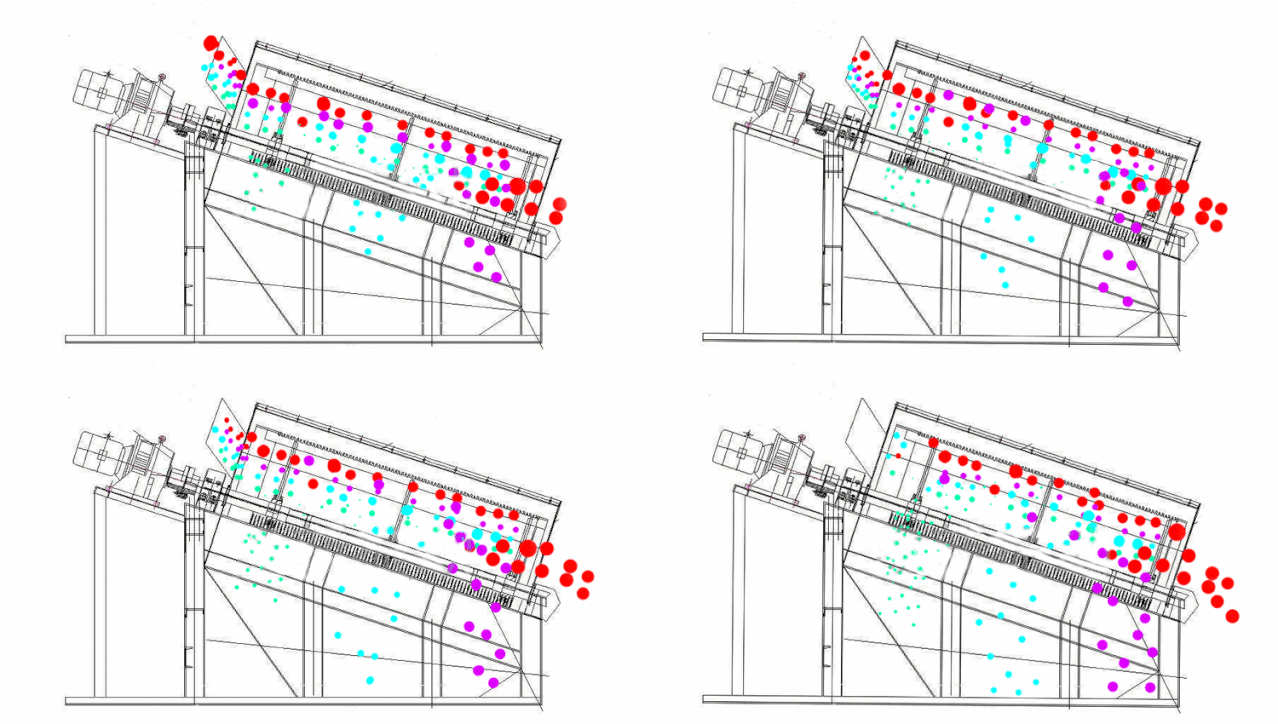
The screen surface is fixed on the screen box, and the screen box is suspended or supported by springs. The bearing of the main shaft is installed on the screen box and is driven by the pulley to rotate at high speed. The eccentric counterweight plate is installed on the main shaft and generates a centrifugal inertia force with the rotation of the main shaft, so that the screen box forms an approximate circular orbit vibration.
 4.
4.
 4.
4. 4. Different Classification
The trommel screen can be divided into single-layer, double-layer, and three-layer vibrating screens according to the number of layers of the screen. This vibrating screen is also similar; according to the number of screen surface layers can be divided into single-layer, double-layer, three-layer, and four-layer vibrating screens.
According to whether the trommel motor is connected to the bearing, it can be divided into shaft trommel and shaftless trommel.
According to the different trajectories of the screen surface of the vibrating screen, it can be divided into circular vibrating screens and linear vibrating screens, which have been introduced above.
5. Different Output and Applicable Occasions
The trommel screen has a large output and long life, which is suitable for large output requirements.
The linear vibrating screen has a small output and is suitable for screening fine materials.
The circular vibrating screen has a large output, which is suitable for large-scale production lines.
Due to the different screening methods of the vibrating screen and trommel screen, the materials they are good at screening are also different:
- In the case of a lot of rocks and large rocks, the material with greater viscosity will be more effective because the vibrating screen is vibrating.
- The screening of dust and small particles is the weak point of the vibrating screen. The screening effect of the trommel screen will be better.
- For screening dry materials, the vibrating screen is not easy to block holes, and the screening effect is better.
6. Different Screening Accuracy
The vibrating screen is a screening equipment with a vibrating motor as the vibration source, so the screening accuracy is high. The trommel is a high-output screening equipment, and the screening accuracy is not as high as the vibrating screen.
7. Different Blocking Conditions
For the trommel screen, the material is turned over and rolled in the drum, so that the material stuck in the sieve hole can be ejected to prevent the sieve hole from being blocked. For the circular vibrating screen, the material moves in a parabolic circular trajectory on the screen surface, so that the material is dispersed as much as possible to improve the material’s bounce force, and the material stuck in the screen hole can also jump out, reducing the hole-blocking phenomenon.
Conclusion
Vibrating screens and trommel screens have their own working methods and screening principles. Some raw materials can be screened through them. However, for different sites and different material requirements, suitable screening machines should be selected to achieve better screening results.
Industry Expert Recommendation
For optimal mineral processing results, consider that trommel screens generally outperform vibrating screens in high-capacity operations with challenging materials, while vibrating screens excel in precision applications requiring multiple product fractions.
Hybrid solutions incorporating both technologies often deliver the best overall performance for complex mineral processing circuits. Modern designs now offer modular systems that combine the high capacity of trommels with the precision separation of vibratory screens in multi-stage arrangements.
LATEST PRODUCTS
-

Inclined Vibrating Screen
The inclined vibrating screen is a simple and eff…
-
High Temperature & Pressure Gold Desorption Electrolysis System
High-Temperature & Pressure Gold Desorption Elect…
-
Normal Temperature & Pressure Gold Desorption Electrolysis System
The normal temperature & pressure gold desorption…


LATEST NEWS
- Shaking Table, 3-Disc Dry Magnetic & Electrostatic Separator for W-Sn-Ta-Nb
- Mineral Analysis: The Foundation for Successful Mineral Processing Projects
- What Is Over-Grinding and How Can It Be Prevented?
- Fluorspar vs Graphite vs Quartz: Non-Metal Minerals Beneficiation Differences
- Tailings Dam Safety: 5 Critical Parameters to Monitor
 English
  French
  Spanish
  Portuguese
  Indonesian