



Introduction
In mineral processing, steel ball consumption can account for approximately 40–50% of the grinding costs of a ball mill. As energy prices continue to rise and mining operations face increasing pressure to improve sustainability, reducing grinding energy and steel ball consumption has become an important way to improve overall plant efficiency and profitability.
Ball mill performance depends on several interconnected factors, including the ore hardness and grindability, feed particle size, steel ball diameter and strength, ball filling rate, pulp conditions, and mill rotational speed. An appropriate combination of these parameters can improve grinding efficiency, reduce media wear, and maintain the required product particle size.
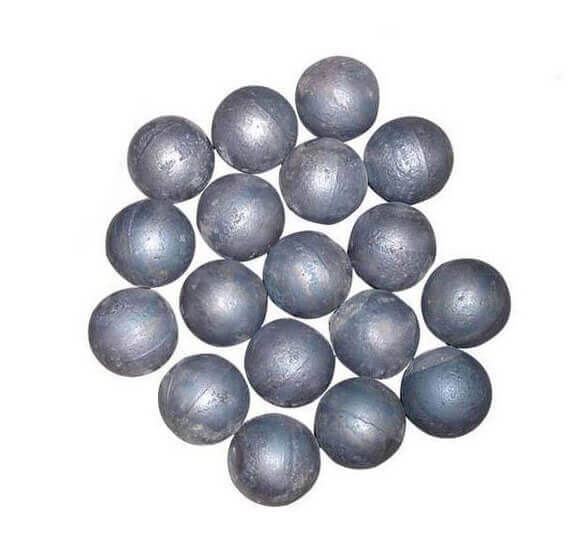
When a new ball mill is commissioned, the initial ball charge and ball size distribution are particularly important. Newly installed grinding media also require a running-in period as they interact with the mill liners and ore. The initial ball charge should therefore be designed according to the mill’s effective volume, operating conditions, liner design, ore characteristics, and the results of grinding tests. Most of the balls just installed will have a certain running-in period with the liner of the ball mill. The amount of bearing steel balls added for the first time should account for 90% of the ball mill. In addition, we add the proportion of bearing steel balls according to the size of steel balls (ф140mm, ф150mm, ф90mm, ф65mm, ф50mm).
During continuous operation, steel balls are gradually lost through wear, impact, and corrosion. Regular replenishment is necessary to maintain a stable ball charge and an appropriate size distribution. Rather than simply adding balls according to a fixed quantity, operators should monitor mill performance, ball consumption, feed characteristics, and product fineness to determine the appropriate makeup-ball strategy.
So, how can mineral processing plants reduce steel ball consumption and grinding energy while maintaining the required grinding performance? The following six strategies provide practical approaches.
Tips for Reducing Energy Consumption of Steel Balls in Ball Mills
1. Change The Grindability of Iron Ore
The particle size distribution of the raw materials fed into the ball mill is the first reason that affects the energy consumption of the steel balls of the ball mill. Generally, the smaller the grindability of the feed particle size distribution, the easier it is for iron ore to grind, the less damage to the steel balls of the ball mill is also smaller, and the energy consumption is also lower. And vice versa.
In specific production and manufacturing, if you encounter iron ore that is difficult to grind or the iron ore is required to be finely ground, you can thoroughly consider adding necessary iron ore during the grinding process when economic development and site standards allow. Analyze chemical preparations to improve the grinding effect and increase the grinding speed; or heat the iron ore to change the process performance of the entire iron ore and reduce the hardness of the ore. These two methods can reduce the energy consumption of the ball mill.
2. Reduce The Feed Particle Size Distribution
The particle size distribution of the ball mill is large, and the effect of the ball mill on the raw materials is also increasing. If you want to exceed the specified grinding particle size distribution, the workload of the ball mill will increase, so the energy consumption of the bearing steel balls will also increase.
To reduce the power consumption of the ball mill, it can reduce the particle size distribution of the vibrating feeder for grinding. So it requires that the particle size distribution of the crushed ore should be small, that is to say, “more crushing and less grinding.”
3. Effective Bearing Steel Ball Filling Rate
When the speed of the ball mill exceeds a certain level, the filling rate is high, and the bearing steel balls have more and more strict inspections on the raw materials. The grinding area is large, and the damage is fast. If the filling rate is too high, it will change the movement state of the steel balls of the ball mill and reduce the effect of strict inspection on large and fine particle materials. On the contrary, the filling rate is low, and the grinding effect is not better.
The filling rate of bearing steel balls in the grinding operation of mining plants is generally 50%~60%. It is not an effective filling rate based on each dressing plant’s specific conditions. Therefore, it must be determined according to the beneficiation test.
4. Adequate Steel Ball Specifications and Configurations
Because the bearing steel balls in the ball mill are in point contact with the raw materials, if the diameter of the bearing steel balls is too large, the crushing force will be too large, and the damage will be too fast. Sometimes it will easily cause the raw materials to break in the direction of the penetrating force, affecting the grinding speed. On the other hand, bearing steel ball filling rate in the same situation, if the ball diameter is too large, the amount of bearing steel balls will be less, the probability of fracture is low, the over-grinding is becoming more and more serious, and the product particle size distribution is not uniform; If the bearing steel ball is too small, the crushing interaction force on the iron ore is small, and the grinding speed is low. Therefore, an effective steel ball specification configuration will reduce the steel consumption of the ball mill and reasonably increase the grinding speed.
5. Effective Grinding Solubility
The size of the grinding solution will affect the proportion of the pulp, the degree of adhesion of raw materials around the bearing balls, and the loss rate of the pulp. If the grinding solubility is high, the degree of adhesion of the raw material near the bearing steel ball is good, the vibration and grinding effect of the bearing steel ball on the raw material is also excellent, and the damage of the bearing steel ball is faster.
In actual production, we can control the amount of ore supply or water output of the supply station or adjust the classification function to control the grinding solubility.
6. Control the Speed of the Ball Mill
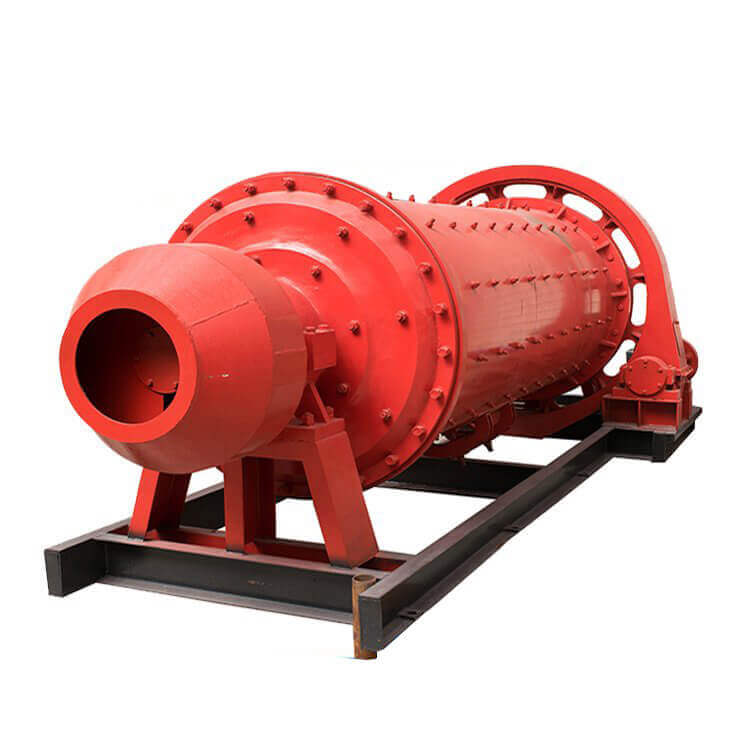
Under the condition that the steel balls of the ball mill are configured and practical, as the rotating speed of the ball mill increases, and the steel balls of the cylindrical bearings will drop into piles; When the speed of rotation increases as necessary, the power exceeds the maximum, the grinding effect is the best, and the ball friction of the ball mill is also the most effective.
The critical value of the basic knowledge of the ball mill is usually 74 to 98%. Due to the type of raw material and other factors, we adjust the specific situation to determine the speed of the ball mill.
Conclusion
Reducing steel ball consumption and energy consumption in ball milling requires more than simply changing the amount of grinding media. The performance of a ball mill is determined by the interaction of ore grindability, feed particle size, ball filling rate, ball size distribution, pulp density, and mill speed.
The six strategies discussed above can help mineral processing operations improve grinding efficiency:
- Improve ore grindability where economically and technically feasible.
- Reduce and stabilize the ball mill feed size through efficient crushing and screening.
- Optimize the steel ball filling rate rather than using an excessive or insufficient ball charge.
- Use an appropriate ball-size distribution based on ore characteristics and grinding requirements.
- Maintain an optimum pulp density for efficient wet grinding and classification.
- Control mill speed to achieve the most effective grinding-media motion.
In addition, steel ball consumption should be monitored continuously through makeup-ball records, mill power, throughput, product particle size, circulating load, and grinding performance. The optimum operating parameters are specific to each ore and grinding circuit, so laboratory testing, plant trials, and ongoing process monitoring are essential.
By systematically optimizing these factors, mining operations can reduce unnecessary grinding energy and media wear while maintaining the required product size and throughput, ultimately improving the economic efficiency and sustainability of ball milling operations.
LATEST PRODUCTS
-

Inclined Vibrating Screen
The inclined vibrating screen is a simple and eff…
-
High Temperature & Pressure Gold Desorption Electrolysis System
High-Temperature & Pressure Gold Desorption Elect…
-
Normal Temperature & Pressure Gold Desorption Electrolysis System
The normal temperature & pressure gold desorption…


LATEST NEWS
- Modern Cyanide Residue Treatment Technologies for Gold Processing
- Traditional De-cyanidation Technologies for Gold Cyanide Residues
- Shaking Table, 3-Disc Dry Magnetic & Electrostatic Separator for W-Sn-Ta-Nb
- Mineral Analysis: The Foundation for Successful Mineral Processing Projects
- What Is Over-Grinding and How Can It Be Prevented?
 English
  French
  Spanish
  Portuguese
  Indonesian